



EIFS over brick: a homeowners and pros guide
EIFS (Exterior Insulation Finishing Systems) are increasingly popular in new construction, and an excellent solution for adding exterior insulation to old homes for energy efficiency renovations. For homes with brick exteriors, installing EIFS presents a unique set of challenges and opportunities. This definitive guide is for both homeowners considering home retrofits to reduce energy costs and seasoned building professionals. Here we will providing a deep dive into the process, from initial prep work to the final finish.
This guide provides a comprehensive look at the key aspects of this topic. Below is an overview of the sections we will cover, allowing you to jump directly to the information you need.
- Understanding EIFS: more than just stucco
- Why insulate over bricks?
- Preparation and brick cleaning
- Attachment methods: adhesives vs. mechanical fasteners
- Pros and cons of each method
- Installation steps: adhesives and fasteners combined
- Regional variations in EIFS (EWI)
- In brief
Understanding EIFS: more than just stucco
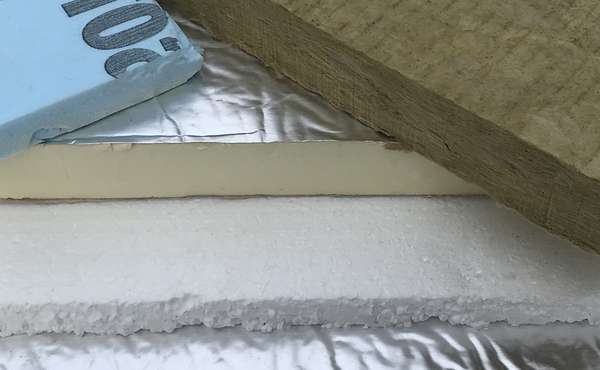
EIFS is a non-load-bearing, insulated cladding system that provides a building's exterior with a seamless, continuous thermal envelope. Often confused with traditional stucco, EIFS is a multi-layered system that includes an insulation board (typically expanded or extruded polystyrene), a drainage or air barrier, a reinforced base coat, and a textured finish coat.
It is a highly-effective way to add significant thermal resistance (R-value) to a building, which is why it is also known as External Wall Insulation (EWI) in places like the UK.
Why insulate over bricks?
Brick, while durable, has a very low R-value, making it a poor insulator. A standard brick wall assembly has very little thermal resistance and can even act as a thermal battery, storing heat in the summer and releasing it into the home.
Not that brick 'should' have an R-value when you think of it as just an exterior cladding, in modern home construction the siding is not commonly part of the thermal envelope. The reason to insulate over a brick home exterior would be if the interior wall has insufficient insulation.
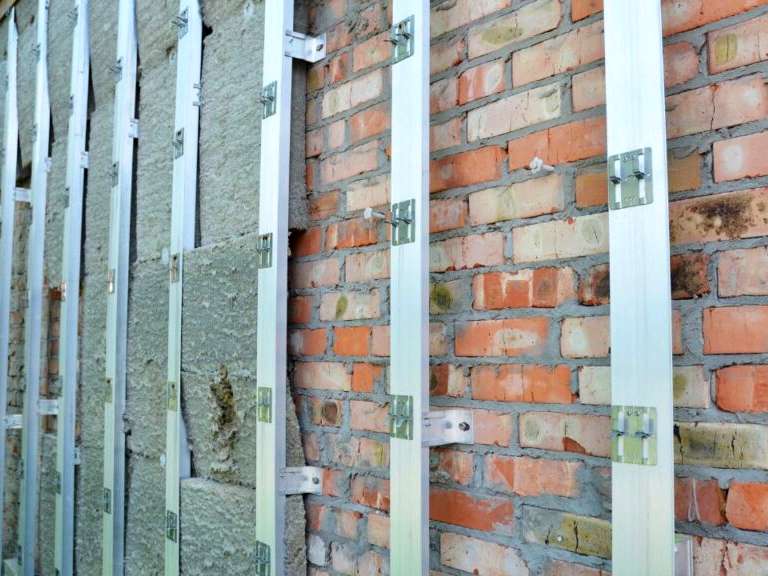
If you have a home with brick on all four sides, odds are it is an older home, and if it has not had an energy efficiency upgrade then it is likely poorly insulated. Brick is a very expensive exterior finish, so when we see it on homes built today it is often just the front facade done in brick and other sides done with something cheaper like vinyl or wood as an example. Adding EIFS to the exterior of a brick home creates a powerful thermal blanket, dramatically reducing energy consumption.
Preparation and brick cleaning
Proper preparation of the existing brick is the most critical step for a successful EIFS installation. The primary reason for cleaning the brick surface before installing EIFS is indeed proper adhesion. When the attachment method is adhesive, EIFS requires a strong, consistent bond to the substrate to perform correctly. Any dirt, dust, efflorescence (white mineral deposits), or loose mortar on the bricks will prevent the adhesive from creating a solid connection.
This can lead to the insulation boards detaching over time, compromising the entire wall system. Think of it like a sticker on a dirty window-it won't stick well and will eventually peel off. Cleaning also removes any contaminants that could interfere with the chemical properties of the adhesive. This step is necessary regardless of the attachment method.
Attachment methods: adhesives vs. mechanical fasteners
EIFS can be installed using a combination of adhesives and mechanical fasteners, or sometimes just one of the two. Here is a breakdown of how each method works and when it is used.
EIFS adhesives: The primary bond
EIFS adhesives are specially formulated polymer-modified cementitious or acrylic products. They are applied to the back of the insulation board in a specific pattern, such as ribbons around the perimeter and a series of dabs in the center. This pattern serves a dual purpose: it creates a strong bond and forms drainage channels for any moisture that may penetrate the system.
EIFS mechanical fasteners: The physical anchor
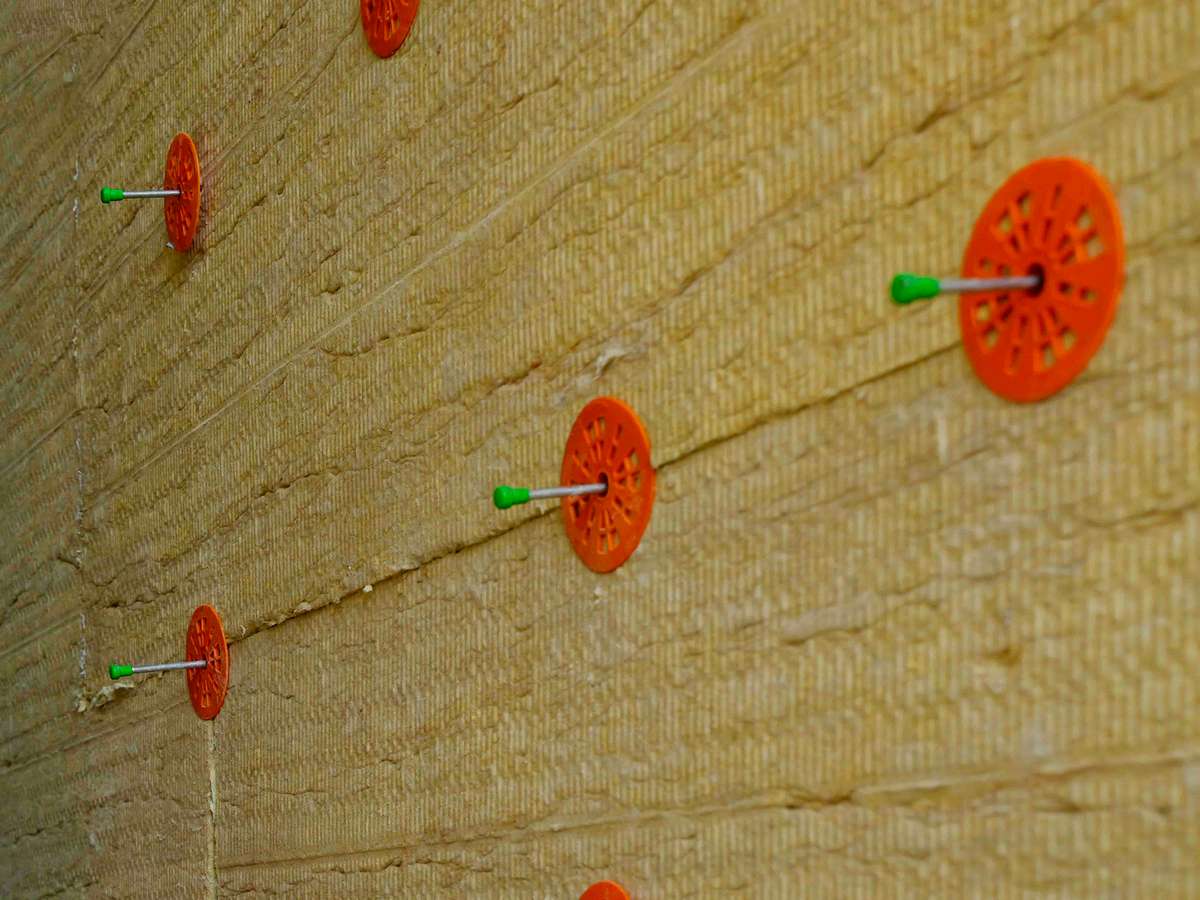
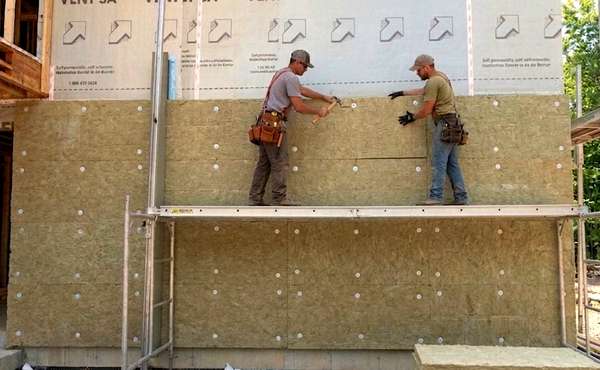
Mechanical fasteners, such as specialized screws or anchors with large plastic washers, are driven directly through the insulation board and into the brick wall. They provide a direct, physical hold that can be essential for stability, especially on uneven surfaces or in areas with high wind loads.
Pros and cons of each method
While adhesives provide a continuous, uniform bond, mechanical fasteners provide a structural hold and are sometimes required by building codes. The decision to use one or both methods is based on the condition of the brick, local building codes, and the project's specific needs.
Pros of adhesives
- Provide a continuous air and moisture seal behind the insulation.
- Create a smooth, uniform surface for the next layers.
- Are a critical part of the wall's drainage system.
- Used on the vast majority of new and retrofit installations.
Pros of mechanical fasteners
- Provide a strong, immediate physical hold that is independent of the adhesive cure time.
- Excellent for supporting the system on very uneven or friable brick surfaces.
- Can be a requirement for multi-story buildings or areas with extreme weather conditions.
- Offer a long-term safeguard against delamination.
Installation steps: adhesives and fasteners combined
Most high-quality installations use a combination of both adhesives and mechanical fasteners for optimal performance and longevity.

Step 1: Preparation
Thoroughly clean the brick surface to remove all dirt, dust, and efflorescence. This is a critical step for a strong bond. Next, install starter tracks and flashing at the base of the wall to create a drainage path.
Step 2: Adhesive and insulation application
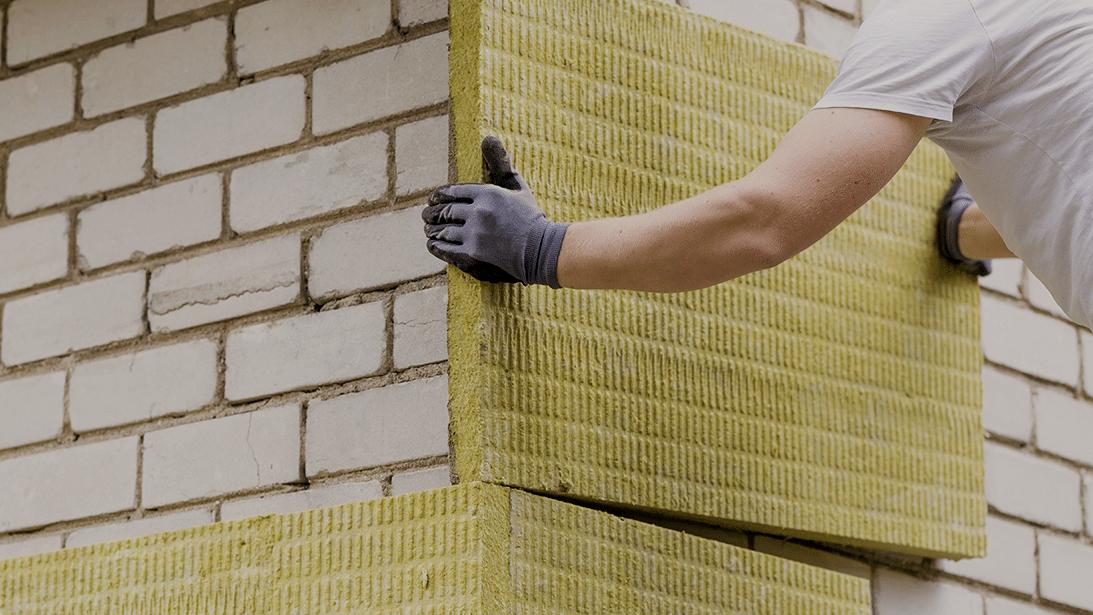
Apply the EIFS adhesive in the required pattern to the back of the insulation boards, then press them firmly against the prepared brick.
Step 3: Fastener installation
Once the adhesive has cured sufficiently, install the mechanical fasteners as specified by the manufacturer and building code. These are typically arranged in a specific pattern to ensure an even load distribution.
Step 4: Base coat and mesh application
A base coat of the adhesive is applied over the insulation boards, and a fiberglass reinforcing mesh is embedded into it while it is still wet. This mesh provides impact resistance and structural integrity to the entire system. This is what truly separates EIFS from traditional stucco. The continuous insulation also prevents thermal bridging and heat loss through the wall assembly.
Step 5: Finishing
Once the base coat is dry, a final decorative finish coat is applied. This is available in a wide variety of colors, textures, and styles. This layer is also what makes EIFS an effective rainscreen.
Regional variations in EIFS (EWI)
While EIFS is the dominant term in North America, this technology is referred to by other names, with slight variations, around the world. In the UK, Australia, and New Zealand, it is most commonly known as External Wall Insulation or EWI, but the principles are the same. In these regions, professionals and homeowners typically refer to insulation values using R-value's reciprocal- U-value.
For example, a common wall assembly in North America might have an R-value of R-40 (or RSI 7.04), while in the UK, the U-value would be 0.14 W/m²·K. Always check local building codes for specific requirements on material types and attachment methods, especially in high-wind zones.
In brief
Installing EIFS over a brick exterior is a highly effective way to improve a home's energy performance and thermal comfort. The process requires a clean brick substrate to ensure proper adhesion.
While adhesives provide the primary bond and critical drainage channels, mechanical fasteners are often used to provide additional structural support and meet building codes, especially on multi-story or uneven surfaces. The best installations utilize both methods for maximum integrity and durability.
Now that you know more about EIFS over brick, find more info about exterior wall insulation and green building techniques in the Ecohome Green Building Guide and these pages below:
-
Can you paint bricks on old homes? Is it a good idea and how to do it?
-
The easiest way to insulate older homes from the exterior
-
Ecohome's top tips for a successful build or renovation
-
How to find and hire a quality contractor

















Comments (0)
Sign Up to Comment