





Phase Change Building Materials - The Best Products and Where to Buy Them
Integrating phase change building materials into residential design offers a cutting-edge approach to managing indoor temperatures and lowering energy consumption. These advanced solutions function as an active thermal battery, absorbing and releasing heat to bridge the gap between lightweight framing and traditional heavy thermal mass.
- Understanding phase change material technology
- Residential applications: Drywall, ceilings, and floors
- Commercially available products and manufacturers
- Regional variables and market availability
- In brief
Understanding phase change material technology
Phase change materials (PCMs) reduce space conditioning demands by storing and releasing latent heat during a state transition. Unlike sensible thermal mass options like concrete or brick, which change temperature as they absorb heat, a PCM maintains a nearly constant temperature while shifting from a solid to a gel or liquid.
The key to understanding how simple a concept this really is starts with understanding what is meant by the term 'phase change'. Any substance undergoing a change of state (liquid to solid, solid to liquid, liquid to gas, etc.) requires a significant transfer of energy to break or create bonds. For water that happens at 32°F (0°C) when it freezes or melts, but that phase change doers not happen at a particularly helpful temperature for PCMs, nor is iron with a melting temperature of 2,800°F.
Phase change building materials leverage this thermodynamic principle by using substances engineered to change states right around room temperature. This allows them to capture and release that massive surge of latent energy passively, and help reduce heating and cooling costs in homes.
For residential home building, these materials are tailored to transition within a precise human comfort window of 68°F (20°C) to 76°F (24.4°C). When the ambient room temperature rises above the material's melting point, it absorbs and stores the excess heat.
As the room cools at night, the material solidifies and releases that stored thermal energy back into the living space. This process eliminates indoor temperature spikes and delays the peak cooling load, which directly reduces reliance on standard heating, ventilation, and air conditioning (HVAC) equipment. By flattening these daily temperature fluctuations, a home can leverage off-peak utility rates and optimize natural ventilation cycles.
Residential applications: Drywall, ceilings, and floors
Builders can integrate PCMs directly into interior surfaces to optimize thermal performance without adding structural weight. Since these materials offer high energy storage density, a thin layer can match the heat storage capacity of stone or concrete in a home. This makes them ideal for timber-frame structures and retrofits where adding heavy masonry is physically or financially impractical.
Standard gypsum wallboard can be manufactured or retrofitted with microencapsulated paraffin or bio-based compounds. The microscopic capsules are embedded directly into the gypsum core during production, allowing the finished product to be hung, finished, and painted just like traditional drywall. While fully commercialized options are concentrated in specialized markets, these panels provide automated climate buffering across large wall surface areas.
Ceiling panels and drop ceiling solutions
Ceilings experience significant heat stratification, making them prime locations for thermal management. Rigid ceiling tiles or flexible drop-in mats sit directly above standard ceiling systems or between joists. This placement intercepts rising heat before it penetrates attic spaces or upper floors, creating an effective thermal barrier that keeps lower living zones stable.
Underfloor mats and radiant heating systems
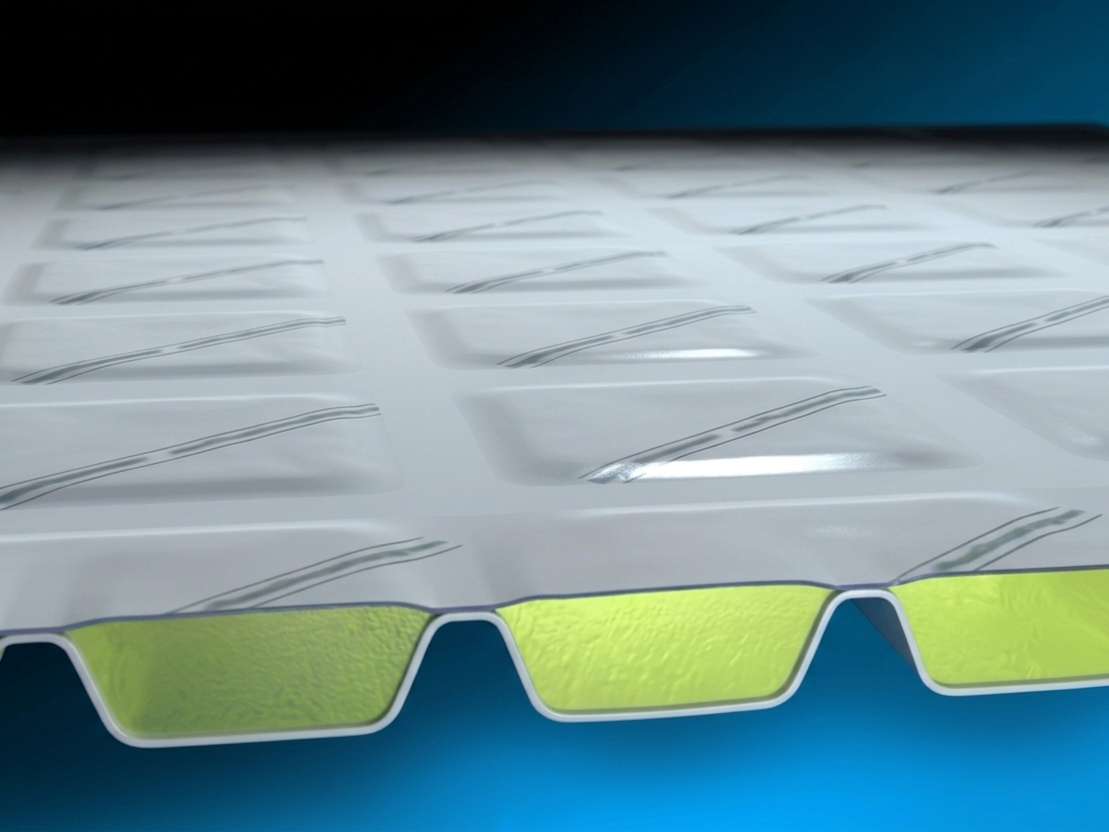
Placing PCM mats directly beneath hardwood, tile, or engineered flooring provides an exceptional pairing for passive solar designs and radiant floor heating. The mats absorb excess solar gain from south-facing windows during the day, preventing the space from overheating. At night, they discharge that heat into the room, reducing the nighttime runtime of the primary heating system.
Commercially available products and manufacturers
Several established manufacturers offer building-grade PCMs designed for straightforward contractor installation. While raw materials are plentiful, choosing packaged products with proven containment properties is essential to avoid leakage and maintain fire code safety compliance over a long building lifespan.
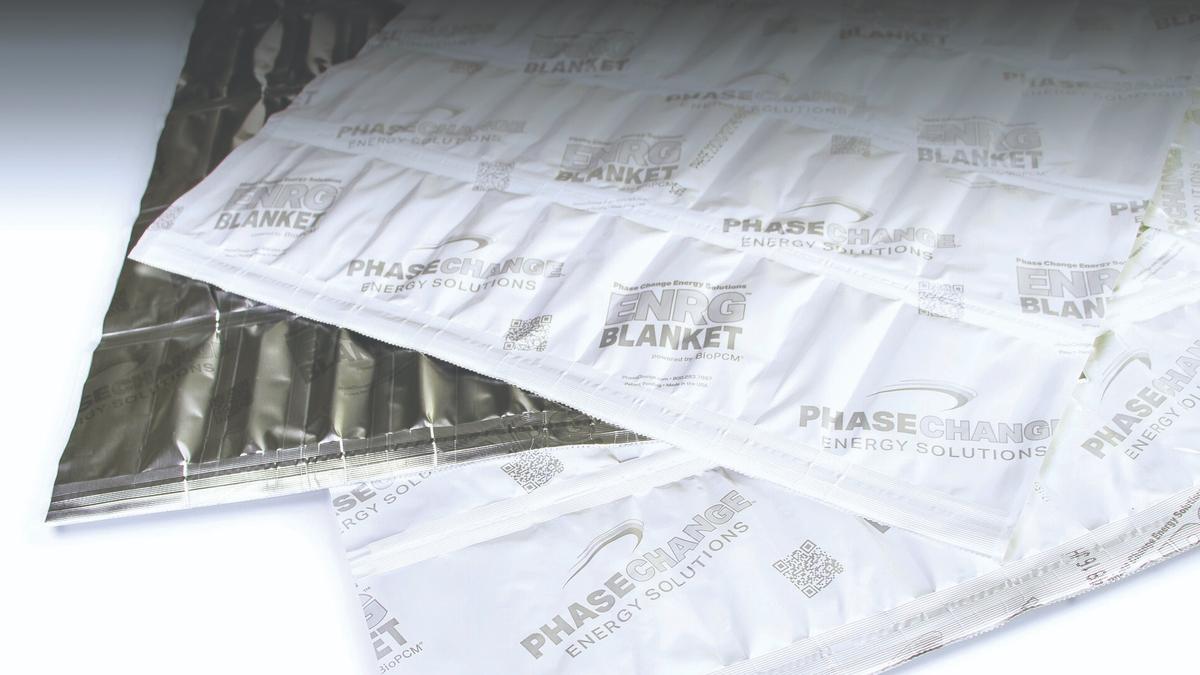
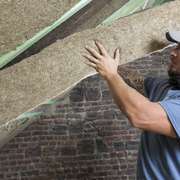
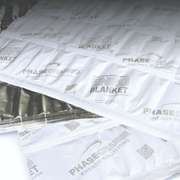
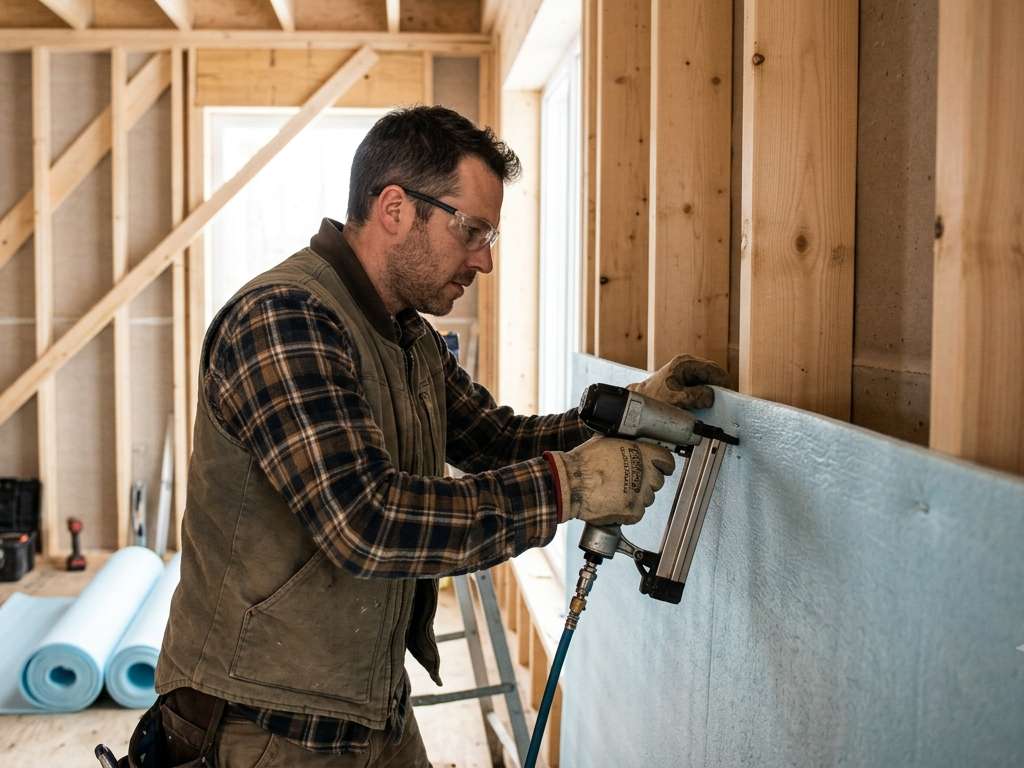
- Phase Change Solutions: This manufacturer produces the ENRG Blanket, a highly stable option utilizing organic, plant-based bio-based phase change materials (BioPCM) held between durable polymer sheets. The product transitions between a solid and a gel state, minimizing common liquid-phase containment risks. It is shipped in modular sheets measuring 16 inches by 48 inches (40.6 cm by 122 cm) or 24 inches by 48 inches (61 cm by 122 cm) for simple stapling to open studs or laying over ceiling tiles.
- Insolcorp: This company manufactures the Infinite R product line, an inorganic salt-hydrate mat system engineered specifically for residential and commercial building envelopes. It acts as an active insulation supplement, targeting peak cooling load reductions of 25% to 35% when installed over 65% to 85% of a ceiling or wall surface area.
- ThermaCool: Specializing in microencapsulated mineral boards, ThermaCool supplies wall panels and preformed ceiling tiles that feature a melting threshold between 66°F (18.9°C) and 73°F (22.8°C). The panels double as traditional finished surfaces while actively regulating humidity and temperature peaks.
Regional variables and market availability
The availability and economic payback of phase change materials depend closely on regional climate patterns and local energy grids. Systems deliver the highest return on investment in areas with large diurnal temperature swings - where days are hot and nights are cool - allowing the material to fully cycle and reset every 24 hours.
- North America (US and Canada): Distribution for Phase Change Solutions and Insolcorp is well established, with materials frequently specified in high-performance insulated concrete forms (ICFs) and net-zero energy custom builds. Payback timelines range from three to five years depending on local utility peak pricing.
- United Kingdom: The market centers primarily on commercial retrofits and lightweight renovations using systems like ThermaCool to mitigate summer overheating in older brick or modern timber structures without adding heavy mechanical cooling.
- Australia and New Zealand: Local distributors supply bio-based PCM sheets to combat intense summer heatwaves. These sheets are applied within ceiling cavities to supplement standard insulation blankets in lightweight residential designs.
In brief
Phase change building materials offer a low-profile, lightweight alternative to traditional thermal mass by actively storing latent heat. By installing products like ENRG Blanket or Infinite R in ceilings, walls, or under floors, both homeowners and professionals can stabilize indoor microclimates, reduce HVAC cycling, and lower peak grid demands across diverse climate zones.
Now that you know more about phase change building materials, find more info about related subjects and green building techniques in the Ecohome Green Building Guide and these pages below:
-
Passive solar home design made easy - learn the core concepts
-
Can you heat a home with only PV solar panels? Yes you can, find out how
-
How to use thermal mass in homes to reduce heating & cooling costs
-
Envelope first building concept: A homeowner's & pro's guide to high-performance home design
Sign up now and reap the benefits of a free Ecohome Network Membership!









Comments (0)
Sign Up to Comment