
















Understanding U-values, how are they different to R-values?
Most homeowners have a general idea of what R-value mean, and it is the most commonly understood metric for detemining insulation values of wall assemblies and other building envelope compoments.
R-values for insulation typically range between about R3.5 per inches and R6 per inch, with a few outliers. Some examples would be the very high R-value of aerogel insulation at between R10 and R12 per inch.
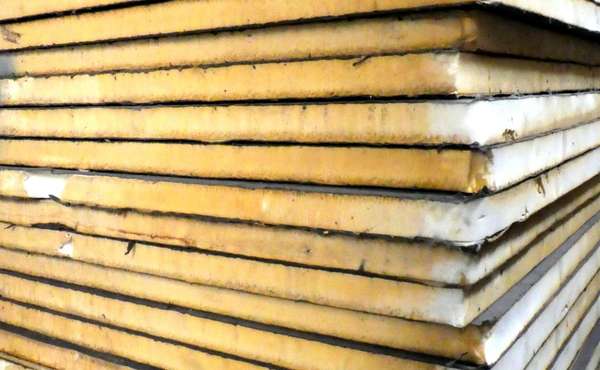
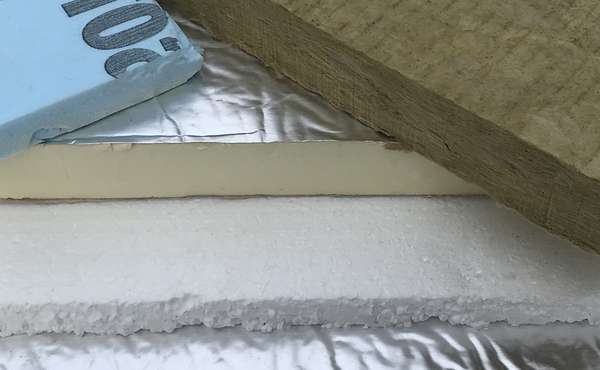
Two other examples that have high R-values (to start out with at least) would be polyiso rigid insulation, spray foam. By that I mean, Insulation types that count of trapped gases to achieve higher R-values don't stay like that forever. Gases escaping from foam cause R-values to drop in a process called thermal drift, where performance deteriorates over time.
Insulation materials usually have their R-values prominently listed right on bags for batt insulation or printed right on rigid insulation panels. But U-values is something you will tend to see more when shopping for windows. So, what is the difference between U-values and R-values? This page is intended to clear that up.
R-values are great for an easy understanding of how one type of insulation stacks up against another, whereas using U-values fine tunes that game a bit. While they measure the same basic characteristic - a building material or component’s thermal performance - they do so from opposite perspectives which leads to frequent confusion among both homeowners and seasoned professionals.
This definitive guide will break down what U-value and R-value truly mean, why both are essential to green building, and how to use them to make smart choices for your home's envelope, whether you are selecting insulation, upgrading windows, or designing a complete wall assembly.
- The two sides of thermal metrics: resistance and conductance
- R-value explained: resistance to heat flow
- U-value explained: rate of heat transfer
- Key differences: material vs. assembly performance
- Regional differences: metric, imperial, and building codes
- Thermal bridging and effective u-value
The two sides of thermal metrics: resistance and conductance
At their core, U-value and R-value are mathematical reciprocals. They are simply two ways of quantifying how well a material or a complete building component manages heat flow. Think of them like two sides of the same coin, one measures how well a material stops heat, and the other measures how easily heat passes through.
To put it simply:
- R-value measures resistance to heat flow. The higher the R-value, the better the insulation performance.
- U-value measures thermal transmittance (aka conductance or heat transfer). The lower the U-value, the better the insulation performance.
The core difference in application comes down to what they are typically used to measure - a specific material or a whole assembly.
R-value explained: resistance to heat flow
The R-value is the most commonly understood metric for insulation materials. It specifically quantifies the ability of a material to resist the flow of heat - heat conducted through the material, heat convected through it, and heat radiated from it.
What the R-value number means
In North America, R-value is measured in imperial units: square foot degrees Fahrenheit hours per British thermal unit. Globally, the metric equivalent, square meters Kelvin per watt, is also known as RSI (Resistance System International).
For example, a standard batt of fiberglass insulation might be rated at R-3.5 per inch (RSI 0.61 per 2.5 cm). The thicker the material, the higher the R-value. A 5.5 inch (14 cm) batt is typically rated R-21.
Where R-value is used
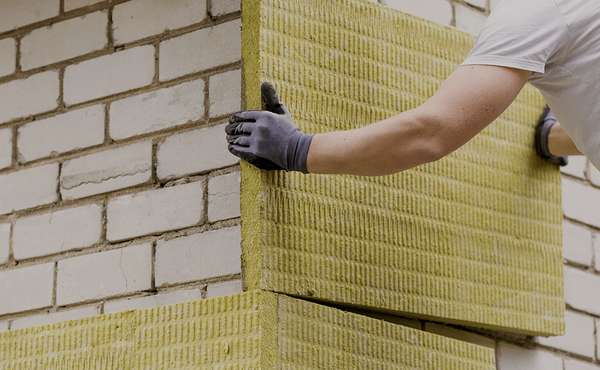
R-value is the primary measure used when selecting insulation products like fiberglass batts, mineral wool, or rigid foam boards. It is the number homeowners and builders use when discussing the insulation level of walls, attics, and floors in North America, Australia, and New Zealand. When you buy insulation, its R-value is clearly labeled.
Before moving on, it is essential to consider the concept of effective R-value, which is the actual R-value of a finished wall or roof assembly once the impact of all framing members (known as thermal bridges) has been calculated. The listed R-value of the insulation alone is rarely the true performance number of the completed system.
While the topic of insulation materials is critical to achieving a high R-value, a more in-depth discussion on material performance and thermal drift is available in our related guides.
U-value explained: rate of heat transfer
The U-value, or thermal transmittance, is a measure of the rate of heat flow through a specific area of a building component. Essentially, it tells you how many units of heat energy are lost through one square unit of a building assembly for every degree of temperature difference between the inside and outside.
What the U-value number means
The U-value is the reciprocal of the total thermal resistance (R-value) of an assembly. U-values are typically expressed in Watts per square meter per degree Kelvin in metric (used predominantly in the UK, Canada, Australia, and New Zealand building codes). In imperial units (used primarily in the US), it is expressed as British thermal units per square foot degree Fahrenheit hour.
Always aim for the lowest possible U-value for maximum energy efficiency, as a low number means less heat is passing through the component.
Where U-value is used
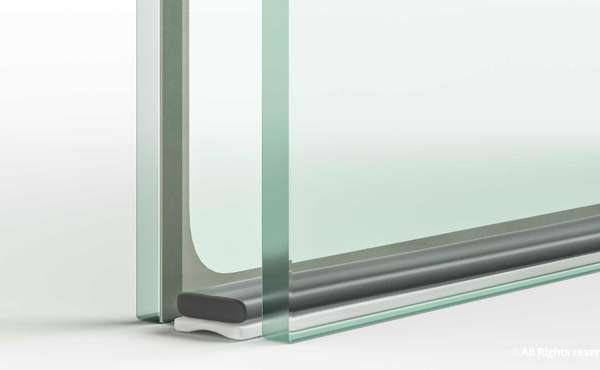
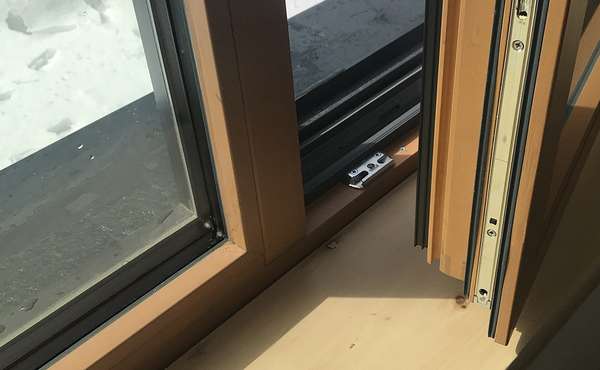
U-value is the universally accepted standard for measuring the thermal performance of complex, pre-fabricated assemblies, most notably windows and doors. A window is an assembly of different materials - glass, frame, spacers, and gas fill - all of which conduct heat at different rates. The U-value captures the combined performance of the whole unit, providing a single, reliable metric for comparison.
In the UK, Europe, and increasingly in other regions like Australia and Canada, U-values are also the primary metric used in building codes to specify the required performance of walls, roofs, and floors. For instance, building codes for new homes in cold climates typically require it to be highly insulated, often achieving a U-value of 0.18 W/m²⋅K (which is equivalent to an R-value of about R-31).
Key differences: material vs. assembly performance
While mathematically linked, the practical difference between the two is in their scope:
| Characteristic | R-value (resistance) | U-value (transmittance/conductance) |
|---|---|---|
| What it measures | Thermal resistance to heat flow. | Rate of heat flow (heat lost/gained). |
| Goal for efficiency | Higher is better (more resistance). | Lower is better (less heat transfer). |
| Typical application | Individual insulation materials (batts, foam). | Whole assemblies (windows, doors, complete walls, roofs). |
| Calculation scope | Typically focuses on the insulating material itself. | Considers all components: materials, air gaps, surface films, and thermal bridges. |
Professionals need to understand that simply adding up the R-values of insulation materials will not give you the accurate U-value for a wall. To get the U-value of an assembly, you must first calculate the total resistance of the entire assembly (the effective R-value) and then take the reciprocal.
Regional differences: metric, imperial, and building codes
One of the biggest sources of confusion is the inconsistent application of these metrics across a global audience. The choice of metric often follows the traditional unit system of the region.
North America (US & Canada)
The R-value in imperial units (square foot degrees Fahrenheit hours per British thermal unit) remains the dominant metric for insulation products and is widely referenced in building codes for walls and attics. The U-factor (often called U-value) is mandatory for rating windows and doors, expressed in imperial units (British thermal units per square foot degree Fahrenheit hour).
The UK, Australia, & New Zealand
These regions, which largely operate under the metric system, primarily use the U-value (Watts per square meter per degree Kelvin) to define mandatory thermal performance requirements for all main building elements (walls, floors, roofs, windows).
For example, the UK's Building Regulations Part L sets specific maximum U-values for different elements. While the R-value (RSI) is used for material comparisons, the U-value is the official target for the finished assembly in code compliance.
Thermal bridging and effective u-value
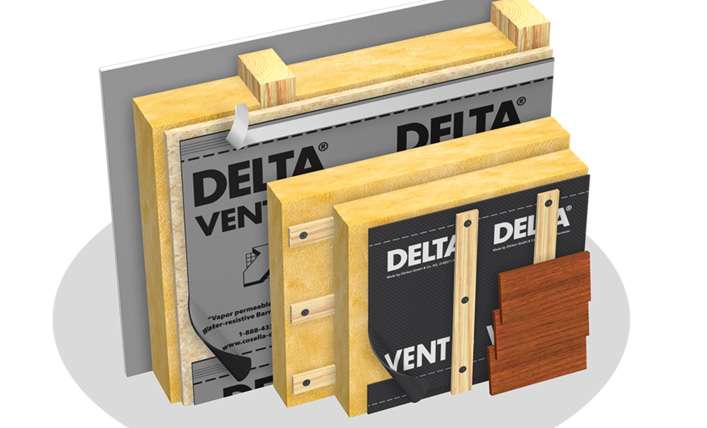
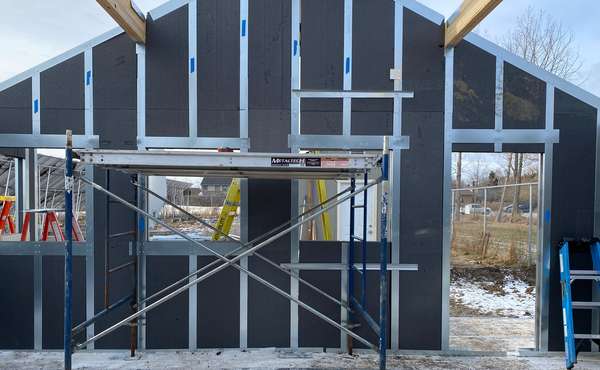
For building professionals, the U-value is a more accurate measure of a component's real-world performance because it is the only metric that, when properly calculated, accounts for thermal bridging. A thermal bridge is a point in the building envelope where the insulation is interrupted by a highly conductive material, like a wood stud, steel beam, or a window frame, allowing heat to bypass the main insulation layer.
Wood framing, for example, has an R-value of only about R-1 per inch (RSI 0.18 per 2.5 cm), which is much lower than the R-value of the cavity insulation. When you calculate the R-value of a whole wall, the high-performance insulation is averaged with the low-performance studs, significantly reducing the effective R-value and raising the U-value of the overall assembly.
Preventing heat loss in homes caused by thermal bridging is a critical topic in modern building science. To ensure an accurate representation of your home's performance and comply with energy codes, you must factor in the heat loss through framing, which is precisely what the calculated U-value does.
U-values and R-values in brief:
U-value and R-value are the bedrock of understanding a home's thermal performance. They are mathematically linked as reciprocals. The key difference for both homeowners and professionals is one of scope: R-value is the measure of resistance, typically applied to insulation materials (higher is better), while U-value is the measure of heat transfer, typically applied to whole building assemblies like walls, roofs, and windows (lower is better).
For a true measure of energy efficiency, particularly when accounting for thermal bridges and complex assemblies, the U-value provides the most accurate and holistic picture of performance.
Now that you know the difference between U-values and R-values, learn more about green building techniques in the Ecohome Green Building Guide and these pages below:
-
Prevent condensation damage in walls with the two thirds rule for insulation
-
Ecohome window buyers guide - what to look for when shopping for windows
-
How to choose rigid foam insulation, which is best - EPS, XPS or polyiso?
-
Building science made easy - video guide for high performance wall design







Comments (0)
Sign Up to Comment