










What is the two thirds rule? How insulation and wall assemblies work best
In the world of durable, high-performance green building, few concepts are as little understood as the two-thirds rule. It's pretty much common knowledge that in cold climates the vapor barrier goes on the inside of insulation, and in hot humid climates like Florida as an example, it goes on the outside. So here we are going to step into the grey zone when you have both those scenarios in play.
The logical practice of installing vapor barriers on walls dates back to a time before air conditioning, when hot, humid summers in a cold climate were just to be endured. But now, virtually all homes having heating and A/C and that changes things.
A cold and humid climate like the northern states or Canada is more like Florida in the summer, so for a period of time each year when we blast the A/C, the vapor barrier is actually on the wrong side. This is not a catastrophic building design failure, and it's really only a problem in the hottest and most humid conditions when the A/C is set really low.
Here you can read about how interior vapor barriers with air conditioning is a problem, and for those seeking to push the envelope on performance building and durability, the two-thirds rule can be a smart upgrade. Here is what we will cover so you can skip ahead if you prefer:
- Understanding the two thirds rule
- How the rule prevents condensation
- Calculating the r-value split
- Climate zones and applicability
- Meeting the rule with continuous insulation
- In brief
Understanding the two thirds rule
The two thirds rule is an empirical guide used primarily in cold and mixed climates (like most of the US, Canada, UK, and northern Europe) to design exterior wall assemblies that are safe from condensation-related failure. Simply put, the rule states:
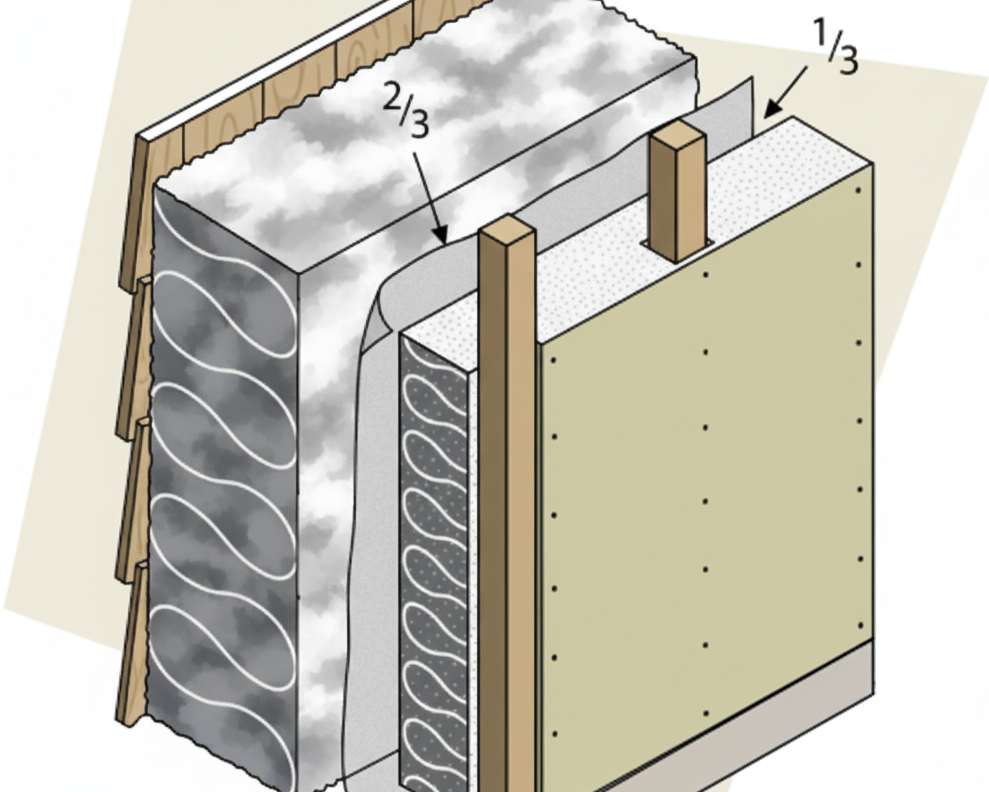
At least two-thirds (2/3) of the total thermal resistance (R-value) of a wall assembly must be located on the exterior side of the main vapor control layer.
This principle is intended to ensure that the structural components of the wall (specifically OSB or plywood sheathing) and the interior face of the wall cavity - remain warm enough to avoid moisture problems during cold weather. If these surfaces are too cold, moisture-laden air from the interior of the home will condense on them, reaching what is known as the dew point inside the wall structure.
The importance of the vapor control layer
In cold climates, the conventional vapor control layer is typically installed on the warm side of the wall assembly, which means the interior side of the studs. This could be a 6-mil polyethylene sheet (Canada/Northern US) or a smart vapor retarder. The moment a vapor control layer is introduced, it creates a point where the wall assembly must manage moisture. The permeability of your materials must be carefully considered.
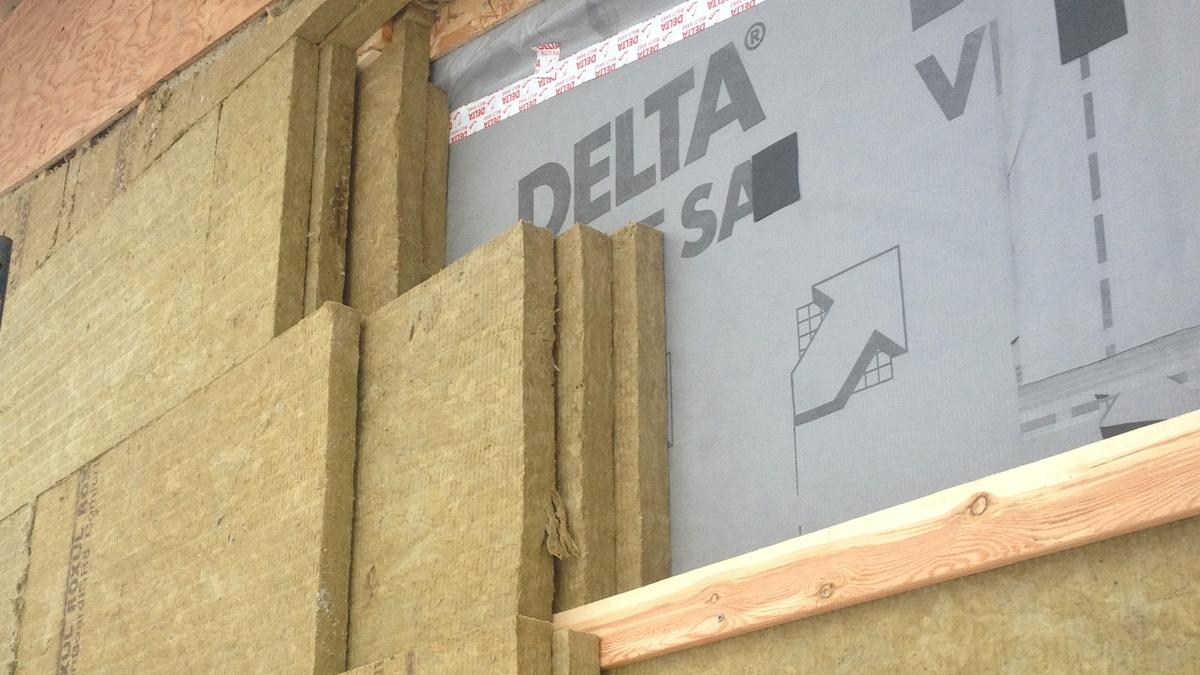
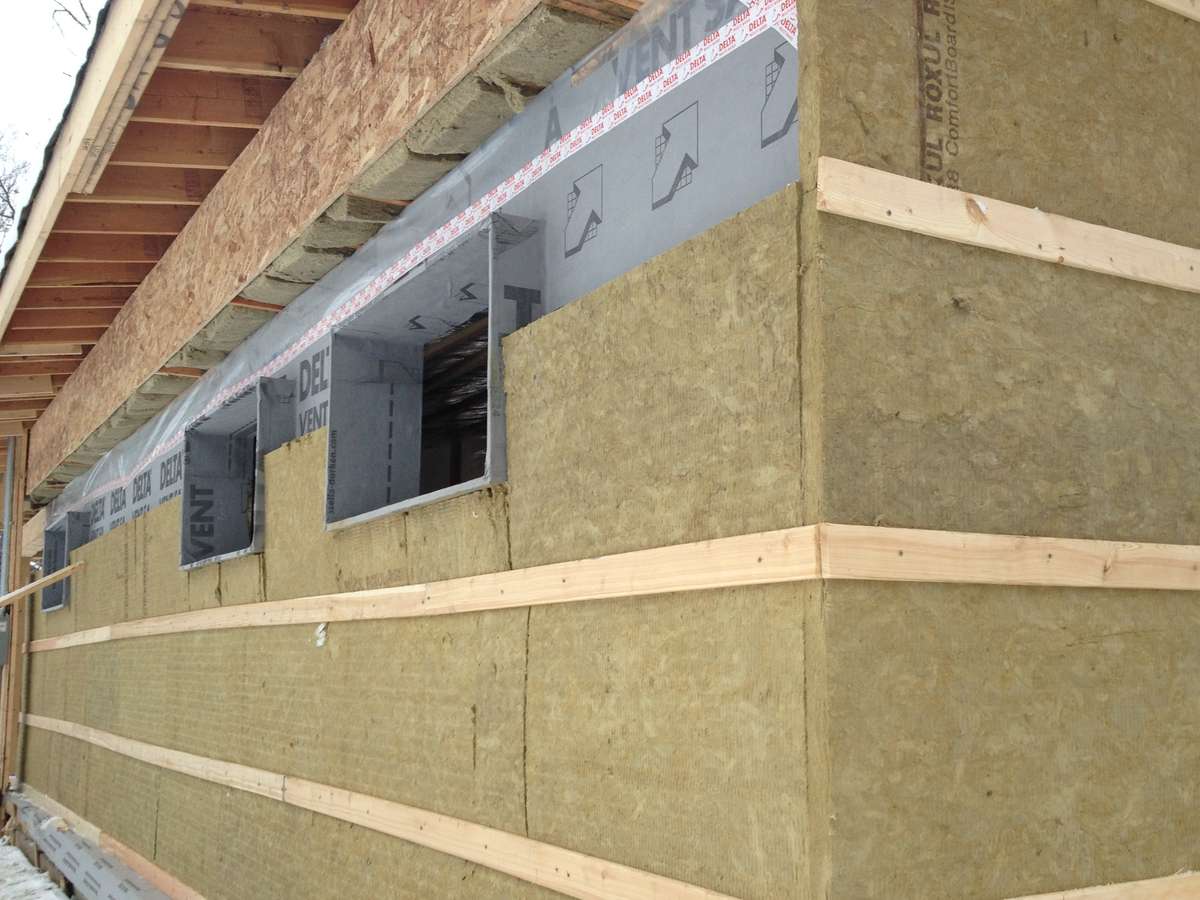
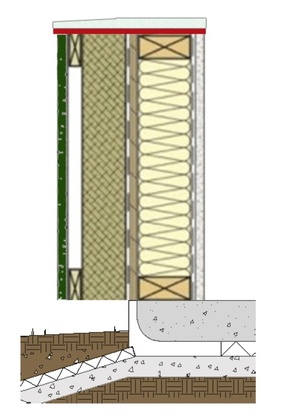
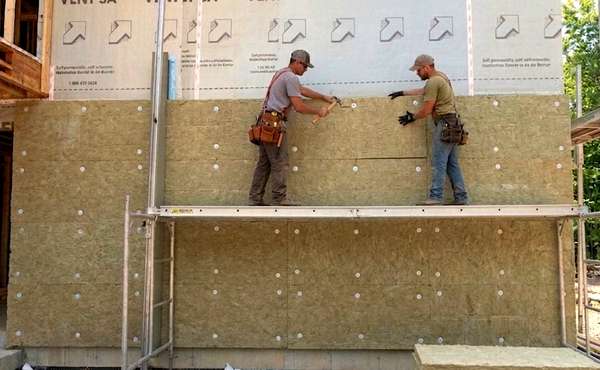
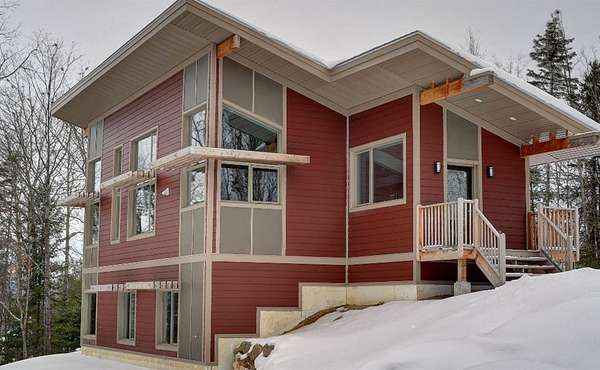
The image below is the 'two thirds rule' wall assembly of the LEED platinum Edelweiss House built by Ecohome in Quebec, Canada, where winters are harsh and cold but summers are hot and humid. Here we built a stud wall with 3.5-inch batts in the stud cavities, vapor control and air barrier at the sheathing, and 8-inches of exterior rigid insulation. We chose mineral wool rigid board insulation as it allows moisture to pass through easily.
How the rule prevents condensation
Condensation occurs when warm, moist air cools down to its dew point temperature. When this happens within a wall assembly, liquid water forms inside the structure, leading to severe issues:
- Mold and mildew growth.
- Rotting of wood framing and sheathing.
- Loss of insulation R-value when batt insulation gets wet.
The role of the dew point
The dew point is constantly moving based on the interior temperature, interior relative humidity (RH), and the exterior temperature. The insulation’s job is to slow the heat loss, which in turn controls where the temperature drops within the wall.
- Without the 2/3rds rule (insulation inside): If most or all insulation is placed in the stud cavity (the interior side of the sheathing), the structural sheathing gets cold quickly. The cold sheathing then becomes the condensing surface - the dew point occurs directly on the wood, causing a catastrophic moisture trap.
- With the 2/3rds rule (insulation outside): By placing two thirds or more of the total R-value on the exterior of the sheathing, the sheathing itself stays warm. It remains above the dew point, preventing the interior moisture vapor from condensing. The wall system can then dry effectively to the exterior.
Calculating the R-value split
Applying the rule requires a quick calculation of the total R-value of your wall assembly (excluding interior and exterior finishes, which have minimal R-value). All professionals should understand that this calculation uses the insulation material's labelled R-value.
Step-by-step calculation for a homeowner's wall
- Determine the R-value of the cavity insulation: For a standard 2x6 wall cavity filled with R-20 mineral wool batts. The interior R-value is R-20 (RSI 3.52).
- Determine the total desired R-value: Say your target is R-30 (RSI 5.28) total.
- Calculate the required exterior R-value:
- Total R-value: R-30 (RSI 5.28)
- Two-thirds (2/3) of R-30 is R-20 (RSI 3.52).
- Apply the rule: To meet the 2/3rds rule, you need R-20 (RSI 3.52) on the exterior of the vapor retarder. Since you already have R-20 (RSI 3.52) in the cavity, this R-30 wall assembly would fail the 2/3rds rule as it stands, because the vapor retarder would be behind the R-20 cavity insulation, which is only 1/3 of the R-60 needed to make the rule work.
The practical application for a conventional 2x6 wall (R-20 cavity) is that you would need to add at least R-40 (RSI 7.04) of continuous exterior insulation to satisfy the 2/3rds rule. Because R-40 is 2/3 of R-60 (R-20 interior + R-40 exterior).
Most builders simplify this by using continuous exterior insulation which automatically moves the sheathing closer to the warm side of the assembly, solving the problem.
Climate zones and applicability
The two thirds rule is primarily a rule of thumb for heating-dominant climates, which include the majority of Canada, the Northern and Mountain US states, the UK, and most of New Zealand and Australia's cooler regions (Learn your climate zone here).
Regional variations and requirements
- North America (US & Canada): This rule is closely related to the prescriptive tables in the International Energy Conservation Code (IECC) and Canadian Building Codes, which specify minimum continuous exterior insulation requirements based on climate zone (e.g., Zone 5, 6, 7). These codes essentially mandate enough exterior insulation to satisfy the 2/3rds principle without explicitly calling it that.
- UK: While the UK's climate is milder, the same physics apply. The focus is often on achieving a low U-value (the reciprocal of total R-value) through thick insulation, which naturally pushes the dew point out.
- Australia and New Zealand: The rule is most relevant in the colder, southern regions (e.g., Tasmania, Victoria, South Island). In warmer climates, the vapor drive can reverse in summer (due to air conditioning), and placing an interior vapor barrier is actually detrimental, requiring a more breathable wall design.
Meeting the rule with continuous insulation
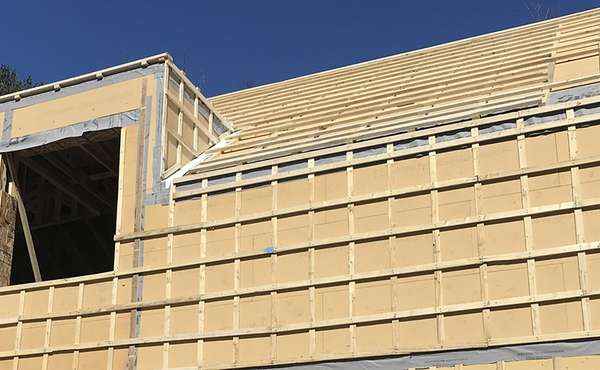
The simplest and most durable way to satisfy the two thirds rule is through the use of continuous exterior insulation (CI), which is insulation placed entirely on the outside of the structural framing (i.e., over the sheathing).
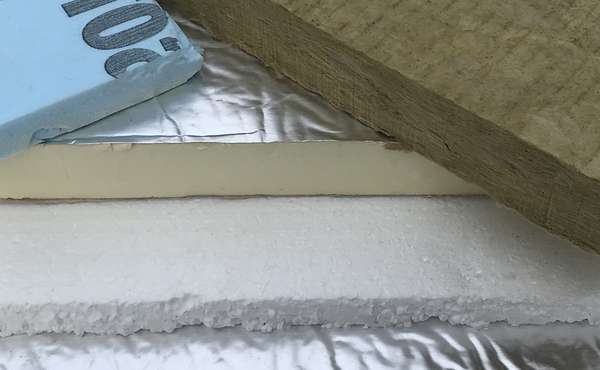
Insulation choices for a durable exterior
Using CI achieves two goals at once: it satisfies the R-value split and it eliminates thermal bridging through
Now that you know more about the two thirds rule, find more info about moisture management and green building techniques in the Ecohome Green Building Guide and these pages below:
-
The difference between air barriers and vapor barriers
-
Choosing the right house wrap / weather barrier, which is best?
-
Smart vapor membranes as a safer alternative to vapor barriers
-
Building science made easy - understanding the basics of durable home design





















Comments (0)
Sign Up to Comment