






Vapor open membranes and smart vapor barriers: what they are and when to use them
Vapor variable membranes, often called smart vapor barriers or vapor open membranes, are one of the most significant advances in modern building science. They look like standard vapor barriers but can allow a certain amount of moisture to pass through. So why would you want that?
Well, there are a few reasons why a 'waterproof' membrane is not always the best solution to prevent moisture build up in walls, as it may be blocking moisture when you don't want it to. By intelligently regulating the flow of moisture vapor, smart membranes offer a sophisticated solution that traditional barriers don't.
This guide provides a comprehensive look at the key aspects of this topic. Below is an overview of the sections we will cover, allowing you to jump directly to the information you need.
- The science of moisture management in walls
- What is a smart vapor barrier and how does it work
- Vapor variable membranes versus traditional vapor barriers
- Regional requirements and climate zone application
- Installation and best practice for professionals
- Choosing the right product for your project
The science of moisture management in walls
Moisture is the number one enemy of building durability, it leads to mold, rot, and structural failure of walls. In any wall assembly, moisture can enter in three primary ways: bulk water intrusion (rain), vapor diffusion (moisture passing through walls), and air leakage. Understanding the distinction between the two ways moisture moves through a wall - diffusion and air leakage - is the foundation of high-performance design.
Understanding vapor diffusion versus air leakage
Vapor diffusion is the slow movement of water molecules through building materials, driven by a difference in vapor pressure (typically high inside to low outside in winter). The rate at which it can pass through a material is measured and identified as a material's 'perm rating', as in how permeable it is to moisture.
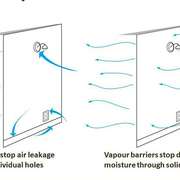
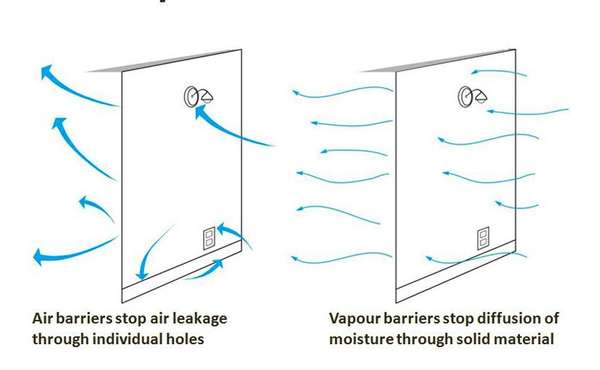
Despite the fact that we talk a lot more about vapor barriers than air barriers, the amount of moisture that passes through a wall by vapor diffusion is vastly overshadowed by how much moisture carried by air leakage.
Air leaks occurs when air (often heavily laden with humidity) moves through holes, cracks, or gaps in the building envelope. A single small hole can move more moisture in one day than vapor diffusion moves through an entire wall section in a whole season. Read more here why air barriers are more inportant than vapor barriers.

What is a smart vapor barrier and how does it work
Smart vapor barriers, or vapor variable membranes, are materials designed to dynamically adjust their resistance to water vapor flow. Unlike traditional plastic sheeting (a Class I vapor barrier that maintains a constant, low perm rating), these membranes respond to changes in relative humidity (RH).
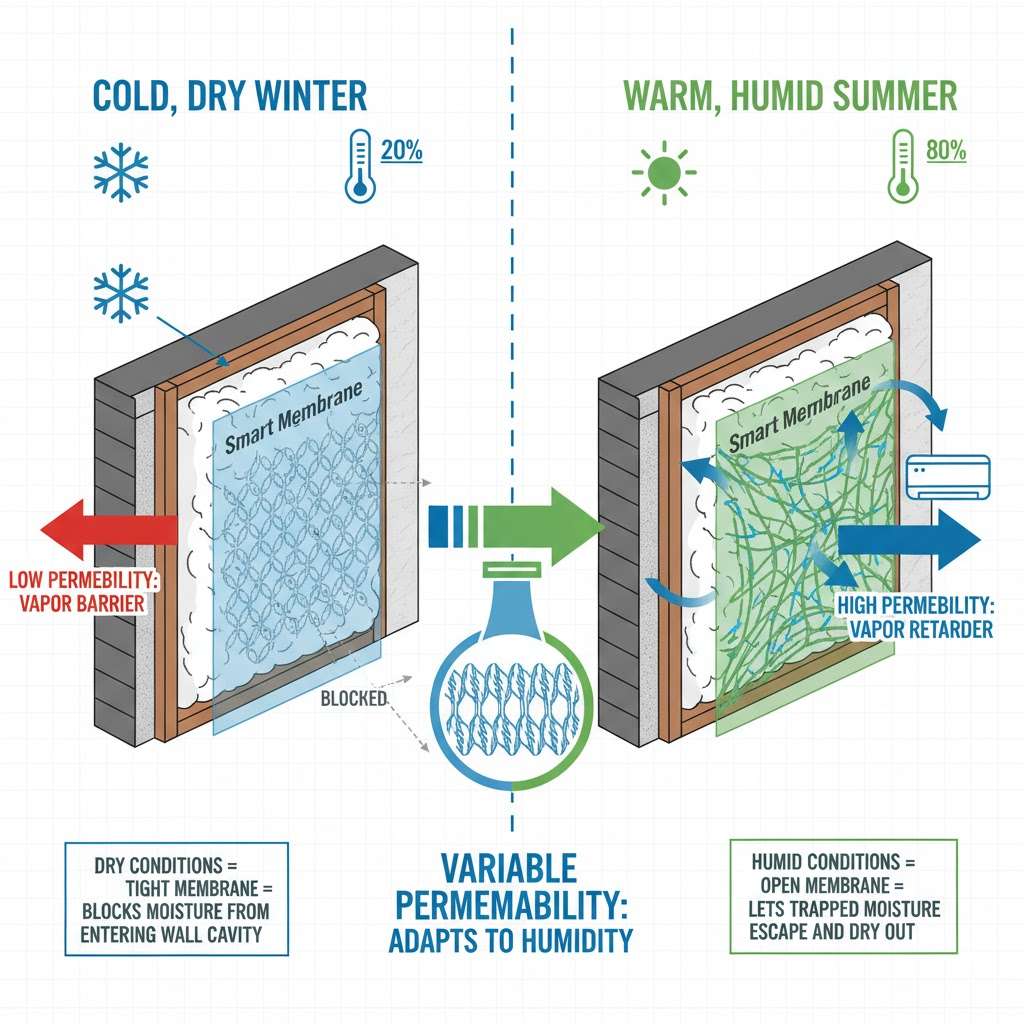
When the relative humidity (RH) within the wall assembly is low, which typically occurs in cold winter months when the membrane's material is dry, the membrane remains closed and acts as a vapor retarder to prevent interior moisture from diffusing into the cold wall cavity where it could condense.
How a vapor variable membrane works
The magic of a smart vapor barrier lies in its molecular structure, which opens or closes depending on the amount of moisture it absorbs. Their perm rating is variable, typically falling in a range of less than 1.0 perm (vapor retarder/barrier) when dry to 10 or more perms (vapor open) when wet.
- In winter: The wall cavity is dry, and the membrane's perm rating is low (Class II or sometimes Class I). This prevents wetting from the warm, humid interior air.
- In summer: The wall cavity becomes warm and humid (perhaps due to moisture trapped in the materials or "reverse vapor drive" from the exterior). The membrane's perm rating increases dramatically (Class III, vapor open). This allows trapped moisture to quickly dry out toward the conditioned space.
Vapor variable membranes versus traditional vapor barriers
The traditional method for moisture control in cold North American climates involves installing a sheet of 6 Mil polyethylene, a classic Class I vapor barrier. This approach is simple, but it has a fundamental flaw: once a Class I barrier is installed, it becomes nearly impossible for any moisture that does get into the wall - whether from a leaky window, construction moisture, or poor air sealing - to ever dry out. This is commonly referred to as trapped moisture being trapped.
By contrast, the variable membrane strategy is a "smart" approach that prioritizes drying potential over absolute prevention. They allow the wall assembly to handle the inevitable and actively manage moisture.
The crucial concept of drying potential
Drying potential is the wall's ability to release accumulated moisture to either the interior or the exterior. Building science dictates that a wall assembly should be able to dry in at least one direction.
In high-performance, super-insulated walls, particularly those using thick exterior rigid foam insulation that limits exterior drying, the smart vapor barrier located on the interior provides the vital back-up drying plane. It allows the wall to dry to the inside when conditions permit, which is a key to durability.
For pros, this means a variable membrane offers a significantly greater margin for error than a traditional monolithic vapor barrier. For homeowners, it translates directly into a more robust and durable home.
Smart vapor membranes on basement walls
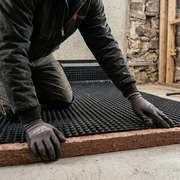
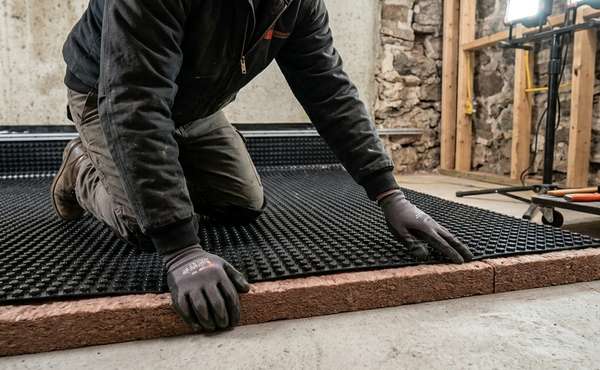
You may have read in other articles here about why you should never put a vapor barrier on the interior of basement walls, and it is for one simple reason - they can't dry to the outside. So all a vapor barrier does in that case is keep moisture where you don't want it.
Builders and building code authorities are smartening up to the problem (albeit slowly) and codes are starting to change, but not fast enough.That's where smart membranes can be a sneaky workaround to not wreck your house when you are forced to install a basement vapor barrier.
Building inspectors that are not up to speed about building science will often refuse to sign off if there is no vapor barrier on basement walls, even though it is a far better way to build. For those particular inspectors, using a smart membrane is a way to appease them but not ruin your walls since it looks exactly like a standard 6-mil poly vapor barrier. Better would be no membrane at all in most cases, but at least a smart membrane will let moisture out when it starts to build up.

Regional vapor barrier code requirements and how they work with climate zones
Vapor control strategies are highly dependent on the climate zone and specific building codes. Using the wrong approach can lead to catastrophic moisture issues. It is important to know that while the United States follows a system based on climate zones, Canada often has more prescriptive, blanket requirements.
North America: The shift from prescriptive to performance-based design
In the United States, the International Residential Code (IRC) classifies vapor retarders into three classes based on their perm rating (Class I being the most restrictive). In US Climate Zones 5 and higher, a Class I or Class II vapor retarder is typically required on the interior side of the wall. Smart vapor barriers are typically Class II/III when dry, making them suitable for use in these cold climates, provided the wall assembly has been modeled for moisture performance.
In Canada, many provincial codes still mandate a prescriptive Class I vapor barrier (polyester) on the warm side of the wall assembly. However, energy-conscious builders are increasingly using advanced climate zone analysis to argue for the use of smart vapor control layers, as they provide superior performance and drying potential in super-insulated homes.
In both the US and Canada, a clear trend is emerging among professionals toward understanding the entire wall system rather than simply meeting the prescriptive code.
Global context: UK, Australia, and New Zealand practices
In the United Kingdom, building practice often favors vapor-open or "breathable" wall assemblies, where the primary control is the exterior weather-resistive barrier (WRB). Smart vapor barriers are used as an interior vapor control and air barrier, specifically in high-performance or Passive House construction, where they manage the potential for interstitial condensation.
In Australia and New Zealand, building codes reflect a greater concern for vapor drive from the exterior, particularly in humid, subtropical regions. Here, smart membranes are often used in reverse-lap applications or on the exterior, acting as a high-perm membrane that allows inward drying but retards outward flow of moisture - a testament to their versatility.
Installation and best practice for professionals
For builders and contractors, the installation of a smart vapor barrier is less about the membrane itself and more about the entire process of air sealing. The best vapor variable membrane in the world will fail if the air barrier is compromised.
Air sealing is the prerequisite for vapor control
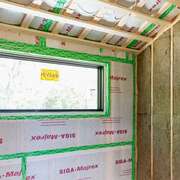
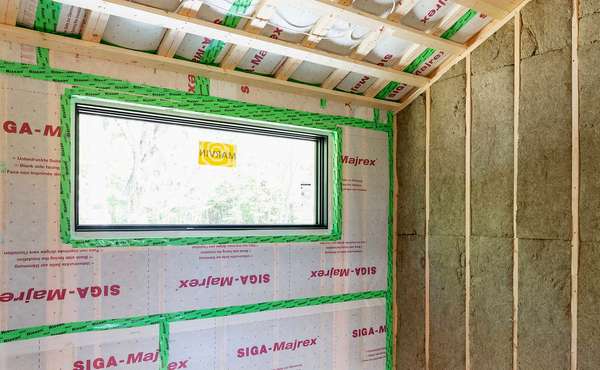
The primary function of a smart vapor barrier is often to serve as the air barrier system. Achieving the highest energy efficiency and moisture control relies on meticulous attention to detail at every seam, penetration, and corner.
- Preparation: Ensure the substrate is clean, dry, and free of dust before application.
- Sealing: All seams must be overlapped by at least 4 inches (10 cm) and meticulously taped with the manufacturer's specified adhesive tape. (Learn here which building tapes are the best)
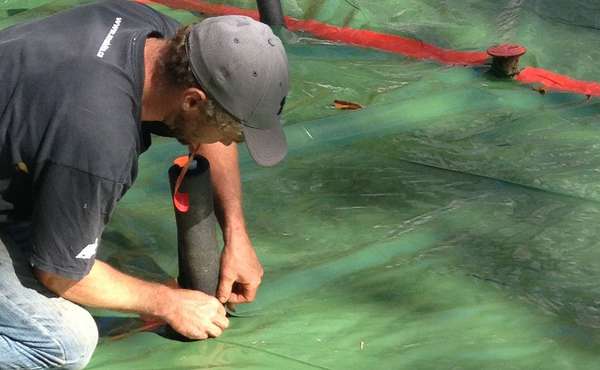
- Penetrations: Use specialized rubber grommets or elastic sealing putties for pipes, wires, and ducts to maintain the air barrier continuity.
- The pro difference: An ideal air change rate (ACH) target is 0.6 ACH or less at 50 Pascals, requiring a blower door test to confirm performance.
Choosing the right product for your project
When selecting a smart vapor barrier, you must look beyond the brand name and focus on the technical specifications. The key data point is the range of the perm rating.
Premium options like ProClima Intello Plus or Siga Majrex typically offer a vast range of variable permeance, often shifting from less than 0.7 perm when dry (Class II vapor retarder) to over 13 perms when wet (vapor open). This large range provides the maximum safety and drying capacity for the wall assembly.
- The Perm rating: The perm rating tells you how much water vapor can pass through the material. Seek a membrane with the widest range of variable perms, ideally moving from a low Class II to a high Class III.
- Cost versus performance: While the initial cost of a smart membrane is higher than polyethylene, its long-term benefit of preventing mold and rot in a high-R value wall makes it a sound investment. A wall assembly with R-40 (RSI 7.04) or greater requires this level of moisture sophistication.
In brief
A vapor variable membrane is not just a replacement for a traditional vapor barrier, it is an upgrade that transforms a static wall component into a dynamic, intelligent system. By acting as a vapor retarder in winter and a vapor-open layer in summer, it provides crucial drying potential that dramatically improves the durability and resilience of modern, energy-efficient homes across all global climate zones.
Now that you know more about vapor open membranes and smart vapor barriers, find more info about moisture management and green building techniques in the Ecohome Green Building Guide and these pages below:
-
Understanding the difference between air barriers and vapor barriers
-
How walls work - Building science made easy video guide
-
How to build a basement so it won't go moldy - best basement wall assembly
-
Buy weather barriers (WRB), vapor barriers and smart membranes online




















Comments (0)
Sign Up to Comment