




Root cellar construction - A guide to storing summer fruit and vegetable harvests
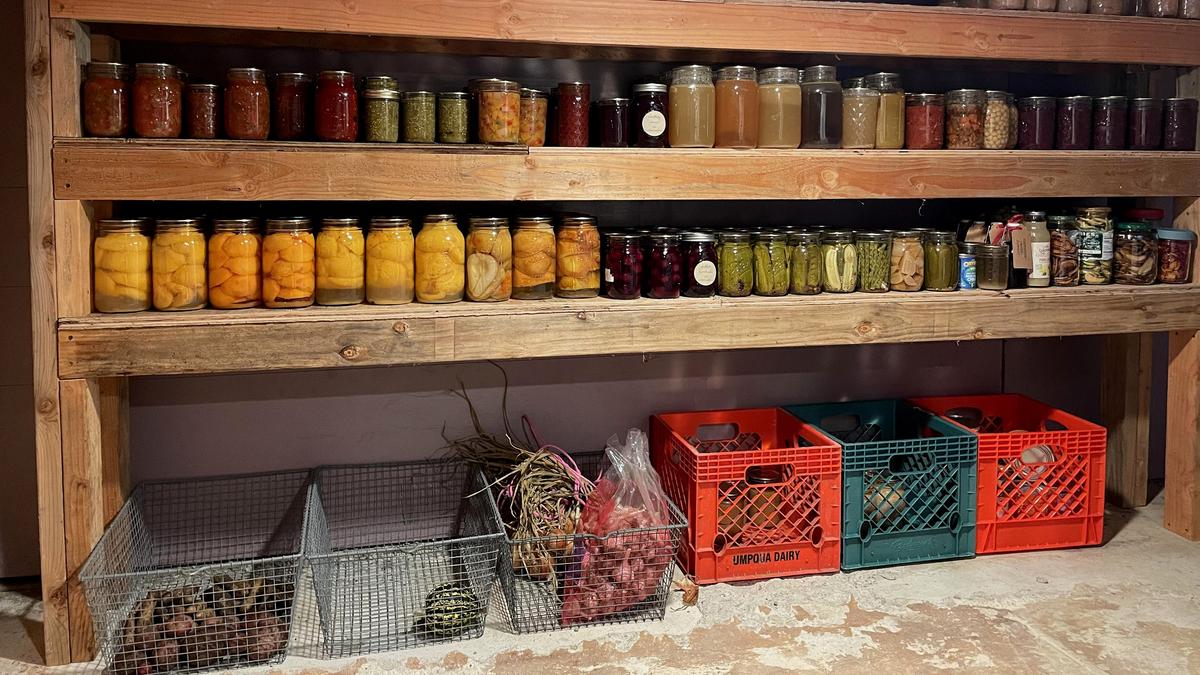
As the price of groceries lately is high and seems rather unpredictable, having a smart food storage method in your home can help reduce your monthly grocery bills. Building a modern root cellar or cold storage room in your basement isn't only for the gardeners among us that grow their own food in backyards, it can help all of us reduce monthly grocery bills.
Case in point - the day after Halloween, the pumpkins at my local grocery store were going for 97 cents. That's a third of the price of a squash and five times bigger.
So as an affordable way to feed your family, buy stuff when it's cheap and store it. You could easily knock 25% off your monthy food budget with smart shopping habits and a keen eye for sale prices, as long as you have a way to keep it fresh.
Done correctly, a root cellar cold storage room can easily maintain ideal, stable temperatures and humidity levels with zero reliance on mechanical refrigeration, relying entirely on the constant cool temperature of the earth. This guide outlines the essential building science principles for durability, design considerations, and construction techniques required to successfully convert an existing basement space into a high-performance root cellar.
This guide provides a comprehensive look at the key aspects of this topic. Below is an overview of the sections we will cover, allowing you to jump directly to the information you need.
- Understanding root cellars: the science of passive storage
- Key design criteria for a root cellar
- Choosing the ideal location and sizing the room
- Insulation and air sealing: the thermal barrier
- Moisture and ventilation: achieving ideal conditions
- Finishing materials: choosing non-toxic and durable surfaces
- Underground root cellar
- In brief
Understanding root cellars: the science of passive storage
The construction of a root cellar needs to be carefully planned and executed, as the ideal conditions (cold and humid) are the opposite of what is good for a house, which would be warm and dry.
The ideal conditions for storing root vegetables in a cold room is to maintain a temperature range somewhere between 32°F and 40°F (0°C and 4.5°C), as well as high relative humidity levels around 85% to 95%. These conditions slow the respiration and ripening process of most produce, which allows them to remain fresh for months.
The primary energy source for cold storage room cooling is the surrounding earth, which maintains a relatively constant temperature below the frost line throughout the year.
The key to success is isolating this cold storage room from the conditioned, warm space of the main house while allowing it to draw cool, stable temperatures from the concrete foundation walls and floor. This requires a calculated approach to insulation, air sealing, and ventilation.

Key design criteria for a root cellar
The two most critical factors determining the performance of your root cellar are the temperature differential and moisture management. Here are the condtions needed to ensure food safety and structural durability.
Temperature requirements:
Maintaining a stable temperature just above freezing is essential. This is achieved by:
- Thermal isolation: Complete insulation and air sealing of the room from the heated basement and the rest of the house.
- Direct contact: Allowing one or more walls and the concrete floor to remain uninsulated on the interior side to couple the room with the stable, cool temperature of the earth.
Moisture management and humidity:
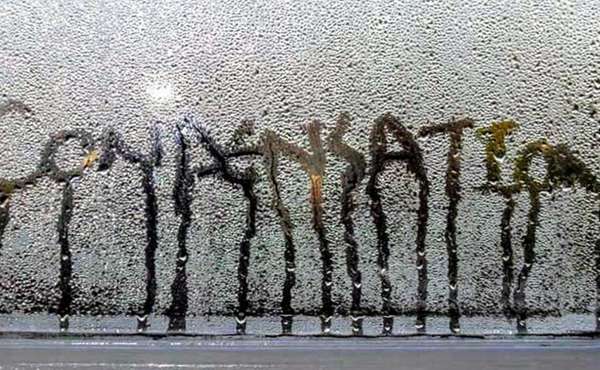
High humidity is necessary to prevent produce from drying out, but this must be achieved without creating moisture-related problems like mold or rot. Basements are inherently damp environments, but the root cellar design must manage this moisture effectively.
This typically involves ventilation and the use of moisture-tolerant insulation materials. For professionals, understanding the interaction between the cold concrete and the warmer, humid air from the house (which can lead to condensation) is paramount.
Choosing the ideal location and sizing the room
The location of the cold storage room is the single biggest design decision, as it dictates the thermal performance.
Ideal placement for maximum cooling
The best location is in the coldest corner of the basement, which is usually:
- Against an exterior foundation wall: This allows the root cellar to benefit from the constant, cool temperature of the earth surrounding the foundation.
- On the north side of the house (in the northern hemisphere): This avoids any potential solar heat gain that could warm the foundation wall.
- Away from heat sources: Position the room away from furnaces, water heaters, heat pumps, or any supply or return ducts of the main heating system.
Sizing for the mixed-use family
For homeowners, the size depends on consumption habits, but a space between 30 and 50 square feet (2.8 and 4.6 square metres) is often sufficient for a family to store a season's worth of produce. For professional builders, designing a space that is flexible and scalable - allowing for shelving and easy access - will provide maximum value. Remember to factor in a buffer space for the necessary air circulation.
Insulation and air sealing: the thermal barrier
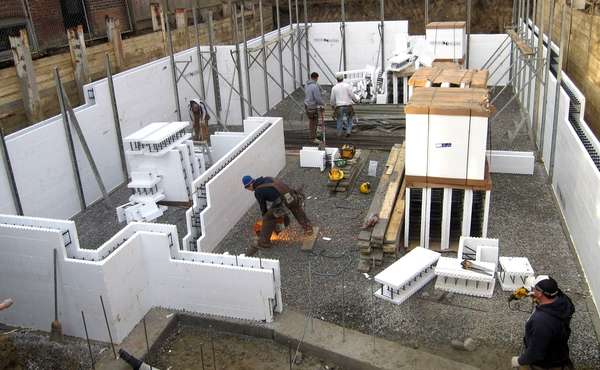
The biggest challenge in building a basement root cellar is creating a thermal break between the warm basement and the cold room while maintaining the room's connection to the cool earth.
Insulating the separating walls and ceiling
The interior walls separating the root cellar from the heated basement, as well as the ceiling, must be fully insulated and air-sealed to minimize heat transfer.
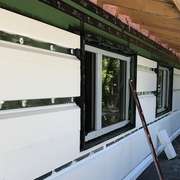
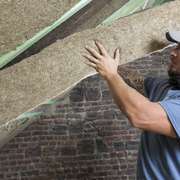
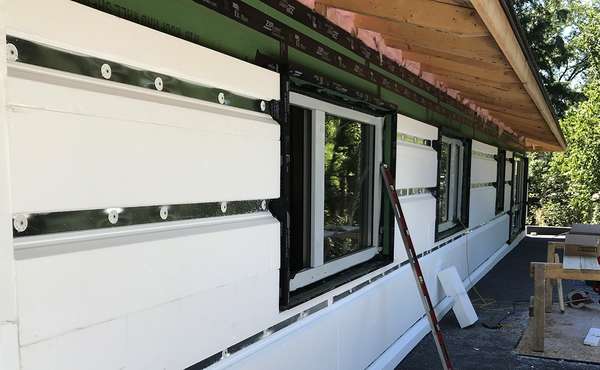
Walls: We recommend using mineral wool batts (stone wool) for their excellent moisture tolerance and fire resistance. Install rigid foam boards - extruded polystyrene (XPS) or expanded polystyrene (EPS) - directly against the concrete on the basement side if you are finishing the surrounding basement area. For the root cellar itself, the dividing walls and ceiling should use standard wood-frame construction filled with insulation.
Pro tip: For those building a new partition wall, using 2 inches (5 cm) of rigid foam on the warm side of the framing can serve as an effective thermal break and vapor control layer for the entire assembly.
Ceiling: The ceiling should be insulated to a high R-value, such as R-20 or R-30 (RSI 3.5-5.3), using mineral wool or dense-packed cellulose.
Air barrier and vapor control
Contrary to the commonly held opinion that insulation is solely responsible for reducing heat loss, air leakage is a significant cause of heat and moisture transfer in homes.
Air sealing first: Use a high-quality building tape or sealant to ensure an airtight sea l at all joints, seams, and penetrations. The air barrier is more important than the vapor barrier for stopping moisture transfer. Reaad more here about the difference between air barriers and vapor barriers.
Vapor control: In cold climates (North America), the root cellar's concrete walls and floor will be colder than the interior air of the basement. Therefore, a vapor barrier should never be installed on the interior side of a basement wall or slab, as this traps moisture and leads to mold.
For the interior walls and ceiling separating the cold storage room from the main house, a smart or vapor-variable membrane may be a good choice, but a properly air-sealed assembly is the best defense.
The Ecohome guide on how to build basements that won't go moldy explains how trapped moisture is the leading cause of basement mold, and how vapor barriers intended to keep walls dry actually keep them wet and cause walls to rot.
The non-insulated interior walls and floor
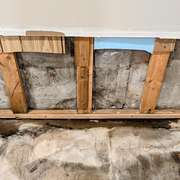
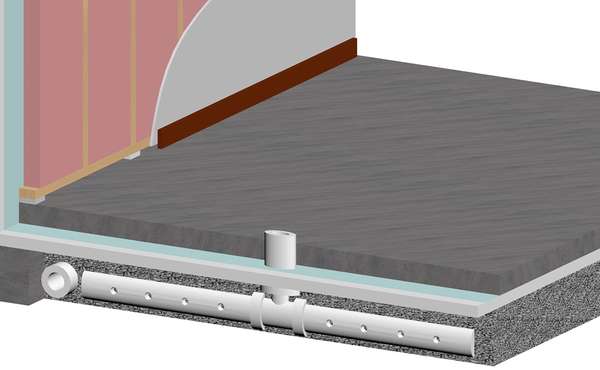
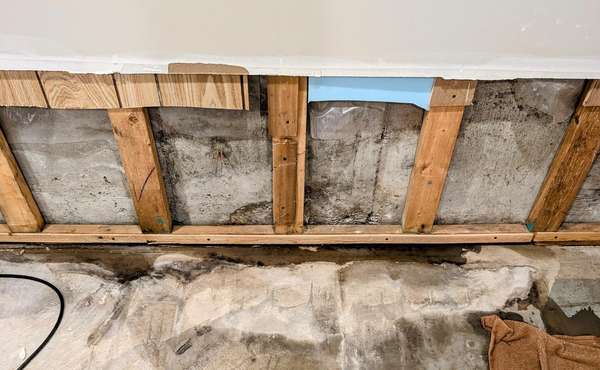
Do not insulate the root cellar's concrete floor or the exterior foundation walls that are below grade. These surfaces are the thermal mass connection to the earth and must be allowed to exchange temperature with the room to keep it cool.
Moisture and ventilation: achieving ideal conditions
Ventilation is the natural mechanism for regulating both temperature and humidity in a root cellar.
Passive air exchange system
A passive system uses two ducts that run to the exterior of the house - one low (intake) and one high (exhaust) - to create a gentle, natural air exchange driven by the stack effect.
- Intake vent (low): A 4-inch (10 cm) insulated duct, typically placed within a few inches (cm) of the floor. It draws in cool, fresh air from outside.
- Exhaust vent (high): A 4-inch (10 cm) insulated duct, placed near the ceiling. It vents stale, warmer air outside.
Both vents must have a screen to keep pests out and a damp-proof, insulated damper or sliding cover that can be closed during extreme weather or when the outside temperature is too warm.
Maintaining high humidity
While the ventilation system manages air quality and mild temperature swings, humidity is best regulated by adding a water source.
- Gravel floor: Laying 2-3 inches (5-7.5 cm) of gravel over the concrete slab and keeping it consistently damp will create the necessary high humidity.
- Water tub: A small, open container of water can be placed on the floor or shelving.
Finishing materials: choosing non-toxic and durable surfaces
Since the root cellar will operate at high humidity, mold-resistant, non-toxic materials must be used for all interior surfaces and shelving.
- Walls: The interior side of the new partition walls should be finished with cement board or a similar moisture-tolerant material, not standard drywall. If you must use paint, choose a low-VOC, mold-inhibiting formulation.
- Shelving: Wire shelving or slatted shelves made from a durable, rot-resistant wood like cedar or treated lumber (ensuring it's rated for food contact) are ideal, as they allow for maximum air circulation around the produce. Never use solid shelving, which can trap moisture.
- Door: The root cellar door must be insulated and weather-stripped to create a perfect air seal between the cold storage room and the warm basement. A repurposed exterior door is an excellent choice.
If you notice white powder or efflorescence on your concrete, it is a sign of moisture migration that might require interior basement moisture control before you install any insulation.
Underground root cellar
If you want to try your hand at storing vegetables but not take on a big project to build one in your basement, a quick and easy DIY outdoor root cellar is simple to make.
If you dig a hole and bury a large bin such as a garbage can, you can store roots outdoors for the winter and see if its something you would make use of. In the summer months you'd need to dig a deep hole big enough to hold a bin but also that you'd be able to access without arms as long as an orangutan.
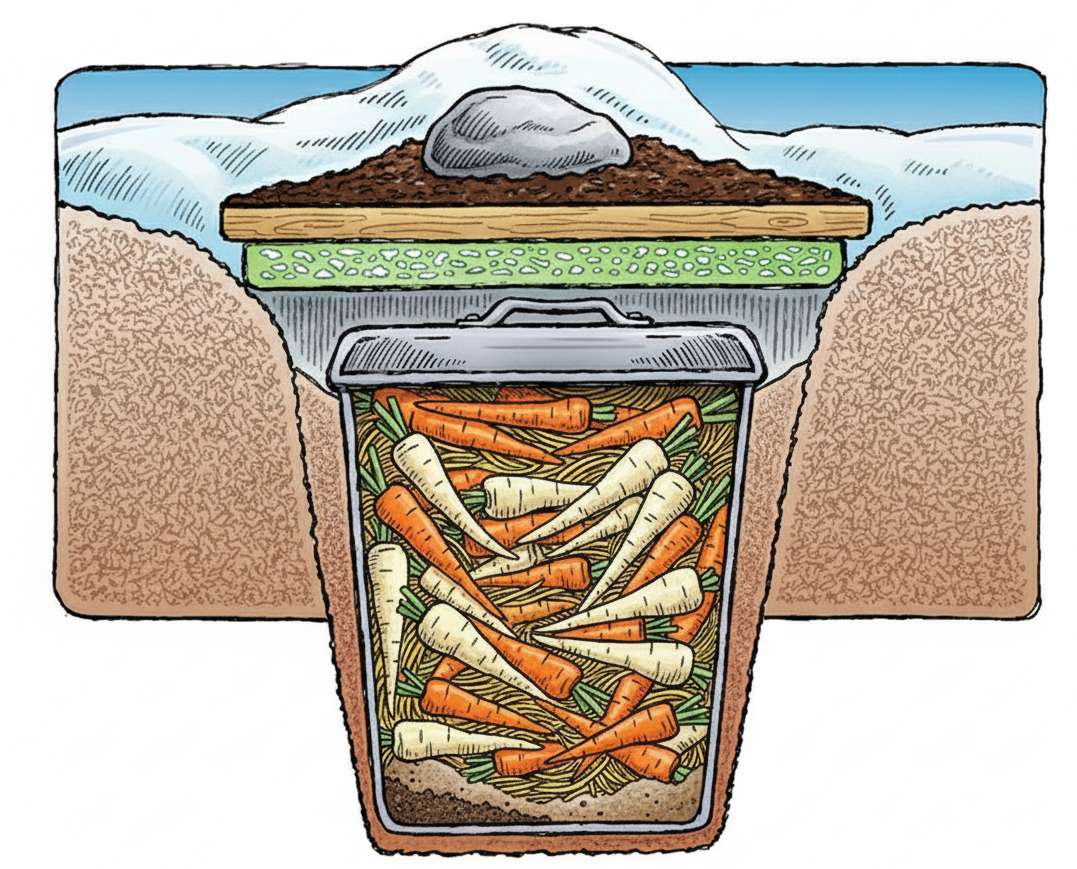
The ideal conditions would be the same as listed above - just above freezing and humid - so how deep and how well insulated will vary depending on your climate. It would no doubt be cold enough, the key is to be sure it doesn't go below zero.
Insulate the sides as well as including a wide top cover of rigid foam insulation will prevent frost from ruining your food cache.
In brief
Building a root cellar in your basement is a fantastic sustainable building project that requires a strategic approach to building science. The critical success factors are complete thermal isolation from the heated house, a non-insulated thermal connection to the cool earth via the foundation, and a passive ventilation system to manage temperature and humidity. By using moisture-tolerant materials and prioritizing air sealing, homeowners and professionals can create a reliable, energy-free preservation space that promotes food security and healthy living.
Now that you know more about root cellars and cold storage rooms, find more info about insulation & green building techniques in the Ecohome Green Building Guide and these pages below:
-
How much insulation does a basement need?
-
The definitive guide to smart vapor barriers and vapor open membranes for homeowners and professionals
-
Why are basements moldy? How to fix or prevent a moldy basement
-
Choosing between an HRV and an ERV

Comments (0)
Sign Up to Comment