


The pursuit of a sustainable and fire-safe building envelope involves weighing complex trade-offs between different rigid insulation boards. While fossil-fuel-based materials like XPS and EPS face scrutiny for their embodied carbon and chemical blowing agents, they remain dominant for valid performance and cost reasons. For example, some foam products, like Expanded Polystyrene (EPS), can consist of as little as 3% plastic resin, primarily encapsulating air.
At the same time, the "natural" alternatives, such as wood fiber and mineral wool, present their own set of questions regarding production energy, binder chemicals, and raw material sourcing. This guide focuses on the definitive alternatives: rigid foam-free insulation boards that are changing the high-performance building landscape, and evaluates them in this broader context.
This guide provides a critical look at the key aspects of this topic. Below is an overview of the sections we will cover, allowing you to jump directly to the information you need.
- Why builders consider foam-free rigid insulation boards
- Understanding the options: mineral wool and wood fiber
- Head-to-head comparison: performance and sustainability
- Applications: choosing the right board for the job
- Regional availability and cost
- In brief
The case for foam-free rigid insulation boards
For builders and homeowners committed to green building principles, the shift to foam-free rigid insulation is a move toward lower embodied carbon, superior fire safety, and a more breathable building envelope. Traditional foam boards, particularly XPS - of which actual Styrofoam is one type of XPS extruded foam - use HFC blowing agents with extremely high global warming potential (GWP), which can be thousands of times worse than carbon dioxide, and can have performance that degrades over time, which is not something many Polyiso and XPS foam manufacturers want us to know!
The white foam with the small beads is - suprisingly to most North Americans, NOT Styrofoam - but is EPS foam and is significantly less environmentally problematic. The alternatives to rigid foam insulation then, made primarily from natural stone or wood fibers, can dramatically reduce the ecological footprint of the home’s thermal layer - at a cost.
Beyond embodied carbon, these materials offer key performance advantages. Foam-free boards are generally vapor-open, meaning they can manage and regulate moisture within the wall assembly. This is a critical building science principle for stick-built homes that reduces the risk of long-term mold, rot, and structural damage, making them a preferred choice for deep energy refits of older homes or for use in high-humidity regions.
Rigid insulation board alternatives to foam
When selecting a rigid, foam-free product, you are typically choosing between two primary contenders and a few more 'fringe' products that work great but are likely less accessible. Other types of rigid insulation offer the same benefits of continuous insulation, though different types will have different pros and cons and applications.
Mineral wool rigid board
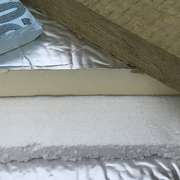
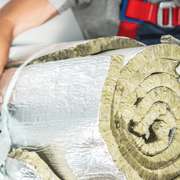
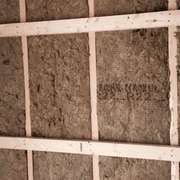
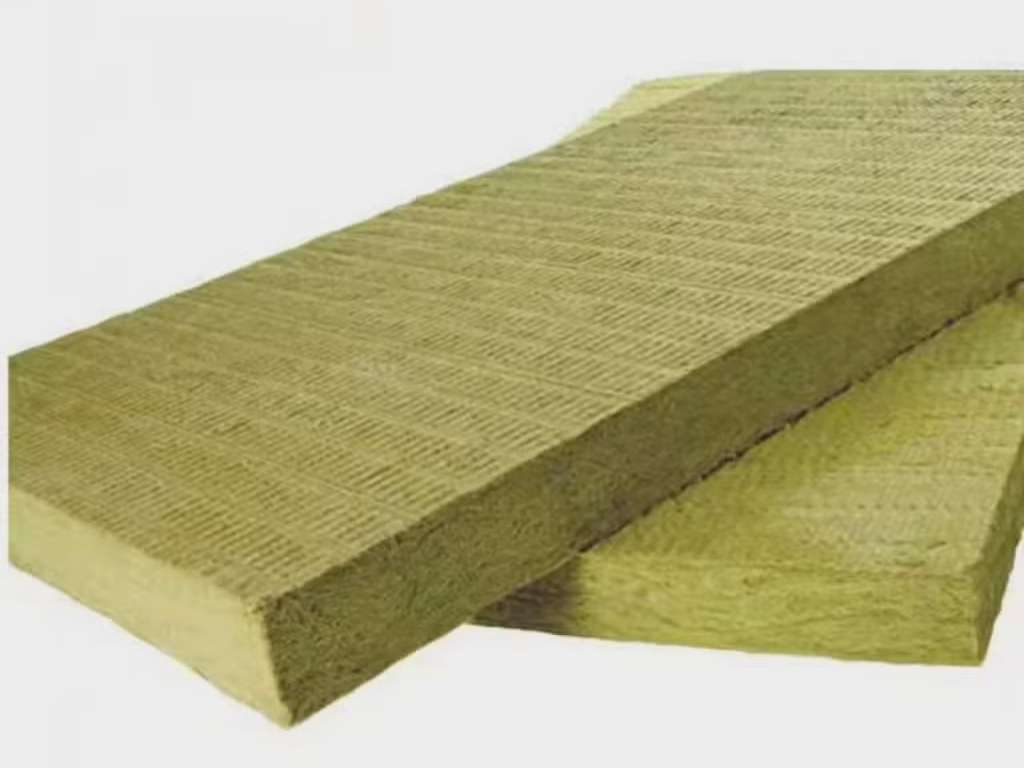
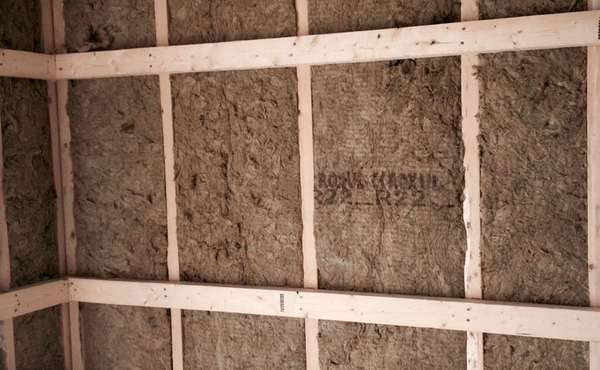
Mineral wool rigid board (also known as stone wool or rock wool), is an exceptionally robust, high-performance insulation made from spinning molten natural rock (basalt) and recycled industrial slag into dense, non-combustible boards. It is the gold standard for projects prioritizing high R values, fire safety and moisture resilience.
Key characteristics and performance:
- Composition: Made from molten natural rock (basalt) and recycled industrial slag, bound into dense, non-directional fibrous boards.
- R-Value: Provides a high thermal resistance of R-4.0 to R-4.2 per inch, giving it a slight thermal advantage over most organic fiber boards.
- Moisture management: The material is naturally hydrophobic (water-repellent) and dimensionally stable. It does not absorb moisture, maintaining its full R-value even when briefly exposed to water.
- Fire safety: Mineral wool is naturally non-combustible (Class A1 Euroclass rating), providing the highest possible fire resistance. It acts as a fire-stop and will not burn or release toxic smoke. Read more here on fire resistant constrution methods and home safety plans.
- Sustainability: Made from abundant, natural materials and recycled content (slag). However, its manufacturing is extremely energy-intensive, requiring temperatures over 1500°C (2700°F) to melt the rock. This process has a significant carbon footprint, which must be weighed against the product's benefits. While its extreme durability and lifespan can offset this initial impact by reducing replacement needs, the upfront environmental cost is a key consideration in a holistic assessment.
- Acoustic performance: Due to its dense, non-directional structure, it provides superior acoustic performance and is very effective at dampening airborne and impact noises in homes.
- Air quality: Inherently non-toxic and free of harmful VOCs; its density aids in limiting air movement.
- Binders: Mineral wool is distinct because it is not a natural fiber, but rather a spun mineral product. Traditionally, the fibers were held together with phenol-formaldehyde (PF) resins, which raised air quality concerns. Modern mineral wool products are now typically bonded with a plant-based, bio-polymer resin. This shift has eliminated added formaldehyde and significantly improved the health profile and handling characteristics of the material.
- Applications: Excellent for exterior continuous insulation, interior basement walls, walls, floors, ceilings, and flat/sloping roofs.
Regional availability: Rigid mineral wool is widely available globally and easily sourced in North America (US and Canada), the UK, and Europe through major building supply retailers and national manufacturers.
Hemp fiber rigid board
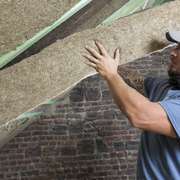
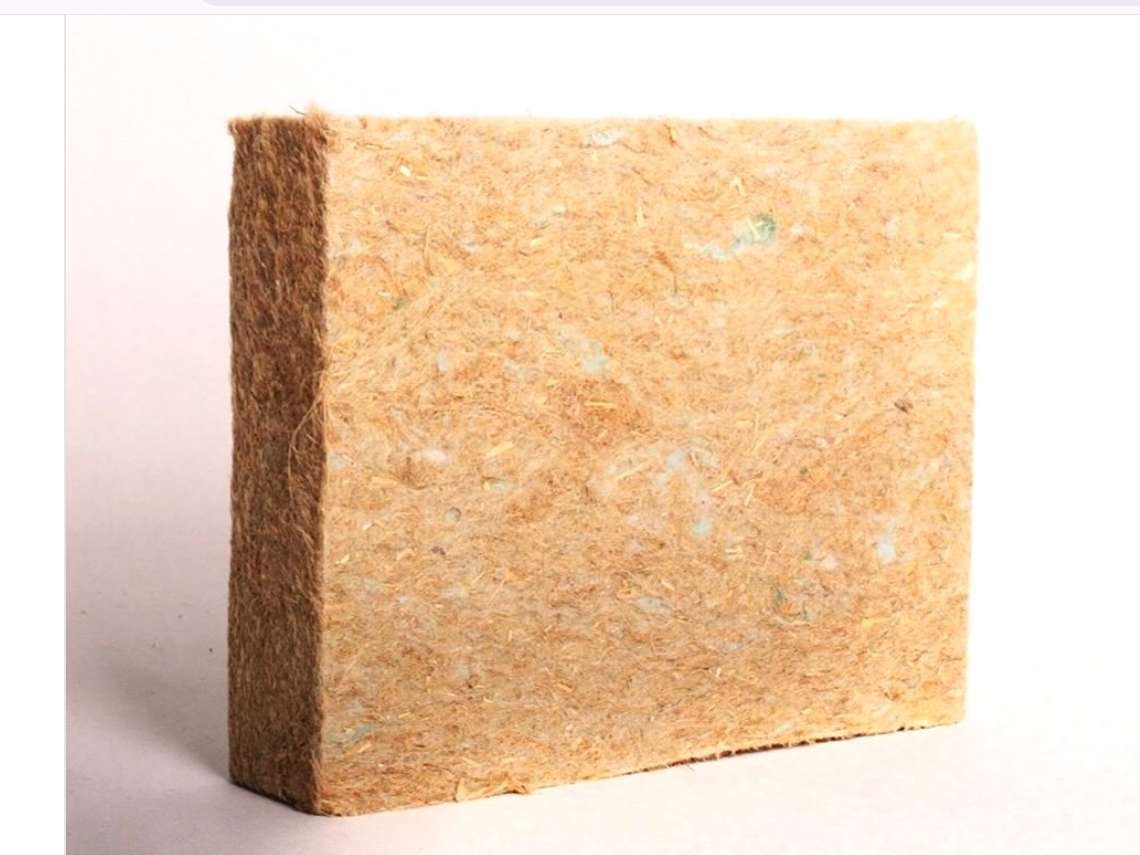
Hemp fiber insulation is an exciting carbon-negative entry into the foam-free market. Sold as a rigid batt, it is made primarily from natural hemp fibers. It is a healthy, non-toxic, and biodegradable alternative to conventional fiberglass and foam, making it highly appealing for eco-conscious construction.
Key characteristics and performance:
- Composition: Composed of approximately 90% natural hemp fibers and a small percentage of polymer or textile binder.
- R-Value: Offers high thermal performance, typically around R-3.7 per inch, comparable to both fiberglass and mineral wool.
- Moisture management: It is hygroscopic and vapor-permeable, meaning it can manage and regulate moisture within the wall assembly without losing its insulating properties, helping to prevent condensation and mold growth.
- Fire safety: While not fireproof, the product is treated with non-toxic, bio-based fire retardants, meeting Class-E fire resistance standards with low heat and smoke release rates. It should be installed between fire-resistant wall boards.
- Sustainability: Hemp is a fast-growing, renewable crop. The final product is certified as a bio-based material and is carbon-negative, sequestering more CO2 than is emitted during its production. It is also safe to handle without protective gear.
- Acoustic performance: The dense, fibrous structure provides excellent sound dampening qualities.
- Air quality: VOC-free, non-toxic, and safe to handle, promoting high indoor air quality.
- Binders: These high-density, load-bearing hemp boards require more robust binders than flexible batts, but they avoid the lime mixture used in hempcrete. The binders used for these panels fall into two main categories:
- Bio-based thermoset resins: These are non-toxic, bio-based binding agents that are chemically activated under heat and pressure to create a durable, rigid structure. Common components used in these thermoset adhesives are often derived from natural compounds like citric acid and glycerol.
- Mineral composites: Some highly rigid, non-lime panels and composite blocks use specific mineral binders to achieve a hard surface and moisture resistance. The most notable example is Magnesium Oxychloride, often referred to as Sorel cement.
- Applications: A 1-to-1 replacement for conventional batts, suitable for walls, floors, ceilings, and attics.
Regional availability: The primary manufacturer (HempWool) is Made in the USA and widely distributed across North America, with a growing number of warehouse locations. Other hemp insulation product manufacturers also operate in North America (e.g., Nature Fibres in Canada).
Expanded cork insulation board
Expanded cork board is a 100% natural, rigid insulation made from the bark of the Cork Oak tree. The cork granules are steam-heated and compressed, causing the granules to expand and release suberin, a natural resin that acts as a binder. This process creates a stable, dense, dark-brown board without the need for any synthetic glues or chemicals.
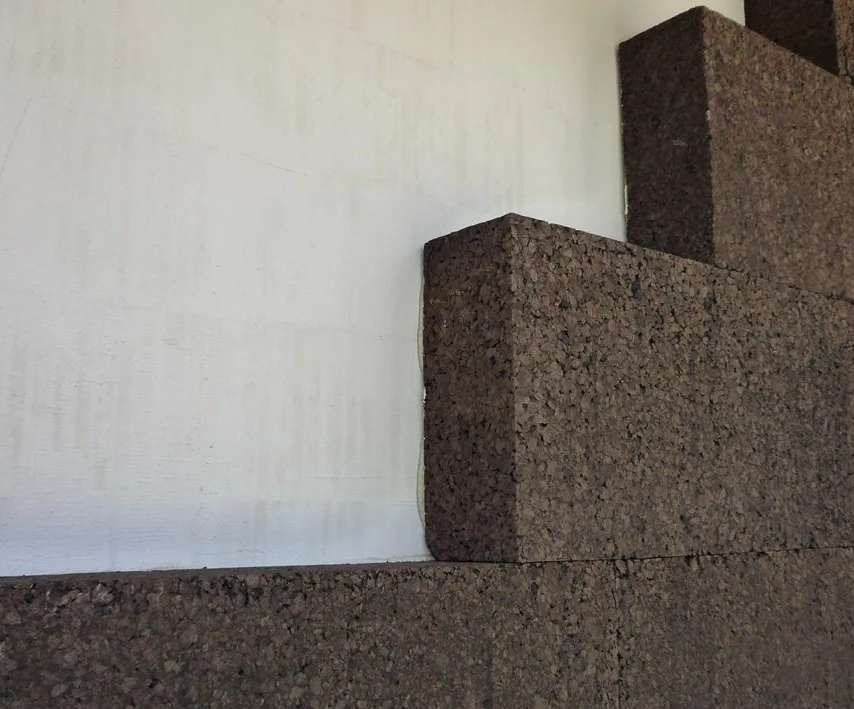
- Composition: 100% natural material made from the bark of the cork oak tree. Expanded cork boards are produced by steam-heating cork granules, which causes the natural binder (suberin) to fuse the material without the need for added glues or chemicals.
- R-Value: Offers high thermal performance, typically ranging from R-3.6 to R-4.2 per inch, a stable value that does not degrade over time.
- Moisture management: Excellent moisture-resistance due to the natural suberin and closed-cell structure. The material is vapor-open (breathable) yet impermeable to liquid water, actively resisting mold and mildew growth.
- Fire safety: Cork is naturally fire-resistant. It burns very slowly, achieving Euroclass B or E ratings (flame retardant) without the need for toxic additives, and most importantly, does not release toxic gases when exposed to fire.
- Sustainability: Considered a leading sustainable choice. The bark is harvested every 9-10 years without harming the tree, promoting forest health and biodiversity. It is often certified as a carbon-negative material and is fully recyclable.
- Acoustic performance: Provides superior acoustic damping qualities due to its dense cellular structure, making it highly effective at reducing both airborne sound and especially impact and vibration noise (ideal for floors).
- Air quality: Promotes high Indoor Air Quality (IAQ). It is non-toxic, hypoallergenic, and does not off-gas any Volatile Organic Compounds (VOCs) or micro-dust.
- Binders: Cork insulation boards are unique because they are entirely self-binding. The process involves steam-baking natural cork granules at high temperatures. This causes the cork's natural resin, called suberin, to melt and expand, permanently fusing the granules together. No other glues, binders, or synthetic additives are needed, making it a 100% pure, natural material. For installation, dust exposure is generally limited to fine cork particles, which are considered inert and non-toxic.
- Applications: Extremely versatile; suitable for external continuous insulation (facades), internal walls, ceilings, roofs, attics, and is highly valued as a flooring underlay for thermal and acoustic isolation.
Regional availability: The European market is highly mature, dominating global cork usage due to the proximity of major cork oak forests (over 80% of global cork comes from Portugal and Spain) and its long-standing adoption in sustainable and energy-efficient construction.
In North America, cork insulation is gaining popularity but is typically imported, making it a specialist product. Rigid cork insulation boards are primarily sourced through online vendors and specialized distributors (e.g., Jelinek Cork Group, ThermaCork) and is considered a premium, higher-cost option for green building projects in the USA and Canada.
Grass fiber rigid board (No, that's not a spelling mistake!)
The rigid grass fiber insulation board (Gramitherm®) is a more recent development - a bio-based product made from underused grass fibers, offering a highly sustainable, renewable alternative. This material is designed for both thermal and acoustic performance, focusing heavily on ecological benefits.
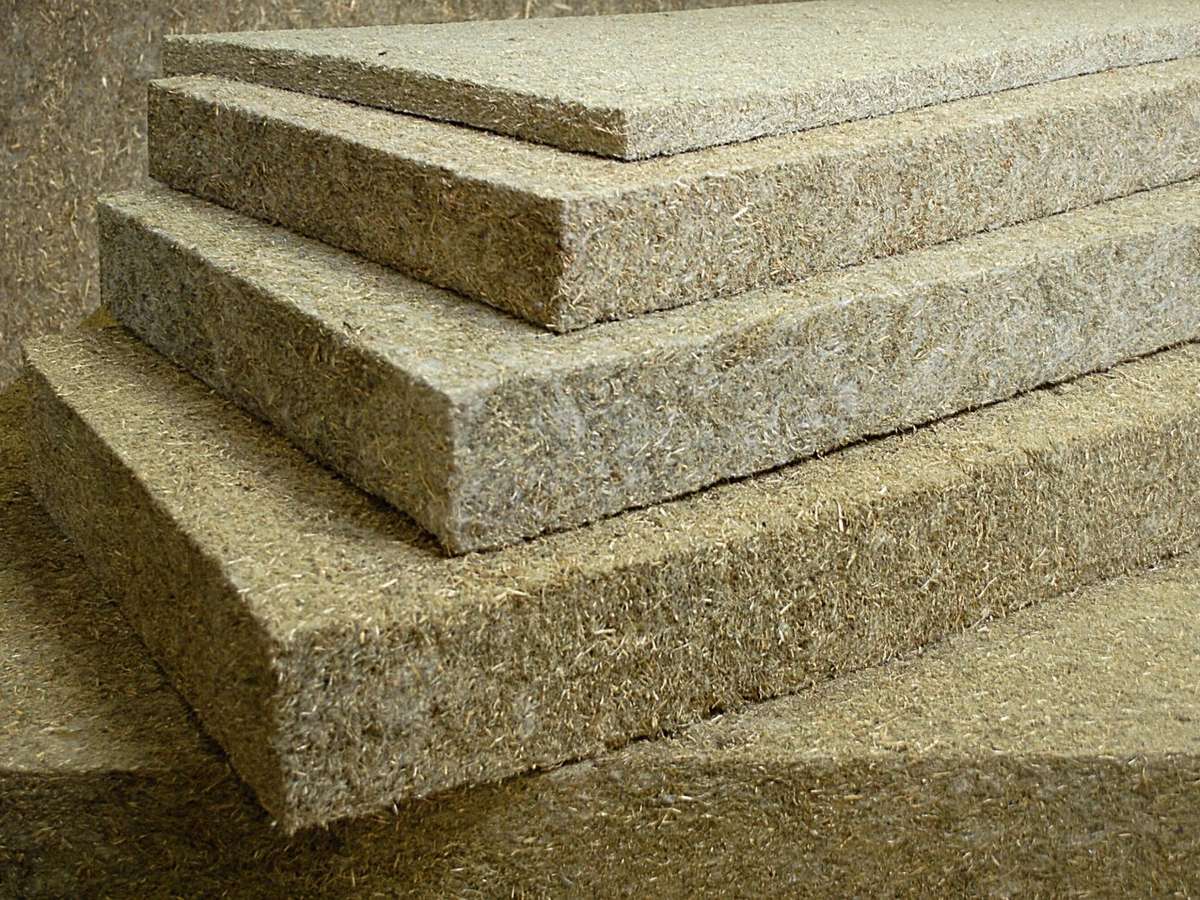
Key characteristics and performance:
- Composition: Bio-based panels made from underused grass fibers, often sourced and processed locally.
- R-Value: Offers high-performance thermal insulation that effectively manages both cold protection and blocking summer heat.
- Moisture management: Promotes a healthy indoor environment by regulating moisture through efficient hygrothermal balance (absorbing and releasing moisture).
- Fire safety: Fire rating is not the primary feature, but its natural composition provides a safe, non-toxic material profile.
- Sustainability: Excellent environmental profile, boasting very low embodied carbon (sometimes referred to as carbon negative) and is fully recyclable.
- Acoustic performance: Provides effective performance for reducing noise.
- Air quality: Helps maintain healthy Indoor Air Quality due to very low VOC emissions.
- Binders: Manufacturers typically use natural or non-toxic binders such as potato starch or a minimal amount of polyester / jute fibers to hold the panel structure together. This results in a product that remains largely natural while achieving necessary panel rigidity.
- Applications: Suitable for partitions, walls, floors, ceilings, attics, roofs, and dedicated acoustic insulation.
Regional availability: Distribution for Gramitherm® is primarily focused on Europe, with a wide network of distributors and installers available across dozens of countries (e.g., Germany, France, Belgium, UK). It is not currently widely distributed in North America.
Wood fiber rigid board
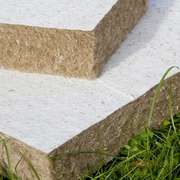
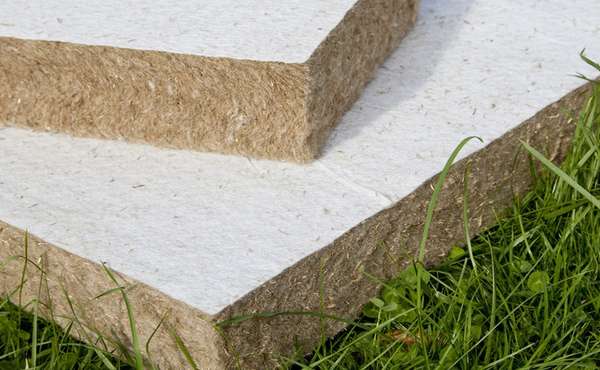
Rigid wood fiber insulation is a preferred bio-based solution in many European markets, made from wood chips and shavings (a forestry by-product) bound with natural starches or resins. It is the clear choice for projects where minimizing embodied carbon and promoting natural breathability are the top priorities, but the different brands and manufacturers products can vary considerably in characteristics.
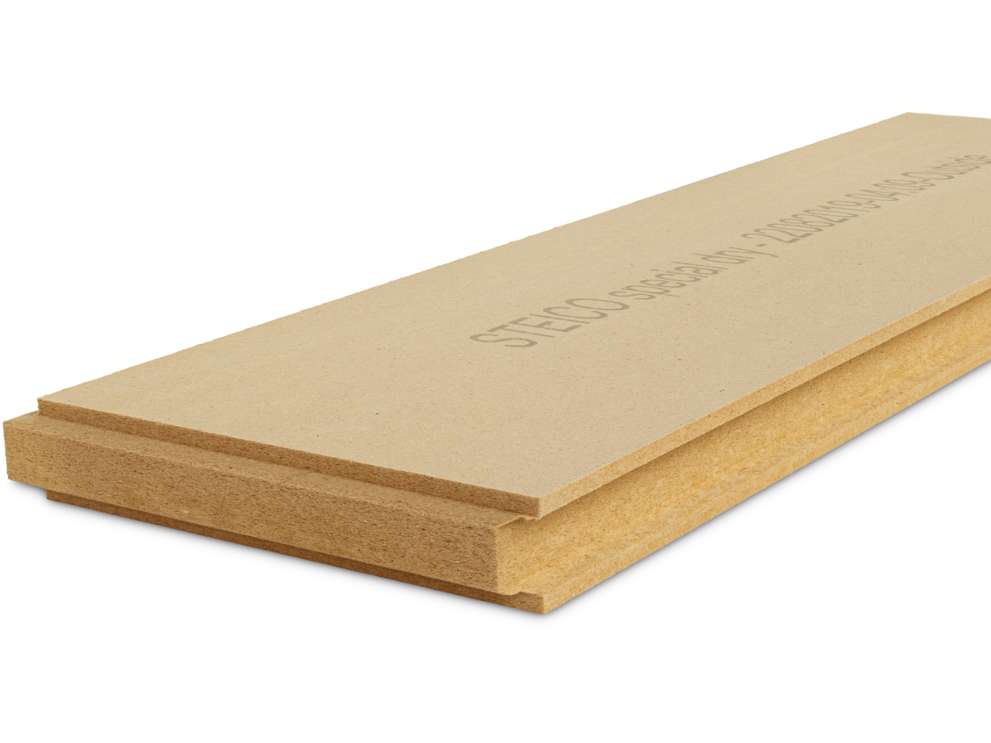
Key characteristics and performance:
- Composition: Made from wood chips and shavings (a forestry by-product) bound with natural starches or resins into dense panels.
- R-Value: Offers excellent thermal resistance, typically ranging from R-3.6 to R-3.9 per inch, a strong competitor to traditional materials.
- Moisture management: This insulation is highly vapor-open and hygroscopic. It can absorb and release moisture, actively helping to regulate humidity within the wall assembly and preventing condensation.
- Fire safety: Wood fiber is combustible (typically B/C Euroclass rating) but forms a char layer when exposed to fire, which slows the burn rate and helps maintain structural integrity longer than many plastic foams.
- Sustainability: It has a low embodied carbon footprint and may be carbon-sequestering. It is made from a highly renewable resource and is recyclable at the end of its long service life.
- Acoustic performance: The dense, high-mass panels provide very good acoustic damping, effective at reducing structural vibrations and impact noise.
- Air quality: Naturally non-toxic and promotes healthy air quality due to its breathability and lack of irritants or harsh chemicals.
- Binders: The manufacturing process can be very different between brands, see the expanded section on wood fiber insulation binders below.
- Applications: Ideal for exterior continuous insulation for walls, walls, floors, and roofs, particularly in traditional timber-frame buildings.
A critical note on recycled content: While many wood fiber boards are marketed as using forestry by-products (virgin wood chips, shavings), some may incorporate recycled wood content. It is crucial for specifiers to verify the source of this recycled fiber. If the feedstock includes post-consumer construction or demolition waste (e.g., from landfill recovery), there is a potential risk of contaminants like residual formaldehyde from old glues (e.g., in particleboard) or traces of lead-based paints, which could compromise the material's 'green' credentials and indoor air quality claims. Diligent sourcing and transparent documentation from the manufacturer are essential.
Additives for performance: Another area requiring scrutiny is the additives used to enhance performance, particularly water resistance. To prevent moisture wicking, some wood fiber board products are treated with additives. These can include paraffin wax or other oil-based, waxy emulsions. While effective, these additives are fossil-fuel derivatives, adding a layer of complexity to the product's overall environmental profile and its 'natural' label.
Regional availability: While widely available in the UK and Europe, rigid wood fiber board is often considered a specialty product in North America (US and Canada), though its distribution is growing through specialized green building products suppliers.
Wood fiber binder comparison: What's the glue?
A less talked about topic for a lot of building materials, is the manufacturing process and how that affects the health of installers and home occupants. Breathing any particles is not good for you, but some are worse than others.
It is always recommended to wear a dust mask while cutting wood, insulation or any material, but some can be especially harmful due to the materials contained in it. Here is a look at the binding process and composition of some of the more popular wood fiber insulation panels.
Binders and installation safety:
There are two primary ways wood fibers are bonded
-
Natural lignin (wet process): The wood's own natural resin, lignin, is released using steam, heat, and pressure, effectively gluing the fibers without any added chemicals.
-
Synthetic polymers (dry process): For lighter, thicker, or more flexible batts and boards, a small percentage (typically 1.5% to 5%) of a synthetic polymer (such as polyurethane (PU) resin or polyolefin/polyester fiber) is added to ensure structural stability, moisture performance, and low density.
Impact on installation safety (cutting)
Cutting any wood fiber product releases fine wood dust, which requires standard P95 or P100 dust mask protection for workers. However, when cutting boards made with synthetic polymer binders, there is a risk that the dust also contains these micro-particles and traces of their manufacturing byproducts. For projects prioritizing the lowest possible chemical exposure during construction and long-term indoor air quality, truly synthetic-free, lignin-only boards are generally preferred.
Notable brand binder composition
The composition often depends on the product line's density and application (dense boards tend to be lignin-only; lighter boards require additives):
Eco4 (Sonoclimat) by MSL:
- Binder type: Primarily natural lignin.
- Composition: Focuses on being made "entirely from recycled and recyclable wood fibres," suggesting it utilizes the wet process and avoids synthetic additives, meeting the standard for synthetic-free, natural building products. All the same, the product contains 1.43% of wax emulsion for water resistance, which may be an oil-based paraffin, soy, or synthetic wax as the manufacturer MSL doesn't specify.
STEICO:
- Binder type: Lignin for dense products; Synthetic Polymers (PU/Polyolefin) for lighter products.
- Composition: Manufacturers often clearly state if a product is "lignin-bonded" (synthetic-free). However, their common sheathing panels and flexible batts use a small amount of polymer binder to enhance performance and achieve their structural ratings and technical data sheets and safety data sheet list oil based "paraffin" as an ingredient, but they do not provide a specific percentage for it.
Pavatex:
- Binder type: Lignin for dense products; Synthetic Polymers (PU/Polyolefin) for lighter products.
- Composition: Similar to STEICO, Pavatex products in the thicker, low-density category (used for roofs and walls) often incorporate a small percentage of synthetic adhesive to maintain the board's shape and performance characteristics. The sarking insulation board ISOLAIR explicitly lists paraffin among its ingredients. The available documents (including technical data sheets and safety data sheets that list ingredients) do not specify the exact percentage of paraffin used in the products that contain it.
Knauf (Wood Fibre Board WF - Branded Heraklith®):
- Binder type: Natural lignin (for their specific Wood Fibre Boards) or Cement/Lime (for Wood Wool panels).
- Composition: Knauf's dense wood fiber products are explicitly bonded using natural lignin. Heraklith® Wood Wool panels – The original wood wool panels by Knauf, ideal for a wide range of applications.
Tektalan panels – Consisting of a Heraklith® Wood Wool top and mineral wool core. Also available with a ‘sandwiched’ mineral wool core. Note that their vast mineral wool portfolio uses ECOSE® Technology, a bio-based, formaldehyde-free polymer, highlighting their general commitment to reducing traditional chemical binders. The downside is that these products are mainly distributed in Europe.
Head-to-head comparison: performance and sustainability
Choosing the 'best' rigid board depends on your project’s priorities: fire safety, moisture management, embodied carbon reduction, or cost. The table below provides a comparative analysis for both homeowners making a primary choice and for architects specifying an exterior continuous insulation layer.
From a raw thermal performance perspective, mineral wool is the slight winner, offering a fractionally higher R-value per inch. For professionals, this difference can be crucial when trying to hit a target total R-value in a limited wall depth. However, for the eco-conscious homeowner, wood fiber appears to offer a compelling advantage in sustainability and embodied carbon, though this must be balanced against the realities of binder chemicals, water-resistance additives, and the source of its wood fiber, as discussed earlier.
Installation considerations for the prosumer
Rigid foam-free boards, while less common than foam, are straightforward to install. Both are easier to cut than many foam boards, requiring only a serrated knife or a fine-toothed saw.
Since both are vapor-open, their installation often requires a different approach to the vapor retarder than foam-based systems, which can act as a vapor barrier themselves. Homeowners undertaking a deep energy retrofit will find that the flexibility and workability of these materials simplify detailing around windows and doors.
Applications: choosing the right board for the job
The 'best' rigid insulation board is ultimately determined by the specific application in the home’s thermal envelope.
Exterior continuous insulation for walls
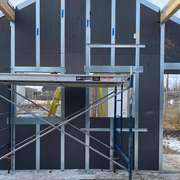
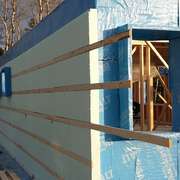
This is the most common use for rigid board insulation. Placing a continuous layer of insulation over the exterior sheathing is the single most effective way to eliminate thermal bridging through studs and window headers. Both mineral wool and wood fiber are excellent here, though it's also difficult to ignore the significant price advantage of EPS foam insulation.
- Choose rigid mineral wool if the home requires the highest fire-resistance rating (such as in high-density urban areas or commercial applications), or if the building design prioritizes superior noise abatement.
- Choose rigid wood fiber if achieving the lowest possible embodied carbon is the primary goal, or if the wall assembly is a traditional timber-frame that benefits from a highly breathable external layer.
- Choose rigid EPS Foam panels if
Insulating Below-grade and foundation walls
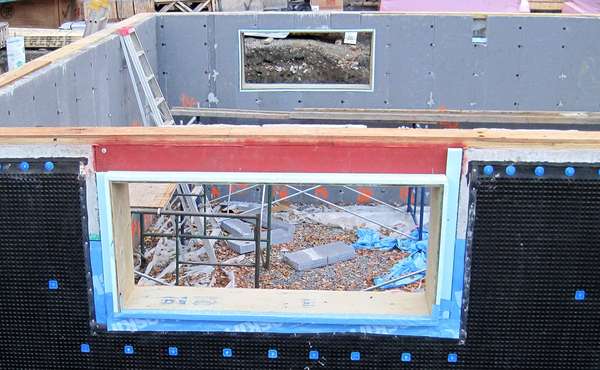
Insulating the foundation is critical for reducing heat loss and preventing condensation. This is where the choice becomes more nuanced. Traditionalists use foam insulation products due to its perceived moisture imperviousness, but foam-free options are viable.
- Rigid mineral wool is highly recommended for interior basement walls. It is hydrophobic and will not feed mold, making it a much safer choice than fiberglass batts against a cold concrete wall.
- Rigid wood fiber is typically not recommended for direct, continuous contact with the earth, as even the robust boards may struggle with prolonged exposure to high, persistent moisture levels.
Insulating Sloping or flat roofs
For roofs, the density and dimensional stability of the insulation board are key. Both alternative insulation products are used effectively, but because of the long term moisture handling capabilities, if it's not foam insulation then:
- Rigid mineral wool is a proven product for flat roofs and commercial applications due to its non-combustibility and ability to handle roofing membranes.
Regional availability and cost
Availability and cost can often be the deciding factor for homeowners and contractors, particularly when managing a tight budget.
- North America (US and Canada): Rigid mineral wool is widely available from national suppliers like Rockwool and is easily sourced through major building supply stores. Rigid wood fiber, while gaining traction, is often a specialty order and can be significantly more expensive due to importation costs and a smaller distribution network.
- United Kingdom, Australia, and New Zealand: Both mineral wool rigid insulation and wood fiber insulation boards are more established in these markets, especially locally European produced wood fiber insulation boards (often referred to as wood wool) which is popular across Europe for its ecological benefits. Pricing tends to be competitive with premium foam products.
The initial material cost of foam-free rigid boards is generally higher than budget-friendly options like Expanded Polystyrene (EPS). This affordability factor is a significant reason for EPS's continued market dominance. While often critiqued for its fossil-fuel origin, it's important to note that EPS provides a high R-value for its cost, and when used correctly - for example, under a protective top finish like an EIFS system or below grade - it has a very long and stable service life, potentially lasting the lifetime of the building. Therefore, a professional must weigh the higher upfront cost and debated 'green' credentials of some natural boards against the proven longevity and cost-effectiveness of foam products like EPS. The long-term value calculation is not always straightforward and must include embodied carbon, production energy, chemical additives, durability, and overall project budget.
In brief
Choosing the 'best' insulation - foam-based or foam-free - requires a nuanced assessment that goes beyond simple 'natural' or 'green' labels. A truly sustainable choice depends on balancing core priorities, including embodied carbon, production energy, raw material sourcing, chemical additives, affordability, and long-term durability.
- Foam boards (EPS/XPS) offer a highly cost-effective path to high R-values and, when properly protected, offer exceptional longevity. This must be balanced against their fossil-fuel feedstock and, in the case of XPS like Styrofoam, the high GWP of blowing agents.
- Rigid mineral wool (e.g., Owens Corning, Rockwool, Johns Manville) offers the highest R-value per inch and unparalleled non-combustibility, though its high-energy production process carries a significant carbon footprint.
- Rigid wood fiber (e.g., STEICO, Pavatex, Knauf Insulation) is a solution for low embodied carbon, assuming its binders are natural lignin and its fiber source is verified. Its 'natural' label can be complicated by the use of paraffin/oil-based water repellents.
- Hemp fiber (e.g., Artcan, Hempitecture , Nature Fibers) provides a carbon-negative option with good thermal performance and is readily distributed across the United States.
- Grass fiber (e.g., Gramitherm®) is an emerging hyper-local, low-carbon alternative with an A+ Air Quality rating, primarily available in Europe.
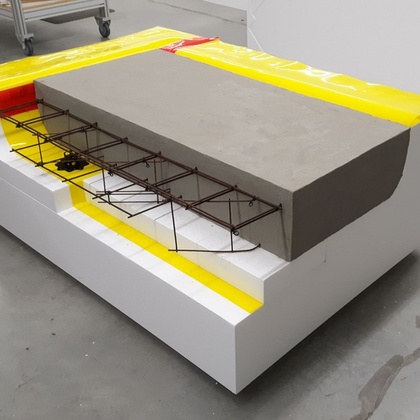
The high carbon footprint of rigid foam boards like XPS has led many green builders to switch to carbon-neutral alternatives for sub-slab insulation.
Now that you have a more balanced view of rigid insulation options and alternatives to Foam insulation, find more info about insulation materials and green building techniques in the Ecohome Green Building Guide and these pages below:
-
The embodied carbon of insulation materials, which are the best choices for insulating homes
-
Mineral wool roof insulation by Rockwool - LEED Platinum V4 - Ecohome
-
Choosing the right insulation: the pros, cons and applications for walls, slabs and basements
-
The difference between polyiso, EPS and XPS foam insulation and Styrofoam
-
What is Graphited Foam Insulation GPS (and is it worth the extra cost?)
Sign up now and reap the benefits of a free Ecohome Network Membership!



Comments (0)
Sign Up to Comment