









Acoustic panels in homes: do they help make homes less noisy?
Unwanted noise transmission and echoes in homes can be frustrating. There are easy ways to sound proof new homes under construction, but that does little for older homes. While many people turn to acoustic panels to improve the acoustic wellness in homes, there's a critical distinction that must be made before you spend your hard-earned money.
The term acoustic panel is often confused with soundproofing. In reality, they are two completely different things. Acoustic panels are for sound absorption, which improves the quality of sound within a room. Designing homes to be peaceful and restorative is part of a quickly growing trend called 'silent architecture', to help maintain our sanity in an increasingly busy and noisy world.
Soundproofing is for sound isolation, which prevents sound from transmitting from one room to another or from the outdoors in. This guide will focus on the former, helping you understand how to use acoustic panels to transform the sound and comfort of your home to provide a more calm and peaceful environment.

This guide provides a comprehensive look at the key aspects of this topic. Below is an overview of the sections we will cover, allowing you to jump directly to the information you need.
- Sound absorption vs. sound isolation: understanding the difference
- How do acoustic panels work?
- Types of acoustic panels and what they're made of
- What are NRC ratings?
- DIY vs. premade: which is right for you?
- Acoustic panel placement: where to put them
- In brief
Sound absorption vs. sound isolation: Understanding the difference
This is the most important distinction to make when dealing with noise in your home. Sound absorption is the process of controlling sound within a space. When a sound wave hits a hard surface (like a wall, ceiling, or floor), it reflects and bounces around. The 'bouncing' is what can take ambient sounds in a home from noticeable or irritating to downright unbearable.
The ability of soft-surface objects and surfaces in homes to reduce noise is significant, as evidenced any time you empty a room of furniture or lift a rug to shake it clean outside. Or if you walk into a newly-built home before it has any furniture you would notice instantly it is an echo chamber.
Why is sound transmission worse in newer homes?
You only need to think about changes in lifestyle and home design to understand why older homes often seem more muffled. And this knowledge can serve as a design motivation for creating smaller and more liveable spaces, an opinion which I will explain (see here to better understand sound transmission in homes.)
I grew up in a small, 3-bedroom, century-old home with small rooms, built-in features like shelving, and lots of interior division walls. In the early 1900s homes were packed with people, in fact 7 kids grew up in that same home when my mother was young. With people seemingly everywhere, rooms were closed off with french doors to provide some modicum of privacy.
Having smaller rooms meant we jammed more furniture into them, so there were respectively a lot more angles and soft surfaces to absorb sounds.
Compare that to the minimalist, open-concept nature we see with a lot of modern homes for a moment. The homes we build now are larger, ceilings are higher, spaces are more open and furniture is more sparse. Wall-to-wall carpet is less common, curtains are less common or swapped out for blinds, and we love big windows that also happen to bounce sound.
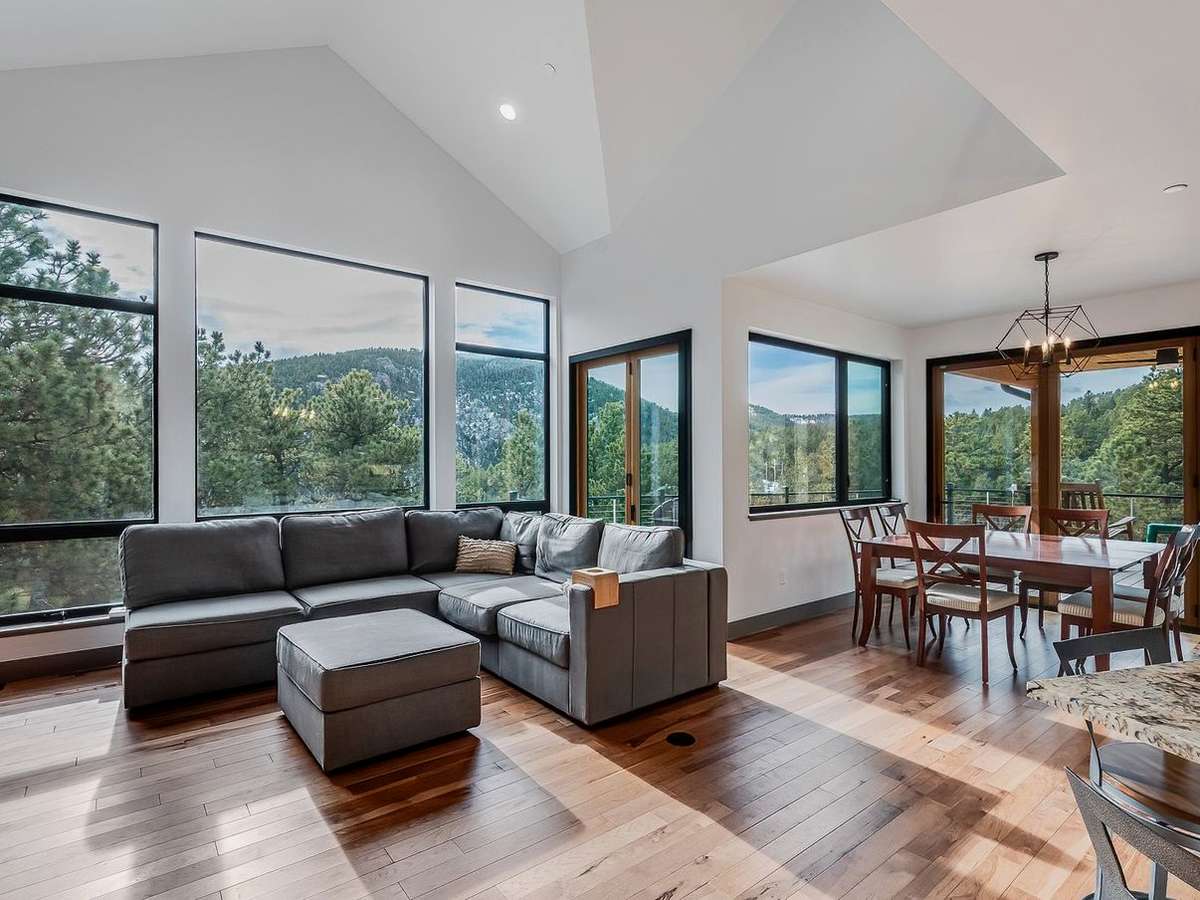
The best sound dampening measures for homes
Without somehow dampening noises leads to echo and reverberation, which can make a room sound loud, hollow or boomy. Acoustic panels are designed to absorb these sound waves, reducing the echo and improving the clarity of sound in the room.
This is crucial for home theatres, recording studios, or simply making a large, open-concept living space more comfortable for conversation.
On the other hand, sound isolation (often called soundproofing) is the process of stopping sound from travelling through a barrier. This is what you need to do if you want to prevent the sound of your loud music from disturbing the neighbours, or if you don't want to listen to theirs. See here to learn how to soundproof walls in new homes and during renovations.
Soundproofing a completely different approach that involves building heavier, more massive walls, floors, and ceilings with decoupled layers. Materials like drywall, mass-loaded vinyl, and proper insulation are key to this process, not acoustic panels.
How do acoustic panels work?
Acoustic panels work on a simple principle: they convert sound energy into a tiny amount of heat energy. When a sound wave hits the porous material of a panel (like mineral wool, fiberglass, or foam), the air molecules within the material vibrate. This friction between the vibrating air and the fibres of the material dissipates the sound energy, absorbing it rather than reflecting it back into the room.
This process is most effective for mid- to high-frequency sounds, which are the primary culprits for echoes and 'slap echo.' Deeper bass frequencies are more difficult to absorb and often require specialized, thicker panels called 'bass traps' that are typically placed in the corners of a room where low-frequency sound tends to build up.
Types of acoustic panels and what they're made of
Acoustic panels come in a wide variety of materials and designs, but they all share the goal of absorbing sound energy. The core absorbent material is what makes them effective. Common materials include:
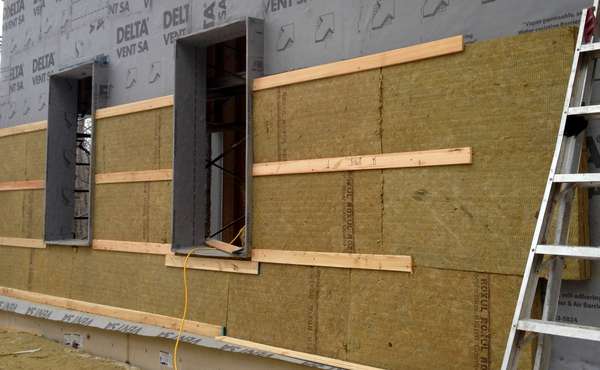
- Mineral wool (stone wool): A very popular choice, mineral wool is a dense, fibrous material made from spun rock or slag. It is excellent at absorbing a wide range of frequencies and is a common component in both commercial and DIY panels.
- Fiberglass: A traditional insulating material, fiberglass is also highly effective for sound absorption. It's lightweight and readily available but requires proper handling due to its small fibres.
- Recycled PET fibre: A more sustainable option, panels made from recycled plastic bottles are becoming increasingly popular. They offer good acoustic performance and are often a preferred choice for eco-conscious builders and homeowners.
- Acoustic foam: While widely available and affordable, foam panels are generally less effective than mineral wool or fiberglass, especially at lower frequencies. They are a good entry-level option for small spaces or for those on a tight budget.
Wooden acoustic panels
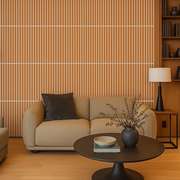
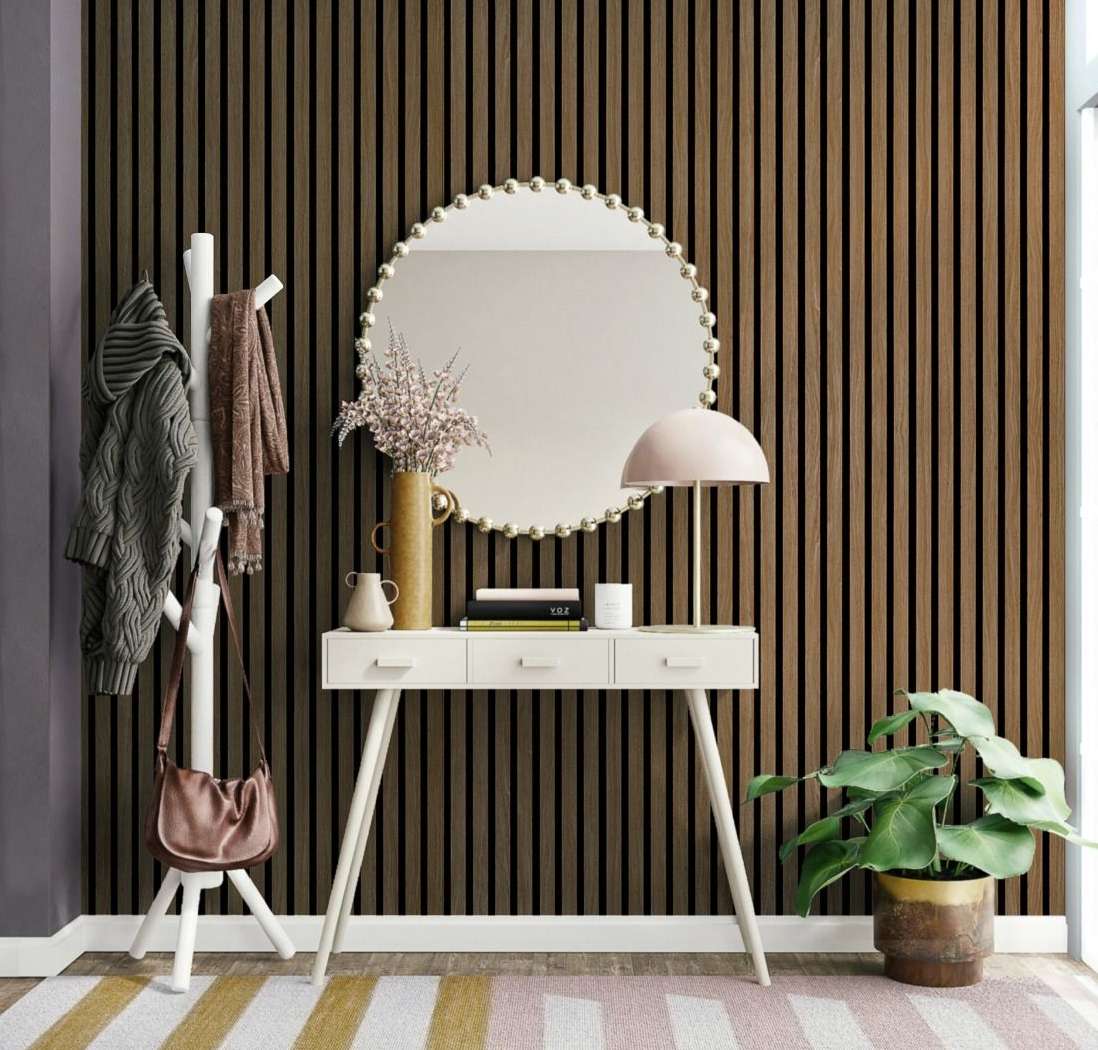
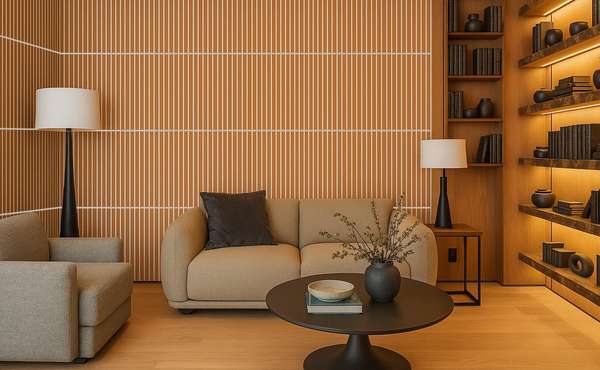
A highly aesthetic option that is gaining popularity, wood acoustic panels combine natural beauty with sound control. They typically consist of wooden slats or veneers mounted on a porous, sound-absorbing felt backing.
This design allows sound waves to pass through the gaps between the slats and be absorbed by the felt, reducing echo and reverberation while adding a modern, elegant touch to any room. The felt is often made from recycled materials, making it a sustainable choice.
What are NRC ratings?
The effectiveness of an acoustic panel is measured by its Noise Reduction Coefficient (NRC). This rating is a single-number value that represents the average sound absorption of a material. The scale runs from 0 to 1, where 0 means no sound is absorbed, and 1 means all sound is absorbed.
A panel with an NRC of 0.85, for example, absorbs 85% of the sound that hits it. A panel with an NRC of 0.30 absorbs only 30%. When choosing panels, a higher NRC rating is generally better. Most quality acoustic panels will have an NRC rating of 0.80 or higher.
DIY acoustic panels vs. premade panels
When it comes to acoustic panels for your home, you have two primary choices: buy them premade or build them yourself. Each option has its pros and cons for both homeowners and professionals.
DIY acoustic panels
Building your own panels is a popular and cost-effective solution, especially in North America. The process involves creating a simple wooden frame, filling it with a sound-absorbing material like mineral wool or fiberglass, and wrapping the entire assembly in a breathable fabric.
This approach allows for full customization in size, colour, and fabric choice, making it easy to match your existing décor. It's an excellent option for those with some basic carpentry skills and a desire to save money.
Premade fabric acoustic panels
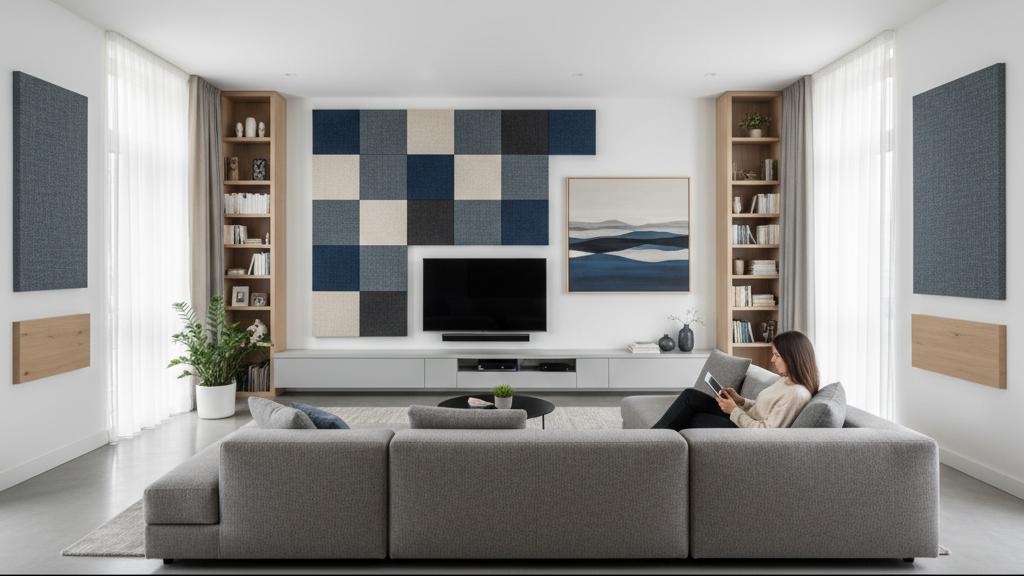
Premade panels are available from a variety of manufacturers in the US, Canada, the UK, Australia, and New Zealand. They come in a wide range of sizes, colours, and designs, from simple fabric-wrapped panels to more decorative, art-infused options.
While more expensive than a DIY approach, they offer a professional, finished look and often come with easy-to-use mounting hardware (like Z-clips) for a simple installation. They are also a great option for those who may not have the time or tools to build their own.
Premade wooden acoustic panels
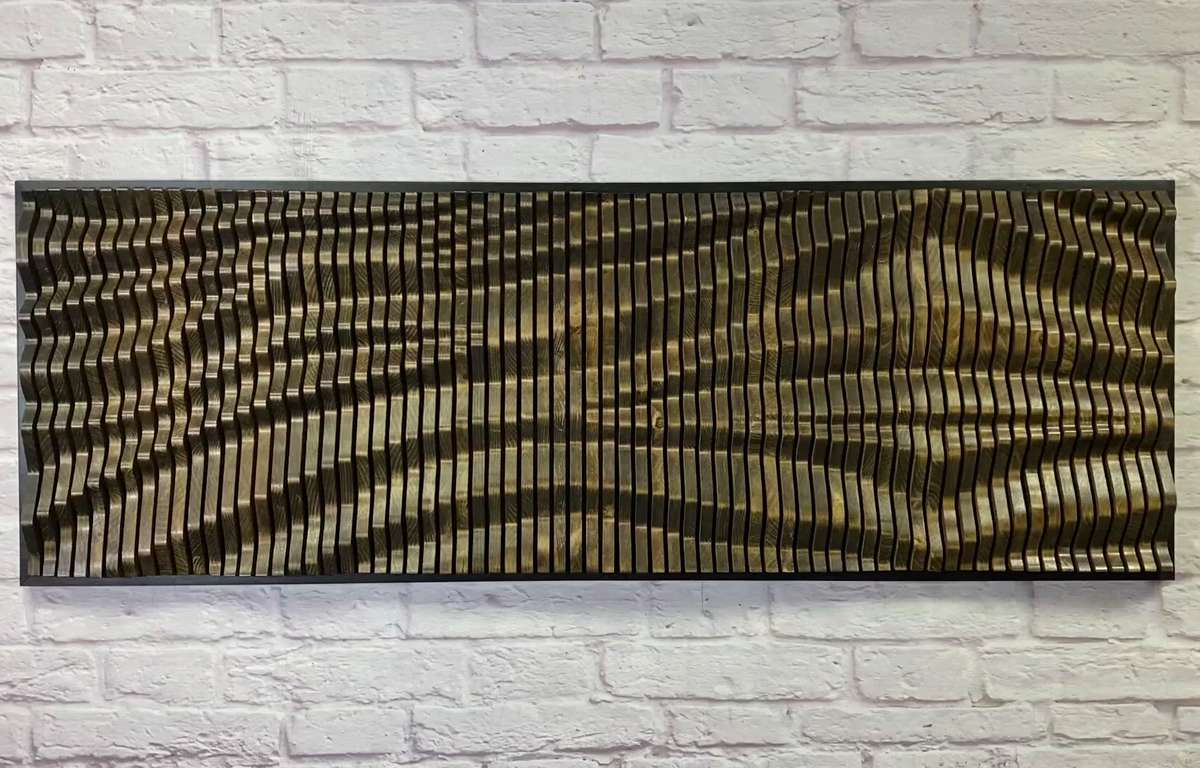
You can find wooden acoustic panels for purchase online, or find them made locally. They can be either incorporated into walls, or hung as artwork on walls.
Acoustic panel placement: Where to put them
Strategic placement is crucial for maximum effectiveness. You don't need to cover every surface. A few well-placed panels can make a dramatic difference. The general rule of thumb is to place them on the walls at the first points of reflection.
You can find these spots by having a friend hold a mirror on the wall while you sit in your primary listening position (e.g., your couch or desk chair). Wherever you can see the sound source in the mirror, that's a reflection point that needs a panel.
For most rooms, start with a few panels on the walls at ear height. For home theatres or studios, consider placing panels on the ceiling and corners as well to tame a wider range of frequencies. Professionals often use software to model the room, but for homeowners, this simple mirror technique is a fantastic starting point.
In brief
Acoustic panels are not a one-stop solution for all home noise problems. They are a powerful tool for improving the quality of sound within a room by reducing echoes and reverberation. They work by absorbing sound waves, not by stopping them from passing through walls.
Whether you choose to build your own or buy premade panels, the key is to choose the right material and place them strategically for the best results. By understanding the difference between sound absorption and sound isolation, you can make an informed decision and create a more comfortable, sonically pleasing environment in your home.
Now that you know more about acoustic panels, find more info about soundproofing & green building techniques in the Ecohome Green Building Guide and these pages below:
-
Understanding sound transmission in homes so you can prevent it
-
Silent architecture and acoustic wellness - design philosophies to create more peaceful homes
-
How to soundproof interior division walls - DIY video guide
-
Which insulation offers the best soundproofing?





Comments (0)
Sign Up to Comment