

This guide provides a comprehensive look at the key aspects of this topic. Below is an overview of the sections we will cover, allowing you to jump directly to the information you need.
- What is graphite-enhanced EPS (GPS/G-EPS)?
- Performance metrics: R-value and R-per-inch
- Global market and terminology
- Key applications for GPS insulation and trade-offs
- Installation and best practices for professionals
- Fire safety, code compliance, and regional variation
- Key takeaways
Graphite-Enhanced Expanded Polystyrene, often marketed simply as GPS or G-EPS, offers a noteabe improvement in the performance of rigid foam insulation. By infusing the familiar white or blue Expanded Polystyrene (EPS) beads with high-purity graphite particles, manufacturers have created an insulation product that delivers a superior thermal performance over standard EPS foam insulation.
This guide is intended to provide objective, evidence-based information for homeowners seeking deep energy retrofits and for building professionals specifying high-performance building strategies, covering everything from technical specifications to best practices for installation and fire safety.
What is graphite-enhanced EPS (GPS/G-EPS)?
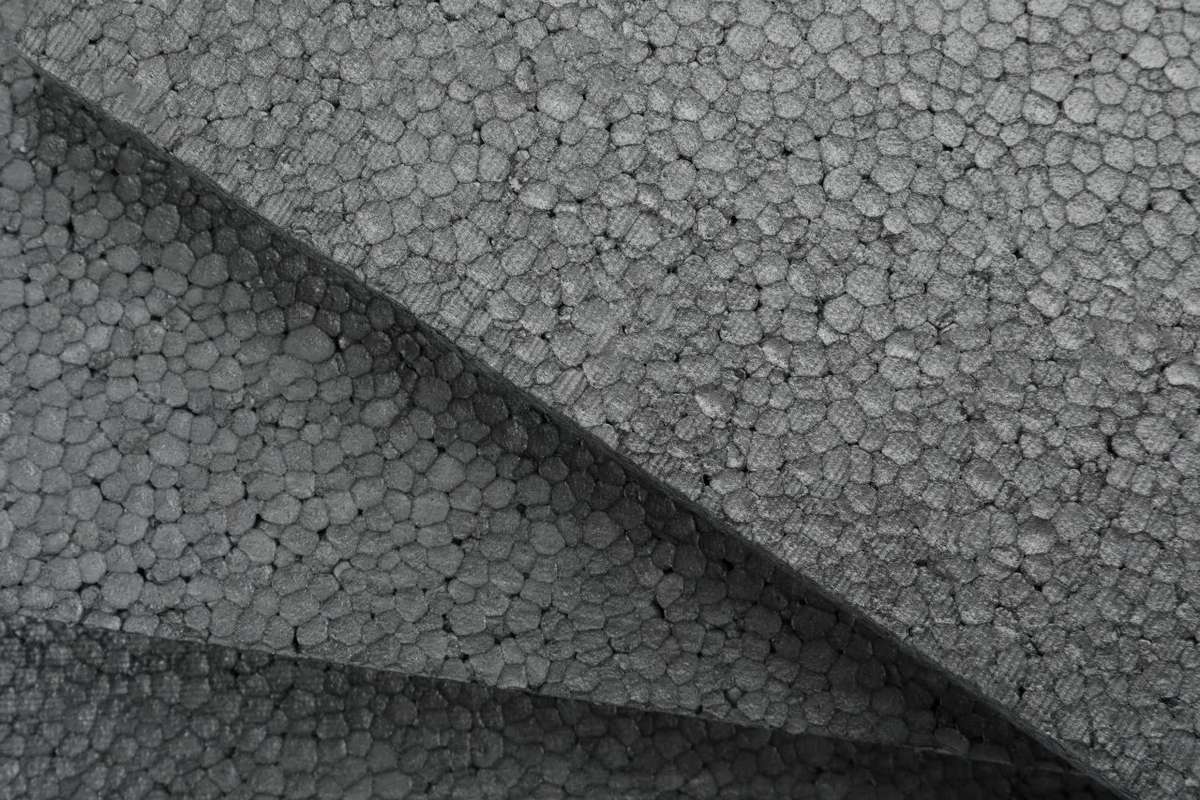
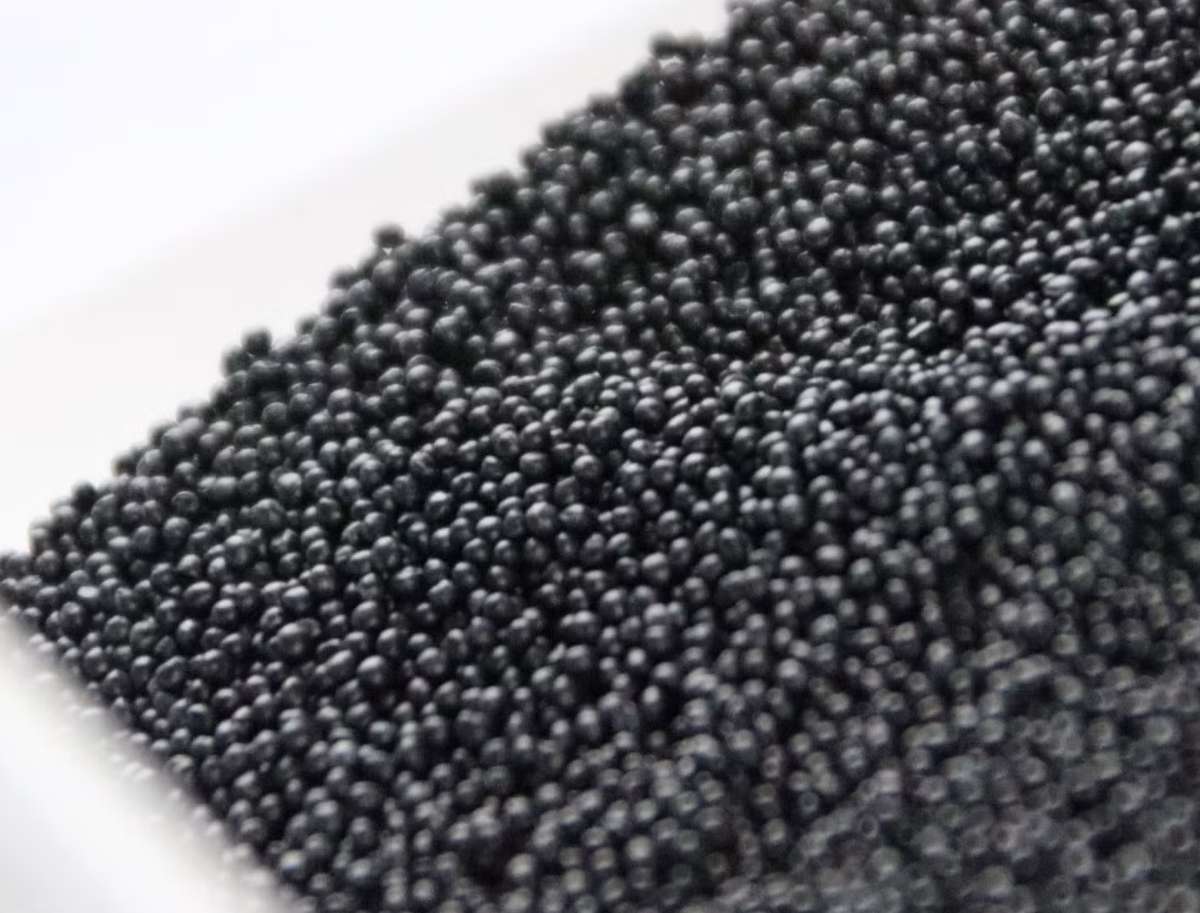
Graphite-Enhanced Expanded Polystyrene (G-EPS) is an advanced form of traditional EPS foam. It is manufactured by incorporating fine particles of high-purity graphite into the raw polystyrene beads before they are expanded and molded into insulation boards. These graphite particles give the foam its distinct silver-gray color, a visual clue to its improved performance.
The science: How graphite boosts r-value
Standard white EPS insulates primarily by trapping air within millions of tiny closed cells, which prevents heat transfer via convection. However, heat can still be transferred through radiation across the cell walls, especially at moderate to high temperatures. This is where the graphite comes in.
The role of the graphite is to absorb and reflect thermal radiation-the microscopic transfer of heat energy. These graphite particles act like tiny mirrors within the foam structure, reflecting the heat back toward the source and significantly reducing radiative heat transfer. This small addition improves the material’s thermal resistance (R-value) by 15% to 20% compared to standard EPS of the same density.
Global market terminology: GPS vs. Neopor
While the generic name is Graphite-Enhanced EPS (G-EPS or GPS), the material is most famously manufactured using raw beads developed by BASF, marketed under the trade name Neopor. When speaking to contractors or suppliers globally, be aware of the common terminology:
- North America (US & Canada): GPS, G-EPS. Used in both residential and large-scale commercial builds.
- United Kingdom & Ireland: Neopor, Silver EPS, Grey EPS. Popular for External Wall Insulation (EWI) and cavity fills.
- Australia & New Zealand: G-EPS. Used widely in lightweight wall systems and exterior cladding insulation.
Performance metrics: r-value and r-per-inch
The thermal performance of GPS makes it an effective and space-saving choice for continuous insulation. For homeowners and design professionals, the R-value per inch is the most important and familiar metric when comparing rigid foams.
R-value comparison: GPS vs. alternatives
The R-value of foam insulation varies by density (pounds per cubic foot-lb/ft³), but for a common medium density of 1.5 lb/ft³ (24 kg/m³), GPS outperforms standard EPS. Here is a brief comparison of common rigid foam types:
| Insulation Type | Approx. R-Value per inch | Notes |
|---|---|---|
| Standard White EPS | R-4.0 | Cost-effective, good vapor permeability. |
| Graphite-Enhanced EPS (GPS) | R-4.7 to R-5.0 | Higher performance, moisture resistance similar to EPS. |
| Extruded Polystyrene (XPS) | R-5.0 | Higher water resistance, but uses blowing agents with high Global Warming Potential (GWP). |
| Polyisocyanurate (Polyiso) | R-5.8 to R-6.5 (initial) | Highest R-value, but performance is temperature-dependent and subject to thermal drift. |
Effective R-Value and thermal bridging
For professionals, the material’s performance is only half the story; the effective R-value of the entire wall or roof assembly is the true measure. Since GPS is often used for continuous exterior insulation (CI), it is exceptional at preventing thermal bridging through structural elements like studs, rims, and foundation walls.
This is a crucial strategy for achieving aggressive energy targets like those found in Passive House projects. GPS is not subject to thermal drift (unlike Polyiso), which ensures its R-value holds for the long term.
Global market and terminology
Regional differences in nomenclature and material specifications can lead to confusion. A contractor trained in the UK may refer to a product differently than a specifier in North America. Here is a breakdown:
| Region | Common Name / Specification | Notes on Use |
|---|---|---|
| North America (US & Canada) | GPS, G-EPS, or specified by the proprietary name (e.g., Halo Exterra, Owens Corning FOAMULAR NGX-note that while FOAMULAR is XPS, the principles of advanced performance are marketed). | Often used in Insulated Concrete Forms (ICF) and as exterior insulation for rainscreen and stucco/EIFS applications. |
| United Kingdom & Ireland | Neopor, Silver EPS, Grey EPS | Heavily used in cavity wall and external wall insulation (EWI) systems due to the need for thinner profiles to meet strict building control standards. |
| Australia & New Zealand | G-EPS, Shadowclad, Insulclad | Popular in lightweight construction and as an insulation solution under cladding where fire regulations permit. |
Key applications for GPS insulation and trade-offs
GPS is a versatile material, but its selection should involve an honest assessment of its cost and environmental impact relative to other options.
Continuous exterior insulation (CI)
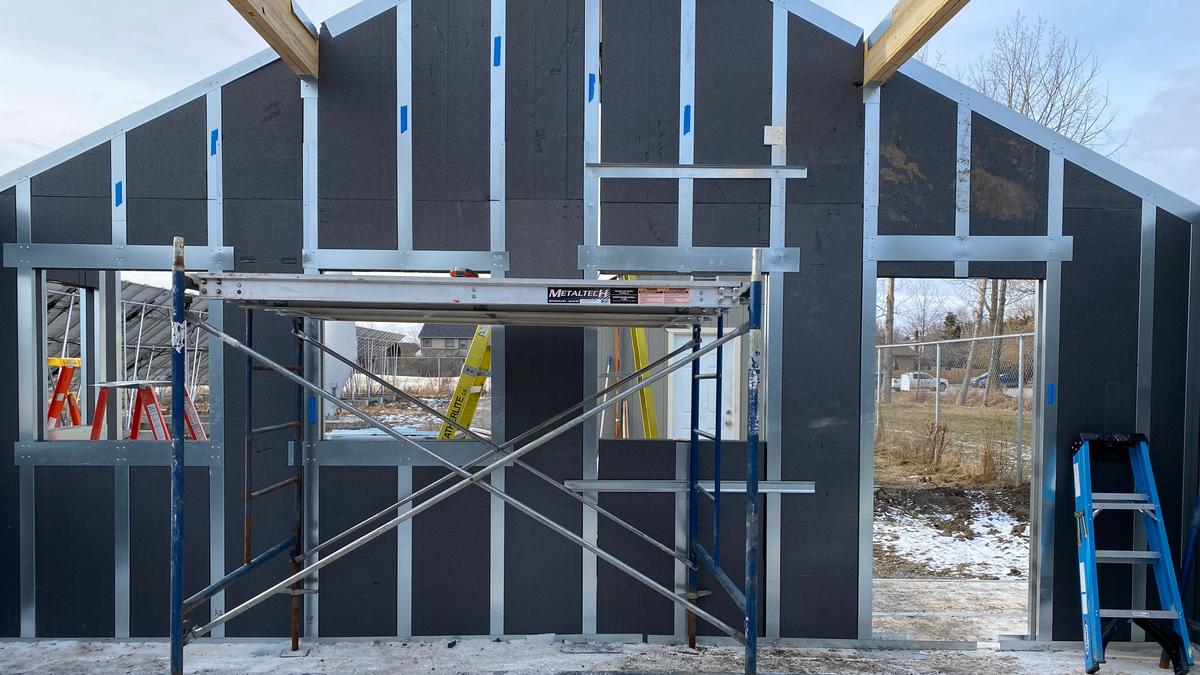
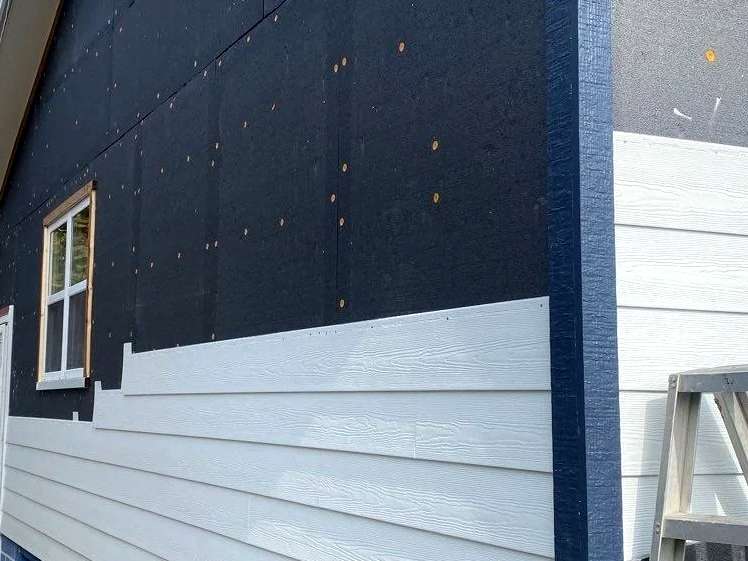
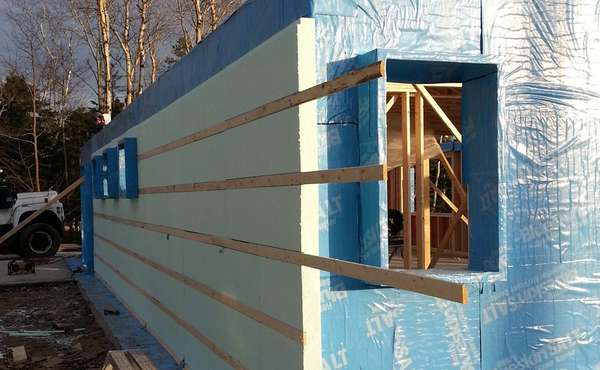
Installing a continuous layer of G-EPS over exterior wall sheathing is its primary high-performance use. It creates a robust thermal break, is relatively cost-effective, and is much lighter than mineral wool. For homeowners doing deep energy retrofits, a 3-inch (75 mm) layer of GPS can dramatically upgrade a wall's performance without excessive thickness.
Insulated concrete forms (ICF) and foundations
G-EPS is offered by some manufacturers of ICF blocks, which serve as both the formwork and permanent insulation of concrete walls. Furthermore, its excellent long-term water absorption resistance makes it highly suitable for below-grade applications like insulating basement walls, crawlspaces, and under concrete slabs.
Trade-offs: Embodied carbon and alternatives
While GPS is highly efficient, it is a fossil fuel-derived plastic. This is not ideal, but manufacturing graphite and standard EPS insulation is one of the greener uses of fossil fuels when you consider how much of it we stick in cars.
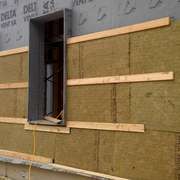
For readers prioritizing low embodied carbon, alternatives like mineral wool or wood fiber boards are superior. However, mineral wool is heavier and often more expensive, and wood fiber is rarely used below grade. GPS offers a balanced solution-high R-value, low cost, and moisture tolerance-making it a practical compromise for many projects.
Installation and best practices for professionals
The superior performance of G-EPS is only realized through rigorous attention to detail and knowledge of the material's limitations on the job site.
Protecting against UV degradation
Many building materials will degrade when exposed to UV radiation, G-EPS is no different. It must not be left exposed to direct sunlight for extended periods. Like standard EPS, UV radiation causes the material to become brittle and chalky, which reduces its efficacy. Manufacturers typically mandate a maximum exposure window-often 30 days. For homeowners purchasing materials, plan delivery and installation closely together.
Vapor permeability and drying potential
G-EPS is moderately vapor permeable, and you can read here about the vapor permeability of different rigid foam panels. This is a distinct advantage in wall assemblies because it allows trapped moisture (from condensation or leaks) an escape path to the exterior, maximizing the drying potential of the wall.
Fire safety, code compliance, and regional variation
Fire safety is a primary concern with all foam insulations, and compliance with local building codes is mandatory. All expanded polystyrene products are combustible, meaning they must be handled correctly. This is not a cause for alarm of course, most things in your home are combustible. There is no greater fire concern with graphite EPS than typical EPS, or many other materials. You can read more here about home fire safety and escape plans here.
The thermal barrier rule
For all regions covered (North America, UK, Australia, NZ), G-EPS used in interior applications (basements, ceilings, exposed walls) must be covered by an approved thermal barrier. This is a non-negotiable building code requirement designed to slow down ignition and fire spread. The standard barrier is typically 1/2 inch (12 mm) drywall (sheetrock) or a proprietary fire-rated cementitious board. Failure to install this barrier will result in the building failing inspection.
Ignition retardants
Manufacturers incorporate fire retardants (often polymeric fire retardants) into the G-EPS. These retardants allow the product to meet specific testing requirements (such as ASTM E84 in the US) that measure surface burning characteristics, but they do not make the foam non-combustible. The foam will still melt and ignite if exposed to high enough temperatures for a long enough duration.
Key takeaways
Graphite-Enhanced EPS (GPS or G-EPS) offers a robust and cost-effective way to achieve superior thermal performance in modern construction. Its R-value of R-4.7 to R-5.0 per inch provides an excellent middle ground between the lower performance of standard EPS and the complex application of Polyiso or the higher embodied carbon of XPS. Homeowners appreciate the material's reliability and space efficiency, while professionals favor its light weight, moisture resistance, and reliable, long-term R-value.
To successfully integrate GPS into your project, prioritize these actionable steps:
- Use GPS for continuous exterior insulation to eliminate thermal bridging.
- Always cover interior applications with an approved thermal barrier like drywall.
- Protect the foam from UV exposure during construction.
- Compare the embodied carbon of GPS against alternatives like mineral wool for a truly holistic material choice.
Now that you know more about Graphite-Enhanced EPS (GPS), find more info about insulation and green building techniques in the Ecohome Green Building Guide and these pages below:
-
A guide to choosing the right rigid foam insulation panels (XPS, EPS & Polyiso)
-
Is building ICF homes a good or bad idea?
-
Choosing the best insulation for basements, walls and roofs
-
Are rigid foam panels considered a green insulation?



Comments (0)
Sign Up to Comment