





ICF blocks: A homeowner's guide to building a home with ICF
Insulating Concrete Forms, or ICFs, are a high-performance building system used to create exceptionally strong, energy-efficient concrete walls. While you may hear them called 'Insulated Concrete Forms,' the more accurate term is 'Insulating Concrete Forms,' as the forms themselves provide the thermal barrier.
This guide offers a technical assessment of ICF blocks, simplified for homeowners and builders, to explain why they are a superior choice for durable construction, especially below grade, even though North America is still dominated by stick-frame buildings.
This guide provides a comprehensive look at ICF construction. Below is an overview of the sections we will cover, allowing you to jump directly to the information you need.
- What are ICF blocks?
- Why ICF is the best choice for basements: cost and performance
- ICF foam explained: It's EPS, not Styrofoam™
- Key benefits of building with ICF blocks
- The environmental impact of ICF construction
- Should you build a whole home with ICF?
- In brief: The case for ICF
What are ICF blocks?
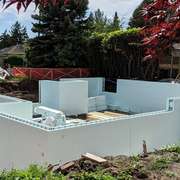
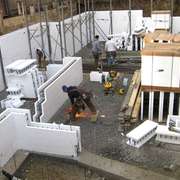
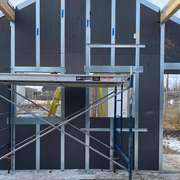
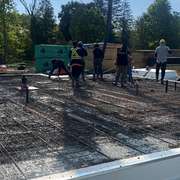
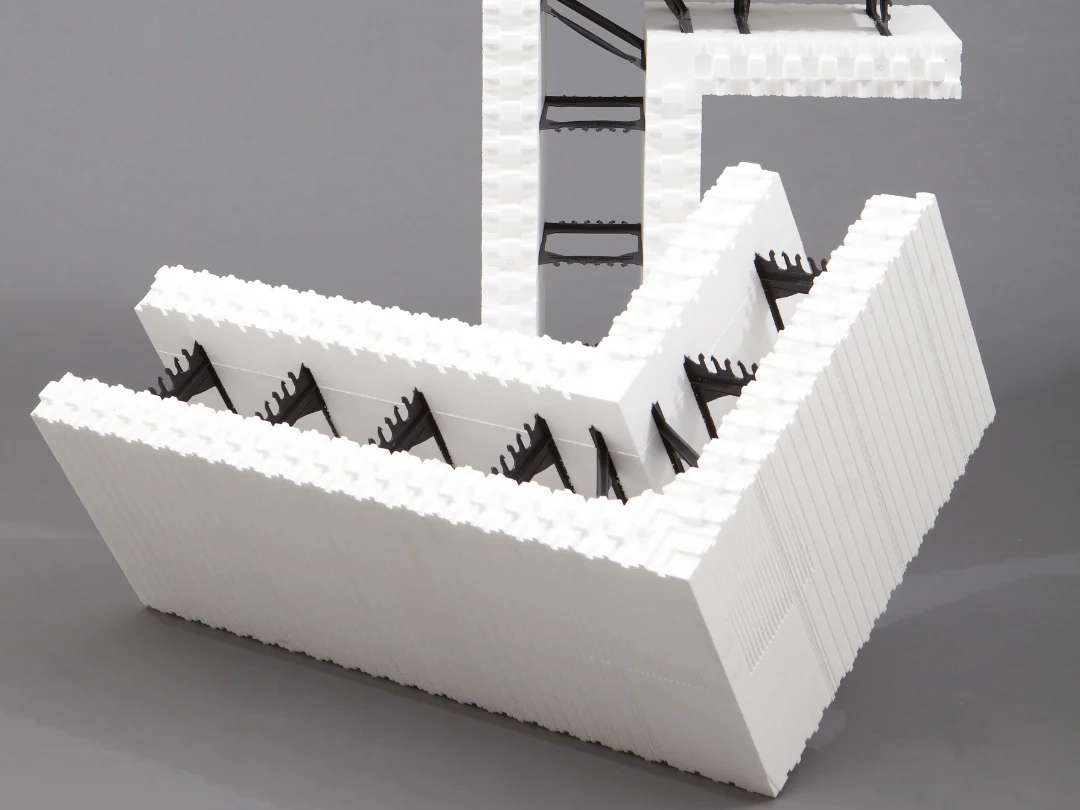
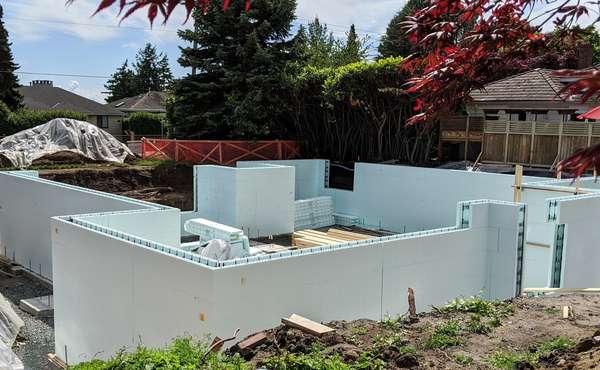
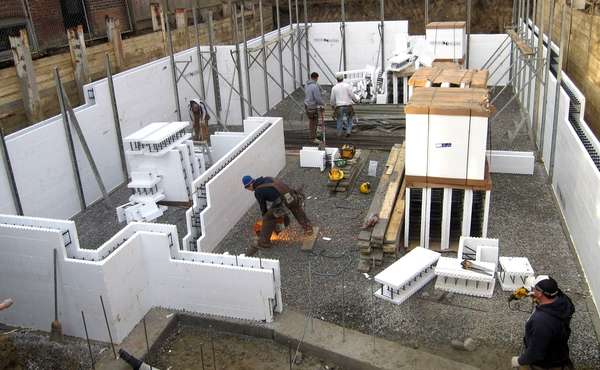
ICF blocks are hollow, interlocking forms, most commonly made from Expanded Polystyrene (EPS) foam. These forms are stacked on site, much like Lego blocks, to create the shape of the exterior walls. Steel or GRP reinforcement bars (rebar) are placed inside the hollow core, and then concrete is poured in.
The foam forms are not removed; they remain in place permanently, creating a solid, monolithic concrete wall sandwiched between two continuous layers of high-performance insulation.

There are many ICF block manufacturers, and many will insist they are the best - but quite honestly, once you've decided you want to build a home from ICF, the area and support you can get from a distributor, plus the availability of experienced ICF contractors in your area and their preference of ICF blocks, is probably going to be the deciding factor in which ICF block to choose for your home build.
This innovative system has a long and interesting past. You can learn more about its evolution in our Definitive history of ICFs guide. The result is a structure that combines the resilient strength of reinforced concrete with the high insulating value of rigid foam.
Why ICF is the best choice for building basements: cost and performance
If you are building a new home with a basement, using ICF blocks should be the default choice. Every time. This is because an ICF foundation delivers a far superior finished product at a comparable, and often cheaper, cost than a traditionally formed concrete basement that is built to modern energy code standards.
With a standard poured concrete foundation, you have multiple steps and trades: forming the walls, pouring the concrete, stripping the forms, damp-proofing, adding interior insulation with a wood frame, and installing a vapor barrier.
ICF construction combines all these steps into one efficient process. This consolidation of labor and materials is how ICF can deliver a better basement for less money. It is a key strategy for keeping a new home build on budget without sacrificing quality.
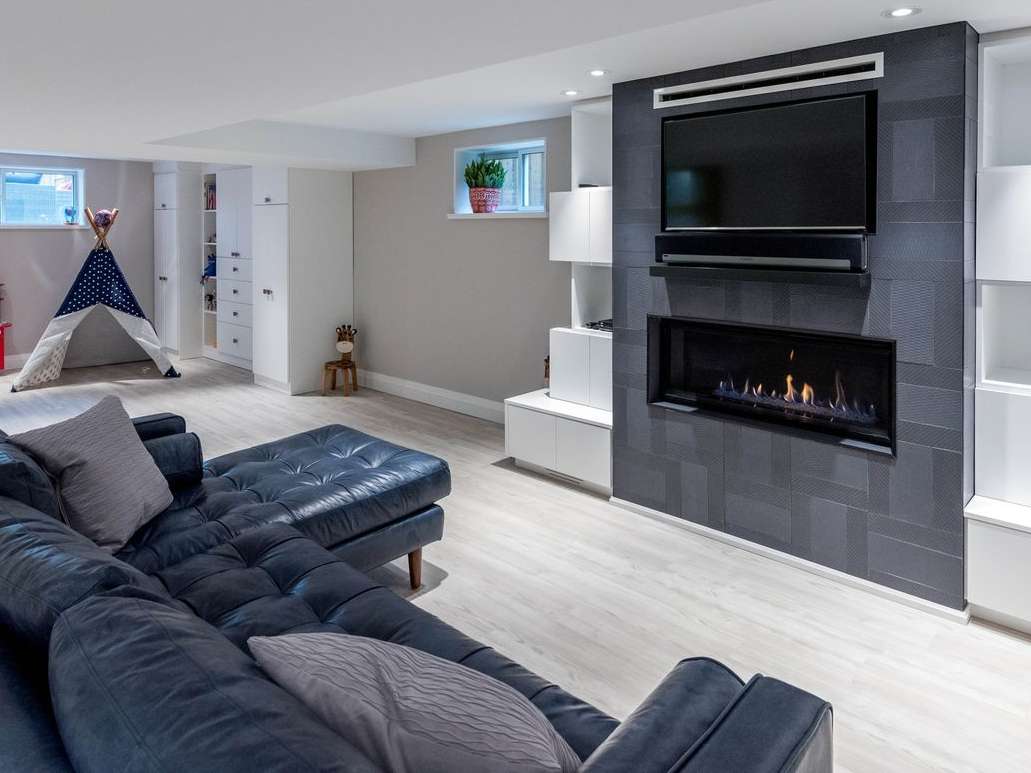
The result is a continuously insulated foundation with no thermal bridges, creating a warm, dry, and airtight space that is ready for drywall. You get a high-performance and energy efficient, comfortable and healthy living area instead of a damp, cold basement that will probably go moldy.
An important note anytime you are building a basement or even slab on grade, is to find out if you are in a high risk area for radon gas contamination and to take measures to prevent it from entering homes. See methods for removing radon gas for basements, crawl spaces and slab on grade here.
ICF foam explained: It's EPS, not Styrofoam™
A common misconception in North America is to call the white foam of an ICF block 'Styrofoam'. This is incorrect. Styrofoam™ is a brand name owned by Dupont for a blue or pink extruded polystyrene (XPS) insulation. XPS is made with chemical blowing agents that can off-gas over time, and our experience shows it can absorb moisture when used below grade, reducing its R-value.
ICF blocks are most often made from Expanded Polystyrene (EPS), a different material entirely. EPS is the white, beaded foam you commonly see. It is manufactured by expanding beads with steam and a small amount of pentane that quickly dissipates, leaving a stable, inert foam that is 98% air.
EPS is highly resistant to moisture absorption and maintains its thermal performance for the life of the building, making it the ideal material for foundations. See here to learn more about rigid foam, which type is best in diferent applications.
Key benefits of building homes with ICF blocks
Beyond the initial construction advantages, Insulating Concrete Form walls offer a powerful combination of performance benefits. These features are difficult and costly to replicate with traditional wood-frame construction, which often requires complex layers of extra materials to achieve similar results. An ICF home is a more comfortable, durable, and energy-efficient home by its very design.
Concrete mass in ICF homes buffers heat transfer
It is often said that ICF construction provides thermal mass in homes, but that is somewhat misleading considering the standard understanding of how thermal mass works in homes. Exposed thermal mass in homes will help regulate temperatures as it absorbs and release heat, but ICF walls don't work that way due to the insulated interior surface.
Instead what they do is 'buffer' heat transfer through the mass of concrete, in what is called the 'thermal flywheel' effect, helping to stabilize your home's internal temperature year-round and reduce the burden on heating and cooling systems. It's still beneficial, just not the way it's often explained, and not to the extent that exposed thermal mass helps with efficiency.
Building with ICF gives superior airtightness
Airtightness is one of the most critical factors for an energy-efficient home. Uncontrolled air leakage through cracks and gaps in the building envelope is a leading cause of heat loss, drafts, and high energy bills. In a wood-frame home, achieving a tight seal requires a complex system of expensive air barrier membranes and tapes, which must be perfectly installed to be effective.
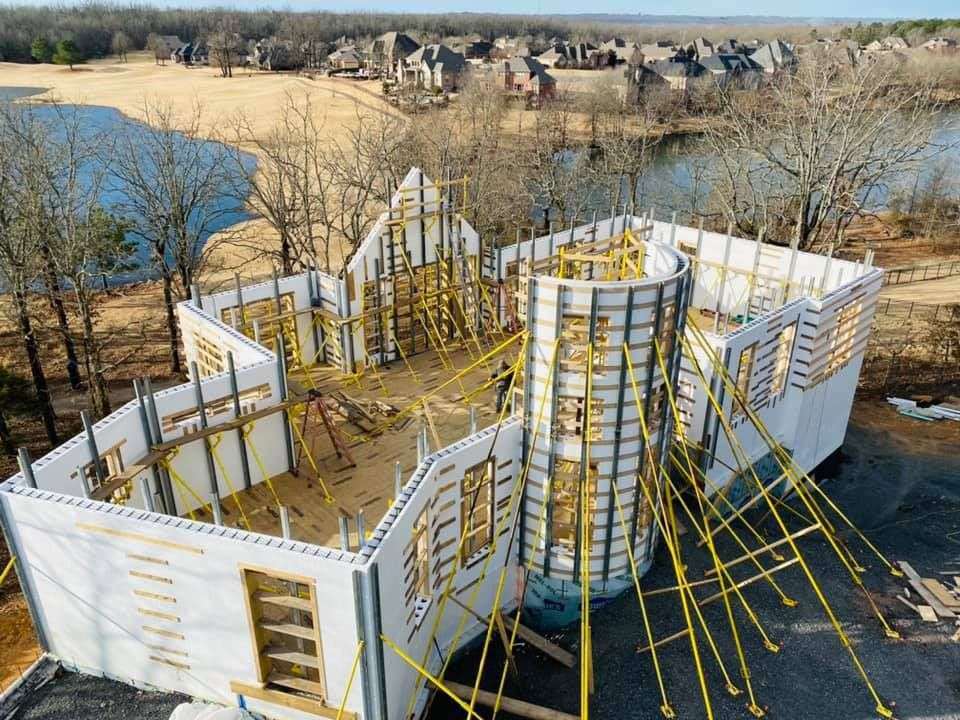
An ICF structure provides superior airtightness automatically. A solid, monolithic concrete wall has no joints, seams, or cracks for air to pass through. This creates a naturally airtight home, which is a major reason ICF construction saves on energy costs. It provides a quiet, draft-free living space and improves indoor air quality by preventing pollen and dust from being pulled into the house.
ICF homes have a continuous and high R-value
The R-value of a wall measures its ability to resist heat flow. In a standard stick-built wall, insulation is placed between wood studs. However, the studs themselves have very poor insulating qualities, creating a thermal bridge for heat to escape. This thermal bridging can lower the real-world R-value of a wall by 20% or more.
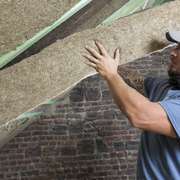
ICF construction completely eliminates this problem. The wall is a sandwich of solid concrete between two continuous, uninterrupted layers of EPS foam. This design provides a consistent and true R-value across the entire wall surface with no weak spots. This continuous insulation is a hallmark of high-performance building and ensures you get the full thermal performance you pay for.
An ICF home gives unmatched durability and resilience
ICF walls are incredibly strong, offering far greater structural integrity than wood framing. The steel-reinforced concrete core provides exceptional resistance to high winds, storms, and impacts, making ICF a smart choice for building resilient homes in areas prone to extreme weather.
One brand I've used, Quad-Lock ICF from Airfoam Industries, has some famous footage of an airborne car bouncing off the corner of a Quad-Lock ICF home - just imagine what the home would have looked like if it was built with wood and drywall!
I've also seen footage of ballistic tests and impact tests where they shoot pieces of stick frame at an ICF wall to replicate what happens when a tornado gathers a few wood structures up and hurls them at 100mph at everything else in the way - again, the ICF home would mostly survive.
Furthermore, the materials used in ICF construction are inorganic. Unlike wood, the concrete and foam structure will not rot, support the growth of mold, or be damaged by termites and other pests. This results in a healthier indoor environment and a durable, low-maintenance building that is designed to last for generations.
In Europe you expect to build homes that will last 200+ years, not the 30 to 50 years we typically see in North America before homes are bulldozed to start over!
ICF homes are really quiet!
One of the most immediate benefits of living in an ICF home is the profound sense of peace and quiet. The combination of the dense, solid concrete core and the two layers of soft EPS foam insulation is incredibly effective at dampening sound. This makes ICF construction a fantastic choice for homes in busy urban areas, as it significantly reduces noise from traffic, sirens, and nearby neighbors.
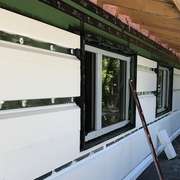
To create a truly serene indoor environment, it is essential to pair these high-performance walls with quality windows, preferably triple-glazed, which offer superior sound insulation as well as thermal efficiency. An added benefit is the structural silence of the home itself; unlike wood framing, solid concrete does not squeak, creak, or crackle as it settles or responds to temperature changes, adding to the overall tranquility.
The environmental impact of ICF construction
It is important to acknowledge and address the embodied carbon of both the EPS foam and the concrete used in ICF construction. These are energy-intensive materials to produce. However, this upfront environmental cost is balanced by the building's significantly reduced operational energy use over its long lifespan, as well as its extreme durability.
Fortunately, the industry is making progress. New, lower-carbon concrete mixes that replace a large portion of cement with recycled materials are becoming more common. Additionally, Glass Fiber Reinforced Polymer (GRP) rebar offers a lower-carbon, corrosion-proof alternative to steel, further reducing the ICF wall's environmental footprint.
Should you build a whole home with ICF?
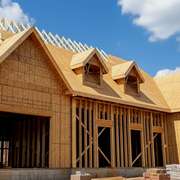
While ICF is the clear winner for basements, the decision to build an entire home with it requires more consideration. Due to the higher embodied carbon, we recommend reserving full ICF construction for areas that demand exceptional structural resilience. For homes in regions affected by hurricanes, tornadoes, or significant seismic activity, the life-saving strength of an ICF structure can be the most important factor.
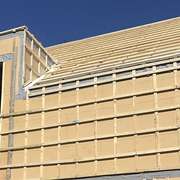
For most other regions, the most balanced approach is to use ICF for the foundation and pair it with a lower-carbon, high-performance wall system above grade.
In brief: The case for ICF
Insulating Concrete Forms offer a smart, efficient, and resilient way to build. For new home construction, they are always in our experience the best method for building a basement, delivering a higher-quality, insulated, and ready-to-finish space for a lower cost than traditional methods.
In a North American market dominated by stick-built homes the ICF market is projected to grow at a Compound Annual Growth Rate (CAGR) of over 6% in the coming years and has been growing steadily as people realise how good an ICF home can be ever since I first built with ICF over 20 years ago in Europe.
By understanding the material science and leveraging innovations in lower-carbon concrete, builders and homeowners can use ICFs to create foundations and homes that are comfortable, durable, and exceptionally energy efficient.
The only other issues I see is the resistance from the wood industry, the growing scarcity of suitable sand and gravel for concrete in some areas and the North American construction industry who are very resistant to change.
Now that you know more about ICF block construction, find more info about foundations and green building techniques in the Ecohome Green Building Guide and these pages below:
-
Why basements are moldy and how to build a mold-free basement
-
ICF slab on grade prefab form kits
-
Low-carbon concrete and eco-friendly options
-
Does EPS foam really count as a green building product?














Comments (0)
Sign Up to Comment