






Thermal mass in homes: a homeowner's and pro's guide
The term 'thermal mass' is often used to describe what for practical purposes, could be called a 'thermal battery', as dense and heavy materials in homes absorb and release heat.
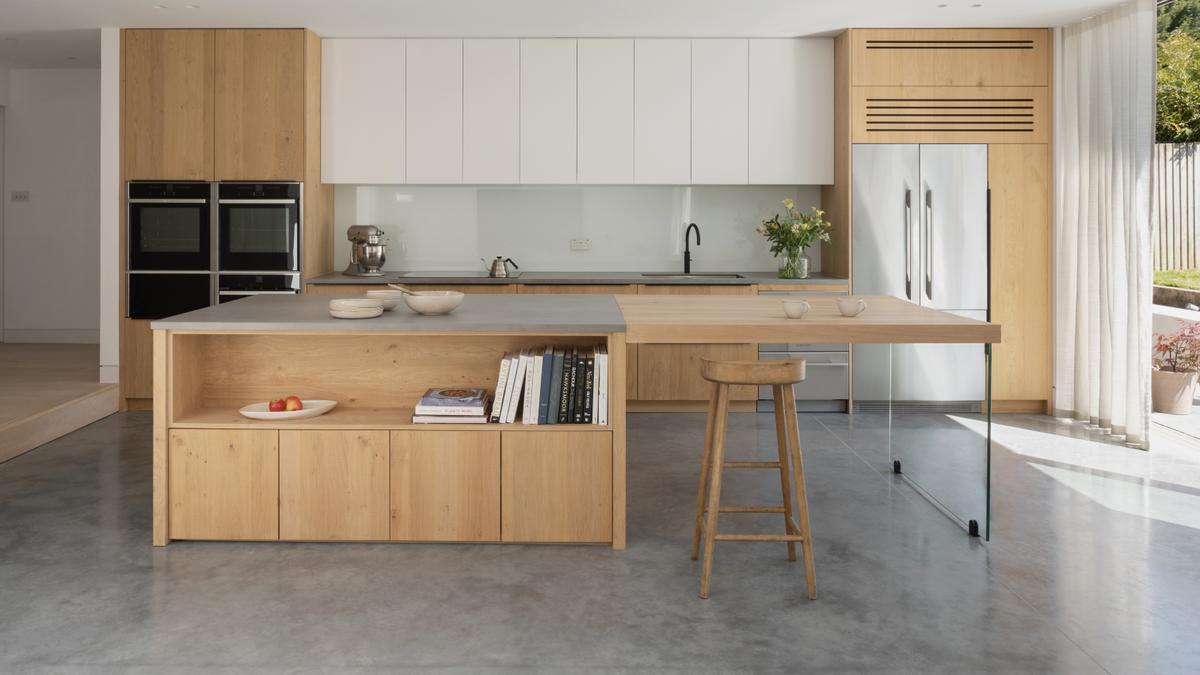
Including significant mass inside the conditioned space of a home (materials such as stone, brick, or exposed concrete, can help provide superior comfort and energy performance. For homeowners, that translates directly into a more thermally stable, and therefore more comfortable, indoor environment.
However, when a massive material like concrete is insulated on both sides, as it is in an ICF wall, it raises a critical building science question: How can the concrete core of an ICF wall have any measurable effect in regulating daily temperatures in a home if it's covered by foam insulation?
Proponents of ICF construction often list 'thermal mass' among the benefits, but that is a bit misleading, this guide is intented to clear up some misconceptions about ICF and thermal mass. We will distinguish the difference between how exposed thermal mass works and 'thermal buffering', which happens when thermal mass is separted from conditioned spaces by insulation, as with ICF blocks.
Below is an overview of the sections we will cover, allowing you to jump directly to the information you need.
- Thermal mass versus thermal buffering: understanding the difference
- How ICF thermal mass actually works: the thermal flywheel effect
- The three pillars of ICF performance: r-value, airtightness, and mass
- Exposed thermal mass in the envelope versus ICF walls
- Regional differences and climate zones: where icf mass excels
- Research and quantifiable benefits: what the studies show
- In brief
Thermal mass versus thermal buffering: understanding the difference
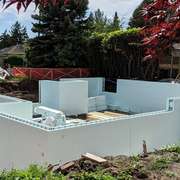
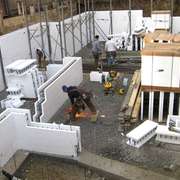
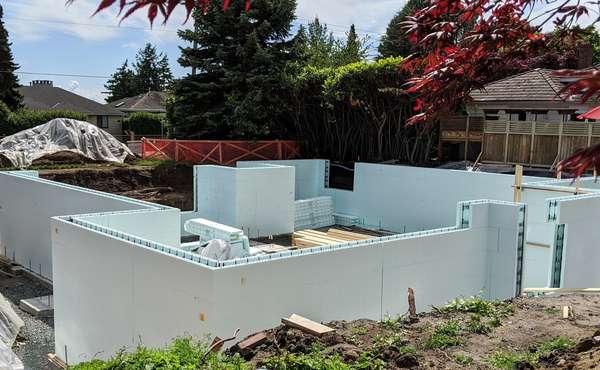
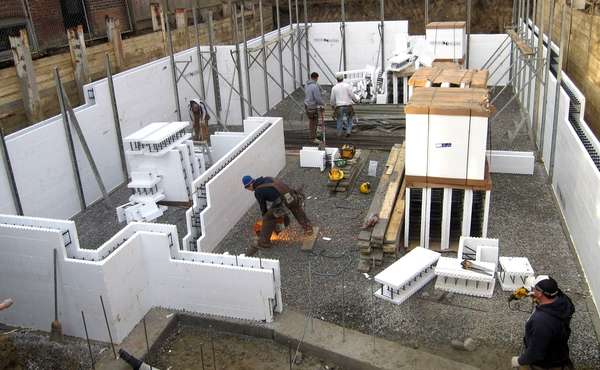
The confusion over ICF's thermal benefit stems from an incorrect comparison to 'exposed' thermal mass. The ICF wall, with its concrete core sandwiched between two continuous layers of Expanded Polystyrene (EPS) foam, is specifically designed as a 'mass with exterior insulation' system.
The role of insulation: the primary barrier
In a standard ICF block, the exterior EPS foam layer (typically providing about R-10, is the first line of defense. It prevents the rapid transfer of outside temperature fluctuations (whether hot or cold) to the massive concrete core. This insulation is crucial because it keeps the concrete mass at a very stable temperature, closely matching the conditioned indoor temperature. The concrete is 'buffered' from the outside world.
Thermal mass in ICF is about stability, not daily swing
The thermal mass in an ICF wall is not about absorbing heat directly from the sun and releasing it later, which is the function of passive solar design with exposed mass. Instead, the thermal mass in an ICF wall serves to stabilize the whole-wall temperature.
This provides a significant time lag, or thermal inertia, that slows the rate of heat transfer through the wall assembly, making the wall more resilient to external temperature swings.
How ICF thermal mass actually works: the thermal flywheel effect
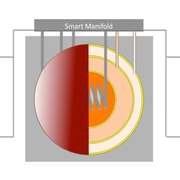
The concrete core of an ICF wall acts as a 'thermal flywheel' that stabilizes the home's interior temperature. This mechanism is subtle yet powerful, especially when compared to the performance of lighter-weight wall systems like wood framing and most types of insulation.
Think of an ICF wall as a highly insulated thermos filled with a massive thermal battery (the concrete). This battery resists any temperature change that might penetrate the insulation, giving the wall immense thermal inertia.
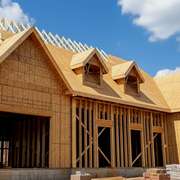
A well-insulated, airtight wood-frame wall is like a highly efficient foam cooler that is empty - it's excellent at stopping heat flow but has very little material inside to absorb, store, and delay temperature swings, which would be the 'buffering' we talk about.
The concrete core in the ICF wall provides the deep thermal reserve that stabilizes the whole-wall temperature and flattens interior temperature peaks over time, a benefit that a light-frame wall simply cannot match, regardless of its insulation thickness.
The three pillars of ICF performance: R-value, airtightness, and mass
ICF walls deliver exellent energy performance in homes because they combine three distinct building science benefits into a single assembly - continuous insulation, air tightness, and mass for buffering. This synergy is why they often outperform code-built stick-built walls with a similar nominal R-value.
Continuous insulation eliminates thermal bridging
In a standard wood-frame wall, insulation is placed between wood studs. However, the studs themselves have poor insulating qualities as wood is only about R1 per inch, compared to most insulation materials at at least R3-5 per inch.
The wood being more conductive than insulation constitutes a 'thermal bridge', leading to exponentially greater heat loss through framing members. This can reduce the wall's effective R-value by 20% or more.
The ICF design completely eliminates this problem since the wall is a solid sandwich of concrete between two continuous, uninterrupted layers of EPS foam. Seamless insulation ensures you get the full R-value across the entire wall surface.
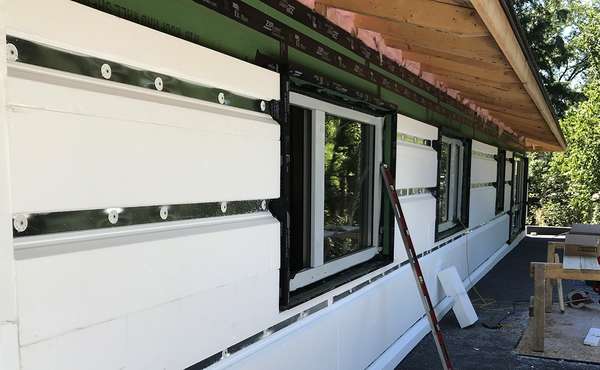
This is not to imply in any way that wood-framed homes cannot perform, this explanation refers more to standard code-built homes where only the minimum effort is often made towares energy efficiency. See the wood-framed LEED Platinum Ecohome demo house as an example of a super performing wood-framed wall.
Superior airtightness
Airtightness is arguably the most critical factor in energy-efficient home performance. Uncontrolled air leakage is a leading cause of drafts and high energy bills. A solid, monolithic concrete wall naturally has no joints, seams, or cracks for air to pass through, creating an inherently airtight home. This eliminates energy loss and improves indoor air quality by preventing outside air (and pollutants) from being pulled in.
Again to be clear on performance, you can make most wall assemblies airtight, but it requires a concerted effort. You need to be very meticulous in material selection and application to create a superior air barrier, where ICF is more like an 'air barrier for dummies' in a sense as its the normal expected result.
Exposed thermal mass in the envelope versus ICF walls
When thermal mass such as a finished concrete slab, a brick interior wall, or a stone fireplace is fully exposed and located entirely inside the insulated building envelope, its primary function is to directly interact with the indoor air. Understanding how thermal mass works in a home is vital for proper design and energy modeling as it is often used in conjunction with passive solar design.
Exposed thermal mass in homes
- How thermal mass works: It absorbs heat from the interior environment, such as solar radiation entering through windows. This prevents the indoor air temperature from overheating during the day.
- Key purpose: To moderate daily temperature swings within the conditioned space. The mass charges and discharges with the 24-hour cycle of heat gain and loss.
- Examples: Insulated concrete slab floors, masonry wood burning stoves, timberframe beams, brick fireplaces etc, are all examples of dense materials that act as thermal mass in homes.
ICF walls with interior insulation
The ICF wall is designed to be highly resilient to external changes.
- How it works: The exterior insulation isolates the concrete from rapid changes in outdoor temperature. The concrete mass remains stable, and its high thermal inertia provides a significant time lag in heat transfer.
- Key purpose: To stabilize the whole-wall temperature. It is about creating a massive, thermally-stable barrier that delays and reduces the rate of heat transfer through the assembly, making the wall resilient to external temperature swings.
- Analogy: A thermal battery that only has to deal with the slow, controlled heat exchange from the highly-insulated interior environment, not the chaotic daily exterior swings.
Regional differences and climate zones: where icf mass excels
The benefits of ICF thermal mass are universally applicable but provide the greatest measurable impact in specific climate conditions common across North America, the UK, Australia, and New Zealand.
North America (US and Canada)
In regions with extreme daily temperature swings, such as the deserts of the US Southwest or the continental climate of Canada and the US Midwest, the thermal flywheel effect is most pronounced. A cold front moving in or a hot sun beating down is delayed and softened by the ICF wall, resulting in lower peak loads for the HVAC system. This can allow professionals to specify smaller, more efficient heating and cooling equipment.
UK, Australia, and New Zealand
For more temperate or oceanic climates (like the UK, coastal New Zealand, or southern Australia) where energy codes are focused on total heat loss, the primary benefit is the consistent performance due to the elimination of thermal bridging and superior airtightness. However, in inland areas of Australia and New Zealand with greater diurnal temperature ranges, the buffering effect is a major comfort factor, keeping the interior cool long into a hot day.
Research and quantifiable benefits: what the studies show
The dynamic performance of ICF walls and how they react to daily temperature fluctuations is consistently shown to be superior to wood-frame walls, even with similar nominal R-values. This is what proves the thermal buffering effect is not a marketing gimmick but a genuine building science phenomenon.
ICFMA and cleb laboratories study
A major study commissioned by the Insulating Concrete Forms Manufacturers Association (ICFMA) and conducted by CLEB Laboratories quantified the real-world performance difference. The study found that an ICF wall assembly provided 58% better effective R-value and up to 60% energy savings compared to a standard 2x6 wood-frame wall with the same finishes. These energy savings are directly attributed to the combination of thermal mass, continuous insulation, and airtightness.
National research council of canada (nrc)
Research by the NRC's Institute for Research in Construction also highlighted the significant 'buffering effect' of ICF walls. They found that the thermal mass dramatically reduced peak heat loss and gain through the wall. This is the scientific basis for specifying smaller HVAC units—the concrete mass essentially 'clips' the temperature peaks, reducing the instantaneous demand on the mechanical systems.
In brief
The thermal mass of an ICF wall is a genuine, quantifiable building science benefit. The exterior insulation is not a flaw; it is the key feature that creates the thermal buffering effect. By isolating the concrete core from outside temperature extremes, the ICF wall system uses its mass to stabilize interior temperatures, creating a thermal flywheel.
This dynamic performance - combined with superior airtightness and continuous insulation - results in a wall that is highly resilient to temperature swings, provides exceptional comfort, and delivers significant energy savings over the life of the building. This makes ICF a superior choice for homeowners seeking comfort and durability, and for professionals designing high-performance homes.
Now that you know more about thermal mass in homes, find more info about high-performance building and green building techniques in the Ecohome Green Building Guide and these pages below:
-
Choosing between an HRV and an ERV for balanced ventilation
-
Understanding a home's blower door test result
-
Choosing the right insulation: the pros, cons, and applications
-
Advanced framing techniques for energy efficient homes


Comments (0)
Sign Up to Comment