






Thermal drift in insulation: are insulation R Values accurate and why do they change?
Thermal drift is the phenomenon where the initial, high R-value of certain foam insulation products decreases over time until it stabilizes at a lower, Long-Term Thermal Resistance (LTTR). For those that think in 'R-value per inch', which is probably most of us, the idea of that changing depending on seasons or degrading overtime is not really common knowledge.
This drop is not due to physical damage, but is a natural and unavoidable aging process caused by the replacement of the foam's high-performance blowing agent with ordinary air, which has a much lower insulating capacity.
Understanding thermal drift is critical for homeowners and building professionals alike to avoid under-insulating projects and ensure long-term energy performance.
This guide provides a comprehensive look at the key aspects of this topic. Below is an overview of the sections we will cover, allowing you to jump directly to the information you need.
- What is thermal drift and the long-term thermal resistance (LTTR)?
- Insulation materials subject to thermal drift
- Thermal drift in polyisocyanurate (Polyiso)
- Thermal drift in extruded polystyrene (XPS)
- Comparing stable and drifting foams (Polyiso, XPS, and EPS)
- In brief
How R-Values are calculated and why they vary
Design and building professionals as well as homeowners in the know, most commonly evaluate insulation in terms of R-Value per inch. That's the easiest metric as it is very easy to calculate when we target a certain performance and decide on a wall assembly.
But these numbers are often misleading, and as the very topic of this article alludes to, certain types of insulation can degrade over time. So choosing the right insulation for the right application takes looking at the performance statistics provided by manufacturers with an discerning eye.
Independent evaluators of the R-Value of specific materials often produces a range rather than a single figure, while manufacturers can be tempted to provide you with the most glowing numbers only. Any particular insulation may offer different resistance values to heat transfer at different temperatures, but you won't always see the weaker figures listed in marketing materials. These aren't catastrophic drops in performance we are talking about, but they should be considered when making insulation choices.
The R-Value testing standard: ASTM C518
Insulation R-values are determined in a laboratory using standard test methods, most commonly ASTM C518 (Standard Test Method for Steady-State Thermal Transmission Properties by Means of the Heat Flow Meter Apparatus). The key parameters for the legally published R-value, as required by the US Federal Trade Commission (FTC) 'R-Value Rule,' are:
- Mean test temperature: R-values must be reported from tests conducted at a mean temperature of 75°F (23.9°C).
- Temperature setup: This 75°F mean is typically achieved by setting the warm side plate at 95°F and the cold side plate at 55°F.
- The calculation: The test measures the heat flux (rate of heat flow) through the sample at steady-state conditions. The R-value is calculated as the thickness of the material divided by its thermal conductivity (R= thermal conductivity thickness).
Manufacturers are generally required to provide this 75°F mean temperature R-value on product labels and in literature.
Why R-Values often vary from the label
The 75°F mean temperature is chosen for standardization, but it does not reflect actual in-service conditions for a wall in winter or a roof in summer. The R-value of many materials changes as the temperature deviates significantly from this test standard. This is where transparency becomes important, as manufacturers may highlight the highest possible number in their marketing.
Temperature-sensitive materials:
- Polyisocyanurate (Polyiso): Polyiso's R-value is highly temperature-dependent and decreases significantly at colder temperatures. Research shows its R-value can drop by as much as 50% or more when the mean temperature drops to 25°F (-3.9°C). This is due to the thermal properties of the trapped blowing agents (gases) inside the closed cells.
- Extruded Polystyrene (XPS): Unlike Polyiso, the R-value of XPS insulation can actually increase slightly as the mean temperature drops. For instance, an R-5.0 per inch at 75°F may increase to R-5.6 per inch at 25°F.
- Expanded Polystyrene (EPS) and Graphite-Enhanced EPS (G-EPS): These materials use air (or a mix of air/graphite in G-EPS) as the primary insulating agent. Their R-values are considered stable and do not exhibit the same dramatic temperature dependence as Polyiso.
To provide a more accurate picture, many manufacturers (especially those selling to professionals) will also publish R-values at other mean temperatures, such as 40°F and 25°F, in their technical data sheets. For high-performance design, it's recommended to use a lower in-service R-value for materials like Polyiso to account for cold climate performance.
What is thermal drift and the long-term thermal resistance (LTTR)?
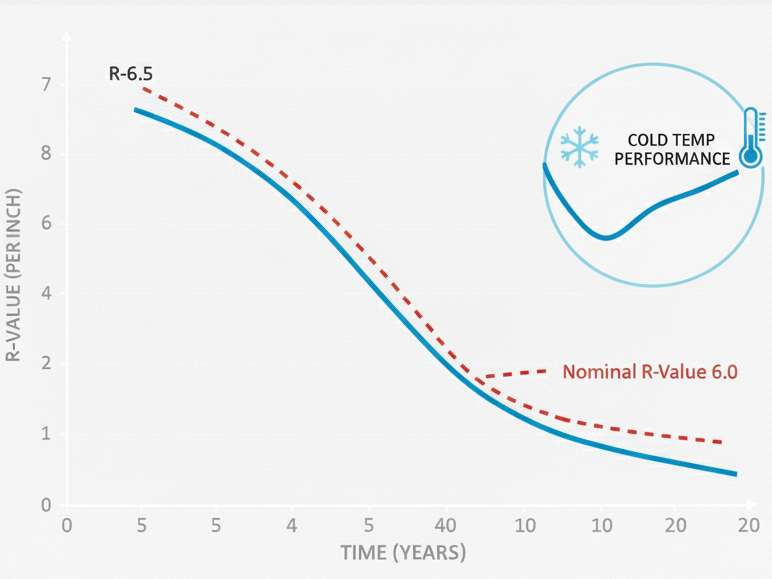
Thermal drift is the long-term, irreversible reduction in the R-value of certain closed-cell foam insulation products as the specialty gas trapped inside the foam’s cells escapes and is replaced by air. This process, also called aging or off-gassing, is a crucial factor to consider when designing a high-performance building envelope.
To achieve an initially high R-value (e.g., R-6.0 or more per inch), manufacturers use special blowing agents (gases with a much lower thermal conductivity than air) to inflate the foam’s tiny, closed cells.
While highly effective at first, these gases gradually diffuse out of the foam structure and are replaced by atmospheric air. Since air is a poorer insulator, the R-value of the product drops until the gas composition inside the cells reaches equilibrium with the outside environment.
The thermal performance you should rely on for a long-lived home is the Long-Term Thermal Resistance (LTTR) value.
- LTTR: This is the R-value that foam insulation is expected to maintain over its service life, typically based on accelerated laboratory testing (like ASTM C1303 or CAN/ULC-S770) that estimates performance after five years, which is then used to predict a long-term average.
- Significance: Building professionals and specifiers should always use the LTTR value, not the initial R-value, when calculating the insulation needs for a home, as the initial, non-aged R-value is misleading for long-term performance.
Insulation materials subject to thermal drift
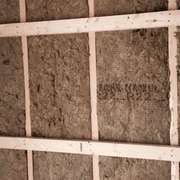
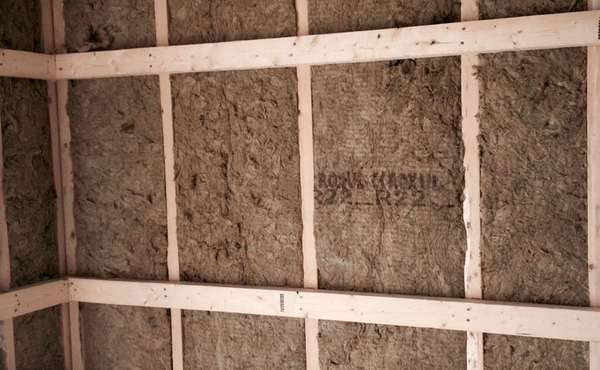
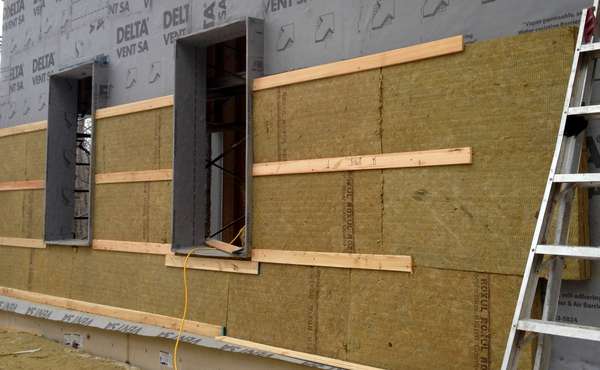
Materials that primarily rely on trapped air within their structure, such as fibrous insulations (mineral wool, fiberglass, and cellulose) or simple plastic foams (Expanded Polystyrene, or EPS), do not experience thermal drift because they are not dependent on high-performance blowing agents.
The insulation materials most susceptible to thermal drift are:
- Polyisocyanurate (Polyiso) rigid foam: The most significant product impacted.
- Extruded Polystyrene (XPS) rigid foam: Also experiences drift, though often at a slower rate than Polyiso.
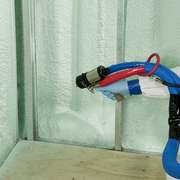
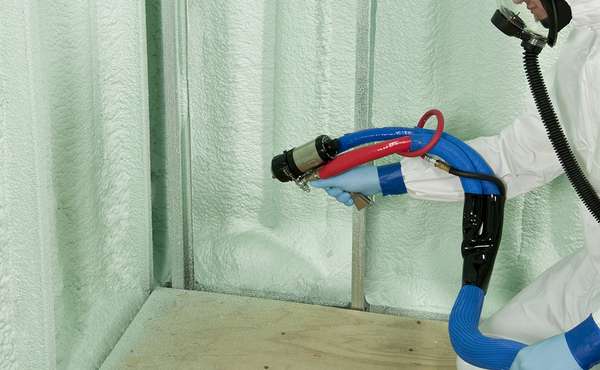
- Closed-Cell Polyurethane Spray Foam (CCSPF): The high initial R-value of this type of spray foam is also subject to drift.
Thermal drift in polyisocyanurate (polyiso)
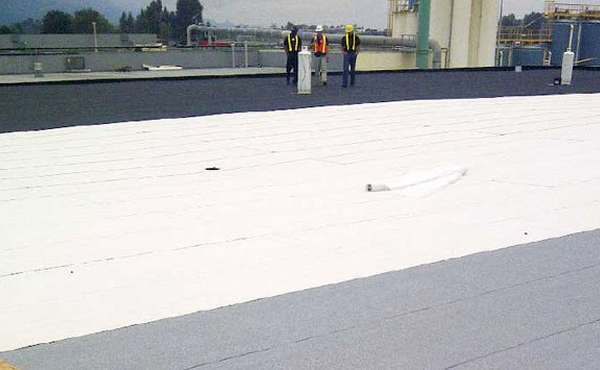
Polyiso is a popular choice for commercial roofing and above-grade wall insulation due to its extremely high initial R-value, often R-6.0 to R-6.5 per inch (RSI 1.06 to 1.14 per 25 mm). The manufacturing process for Polyiso relies on hydrocarbon blowing agents like pentane that provide its initial high thermal performance.
The process and stabilization
- Most thermal drift in Polyiso occurs rapidly, often within the first 6 to 24 months after manufacturing and installation. The R-value loss can be up to 5% of the labeled value before it stabilizes.
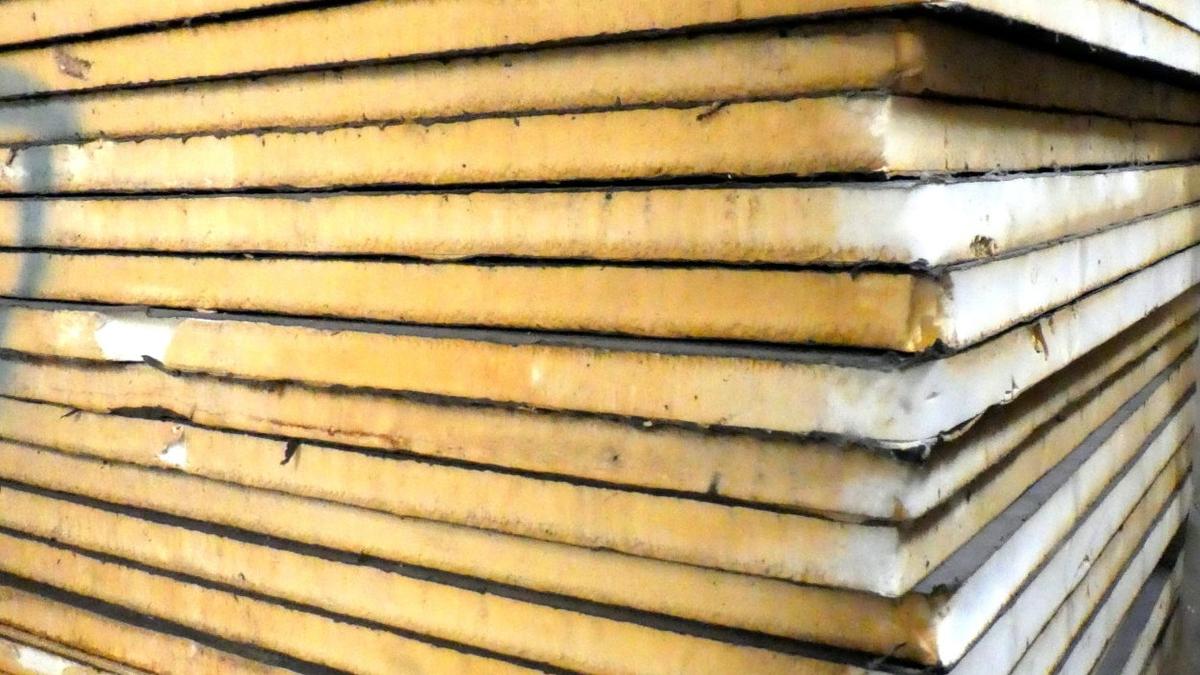
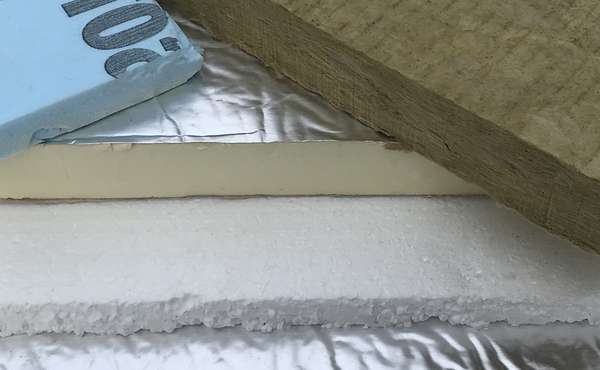
- Manufacturers address this by using impermeable facers - typically foil or coated glass fiber - on both sides of the board. These facers act as a barrier to slow the outward diffusion of the blowing agent and the inward diffusion of air. Without facers, the drift would be much more severe and rapid.
Temperature sensitivity
Professionals should note that Polyiso's R-value drops noticeably when it gets cold (below 40∘F or 4∘C). This decrease is temporary. This temporary reduction is separate from the permanent thermal drift, but can be a major issue in cold climate applications.
Thermal drift in extruded polystyrene (XPS)
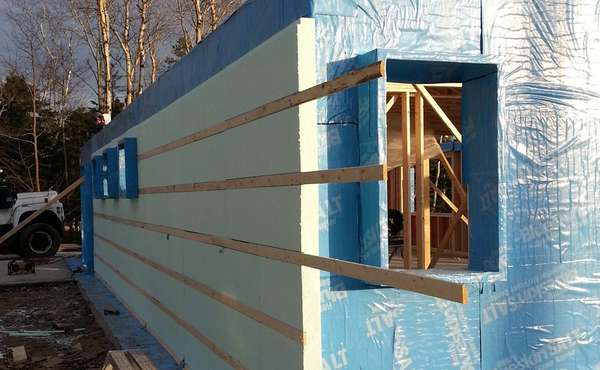
Extruded Polystyrene (XPS) rigid foam, often recognizable by its distinctive pink, blue, or green color, is typically considered to be R-5.0 per inch (RSI~0.88 per 25~mm), but is that accurate?
The mechanism of drift
- Like Polyiso, XPS relies on a captive blowing agent (Historically HCFCs, now often HFCs) to achieve its high initial rating. Thermal drift occurs as these gases escapes, with the final LTTR typically stabilizing between R-4.3 to R-4.7 per inch (RSI~0.76 to 0.83 per 25~mm).
- Due to its denser, closed-cell structure, the drift in XPS tends to be slower than in unfaced Polyiso, but the total long-term loss is often higher than in faced Polyiso. In real-world, long-term testing, the R-value of XPS can show a total loss of 10% to 20% compared to its initial value.
Embodied carbon note for homeowners
For the eco-curious homeowner, it’s worth noting that the blowing agents used in standard XPS historically had a very high Global Warming Potential (GWP), making its overall environmental impact significant, despite its strong performance. Manufacturers are moving toward lower-GWP alternatives to address this issue.
Comparing stable and drifting foams
When selecting a rigid foam for a project, the thermal drift profile is an essential factor. It separates the high-initial R-value foams from the stable, long-term R-value foams.
| Insulation Material | Initial R-Value (per inch) | Thermal Drift Subject? | Mechanism / R-Value Stability |
|---|---|---|---|
| Polyisocyanurate (Polyiso) | R-6.0 to R-6.5 | Yes (Significant Initial Drop) | High initial R-value due to captive blowing agent. Stabilizes to LTTR after 1-2 years. R-value also drops temporarily in cold temperatures. |
| Extruded Polystyrene (XPS) | R-5.0 | Yes (Slower, but Continuous) | Uses a captive blowing agent. R-value decreases over time (aging) to its LTTR, which is typically R-4.3 to R-4.7. |
| Expanded Polystyrene (EPS) | R-3.6 to R-4.4 | No (Stable R-Value) | Cells are filled with atmospheric air during manufacturing. The R-value is considered stable for the lifetime of the building and is its LTTR. |
The prosumer's perspective: thickness and cost
When calculating your building envelope, the difference between R-6.0 and R-4.5 can translate into a need for significantly thicker insulation to meet energy code requirements (like the R-20 or R-40 assemblies required by Passive House or other high-performance standards).
For instance, an assembly requiring R-20 continuous insulation would need 3.3 inches (8.4 cm) of R-6.0 Polyiso, but 4.4 inches (11.2 cm) of R-4.5 Polyiso (or R-4.5 XPS) to meet the same target—a 33% increase in thickness. This has direct impacts on costs, structural detailing, and window/door rough opening depths.
In brief
Thermal drift is the expected, permanent loss of R-value in certain closed-cell plastic foams as the specialized blowing gas used to make them escapes and is replaced by regular air. It primarily affects Polyisocyanurate (Polyiso) and Extruded Polystyrene (XPS).
The performance value that homeowners and professionals should always use for design purposes is the Long-Term Thermal Resistance (LTTR), which represents the stable, aged R-value of the product. By contrast, Expanded Polystyrene (EPS) is not subject to thermal drift because its cells contain only trapped air from the start, providing a lifetime stable R-value.
While widely available, understanding the environmental impact of fiberglass insulation involves looking at the energy-intensive melting process required for its production.
Now that you know more about thermal drift in insulation materials, find more info about other rigid insulation products and green building techniques in the Ecohome Green Building Guide and these pages below:
-
The difference between polyiso, EPS & XPS foam insulation and styrofoam
-
What are the best rigid insulation board alternatives to foam panels? Check out mineral wool, wood fiber, hemp and more!
-
Choosing the right insulation: the pros, cons and applications for walls, slabs and basements
-
Graphite-enhanced EPS (GPS): The next generation rigid foam insulation





Comments (0)
Sign Up to Comment