







For anyone looking to replace windows or build a new home, the options to weed your way through can be overwhelming. You will encounter terms like argon and krypton gas fills, low-E coatings, and U-values.
Understanding these technologies is critical because windows are often the weakest link in a building's thermal envelope. Choosing the right gas fill can significantly improve your home's energy efficiency, comfort, and noise reduction, but it comes at a cost. This guide explores the differences between argon and krypton, their return on investment, and whether they are the right choice for your project.
This guide provides a comprehensive look at the key aspects of this topic. Below is an overview of the sections we will cover, allowing you to jump directly to the information you need.
- What are argon and krypton gases?
- Argon vs. krypton: performance and cost
- Are gas-filled windows worth the money?
- Do gas-filled windows reduce passive solar heat gain?
- Lifespan and leakage: how long does gas in windows last?
- Replacing gas-filled windows
- Our conclusions on gas-filled windows
What are argon and krypton gases?
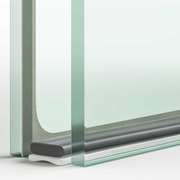
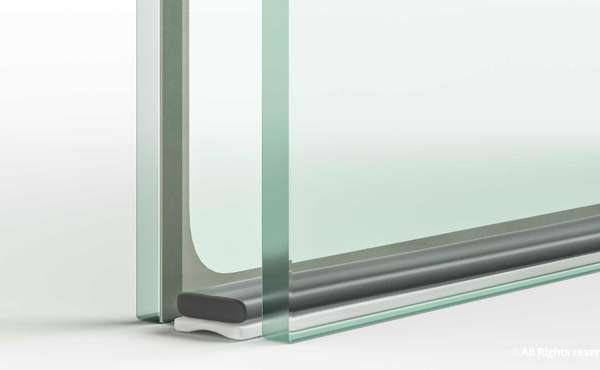
Argon and krypton are inert, non-toxic gases used to fill the space between glass panes in double- or triple-glazed windows. In standard insulating glass units (IGUs), this space is filled with regular air. However, air contains moisture and is relatively conductive, meaning it transfers heat easily. By replacing air with a denser, inert gas, window manufacturers can significantly slow down the transfer of heat through the window unit.
Why inert gases are used in windows
The primary purpose of gas fills is to improve the thermal performance of the window, measured as the U-factor (or U-value) in the US and UK, or R-value in Canada. Because these gases are denser than the atmosphere, they move more slowly. This reduced movement minimizes convection currents within the space between the panes, acting as a more effective insulating barrier against cold air in winter and hot air in summer.
Beyond thermal insulation, gas filled windows offer secondary benefits. They can help reduce sound transmission in homes, making your home quieter, and they minimize the risk of internal corrosion because they displace oxygen and moisture that can damage the spacer bars and seals over time.
Argon vs. krypton: performance and cost
While both gases serve the same function, they have distinct properties that make them suitable for different applications. The choice between them usually comes down to the specific design of the window and the budget of the project.
Argon: the standard for value
Argon is the most common gas used in residential windows today. It is relatively inexpensive, readily available, and provides a significant performance boost over air-filled windows. Argon is roughly six times denser than air. It performs best in a gap width of approximately ½ inch (12-13 mm). This makes it the ideal choice for standard double-pane windows, where the gap between panes is typically designed to accommodate this optimal thickness.
Krypton: high performance at a price
Krypton is a much denser gas than argon, it's also a more expensive gas and a more expensive window upgrade. Krypton is approximately six times denser than argon (and 12 times denser than air). Because of its high density, krypton is an exceptional insulator even in very thin spaces. It functions optimally in gaps as narrow as ¼ inch (6-7 mm) to 3/8 inch (9 mm).
This property makes krypton the gas of choice for triple-pane windows. In a triple-pane unit, the overall width of the window frame is limited. To fit three panes of glass into a standard frame depth, the gaps between the panes must be smaller. Argon would not perform efficiently in these narrow cavities, but krypton thrives, allowing for extremely high R-values without requiring bulky, non-standard frames.
Cost comparison
The price difference is substantial. Argon is a commodity gas that adds very little to the cost of a window—often just a few dollars per square foot. Krypton, being rarer, can increase the cost of a window package significantly. For most homeowners, the slight improvement in U-value provided by krypton in a standard double-pane window does not justify the steep price hike. However, for high-performance builds where every decimal point of efficiency counts, krypton is indispensable.
Are gas-filled windows worth the money?
For the vast majority of window installations, argon-filled windows are absolutely worth the money. The incremental cost over air-filled units is negligible compared to the energy savings and comfort improvements over the life of the window. And 'comfort' is a real factor when it comes to window choices.
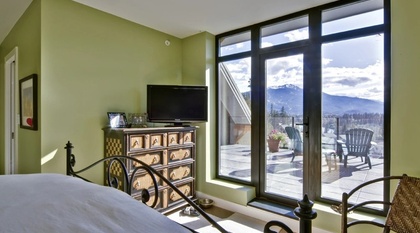
Sitting by an older double pane window or patio door on a very cold winter day, you would have felt much colder than a high quality and high performing window. It's really not just about your heating bills, its truly about comfort. Here you can read how to design for thermal comfort, and learn why your thermostat setting is really just a small part of your thermal experience.
In many regions, building codes now essentially mandate argon fills to meet minimum energy performance standards. Whether Krypton is worth it or now however, is a more nuanced decision. It is generally worth the investment only in specific scenarios:
- Passive House projects: When trying to achieve Passive House certification, the window U-values must be exceptionally low (often below 0.8 W/m²K or roughly R-7). Krypton-filled triple-glazed units are often necessary to hit these targets in cold climates.
- Space constraints: If you are retrofitting a historic home and need thin window profiles that mimic the original look but still require modern efficiency, krypton allows for high performance in a slim profile.

It is important to note that the gas fill is just one part of the equation. To get the most out of your investment, it must be paired with low-emissivity (low-E) coatings and a thermally broken frame. A krypton-filled unit with a poor frame is a waste of money.
Do gas-filled windows reduce passive solar heat gain?
No worries here for the passive heating fans, argon and krypton gas are invisible and they do not absorb, reflect, or block the visible light or the short-wave infrared energy (solar heat) from the sun. Solar radiation passes through the glass and the gas layer unimpeded.
Other high performance window options like Low E coatings and even the frame material choices for the most part have a pro and a con, gas does not. All gas does in windows does is improve the R value and reduce heat transmission, so there is really no downside to including gas in your window purchase.
Lifespan and leakage: how long does gas in windows last?
A common concern with gas-filled windows is leakage. Since the gas is not sealed in a vacuum but rather trapped between panes by a spacer and sealant system, some diffusion is natural over time.
Typical gas loss rates
The industry standard for gas leakage is about 1% per year. This means that after 20 years, a quality window should still retain about 80% of its gas fill. Even at this reduced level, the window will continue to insulate effectively, as the relationship between gas concentration and insulating value is not linear - you do not lose half the performance if you lose half the gas.
How to tell if the gas has leaked
You cannot see argon or krypton, nor can you smell them. The only visible sign of a complete seal failure is condensation or fogging between the panes of glass. If you see moisture inside the unit that you cannot wipe off, the seal has failed. At this point, the gas has escaped and been replaced by moisture-laden air, significantly reducing the window's thermal performance.
For more details on moisture issues, read our guide on condensation on windows, which explains causes and solutions for foggy glass.
Replacing gas-filled windows
If your windows have lost their gas fill due to seal failure, you generally cannot just refill them. The standard repair is to replace the customized Insulated Glass Unit (IGU) while leaving the existing window frame in place. This is often much cheaper than a full window replacement.
However, if your frames are rotting or warping, a full replacement might be necessary. When selecting new windows, pay close attention to the frame material. As detailed in our guide page about which window frame materials are best, choices like fiberglass or thermally broken aluminum can offer better durability and seal integrity than standard vinyl.
For ultra-high performance without the weight of triple glazing, you might also consider suspended-film insulating glass. These units use internal films to create multiple air chambers, achieving high R-values that rival krypton units often at a lower weight and cost. And here you can read about Aerogel, super insulation for windows.
Our conclusions on gas-filled windows
Argon gas is the smart, cost-effective standard for modern residential windows, offering excellent value and performance. Krypton gas is a premium solution best reserved for triple-pane windows or specific architectural needs where space is tight and maximum insulation is required. Both gases rely on high-quality seals to last, so investing in reputable window manufacturers is just as important as the gas inside.
Now that you know more about gas filled high efficiency windows, learn more about insulation and green building techniques in the Ecohome Green Building Guide and these pages below:
-
How to install windows for the best performance and efficiency - Video Guide
-
Suspended-film insulating glass windows: a definitive guide
-
When should you replace old windows? Can you fix old windows?
-
Aerogel super insulation - the next game changer in window performance

















Comments (0)
Sign Up to Comment