





Composting toilets: a homeowner's & pro's guide
For off-grid living, tiny houses, and sustainable residential projects, the composting toilet has evolved from a rustic necessity into a high-performance sanitation solution. For those new to composting toilets, it is hard not to conjure an image of a backwoods sort of environment where someone is manually managing their own business in an unappealing way. But composting toilets have entered the modern age, so fear not!
Modern systems offer waterless operation, odor-free technology, and a significant reduction in household water consumption, making them a viable option for homeowners looking to reduce their environmental footprint.
Whether you are navigating local building codes for an Accessory Dwelling Unit (ADU) or seeking a low-maintenance model for a remote cabin, understanding the biological principles and engineering types of these toilets is the first step toward independent waste management.
This guide provides a comprehensive look at the key aspects of this topic. Below is an overview of the sections we will cover, allowing you to jump directly to the information you need.
- How composting toilets work: the biology of waste
- Comparing model types: self-contained vs. centralized
- Top 5 composting toilet brands for homeowners and pros
- Maintenance requirements: lowest vs. highest effort
- Primary applications: off-grid, tiny houses, and ADUs
- Legalities and permitting: navigating the rules
- In brief
How composting toilets work: the biology of waste
A composting toilet is not a disposal unit but a biological reactor. Unlike a standard flush toilet that uses 1.6 gallons (6 liters) or more per flush to transport waste to a septic tank or municipal sewer, a composting toilet uses aerobic decomposition to treat human waste. The process relies on a balance of nitrogen (from the waste), carbon (from a "bulking agent" like coco coir or peat moss), oxygen, and moisture.
To ensure odorless operation, most modern units employ urine diversion. By separating liquids from solids, the system prevents anaerobic conditions, which is the primary cause of sewage smells in homes. Professionals should note that maintaining a moisture content of 40% to 60% is critical for microbial health. In many designs, a small 12V or 120V fan provides constant ventilation, pulling air across the waste and out through a roof vent, which also helps to dehydrate the solids.
Comparing model types: self-contained vs. centralized
When selecting a system, the choice usually falls between self-contained units and centralized (remote) systems. Each has distinct installation and spatial requirements.
Self-contained composting toilets
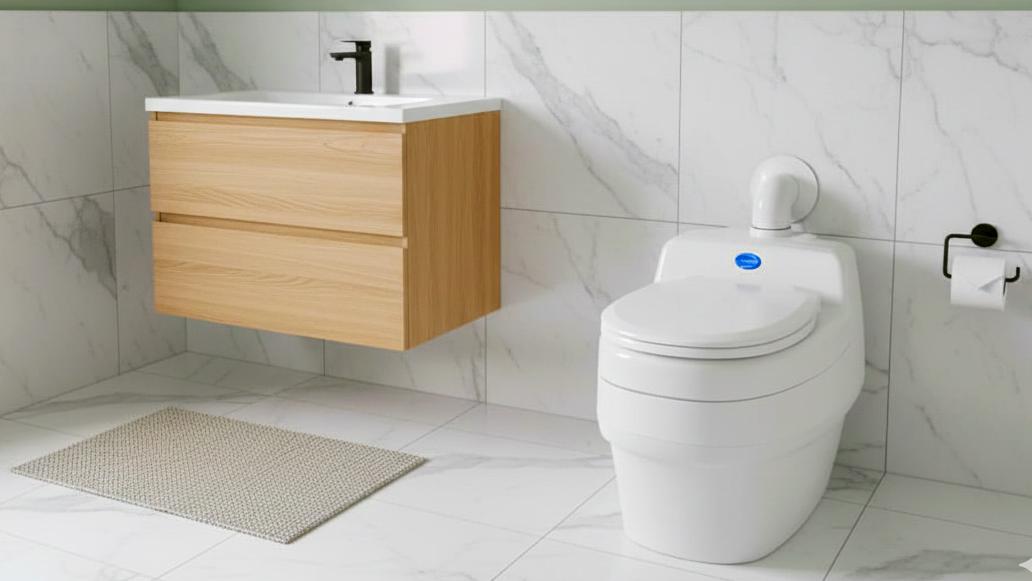
In these models, the composting chamber is located directly beneath the toilet seat. These are the most common choice for tiny houses and renovations because they require no sub-floor space. They are compact but have a limited holding capacity, usually requiring emptying every 3 to 6 weeks for a 2 person household.
Centralized or remote systems
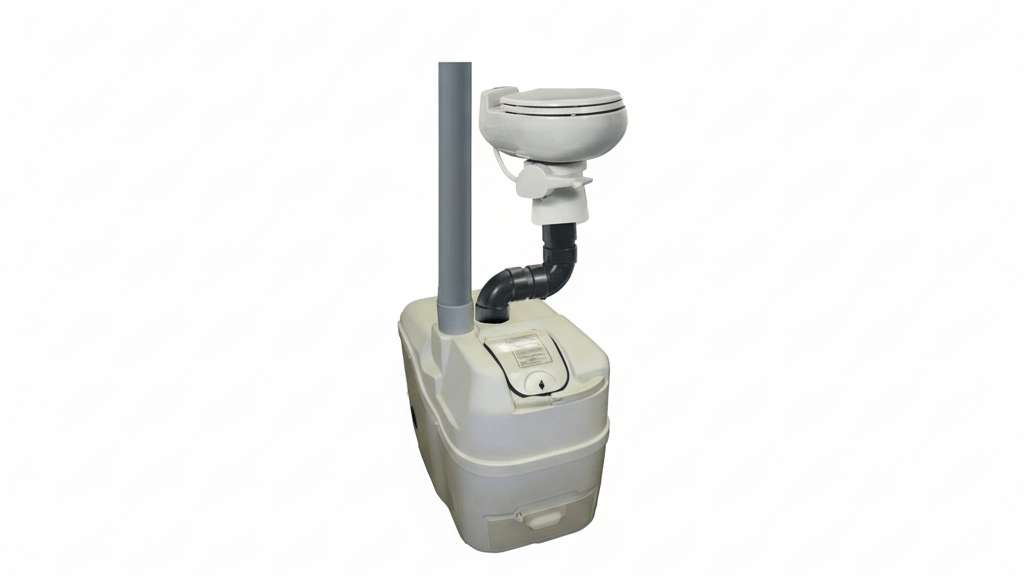
A centralized system features a conventional-looking toilet pedestal in the bathroom connected via a chute or vacuum line to a large composting bin located in a basement or crawlspace. These are favored by architects and builders for full-sized off-grid homes because they can handle higher volumes and require less frequent emptying - often only once per year.
Top 5 composting toilet brands for homeowners and pros
Selecting a reliable manufacturer is essential for long-term performance and code compliance. Based on reliability, certification, and ease of maintenance, these five brands lead the market in 2026.
Sun-mar
Sun-Mar is a pioneer in the industry, known for its Bio-drum technology which ensures even aeration and moisture distribution. Their Centrex 1000 and Excel models are staples for both off-grid homeowners and commercial applications due to their high capacity and NSF/ANSI 41 certification. They offer both electric (with heaters) and non-electric versions, making them versatile for various power configurations.
Nature's Head
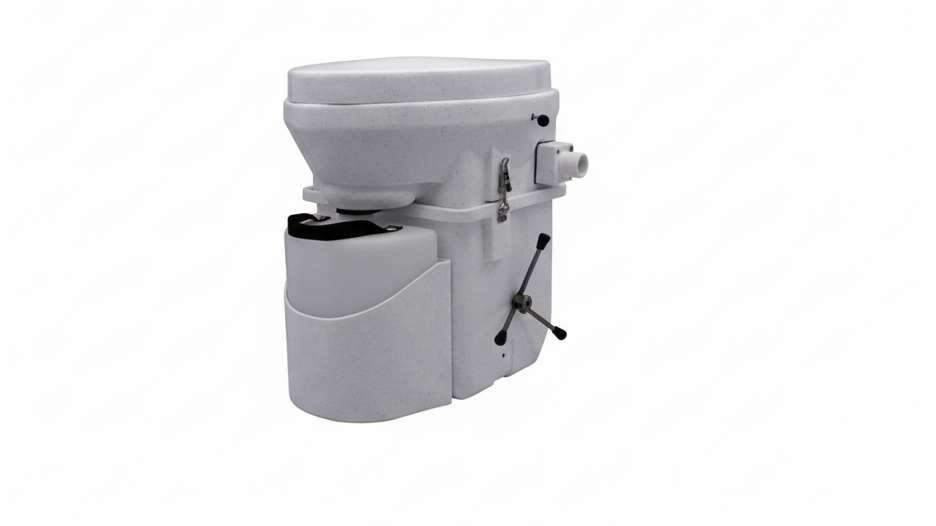
Originally designed for the marine industry, Nature's Head has become the gold standard for tiny houses and DIY builders. It is a rugged, urine-diverting self-contained unit that is exceptionally easy to install. Its spider-handle agitator and stainless steel hardware make it a favorite for those who need a durable, portable solution that can withstand high-frequency use in tight quarters.
Separett
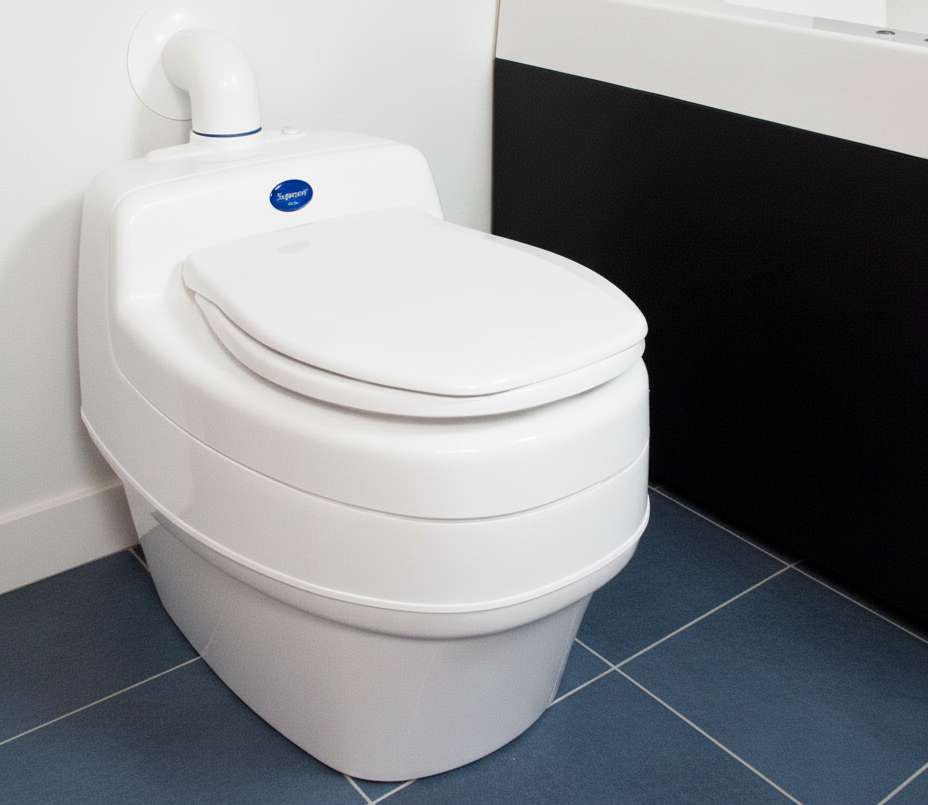
Swedish manufacturer Separett is highly regarded for its sleek, modern aesthetics that closely resemble a traditional toilet. Their Villa series is a top-tier urine-diverting model that uses a pressure-sensitive trap door for solids, keeping the waste out of sight. It is a preferred choice for residential ADUs and modern eco-homes where interior design is a high priority alongside sustainability.
Clivus Multrum
For professionals and architects working on large-scale residential or public projects, Clivus Multrum is the go-to for centralized, continuous composting systems. These are high-capacity units that reside in a basement or separate room. They are designed for decades of service and can handle large volumes, often being integrated into "green" commercial buildings and remote park facilities worldwide.

Laveo by DryFlush
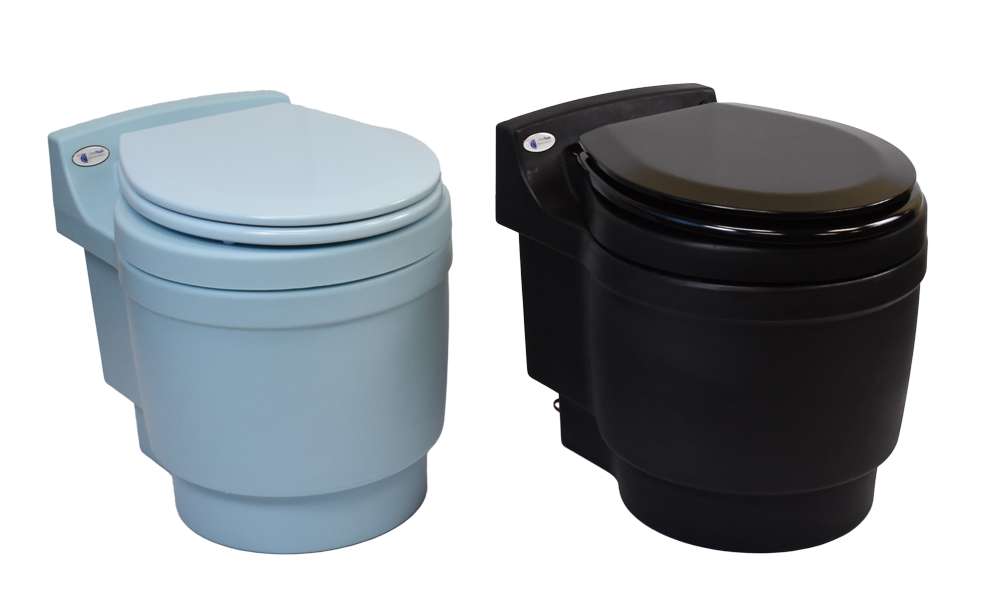
While technically a waterless disposal system rather than a biological composter, the Laveo DryFlush is frequently used in similar applications. It uses a proprietary bagging system that seals waste away with each "flush." It is an excellent choice for medical recovery rooms, basements where plumbing is impossible, or areas where the user wants zero contact with waste and zero maintenance of a compost pile.
Maintenance requirements: lowest vs. highest effort
Maintenance is often the deciding factor for homeowners when choosing a composting toilet model. The 'ick factor' is largely mitigated by design, but some systems demand more active management than others.
- Lowest maintenance: Large-scale centralized systems. Because of their size, these systems allow for long-term decomposition. Some models use a rotating drum or multiple bins, meaning the user only interacts with fully composted, soil-like material once or twice a year.
- Moderate maintenance: Urine-diverting self-contained units. These require the urine bottle to be emptied every few days (if not plumbed to a graywater system) and the solids bin to be emptied monthly.
- Highest maintenance: Non-diverting/batch systems. Systems that do not separate urine require more bulking material to manage moisture and more frequent 'turning' or agitation to prevent odors and ensure aerobic breakdown.
Primary applications for composting toilets: off-grid homes, tiny houses, and ADUs
Composting toilets are not a one-size-fits-all solution; their utility depends on the site constraints and occupancy.
Off-grid houses: For homes without access to municipal services, a composting toilet eliminates the need for a costly septic system, which can save homeowners between $10,000 and $30,000 (roughly 9,500 to 28,500 EUR) depending on soil conditions.
Mobile tiny houses: Weight and portability are key. A waterless toilet eliminates a "blackwater" tank, which is heavy and difficult to dump. Many tiny house manufacturers and builders prefer urine-diverting models for their simplicity and odor control in small spaces.
Accessory Dwelling Units (ADUs): In urban environments, installing a composting toilet can bypass the need to trench through existing landscaping to reach main sewer lines, though this is where legal hurdles are most common.
Legalities and permitting: navigating the rules
The legal landscape for alternative sanitation varies significantly by region. Professionals should always consult the local health department or building official before installation.
North America (US and Canada): Most jurisdictions follow the International Plumbing Code (IPC) or Uniform Plumbing Code (UPC). Many states and provinces now recognize NSF/ANSI Standard 41, which certifies composting toilets for public health safety. However, some areas still require a "flush toilet" to be installed to meet minimum habitability standards, even if a composting unit is also present.
UK, Australia, and New Zealand: In the UK, Building Regulations (Part H) allow for non-water-borne sanitation provided there is a suitable disposal method for the end product. In Australia and NZ, AS/NZS 1546.2 is the standard for on-site domestic wastewater treatment, and many local councils provide specific permit pathways for composting systems.
In brief
- Composting toilets use biological decomposition to turn waste into stable organic matter without water.
- Urine diversion is the most effective way to prevent odors and simplify maintenance.
- Self-contained models are ideal for tiny houses, while centralized systems suit full-sized off-grid homes.
- Always check for NSF/ANSI 41 certification or local equivalents to satisfy building inspectors.
- Proper ventilation and carbon-to-nitrogen ratios are the keys to a successful sanitation system.
Now that you know more about composting toilets, find more info about sustainable sanitation and green building techniques in the Ecohome Green Building Guide and these pages below:
-
Backyard composting: a homeowner's and pro's guide
-
Graywater recycling systems that work
-
Water efficient toilets for reduced water use
-
Building an off-grid eco-community - where to start?

Comments (0)
Sign Up to Comment