










Next-gen solar perovskite and tandem cells: a homeowner's and pro's guide
Next-generation perovskite and tandem solar cells represent the most significant technological leap in residential renewable energy generation in a generation. Combined with a move towards the electrification of homes and huge demand from AI that is eating up power, the timing couldn't be better for meeting the high demands for electricity.
By blending cutting-edge material science with traditional solar infrastructure, these advanced photovoltaic (PV) systems offer a clear path toward radical energy independence. This bodes well for those looking to future-proof their homes to keep running during power outages, which are increasingly severe and more frequent as the carbon we have released for generations comes home to roost.
- Understanding perovskite and tandem technology
- Benefits for homeowners and professionals
- Challenges, durability and commercial availability
- Regional considerations and financial incentives
- In brief
Understanding perovskite and tandem technology
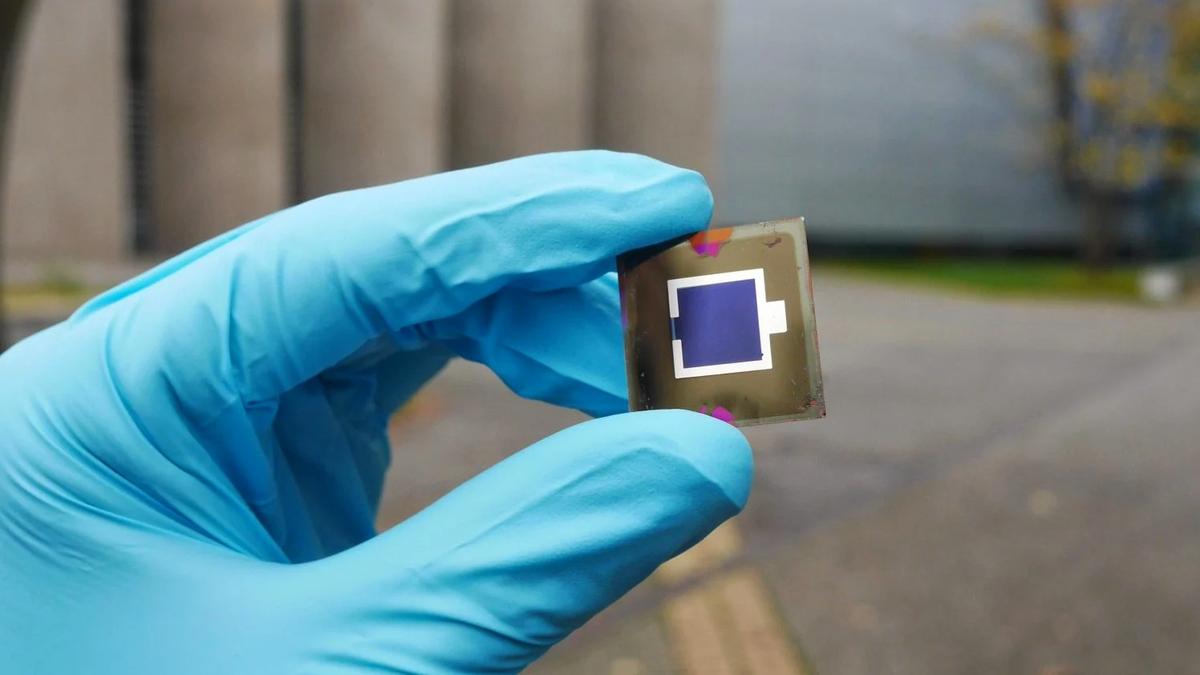
Perovskite solar cells utilize a synthetic material engineered with a specific crystalline structure that excels at absorbing distinct wavelengths of sunlight. While standard silicon panels have dominated the clean energy sector for decades, they are rapidly approaching their theoretical efficiency ceiling, often referred to by engineers as the Shockley-Queisser limit of roughly 29 percent.
The mechanics of tandem stacking
To shatter this efficiency barrier, manufacturers are pairing traditional silicon with perovskite layers to create tandem solar cells. In this configuration, the top perovskite layer absorbs high-energy blue light spectrums, while the underlying silicon layer captures low-energy red wavelengths. This dual-absorption approach allows the combined cell to convert significantly more sunlight into usable electricity without expanding the physical footprint of the array.
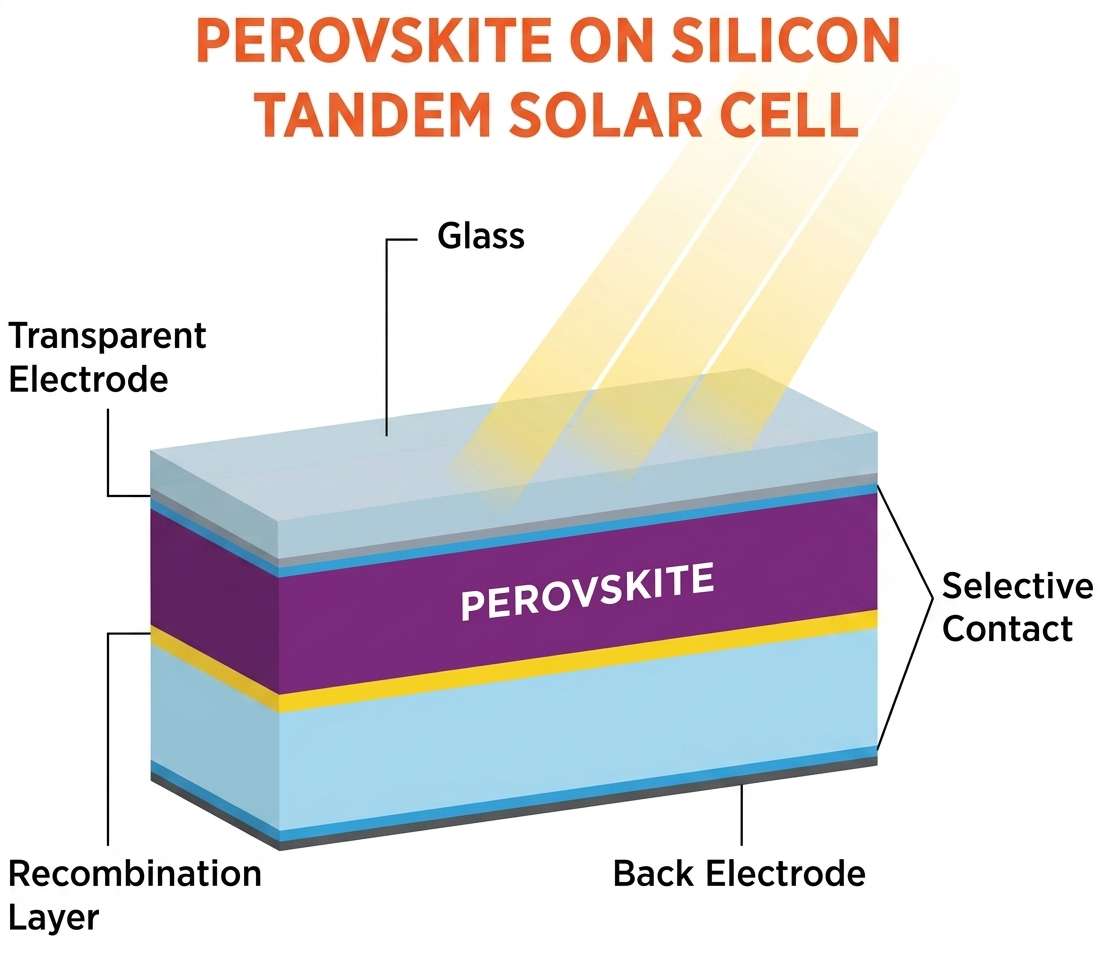
A typical perovskite layer is incredibly thin, measuring roughly 0.00004 inches (one micrometer) in thickness, which is approximately 100 times thinner than a human hair. This lightweight profile means that adding perovskite to standard silicon tracking or residential solar shingle substrates adds negligible weight while dramatically improving overall power density.
Benefits for homeowners and professionals
The primary commercial appeal of next-generation tandem solar panels is their unprecedented energy conversion efficiency ratings. Laboratory testing has already pushed tandem cell configurations past 33 percent efficiency, a massive leap over the 18 to 22 percent averages found in conventional residential solar panels available today.
What this means for the modern homeowner
For individuals building or retrofitting an energy-efficient home, higher efficiency translates directly to a smaller rooftop footprint. If your roof space is limited by gables, dormers, or shading from nearby trees, installing high-yield tandem panels ensures you can still meet 100 percent of your household electrical load, charge electric vehicles, and run heat pumps efficiently.
Lower space requirements also lower the total amount of racking hardware needed, simplifying the visual integration of the solar array into your home design.
Technical advantages for contractors and builders
From an installation perspective, solar contractors and building professionals can deploy these systems using familiar structural techniques. Because tandem modules fit into standard dimensions, such as a typical residential panel size of roughly 66 inches by 40 inches (168 cm by 101 cm), they remain fully compatible with mainstream racking systems and modern micro-inverters.
Additionally, perovskite materials exhibit an excellent temperature coefficient, meaning they lose less efficiency on hot summer days compared to traditional silicon alternatives, ensuring a more stable power curve throughout the year.
Challenges, durability and commercial availability
Despite the massive performance advantages, widespread commercial deployment faces hurdles related to long-term atmospheric durability. Traditional silicon arrays are famous for their longevity, often carrying performance warranties that guarantee at least 80 percent power output after 25 years of continuous service.
Overcoming moisture and heat degradation
Perovskite structures are naturally sensitive to moisture, oxygen, and sustained ultraviolet exposure. When exposed to harsh outdoor elements, unsealed perovskite crystals can degrade rapidly, shortening the functional lifespan of the cell.
However, international research consortiums and manufacturers have made massive strides by developing advanced polymer encapsulation techniques and introducing chemical stabilizers to protect the delicate layers.
The commercial timeline for buyers
As manufacturing facilities scale up production lines, tandem modules are steadily transitioning from experimental labs to commercial markets. Leading solar manufacturers are currently piloting utility-scale tandem products, with residential-grade panels expected to land on consumer markets in volume over the next two to three years. Early adopters should expect a minor cost premium per watt, which will be quickly offset by the accelerated return on investment driven by the superior power output.
Regional considerations and financial incentives
Maximizing the financial return on next-generation solar setups requires a clear understanding of regional climate realities and local clean energy frameworks. Government policies across the globe are adapting quickly to incentivize the adoption of ultra-high-efficiency renewable technologies.
North American market variables
In the United States, homeowners and builders can leverage the 2026 federal Residential Clean Energy Credit to deduct 30 percent of the total installation cost from their federal taxes. In Canada, regional net metering frameworks allow residents to feed excess summer generation back into the provincial grid, banking credits for cold winter months. Because tandem panels generate more power under diffuse light conditions, they are exceptionally well-suited for northern climates where winter days are short and often overcast.
United Kingdom, Australia and New Zealand frameworks
In the United Kingdom, residential solar installations currently benefit from a zero percent value-added tax rate, alongside the Smart Export Guarantee which ensures utility companies pay homeowners for exported green electricity.
Meanwhile, professionals in Australia can utilize Small-scale Technology Certificates to dramatically lower upfront system expenses. In New Zealand, localized clean energy loan options from major banking institutions make financing high-efficiency solar integration highly accessible for custom residential builds.
In brief
Tandem perovskite solar cells are set to fundamentally transform the residential solar market by offering massive efficiency gains within conventional panel dimensions. While long-term durability engineering continues to refine these modules, their ability to unlock over 30 percent energy conversion efficiency makes them a critical technology for future-proofing sustainable homes, optimizing limited roof space, and accelerating global clean energy adoption paths.
Now that you know more about next-gen solar perovskite and tandem cells, find more info about solar energy and green building techniques in the Ecohome Green Building Guide and these pages below:
-
Solar windows: achieving net-zero with transparent photovoltaic (BIPV) glass
-
Master net metering by combining PV solar, heat pumps and home batteries
-
Roof mounted solar panels or solar trackers, which is best?
-
2026 energy efficiency grants and tax credits for home solar installations









Comments (0)
Sign Up to Comment