





Generate power with PV coatings on windows
The transition toward net-zero building has traditionally focused on rooftops, but energy-generating glass coatings are now turning the building envelope itself into a power plant. By integrating transparent photovoltaic (TPV) technology directly into windows and facades, homeowners and professionals can harvest solar energy without sacrificing natural light or aesthetics.
These solar windows represent a shift from passive energy conservation to active generation, utilizing the largest available surface area of modern architecture to achieve unprecedented energy independence.
- How transparent PV works
- Low-E glass vs. energy-generating coatings
- Efficiency and performance expectations
- Installation and pro considerations
- Transparency, light, and aesthetic trade-offs
- Maintenance and longevity challenges
- Cost analysis and ROI
- In brief
How transparent PV works
Standard solar panels are opaque because they absorb the visible light spectrum to generate electricity. In contrast, transparent solar coatings utilize selective absorption. These coatings are engineered to allow visible light to pass through while capturing energy from the ultraviolet (UV) and infrared (IR) spectrums.
The science of selective absorption
Most TPV technologies use organic salts or specialized thin-film layers that act as a 'glow-in-the-dark' material for non-visible light. These materials absorb high-energy UV and heat-carrying IR waves and move them to the edges of the glass.
At the perimeter, thin strips of conventional photovoltaic cells - hidden within the window frame - convert that concentrated light into DC electricity. This allows the window to maintain high levels of transparency while simultaneously generating power.
Low-E glass vs. energy-generating coatings
While both Low-Emissivity (Low-E) glass and TPV coatings manage solar energy, they serve fundamentally different purposes in a high-performance building envelope.
Passive control vs. active generation
Low-E coatings on windows are microscopically thin metallic layers - often silver - about 500 times thinner than a human hair. Their job is to reflect heat back to its source: keeping warmth inside during winter and blocking solar heat gain in summer.
While Low-E glass reduces heat loss, it does not produce it. Energy-generating coatings take this a step further by capturing that same infrared heat and converting it into a usable electrical current. For even more advanced window glazing, see our guide on Aerogel insulating glass units.
Efficiency and performance expectations
For builders and homeowners, managing expectations regarding output is critical. Transparent solar glass is currently less efficient than traditional silicon-based rooftop panels, but it offers a much larger functional surface area.
Understanding efficiency metrics
Traditional rooftop solar panels typically achieve efficiencies between 18% and 23%. Current commercial transparent solar windows generally range from 5% to 10% efficiency. However, in an urban environment or a home with large south-facing glazing, the sheer square footage of glass can compensate for lower per-inch (2.5 cm) efficiency. In 2026, new perovskite-based coatings are beginning to push these boundaries, targeting efficiencies closer to 15% without compromising clarity.
Installation and pro considerations
Integrating energy-generating glass requires coordination between glazing contractors and electrical professionals. These are not standalone units but parts of a Building-Integrated Photovoltaic (BIPV) system.
Wiring and system integration
Each window unit must be wired back to a central inverter or micro-inverter system. For building professionals, this means planning for wire runs through window headers or specialized mullions early in the design phase.
Unlike rooftop solar, where wires are often external, BIPV systems require internal routing that must comply with local electrical codes for low-voltage DC systems. The complexity increases when integrating these windows into smart home automation systems for real-time energy monitoring.
Transparency, light, and aesthetic trade-offs
One of the primary concerns for homeowners is how these coatings affect the quality of light inside the home. While advertised as 'transparent,' there are nuances to consider regarding the visible light transmission (VLT).
Potential for tinting and color shift
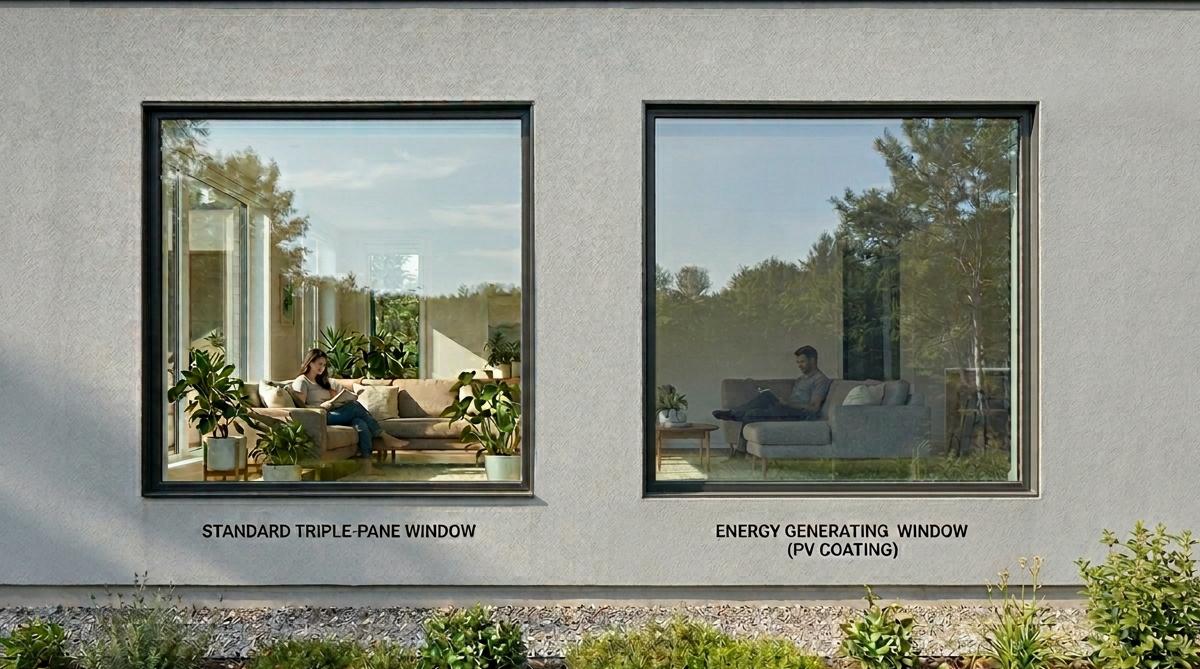
Depending on the manufacturer, some coatings can introduce a subtle blue or gray tint to the glass. This is often comparable to the tint found in high-performance triple-pane windows but may be more noticeable at certain angles.
Pros must consult with clients on the Visible Light Transmittance rating; a standard window might have a VLT of 70%, while a solar-generating window might sit between 40% and 60%. This reduction in light can be beneficial for reducing glare in home offices, but may require slightly more artificial lighting in northern climates during winter months.
Maintenance and longevity challenges
Unlike a standard window that remains functional as long as the seal holds, an energy-generating window is an electronic component subject to degradation.
Keeping the surface clean
For rooftop solar, rain often provides sufficient cleaning. However, vertical windows are prone to dirt streaks and mineral deposits. Because efficiency is directly tied to light penetration, a dirty window can see a performance drop of 15% or more.
Homeowners should plan for a more frequent cleaning schedule compared to standard glazing. Additionally, the longevity of organic PV coatings is a point of concern; while traditional panels last 25 years, some early-generation TPV coatings may experience efficiency drops after 15 to 20 years, making warranty terms a critical factor for contractors to vet.
Cost analysis and ROI
The 'green premium' for solar-integrated glass is significant, often costing 2 to 3 times more than standard high-efficiency windows. However, the ROI should be calculated by looking at the offset in building material costs.
A dual-purpose investment
When used in new construction, the glass serves as both the exterior weather barrier and the power generator. This 'two-for-one' utility helps mitigate the high upfront cost. Furthermore, these windows provide exceptional UV protection, blocking nearly 100% of the rays that fade hardwood floors and furniture.
For a deep dive into how this compares to other high-performance strategies, read our analysis on net zero energy homes vs passive house. In many regions, BIPV also qualifies for federal solar tax credits, which can cover up to 30% of the total installation cost.
In brief
Energy-generating glass coatings are no longer a laboratory concept; they are a viable BIPV solution for the modern home. While they come with a higher price tag and specific maintenance needs, the ability to generate power from every window makes them indispensable for net-zero energy goals.
As technology matures, the trade-off between transparency and efficiency will continue to shrink, making power-generating glass the future standard for the eco-conscious building professional.
Now that you know more about energy-generating glass coatings, find more info about sustainable window technologies & green building techniques in the Ecohome Green Building Guide and these pages below:
-
Integrating solar, home batteries and heat pumps: how to master net metering
-
Choosing window mechanisms - casement, slider or tilt and turn, which is best?
-
The definitive guide to suspended-film insulating glass windows
-
Window film treatment to reflect heat and lower air conditioning bills







Comments (0)
Sign Up to Comment