
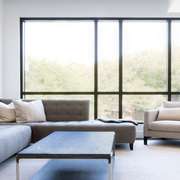
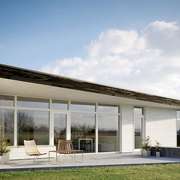

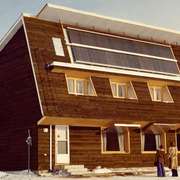
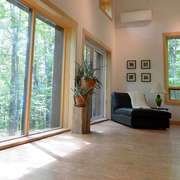
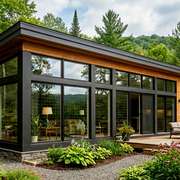


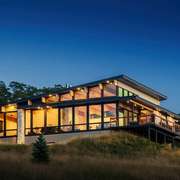

Homes designed for passive heating and cooling offer noticeably lower utility bills, not to mention increased comfort and security during power outages. In our humble opinion, the first thought for any home being designed or built, should be - which way is south and how do I use that knowledge to passively reduce the future energy consumption of my home.
The concept of passive solar home design is not new, but it is not nearly as commonly employed as it should be. Given a choice, we are all smart enough to sit in either the sun or the shade depending on whether we are warm or cold, so the concept is unconsciously understood by all of us. But that knowledge is not always employed in terms of home design and orientation.

This is not directed solely at those designing a new home, any home that does not currently have suitable summer shading on south facing windows could benefit from including some sort of measures to allow winter sun in and still keep the summer sun out.
While we often focus on maximizing winter sun when we consider passive heating, preventing unwanted heating in summer is equally, if not more, important to prevent overheating and reduce cooling costs. This guide will provide a comprehensive look at both exterior and interior window shading strategies, from landscaping to high-tech window treatments, ensuring your home remains comfortable and efficient year-round.
- Understanding solar heat gain
- Strategic exterior shading: The first line of defense
- Interior shading options: Layering your defenses
- Advanced glass and film technologies
- In brief
Understanding solar heat gain: a seasonal balancing act
Passive solar design hinges on a simple principle: letting the sun's energy in when you need it and keeping it out when you don't. The angle of the sun in the sky changes dramatically with the seasons. In the Northern Hemisphere, the sun is low in the southern sky during winter, allowing its rays to penetrate deep into your home through south-facing windows.
This energy is then absorbed by a home's thermal mass (e.g., concrete floors, brick walls) and released slowly, providing free heating. In the summer, however, the sun is much higher in the sky. when left unchecked these high-angle rays will cause significant overheating.
Strategic exterior shading options
The most effective way to manage solar heat gain is to stop the sun's rays before they even hit the window glass. Exterior shading provides the best protection because it prevents heat from building up on the window pane itself and radiating inward.
Fixed architectural overhangs and porches
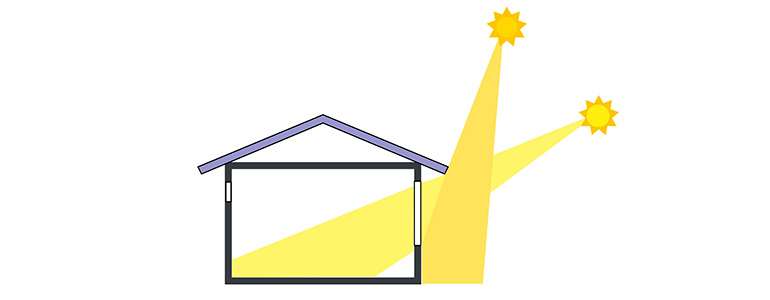
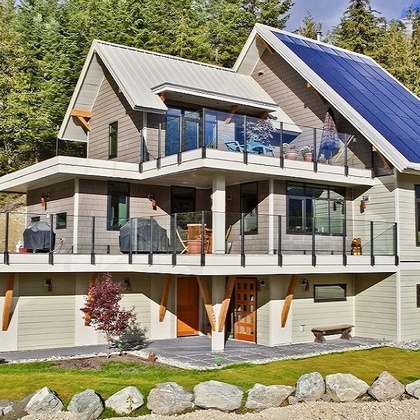
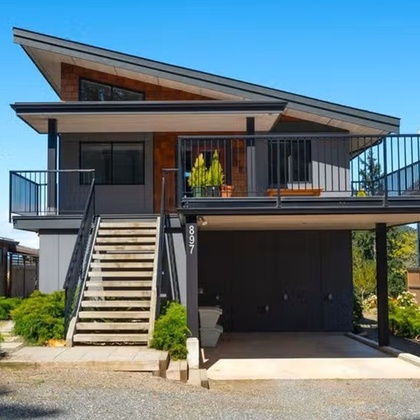
This is the most fundamental passive solar strategy. Properly-designed overhangs are calculated based on your latitude to block the high-angle summer sun completely while allowing the low-angle winter sun to pass underneath. This is a crucial element of the building's permanent design and should be a primary consideration for new construction.
Landscaping and deciduous trees
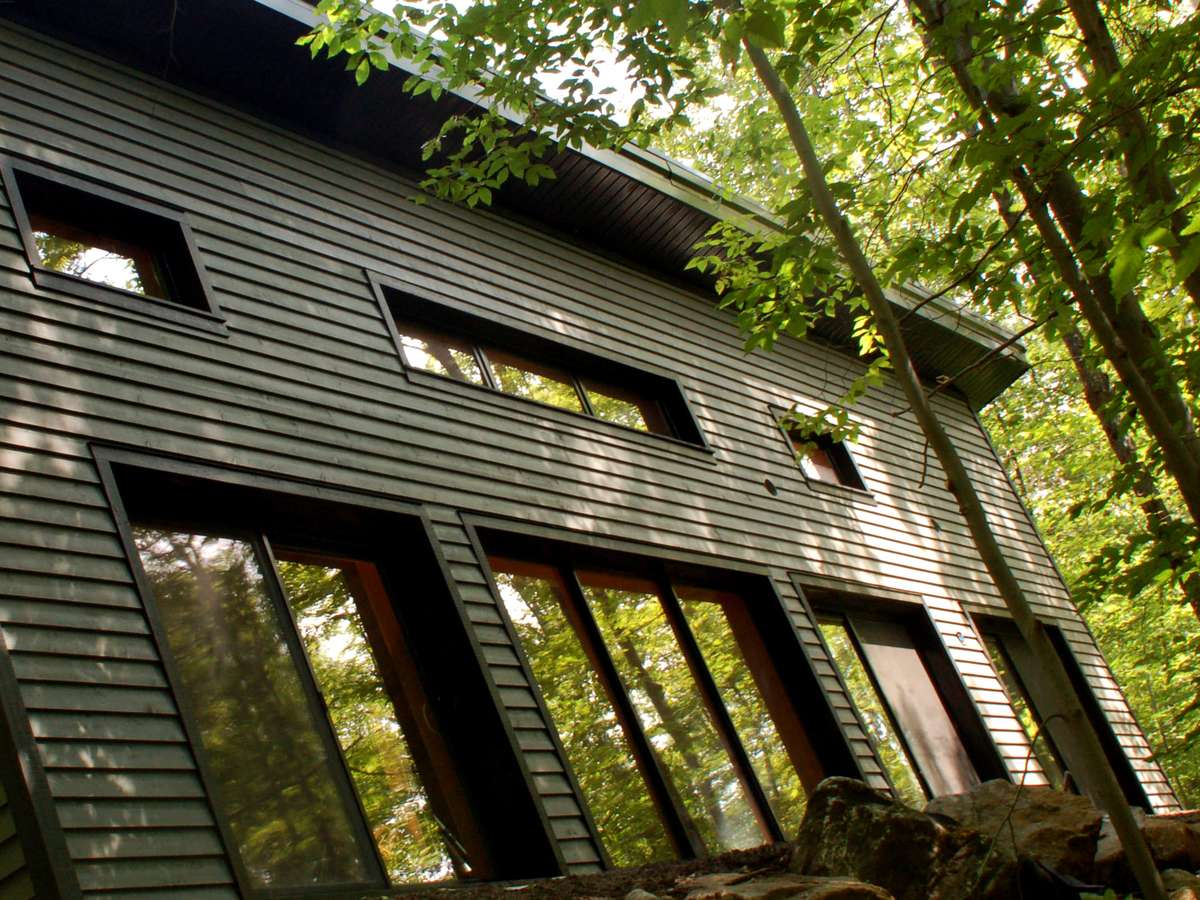
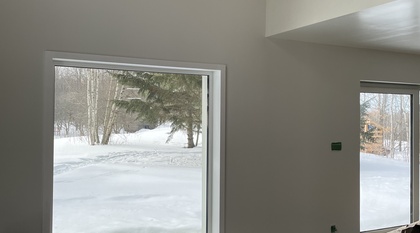
Nature offers a perfect, low-cost solution. Building beside or planting deciduous trees (which lose their leaves in the fall) on the east, west, and south sides of a home can provide excellent, seasonally-appropriate shading. In summer, the full canopy of leaves blocks the sun's heat, and after the leaves have fallen, the bare branches allow valuable sunlight to reach your windows.
Awnings
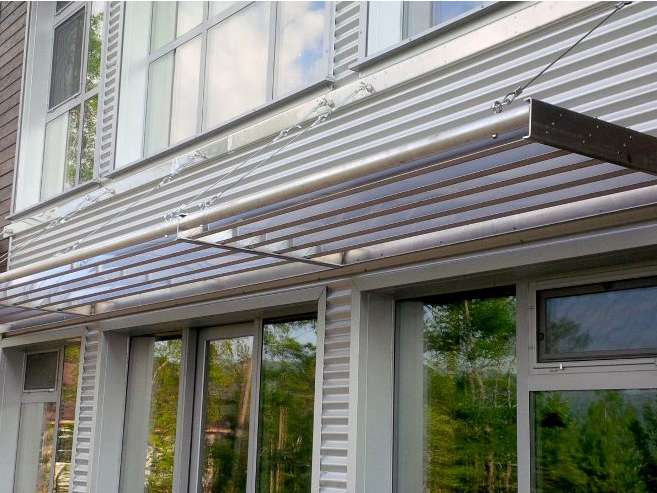
Awnings provide a flexible way to add exterior shading to an existing home or to fine-tune a new design. Fixed awnings offer consistent shading, but retractable awnings give homeowners the flexibility to adjust for different times of day, cloud cover, or a desire for more winter sun. You can find awnings in a variety of materials, from durable canvas to rigid aluminum or wood louvers.
Interior shading options: layering your defenses
While exterior shading is always the most effective, interior options are far more common and often more affordable. They can be particularly useful for managing morning or afternoon sun on east and west-facing windows that are difficult to shade with overhangs.
Blinds and curtains
The most common and accessible interior shading options are blinds and curtains. While they can be very effective at blocking visible light, their ability to limit unwanted heat is not as effective as most of us may assume. Closing curtains may leave you feeling a bit cooler by preventing the suns rays from hitting you directly, but a fair amount of heat is still being collected.
Standard blinds and curtains often trap heat between the window and the fabric, so you would probably find that your curtains and the air surrounding them may be quite warm, and that heat will circulate. The problem is that once the energy is in your home, its yours to keep. Shiny and very light-colored curtains will reflect more light back out than mat darker ones. However, some types are designed with energy performance in mind.
- Honeycomb (cellular) blinds: These blinds are made of a series of air pockets that provide a layer of insulation, reducing both heat gain in summer and heat loss in winter. They come in a variety of opacities, from sheer to blackout.
- Blackout curtains: While they don't insulate, heavy blackout curtains can be very effective at blocking direct sunlight and radiant heat. They are best used on windows that are getting too much sun at a given time.
Advanced glass and film technologies
Modern window technology has introduced several high-performance options that shade windows from within the glass itself. These technologies are often a core part of a window's design.
Low-E coatings
Low-emissivity (low-e) coatings are microscopic, metallic layers applied to window glass that reflect infrared (heat) radiation. These coatings are incredibly effective at managing solar heat gain and loss. Finding a high performance window manufacturer will help you make the right choices of window coatings, because the placement of the coating is critical and depends on your climate.
In hot climates, the low-e coating is placed on the outer surface (#2) to reflect heat before it enters. In cold climates, it is placed on an inner surface (#3 or #5 in a triple-pane window) to reflect indoor heat back inside while allowing some beneficial solar heat gain.
Reflective window films
For existing windows, a homeowner or professional can apply an aftermarket reflective window film. These films work by reflecting solar radiation and are a great way to improve the performance of older, non-low-e windows. They can be particularly useful on east or west-facing windows that receive a lot of unwanted sun and contribute little to passive heating. While they can reduce the heat coming into your home, they are not as effective as a proper Low-E coating integrated into the window itself. We have covered this topic in greater detail in a guide on a specific product called SketchNanoGard reflective window film.
Optimizing roof overhangs for solar shading
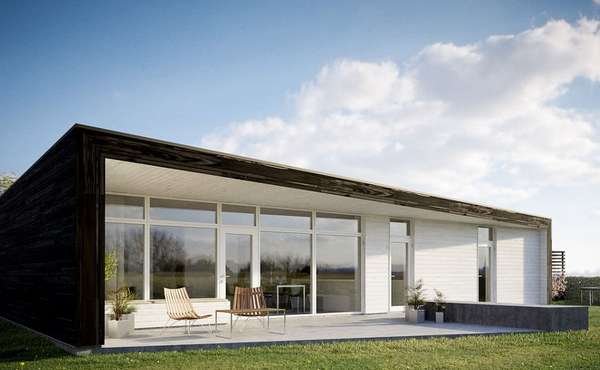
Roof overhangs are one of the most effective and elegant passive solar shading solutions because they're a permanent, maintenance-free part of a building's design. This is more of a new home passive cooling design solution and for those doing major renovations such as additions.
The key to a successful overhang is proper calculation based on your specific location's latitude. The goal is a two-fold solution: to completely block the high-angle summer sun (June 21) while allowing the low-angle winter sun (December 21) to fully penetrate the window.
How to calculate your ideal overhang
Designing a proper overhang requires a basic understanding of your local solar angles. The sun's path across the sky is predictable and varies by latitude. By knowing the winter and summer solstice sun angles for your region, you can calculate the optimal overhang length and height. This is a critical step for professionals and self-builders alike. Your calculation will need to account for three key variables:
-
Window height: the vertical dimension of your window.
-
Window head height: the distance from the bottom of the window to the top of the window opening.
-
Overhang height: the vertical distance from the top of the window opening to the bottom of the overhang.
For example, in North America, a common design principle for a south-facing window is to use an overhang that is one-third of the window's height. However, a precise calculation is always recommended for maximum performance. This can be done using readily available solar angle calculators or specialized passive solar design software, ensuring your home is protected from overheating in summer while still reaping the benefits of passive solar gain in winter.

In brief
Strategic window shading is a fundamental aspect of creating a comfortable and energy-efficient home, especially one designed for passive solar heating. The most effective strategies are exterior-based, such as fixed overhangs and deciduous trees, as they prevent heat from reaching the window in the first place.
Interior options like honeycomb blinds or blackout curtains provide an additional layer of defense. For new construction or window replacement, integrating low-e coatings is the most impactful choice. For existing homes, a retrofit with reflective window film can make a significant difference in comfort and cooling costs.
Now that you know more about window shading, find more info about passive solar design & green building techniques in the Ecohome Green Building Guide and these pages below:
-
Passive solar home design - video guide
-
Sun tubes, sun tunnels and tubular skylights - what are they and do they work?
-
How to keep homes cool without AC
-
Window film treatment to reflect heat and lower air conditioning bills















Comments (0)
Sign Up to Comment