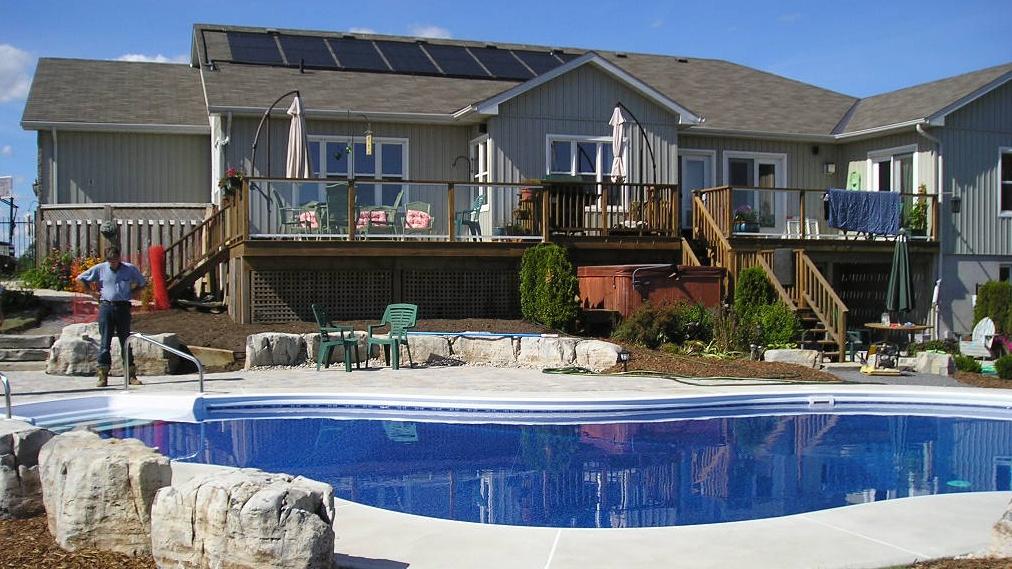
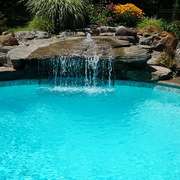





As summer arrives and homeowners start opening their pools, those first couple of weeks will be a bit too chilly at first without a pool heater, unless of course ice dunks are your thing. Pool water does not heat up fast or for free, so here we want to explore the cost of heating a pool with a variety of methods.
Given the differences in hydro rates as well as spring temperatures in different regions, we will run the numbers assuming a 16 x 32 foot pool in a cold climate like Canada or the northern US States. And since hydro rates vary, we are using a blended average Canadian hydro rate of $0.14/kWh and assuming a 5.5C (10°F) temperature rise.
At the start of May when most people will be looking to open their pools, you could expect the water temperature to be somewhere between 7°C and 12°C (45°F – 54°F), which will make even the heartiest of us let out a gasp. And that is a far cry from the 26°C and 28°C (78°F – 82°F) that would be considered the sweet spot for most recreational swimmers.
This guide provides a comprehensive look at the key aspects of this topic. Below is an overview of the sections we will cover, allowing you to jump directly to the information you need.
- How much does it cost to heat a swimming pool?
- Cost comparison for a 'start of the season' temperature boost
- How do solar pool heaters work?
- Components to a solar pool heating system:
- Solar pool heater FAQ with a pro installer
How much does it cost to heat a swimming pool?
No matter which pool heating system you choose, there will be a system set up cost for the initial purchase of equipment and hiring pros to install it, as well as operational cost. You have 3 basic commercially available options, either electric resistance heaters, an air to water heat pump, or a solar pool heaters. Below is an average of what you could expect to pay for each system :
For clarity - 'electric resistance' refers to any electric heat generation whether that is a kettle, hair dryer electric furnace or a pool heater where you get one watt of heat per watt of energy. A ratio of 1:1 is its coefficient of performance.
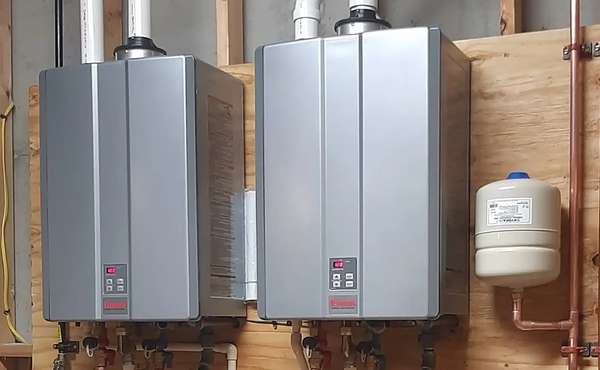
Electric resistance pool heater :
- Parts and labor for system installation: $2,500 to $4,500.
- Hourly operational cost: $1.47
- COP: 1
Note: An electric pool heater will require 200 amp service. Great if you have it already but if not - to upgrade to a 200 amp panel will cost between $3,000 and $5,000
Natural gas or propane pool heater:
- Parts and labor for system installation: $3,500 to 6,500
- Note: If a new gas line must be run from the meter to the pool across a long distance, add $1,500 – $2,500.
- COP of standard gas heaters: 0.80 to 0.85.
- COP of high-efficiency gas heaters: a COP of 0.95 to 0.97.
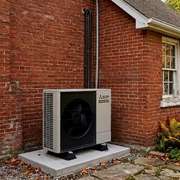
Air to water heat pump pool heater:
- Parts and labor for system installation: $5,500 – $9,500
- Hourly operational cost: $0.47
- COP of 3.0 to 6.0
Solar pool heater:
- Parts and labor for system installation: $5,000 – $8,500
- Hourly operational cost (pump only): $0.15
- COP of 15.0 to 50.0 (Actual COP is determined by pump efficiency, pipe length to panels, the height of panels a solar irradiance as the pump still runs during cloud cover or sub-optimal panel angle)
| Heating Option | Time to Reach 80°F | Total Energy Cost (CAD) | Performance Profile |
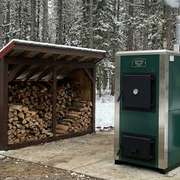
| Natural Gas | ~17 Hours | $72.00 | High Speed: Consistent heating regardless of air temperature. |
| Electric Resistance | ~38 Hours | $180.00* | Constant: Simple but expensive; requires 200 Amp service. |
| Air-to-Water Heat Pump | ~96 Hours | $35.00 | High Efficiency: Slow and steady; performance depends on air warmth. |
| Solar Panels | 4–6 Sunny Days | $9.60 | Passive: extrememly low cost but strictly dependent on cloud cover. |
* Pool heating cost can vary depening on the time of day you run the heater. Limiting it to off-peak hours will obviously save you money.
When you consider installation costs as well as operational costs, the clear winner would be solar, but that does leave the question of capacity and reliability. Can solar panels heat your pool to your satisfaction? That depends on how hot you like your pool.
Solar is unpredictable of course, so if you're quite particular about your swimming temperature then maybe it's not the system for you, or, when setting up a system maybe you will want to oversize it a bit. Anyway you slice it this is the 'low-carbon footprint' option for pool heating.
Cost comparison for a 'start of the season' temperature boost
| Heating Method | Energy Cost (CAD) | Time to Reach 80°F |
| Electric Resistance | $180.00 | ~36–48 Hours |
| Air-to-Water Heat Pump | $51.00 | ~48–72 Hours |
| Natural gas | $32 - $45 | 12-15 Hours |
| Solar Panels | $9.60 | 3–5 Sunny Days |
Solar pool heaters are an excellent use of solar energy. The initial installation cost is comparitive to the others, but only operating a pump will save you a lot of money. Typically, solar pool heaters raise the temperature of a pool from five to ten degrees, and in Canada they can extend the pool-use season by more than two months when compared to unheated pools.
How do solar pool heaters work?
The beauty of a solar pool heating system lies in its absolute simplicity, as it hooks directly into the equipment your pool already relies on to circulate water. Instead of generating heat through expensive natural gas combustion or heavy electrical resistance, the system takes advantage of basic thermodynamics and radiant energy from the sun to warm the water for free.
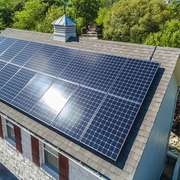
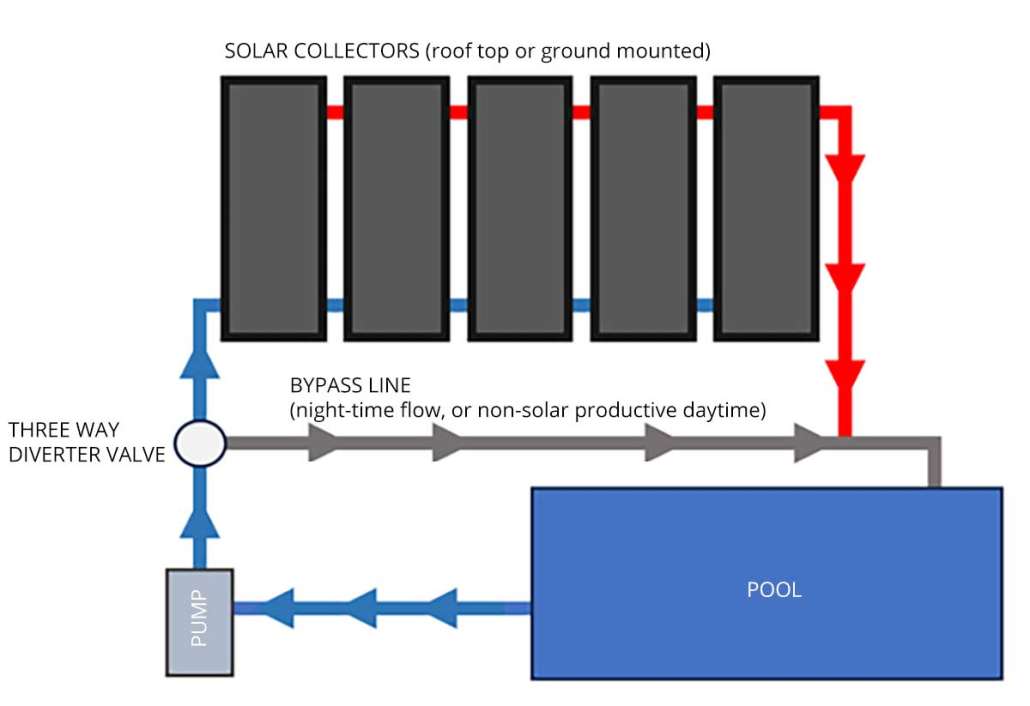
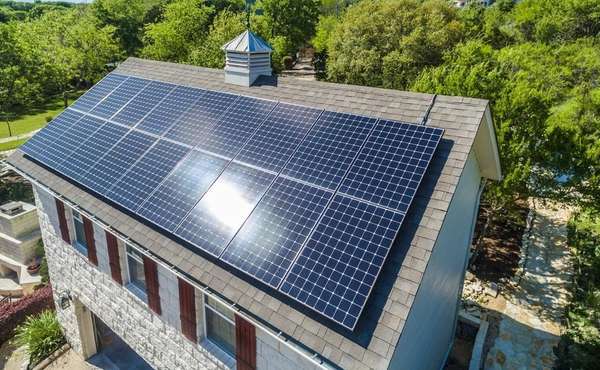
The mechanism relies on a basic loop. When your existing pool pump pushes water through the filtration system, it encounters a multi-port diverter valve before heading back to the pool. When sensors detect sufficient sunlight, this valve automatically redirects the filtered water up to the solar collectors - typically a series of heavy-duty, black polypropylene panels mounted on a nearby roof or ground rack. As the water flows through the narrow channels inside these sun-baked panels, it rapidly absorbs the trapped thermal energy.
Once the water reaches the top of the collectors, it is piped back down and discharged directly into your pool basin, gradually raising the overall volume temperature. When the sun goes down or cloud cover takes over, the diverter valve closes access to the collectors. This bypass is crucial: it prevents the system from accidentally turning your roof into a giant radiator that pulls heat out of your pool water when the outdoor air cools down.
Components to a solar pool heating system:
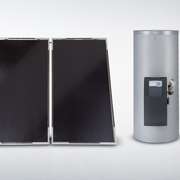
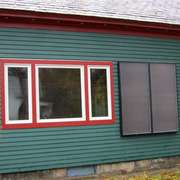
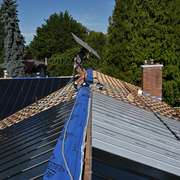
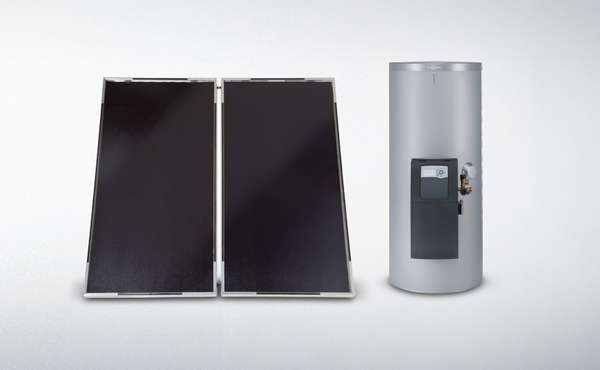
Solar collector: Typically a 4’ x 10’ panel made of black plastic/polypropylene material. These collectors heat up pool water when it flows through them, and they can be either roof or ground mounted.
Diverter valve: This valve sends pool water up into the panels during the day, and prevents flow to the panels at night. This can either be done manually twice a day or automatically with an electronic control system.
Pool pump: Circulates water through the collectors and back into the pool. No change in pump size is required; the same pump your pool currently has is more than sufficient.
The Process
1. The solar collectors capture the heat from the sun.
2. While the sun is out, a manual or automated diverter valve directs the pool water up through the panels, heating it up.
3. The pump circulates the warmer water back into the pool to warm it and extend your swimming season without adding to your electricity bill.
Solar pool heater FAQ with a pro installer
We would like to thank Rick Rooney of Quantum Renewable Energy in Kingston, Canada for help with this article, along with answers to the following questions solar pool heating:
How long does a solar pool heater last?
The standard lifetime of a solar pool system is 20 to 25 years.
How much does installing a solar pool heater cost?
The average 16’ x 32’ in-ground pool would require about six 4x10 foot panels. Systems with manual controllers would likely start at about $3500, where electronic controlled systems would start at about $4000.
What are the maintenance requirements for a solar pool heater?
The only service requirement is at the end of the swimming season in preparation for winter. We provide a free system winter shut down visit in the first year to show you how to do it.
How long does it take to complete the installation?
The typical residential system takes one to two days, with no interruption to your pool use.
What warranties could a buyer expect with a system?
I could only speak to our installations, and we offer a complete two year warranty on labour. Equipment warranties vary from supplier to supplier, but they are generally ten years in length
Can pool pumps handle pumping to water to solar collector as well?
Solar collectors only add approximately a 3-5 PSI load to the system. Since most pool pumps are greatly oversized to begin with, there shouldn’t be any issues.
Will rooftop solar panels shorten the life of my roof?
NO. In fact, these panels will lengthen the life of your roof, since the sun is what destroys shingles. The solar collectors will not only shade the roof they are on, but when operating, they also remove the heat from your roof and transfer it to your pool.
How much maintenance do solar pool heating systems require?
The only maintenance a pool system requires is draining when you shut your pool down at the end of the year. The reason this must be done is to ensure that there is no water left in your pipes when winter comes, which could damage the system due to freezing.
How much will my pool temperature go up with a solar pool heater?
Typically a properly-sized solar pool heater will add 10 degrees to an unheated pool.
Now you know about Solar Pool Heaters, find more pages about about sustainable green building and landscaping in the Ecohome Building Guide and in these pages :
-
How to make a swimming pool more energy-efficient
-
How to build a natural swimming pond/chlorine free natural pool - free DIY guide
-
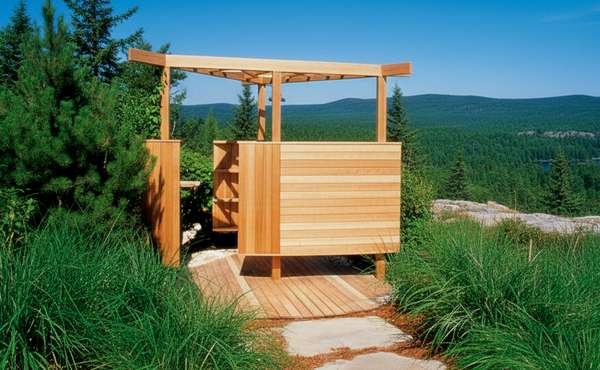
DIY guide to build an outdoor solar shower
-
The definitive guide on how to build an outdoor kitchen



Comments (0)
Sign Up to Comment