










How to build an outdoor kitchen: a homeowner's and pro's guide
An outdoor kitchen is more than just a place to grill; it's a versatile, functional extension of your living space that brings friends and family. Not only will an outdoor kitchen let you get to spend more time outdoors, cooking outside during the heat of the summer gives your home air conditioning a break, as you are not adding a ton of unwanted heat.
Whether you're a homeowner dreaming of summer barbecues or a building professional looking to add value and appeal for clients, this definitive guide will walk you through the entire process, from initial planning to final touches. We'll cover everything from sustainable design principles and material choices to practical construction tips and regional considerations for a durable, eco-friendly, and beautiful outdoor cooking area.
This guide provides a comprehensive look at the key aspects of this topic. Below is an overview of the sections we will cover, allowing you to jump directly to the information you need.
- Planning and designing your outdoor kitchen
- Foundations and eco-friendly materials
- Utilities and appliances: water, gas and power
- Eco-friendly cooking alternatives to gas: charcoal and wood chips
- Budgeting and permits: what you need to know
- In brief
Planning and designing your outdoor kitchen
The first step in building a successful outdoor kitchen is careful planning. Consider your goals, your space, and your climate. A successful design is both functional and resilient.
Design considerations for a seamless kitchen
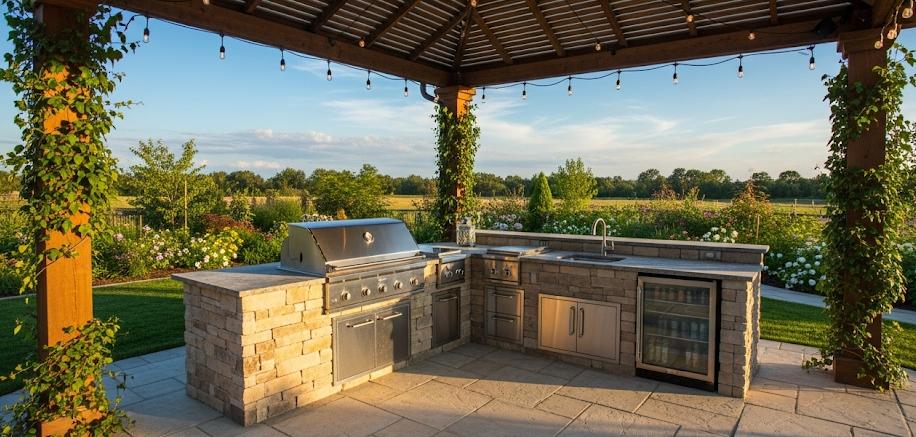
Your outdoor kitchen should feel like a natural extension of your home. Think about the 'kitchen triangle' concept, which links the key work areas-the sink, stove, and refrigerator-into a functional and ergonomic layout. For an outdoor space, this translates to the grill, prep area, and storage. Consider the following:
- Location: Place the kitchen close enough to your home for easy access to supplies, but far enough away that smoke and fumes don't get trapped inside. Consider prevailing winds.
- Size and layout: A simple grill island may be sufficient, or you might need a full U-shaped or galley-style kitchen with a sink, fridge, and bar seating.
- Shelter: A pergola, awning, or roof can protect your investment from the elements and extend its usability into different seasons. For an in-depth look at this, see our guide on passive heating and cooling, as the same principles of solar orientation and shading apply to outdoor spaces.

Foundations and eco-friendly materials
The foundation of your outdoor kitchen is critical for its longevity and stability, especially in regions with freeze-thaw cycles like North America and parts of Europe. For the base, a concrete slab is a durable option that provides a solid, level surface. Be aware that concrete has a high embodied carbon footprint, but newer formulations are helping to reduce this. When choosing materials, look for options that are not only durable but also sustainable.
Choosing sustainable construction materials
The materials you choose will define the look and lifespan of your kitchen. Look for materials that are salvaged, recycled, or locally sourced.
- Cabinetry: Choose marine-grade plywood or recycled plastic composite lumber over wood that is prone to rot. Stainless steel is also a durable, recyclable option.
- Countertops: Recycled glass and porcelain are excellent, low-maintenance options. Polished concrete can also be a beautiful and robust surface; learn more about this material in our guide on how to seal and polish concrete floors.
- Decking and flooring: If you're building on an existing deck, ensure it is structurally sound. For new decks, consider sustainably sourced lumber or recycled composite materials. See our guide on how to build decks that last for more tips.
Utilities and appliances: water, gas and power
Unlike a simple grill, an outdoor kitchen may require a range of utilities. This is where the expertise of a professional is invaluable, as proper installation is critical for safety and function.
Electrical, plumbing, and gas lines
- Plumbing: A sink is a great addition, but it requires a water supply line and a drain. In colder climates, all plumbing must be properly insulated and have a shut-off valve to be drained in the winter to prevent freezing pipes.
- Gas: If you plan on a built-in gas grill, you will need to run a gas line from your home's main supply. This must be done by a licensed professional to ensure safety and compliance with local codes.
- Electrical: Running electrical lines for outlets, lighting, and a refrigerator should be done by a certified electrician. All outdoor outlets must be GFCI (Ground Fault Circuit Interrupter) protected for safety, a standard requirement in North America, the UK, Australia, and New Zealand.

Choosing efficient appliances and fixtures
When selecting appliances, prioritize energy-efficient, outdoor-rated models that can withstand temperature swings and moisture. Consider options such as:
- Refrigeration: Outdoor-rated mini-fridges are designed for external environments and are more efficient than a standard indoor fridge.
- Solar power: For lighting, consider using solar-powered fixtures. They are easy to install, have no running costs, and are a great way to reduce your environmental footprint. Our guides on solar energy can help you understand how solar panels work and their potential applications for your home.
Eco-friendly cooking alternatives to gas: charcoal and wood chips
While many modern outdoor kitchens are built around a gas grill, there are a number of eco-friendly and lower-carbon alternatives for cooking. The choice of fuel can not only affect the flavor of your food but also have a significant environmental impact.
Charcoal and wood chips
While often seen as a traditional fuel, charcoal has a complex environmental story. Traditional briquettes often contain chemical binders and fillers, producing more ash and a less clean burn. However, lump charcoal is made from pure carbonized hardwood with no additives, making it a much cleaner-burning option. When sourcing, look for brands that are certified to come from sustainably managed forests or that use agricultural byproducts like coconut shells.
Mesquite wood is a particularly interesting option. In many parts of the world, especially in the US Southwest, mesquite is considered an invasive species that encroaches on grasslands. By using mesquite wood chips for smoking and grilling, you are not only getting a distinctive, savory flavor but also supporting a practice that can help manage these ecosystems. Other wood chips, such as apple or hickory, should be sourced from a reputable supplier that uses waste wood or manages their forests responsibly.
Budgeting and permits: what you need to know
Understanding the financial and regulatory aspects of your project is crucial. Outdoor kitchens can range from a few thousand dollars for a simple setup to tens of thousands for a high-end, fully-equipped space.
A cost breakdown and smart investments
The total cost is largely determined by the materials and appliances you choose. A basic DIY setup with a pre-made island kit and a portable grill can start around $2,000 to $5,000 (roughly £1,500-£4,000 or $3,000-$7,500 AUD/NZD), while a fully custom, professionally installed kitchen with stone countertops and a built-in fridge can easily exceed $20,000 (around £15,000 or $30,000 AUD/NZD).
Permits, codes, and safety
This is a critical area where homeowners and professionals must work together. In most regions, building an outdoor kitchen will require a permit, especially if it involves permanent structures, gas lines, or electrical wiring. Always check with your local municipality or council for specific requirements. They will have regulations regarding setbacks from property lines, fire safety, and material standards. A failure to obtain the correct permits can lead to fines or the forced removal of your kitchen.
In brief
Building an outdoor kitchen is a significant home improvement project that requires careful planning, smart material choices, and professional expertise. By focusing on a holistic design that considers your climate and how you'll use the space, you can create a durable and functional outdoor hub.
Prioritize sustainable, long-lasting materials and ensure all utility work is done safely and according to code. Whether you're a DIY enthusiast or a professional, a well-built outdoor kitchen will provide a valuable and enjoyable space for years to come.
Now that you know more about outdoor kitchens, find more info about sustainable homes and green building techniques in the Ecohome Green Building Guide and these pages below:
-
How to restore a cedar wood deck easily
-
A guide to drought-resistant landscaping
-
DIY guide to build your own natural backyard swimming pond or pool
-
Deck building guide - pressure treated wood, composite decking or cedar wood, which is best?







Comments (0)
Sign Up to Comment