











Drought-tolerant landscaping: a homeowner's and pro's guide
In an era of unpredictable weather patterns and increasing water scarcity, drought-tolerant landscaping is more than just a trend-it’s a necessity. Whether you’re a homeowner looking to lower your water bill and create a resilient garden, or a building professional designing a sustainable property, understanding the principles of xeriscaping (a term for landscaping that reduces or eliminates the need for irrigation) is crucial.
This guide will walk you through the core concepts, practical techniques, and best plant choices for creating a beautiful, sustainable landscape that thrives with minimal water.

This guide provides a comprehensive look at the key aspects of this topic. Below is an overview of the sections we will cover, allowing you to jump directly to the information you need.
- Understanding the principles of xeriscaping
- Soil preparation, mulching and permeable landscaping
- Plant selection and strategic placement
- Using river stone for moisture retention
- Smart irrigation and water management
- Drought resistant alternatives to grass
- Regional plant guide for a global audience
- In brief
Understanding the principles of xeriscaping
Xeriscaping is often misunderstood as a 'no-water' or 'rock garden' approach, but it's really about intelligent water use. It involves seven core principles, which we've adapted here for a comprehensive approach to building a more resilient landscape. These principles are applicable whether you're working on a residential garden or a large commercial project.
Plan and design for water efficiency
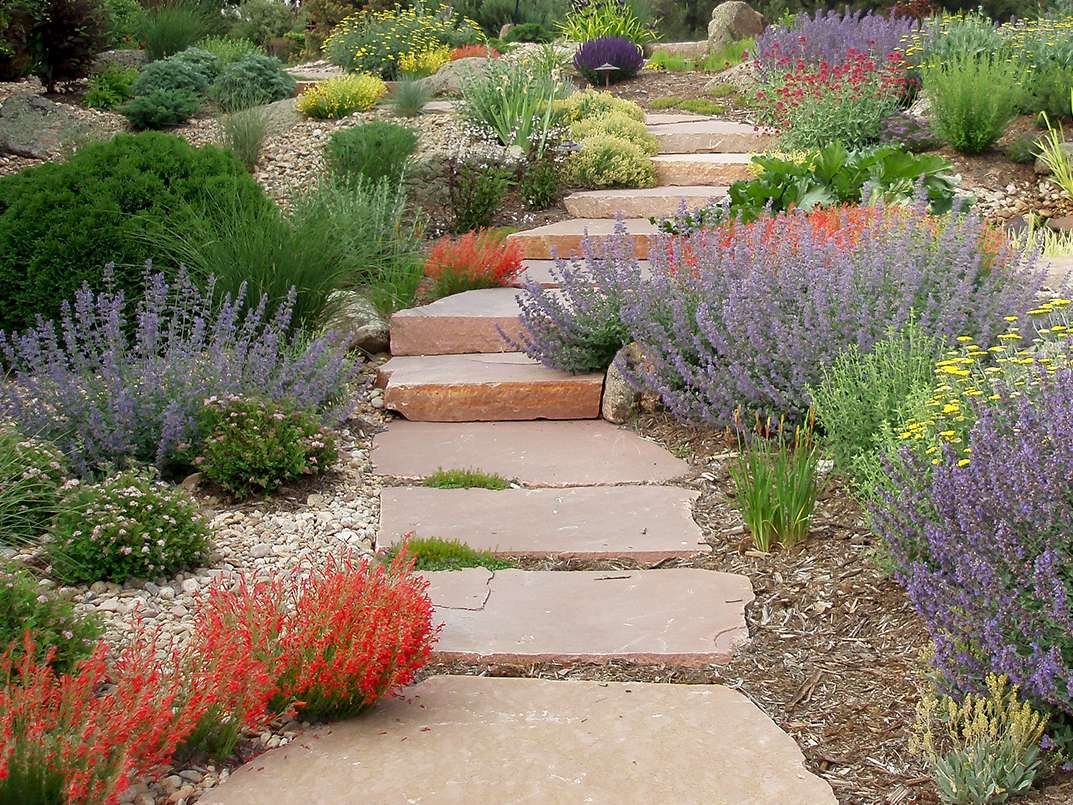
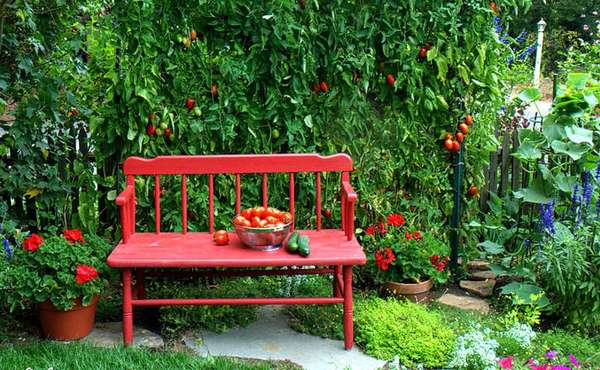
Before you dig, take a step back and assess your site. Consider sun exposure, drainage patterns, and how you use your outdoor space. A thoughtful design will zone your yard based on water needs, placing high-water-use plants (like edibles) in a small, accessible area and drought-resistant plants elsewhere.
This is also the time to consider how water will move through your property-can you capture and use rainwater? Are there areas where water pools that could be repurposed?
Analyze your soil for optimal plant growth
Your soil is the foundation of a successful drought-tolerant landscape. Well-amended soil holds water more effectively and provides essential nutrients, reducing the need for frequent watering. A simple soil test can tell you a lot about your soil's composition and pH levels. For many arid regions, adding compost or other organic matter is a great way to improve soil health and water retention.
Soil preparation, mulching and permeable landscaping
The ground beneath your plants is as important as the plants themselves. Proper soil preparation and the strategic use of mulch are two of the most effective ways to conserve moisture and build a healthy, resilient garden.
Prepare your soil for maximum water retention
Heavy clay soils and sandy soils both present challenges for water retention. Amending your soil with a generous amount of organic matter, such as compost, can dramatically improve its structure. For sandy soil, organic matter acts like a sponge, holding onto water and nutrients.
For clay soil, it helps break up the dense particles, improving drainage and allowing roots to breathe. Incorporate a layer of compost-rich topsoil to a depth of at least 6 inches (15 cm) for a strong start.
The power of mulching
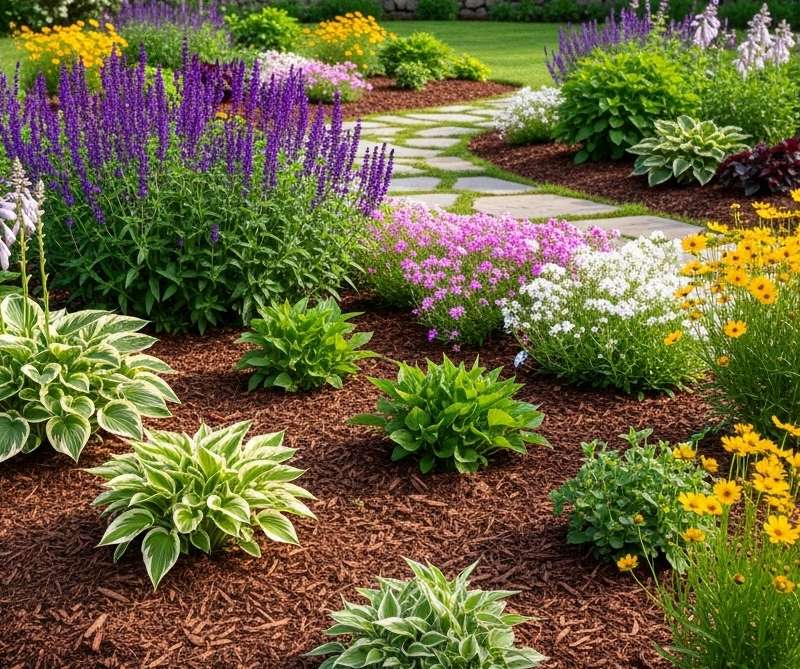
Mulch is a game-changer for water conservation. A 2 to 4-inch (5 to 10 cm) layer of organic mulch, such as wood chips, shredded bark, or straw, will insulate the soil, reduce evaporation, and suppress weeds that compete for water. As the mulch breaks down, it adds more organic matter to the soil, improving its long-term health. Be sure to keep mulch away from the base of plants to prevent rot.
Integrate permeable landscaping and rainwater harvesting
Instead of letting rainwater run off your property and into storm drains, you can use it as a resource. Practices like permeable landscaping allow water to soak into the ground, recharging the water table and reducing runoff.
This is also the core principle behind rain gardens and swales. The use of permeable pavers, gravel, or decomposed granite for paths and patios is another effective strategy. To learn more about this, check out our guide on permeable landscaping and rainwater runoff management.
Plant selection and strategic placement
Choosing the right plants is the most visible and rewarding part of creating a drought-tolerant landscape. The key is to select plants that are native to your region or are known to thrive in dry conditions. These plants have evolved to handle local climate challenges, requiring less water and maintenance.
Zone your landscape by water needs
Divide your property into hydrozones-areas with similar water requirements. Place plants that need more water (e.g., vegetables, fruit trees) in a small, dedicated zone near a water source. Group low-water plants together in a separate zone, away from the frequent watering of other plants. This targeted approach prevents overwatering and conserves water.
Tips for choosing the right plants
- Look for native plants: They are naturally adapted to your climate and soil, making them a low-maintenance, high-reward choice.
- Consider succulents and cacti: These plants store water in their leaves, stems, or roots, allowing them to withstand long periods of drought.
- Choose plants with silver or gray foliage: These colors reflect sunlight, helping the plant stay cooler and reducing water loss.
- Select plants with small or waxy leaves: Small leaves have less surface area for evaporation, and waxy coatings help lock in moisture.
Using river stone for moisture retention
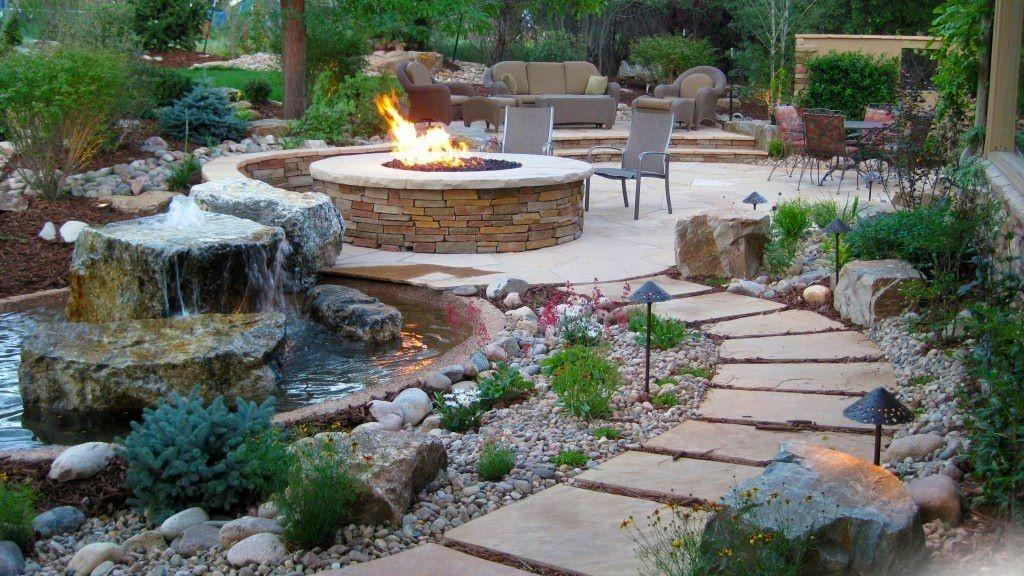
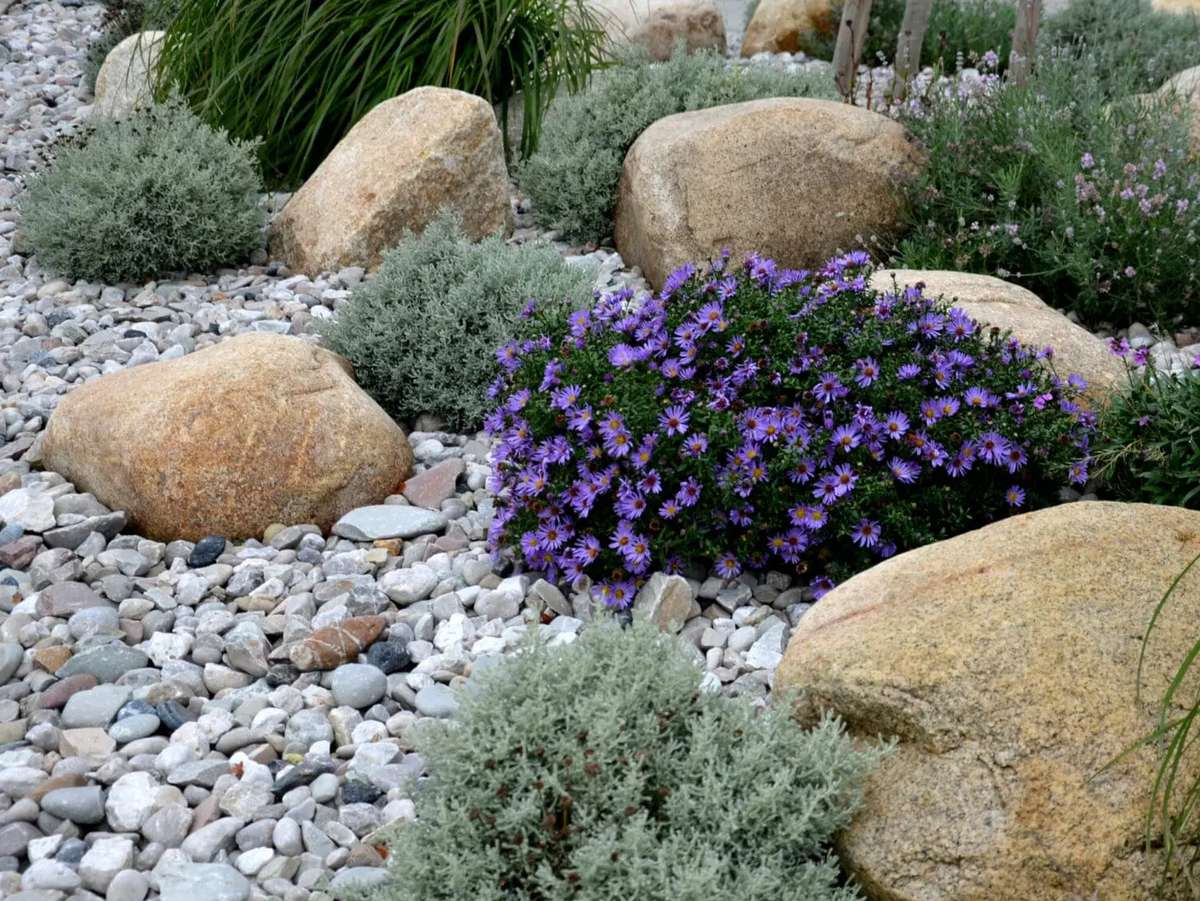
While organic mulch is a popular choice, river stone and other non-organic materials can also be effective in a drought-resistant landscape, particularly in xeriscaping. A layer of river stone creates a physical barrier that shades the soil and reduces wind exposure, both of which are key to minimizing water evaporation. The spaces between the stones allow water to penetrate to the roots below.
Pros and cons of river stones in gardens:
-
Heat retention: A key difference from organic mulch is that stones absorb and retain heat. In hot climates, this can significantly increase soil temperature, potentially stressing or harming the roots of some plants. However, in cooler climates, this effect can be beneficial for warming the soil in the spring. Keep in mind, lighter colored stones will reflect more heat and darker ones will absorb more heat.
-
No nutrient contribution: Unlike organic mulch, river stones do not decompose, so they will not add beneficial organic matter or nutrients to the soil.
-
Maintenance: Once in place, stones are heavy and difficult to move, making it challenging to plant new items or amend the soil. Weeds can also grow between the rocks, which can be difficult to remove.
-
Best uses: River stone is an excellent choice for gardens with plants that prefer dry, hot conditions, such as succulents and cacti. It is also well-suited for around permanent plantings like trees and shrubs. For best results, consider placing a layer of landscape fabric underneath to prevent weeds and keep the stones from sinking into the soil.
Smart irrigation and water management
Even drought-tolerant landscapes need some water, especially when establishing new plants. The goal is to use water as efficiently as possible.
Drip irrigation vs. sprinklers
When it comes to watering, drip irrigation is far superior to traditional sprinklers. Drip systems deliver water directly to the plant's roots, minimizing evaporation and runoff. Sprinklers, especially those used during the day, can lose a significant amount of water to evaporation before it even reaches the soil.
Harvesting rainwater for your garden
Another smart strategy is to collect rainwater. Rain barrels or larger cisterns can store water from your roof to be used for watering your plants during dry spells.
For more information on this process, see our guide on how to install a rainwater harvesting system for your home. This practice is particularly beneficial for watering edible gardens and container plants, reducing your reliance on municipal water.
Water your plants in the morning
Watering during the hottest part of the day will lead to much more evaporation, so you would be wasting water unnecessarily. watering in the evening can leave moisture on the plants an risk developing fungal diseases.
Does watering plants during the day burn them?
This was a widely held belief (I myself held it for a long time), but has since been pretty much debunked. The thought was, that water droplets acted as magnifying glasses and burned leaves, but in reality the droplet is too close to have that effect.
There is however, a very rare exception to that rule; a few studies have found that leaf burn can occur in very specific circumstances, particularly on plants with tiny, waxy hairs (like some floating ferns). These hairs can hold water droplets suspended at just the right distance from the leaf's surface to create the magnifying effect.
Drought resistant alternatives to grass
There are many beautiful and functional drought-resistant ground covers that can reduce water use and maintenance in your garden. Here is a list of some of the most popular and effective options, categorized for different sun and soil conditions.
Ground covers for sunny, dry areas
These plants thrive in full sun and well-drained soil, making them perfect for rock gardens, slopes, and hot, dry locations.
-
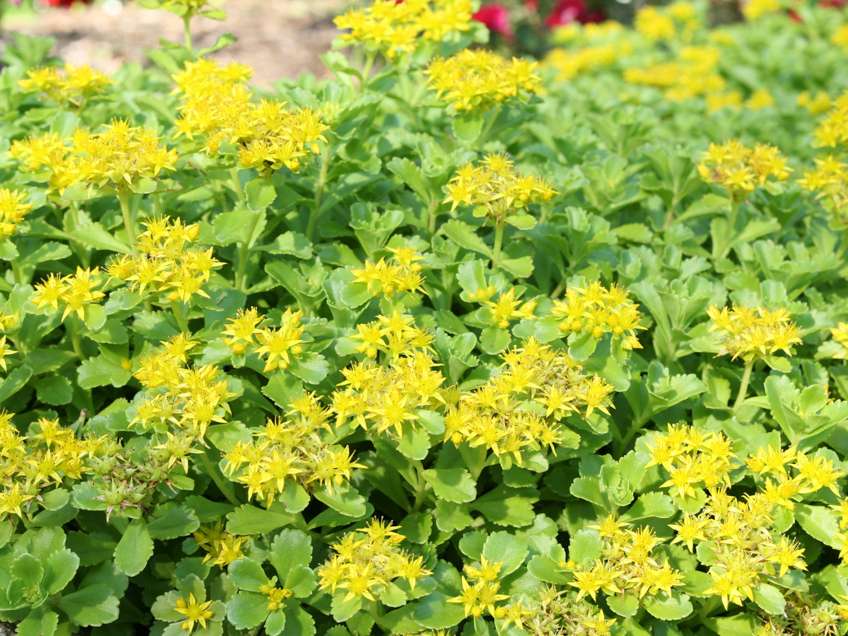
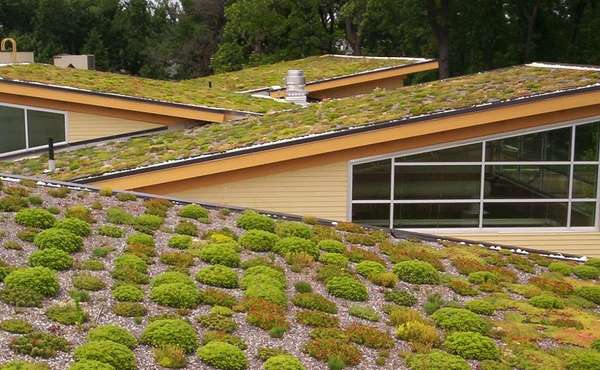
Sedum (Stonecrop): A large family of succulent plants, many of which are excellent ground covers. They have thick, fleshy leaves that store water.
-
Angelina Sedum ('Sedum rupestre 'Angelina'): A popular choice with chartreuse foliage that turns a beautiful rusty orange in the fall.
-
Dragon's Blood Sedum (Sedum spurium): Features dark, reddish-green foliage and bright pink flowers.
-
-
Creeping thyme: A tough, low-growing herb that releases a pleasant fragrance when stepped on. It can withstand light foot traffic and produces tiny flowers that are great for pollinators.
-
Creeping Thyme (Thymus serpyllum): A classic variety with purple or white flowers.
-
Woolly Thyme (Thymus pseudolanuginosus): Known for its soft, fuzzy, gray-green leaves.
-
-
Hardy ice plant (Delosperma cooperi): A succulent that forms a low, spreading mat and produces a profusion of bright, daisy-like flowers in vibrant colors all summer long. It thrives in sandy, well-drained soil.
-
Creeping phlox (Phlox subulata): A perennial that creates a dense mat of needle-like foliage and is covered in a carpet of white, pink, or purple flowers in the spring. It's great for slopes and rock walls.
-
Dianthus (Pinks): These plants form low mounds of grassy, blue-green foliage and produce fragrant, fringed flowers.
-
Blue fescue (Festuca glauca): A clumping ornamental grass with striking blue-hued foliage that provides a modern, clean look and requires very little water once established.
Ground covers for shade or part-shade
Even shady areas can be drought-tolerant, though these plants may require some initial watering to get established.
-
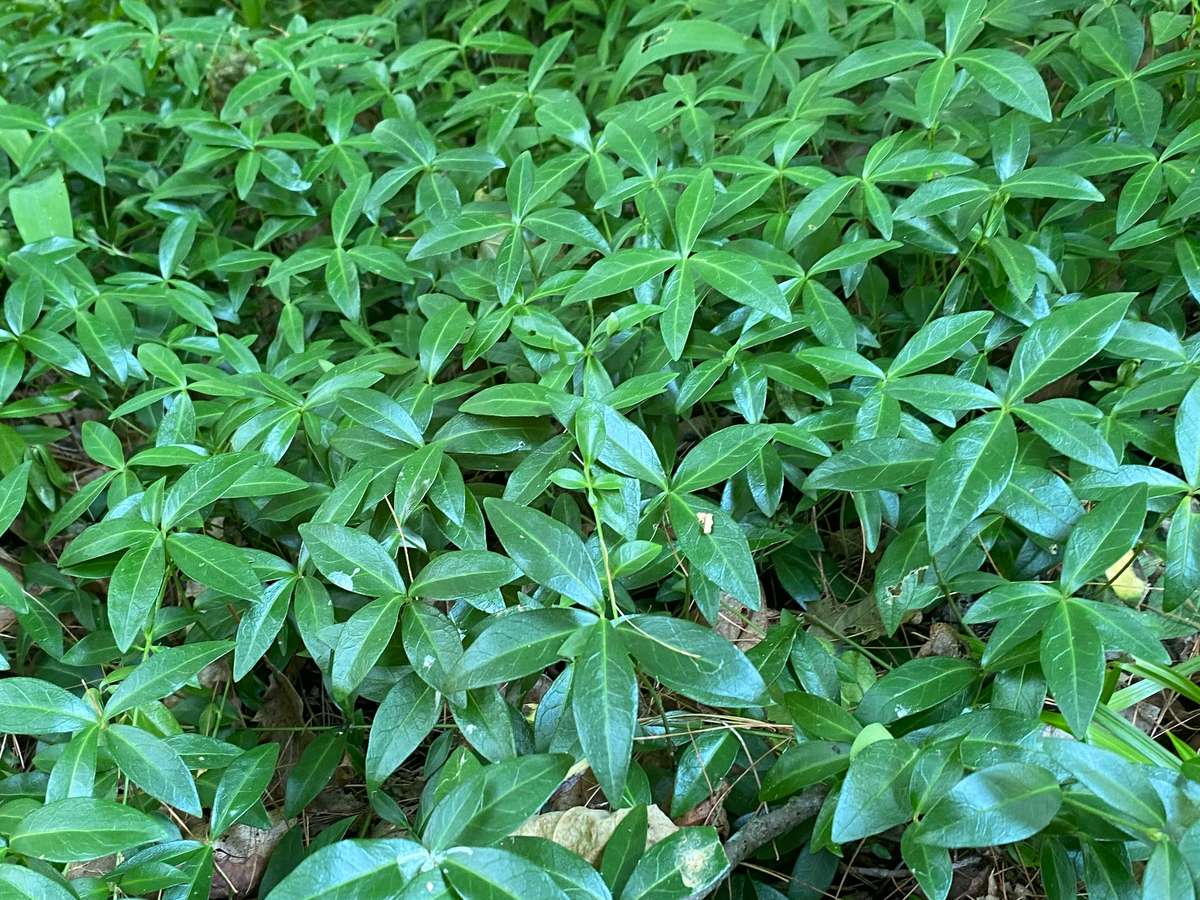
Dwarf periwinkle (Vinca minor): A classic evergreen ground cover with glossy, dark green leaves and charming blue or white flowers in the spring. It's a vigorous spreader and can be considered invasive in some regions, so check with local guidelines.
-
Creeping mahonia (Mahonia repens): A low-growing, evergreen shrub that is great for erosion control on slopes. It features yellow flowers in the spring and blue-black berries in the summer.
-
Epimedium (Barrenwort): A shade-loving perennial that forms a tidy mound of heart-shaped leaves and produces delicate, pendulous flowers in the spring. It is deer and rabbit-resistant.
-
Bugleweed (Ajuga reptans): A fast-growing ground cover with glossy foliage in shades of green, bronze, or chocolate brown. It sends up spikes of blue or purple flowers in the spring. Like vinca, it can be an aggressive spreader.
Other notable drought-tolerant ground covers
-
Bearberry (Arctostaphylos uva-ursi): A slow-growing, native evergreen with small, waxy leaves and red berries. It is excellent for cold climates and poor, sandy soils.
-
Yarrow (Achillea millefolium): While some varieties are taller, certain yarrow cultivars form low mats of feathery, aromatic foliage with clusters of flowers that attract pollinators.
-
Lamb's ear (Stachys byzantina): Known for its soft, fuzzy, silvery leaves, which are both beautiful and resistant to deer and rabbits. It tolerates dry soil and adds a unique texture to the garden.
Regional plant guide for a global audience
To help you choose the right plants for your area, here is a general guide of well-adapted plants for different global regions. Always check with a local nursery or extension office for specific recommendations for your microclimate and soil type.
North America (US and Canada)
Western US/Southwestern Canada: Lavender, Sage, Coneflower, Yarrow, Sedum, Agave, and various ornamental grasses. The California Native Plant Society and local nurseries are excellent resources.
Central US/Prairies: Prairie Blazing Star, Purple Coneflower, Black-Eyed Susan, and Switchgrass.
Eastern US/Southeastern Canada: Coreopsis, Penstemon, Bee Balm, and Liatris.
Australia and New Zealand
General: Grevillea, Kangaroo Paw, Bottlebrush (Callistemon), and various species of Eucalyptus and Acacia. New Zealand Flax (Phormium) is a tough, versatile choice.
United Kingdom
General: Sedum, Lavender, Salvia, ornamental grasses like Festuca glauca, and Mediterranean plants like Rosemary and Thyme. The Royal Horticultural Society offers extensive advice on drought-tolerant gardening.
In brief
Creating a drought-tolerant landscape is a holistic process that begins with smart design and ends with the satisfaction of a resilient, beautiful, and low-maintenance garden. By preparing your soil, using mulch, selecting appropriate plants, and managing water efficiently, you can significantly reduce your environmental footprint while enhancing the beauty and value of your property. It's a win-win for homeowners, professionals, and the planet.
Now that you know more about drought-tolerant landscaping, find more info about sustainable gardening and green building techniques in the Ecohome Green Building Guide and these pages below:
-
Find which plants grow well in the shade - Ecohome gardening guide
-
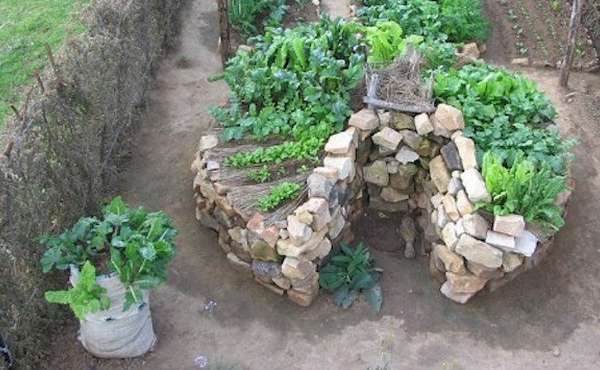
What is a keyhole garden and how do you build one?
-
Introduction to easy rainwater collection and storage
-
Food forests and edible landscaping - a guide to growing plants you can eat







Comments (0)
Sign Up to Comment