
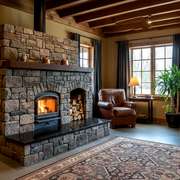
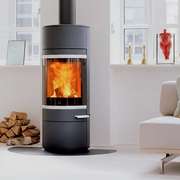





If a masonry heater is the refined, commercially installed option for thermal mass heating, the Rocket Mass Heater (RMH) is its radical, ultra-efficient cousin often found in the permaculture and natural building movements.
There is nothing to stop anyone from putting rocket stove in a more modern home, as a technology it just happens to have taken roots in the more organic, off-grid culture.
Famous for the 'rocket' type sound they make as air rushes into the combustion chamber, these stoves are capable of heating a home with a fraction of the wood used by a conventional stove. They also happen to be something that any competent DIY welder can fabricate over a long weekend, if they have a clear copy of some DIY rocket stove plans.
This guide explores the physics of the rocket stove, how it differs from traditional masonry wood burning heaters, and the specific challenges of installing these systems in insured, code-compliant, airtight homes.
Below is an overview of the sections we will cover.
- What is a rocket stove vs. a rocket mass heater?
- The physics of rocket stoves: J-tubes, batch boxes, and the heat riser
- Thermal comfort: Cob benches and radiant heat
- Do rocket mass stoves work in airtight homes?
- How to meet building code and get home insurance with rocket mass stoves
- J-design vs. K-design: A hypothesis for airtight homes
- In brief: Rocket mass heaters and rocket stoves

What is a rocket stove vs. a rocket mass heater?
It is important to distinguish between the combustion technology and the heating system:
- A rocket stove refers specifically to the combustion chamber. It is a high-temperature burner that uses an insulated vertical chimney (the heat riser) to create a powerful draft and complete combustion. Portable versions are often used for camping or outdoor cooking.
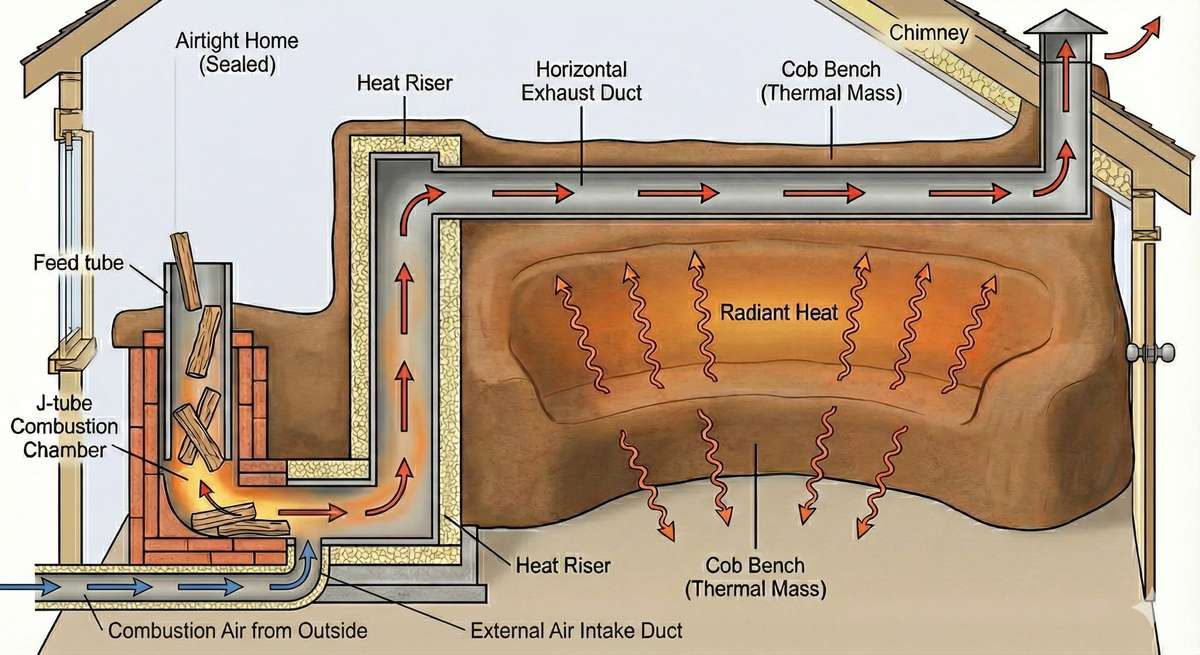
- A rocket mass heater is the home heating system. It takes the super-heated exhaust from the rocket stove engine and forces it horizontally through a long duct system embedded in a massive bank of thermal mass (usually cob, adobe, or brick) before it finally exits the building.
Like the masonry heater, the goal of a rocket stove is to extract as much heat as possible from the smoke before it goes up the chimney. However, the rocket mass heater usually does this by directing the exhaust through a long, horizontal bench adjacent to the stove. This system captures and stores heat in the bench that would otherwise have gone up the chimney. The result is a thermal batter that is very enjoyable to sit or sleep on.
What is really important is to make certain that none of these combustion fumes or exhaust gasses including the deadly carbon monoxide can escape into the home and negatively affect the healthiness of your indoor air quality.
The physics of rocket stoves: J-tubes, batch boxes, and the heat riser
The magic of a rocket stove happens in the heat riser. In a standard wood stove, the fire burns in a box. In a rocket stove, the fire burns sideways and then roars upwards.
The j-tube vs. the batch box in rocket stove design
The classic design is the J-tube, where wood is gravity-fed vertically into the fire. As the wood burns at the bottom, the flame is pulled sideways into the combustion tunnel and then up the insulated riser.
The more modern evolution, better suited for standard homes, is the batch box. This looks more like a standard wood stove door; you load a full batch of wood horizontally, but the exhaust is still channeled into a rocket riser behind the firebox to ensure that intense secondary combustion.
The heat riser for rocket heaters
This is the engine. It is a heavily insulated internal chimney. Because it is insulated, it gets incredibly hot - often creating a 're-burn' zone where smoke particulates are incinerated. This temperature difference creates a powerful thermosiphon (draft) that pushes the gas through the rest of the system with enough force to travel horizontally through long bench ducts.
Thermal comfort: Cob benches and radiant heat
The most distinctive feature of a rocket mass heater is the aesthetic. While masonry heaters are often upright stone towers, RMHs are typically horizontal, organic shapes made of cob (a mixture of clay, sand, and straw).
The exhaust pipe snakes through this cob bench. Because the combustion is so efficient, the exhaust gas cools drastically as it travels through the bench. By the time the smoke leaves the house, it is often little more than warm steam (sometimes as low as 40 degrees Celsius or 100 degrees Fahrenheit All that heat energy is left in the bench.
This provides conductive heating. You literally sit on your heater. For high performance homes like Passive House, this is excellent because it is a slow-release heat source that doesn't overwhelm the air temperature.

Do rocket mass stoves work in airtight houses?
Rocket mass heaters face the exact same physics challenge as masonry heaters and wood stoves in modern green buildings: air supply.
A classic J-tube rocket stove is an 'open system' - the feed tube is open to the room air. In a modern airtight home with an operational HRV or ERV system, or a kitchen range hood, this is dangerous. Negative pressure can easily pull carbon monoxide and smoke out of the feed tube and into the living space.
The requirement: sealed systems
To safely install a rocket mass heater in an airtight home, you generally must use a batch box design with a dedicated external air intake and a way of closing the wood inlet. The air must be piped from outside directly into the combustion box, completely isolating the burn from the room's pressure envelope. Classic open J-tubes are rarely suitable for certified airtight construction.
How to meet building code and get home insurance with rocket stoves
Getting building permits and home insurance with a rocket mass heater could be a very big challenge. While masonry heaters have established ASTM building standards, RMHs are often considered experimental by building officials.
- The code gap: Most local building codes do not have a specific section for rocket mass heaters, so you have a quite the hurdle ahead of you for getting a permit. They often fall under the category of generic 'masonry fireplace' in building codes, which means they may not meet requirements due to their horizontal flues.
- Insurance: Getting home insurance for a DIY site-built rocket heater can be very difficult.
- The UL/EPA solution: If you want the efficiency of a rocket stove without the red tape, look for manufactured, UL-listed rocket stoves or 'liberator' heaters that use rocket technology but are certified as wood stoves.
J-design vs. K-design: A hypothesis for airtight homes
For the intrepid DIY builder looking to solve the airtight home puzzle, the distinction between the classic 'J-design' and the newer 'K-design' is worth investigating.
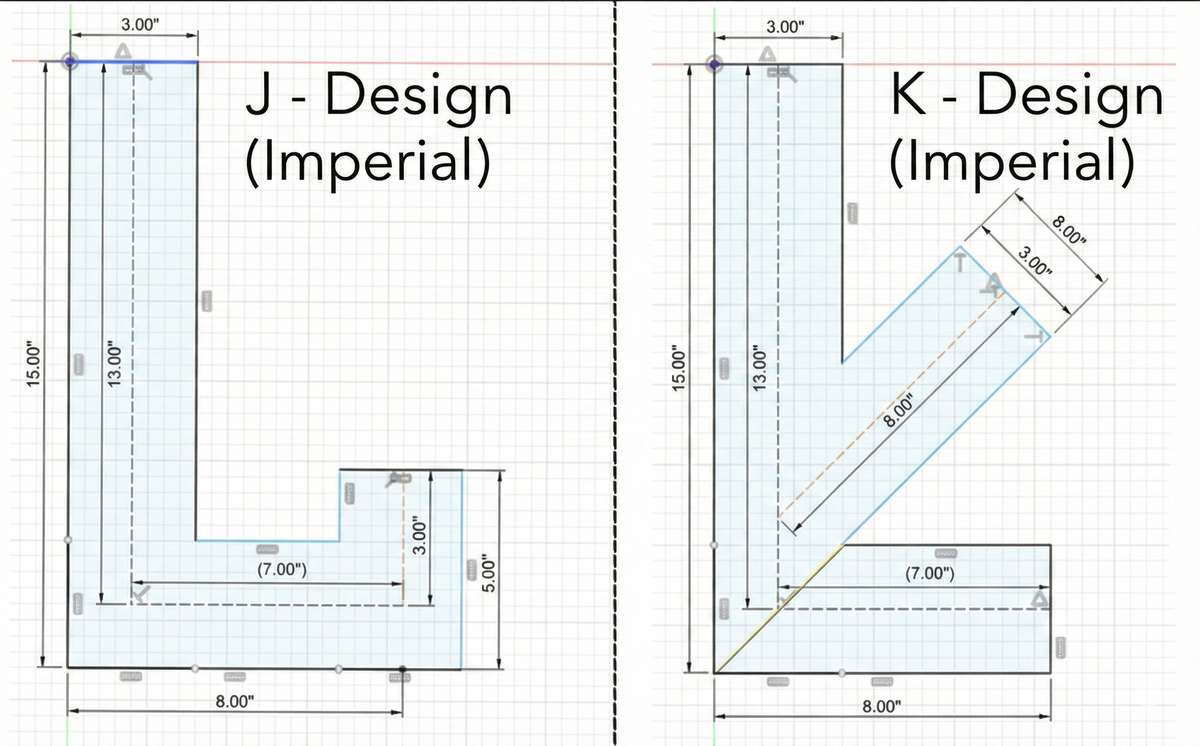
As illustrated in the diagram below, the shape of the combustion zone dictates how the fuel enters and, crucially, how the air enters.
- The J-design: In this classic configuration, the fuel feed is strictly vertical. Wood drops down by gravity. The challenge for airtight homes is that the air usually enters through the same opening as the wood (an open top). Sealing this while adding fuel is mechanically complex.
- The K-design: Here, the fuel feed enters at a 45-degree angle (like the arm of the letter K). This geometry separates the fuel feed from the air intake.
The airtight hypothesis: The K-design offers a theoretical advantage for those who want wood burning stoves suitable for an airtight Passive House. Because the air intake is often a distinct, horizontal channel at the base of the 'K', it should be far easier to attach a standard 4-inch fresh air duct directly from the exterior to this intake.
This would create a direct air supply system where the combustion air is drawn entirely from outside, bypassing the airtight envelope of the house. While few commercial kits exist for this yet, we hypothesize that the K-design is the likely future for safe rocket mass heaters in high-efficiency, air-sealed buildings.
In brief: Rocket mass heaters and rocket stoves
Rocket mass heaters, also known affectionately by the Green building community as 'rocket stoves' are the ultimate expression of extracting every calorie of heat from wood in a DIY homemade wood stove.
By burning wood sideways and creating a high-velocity draft, they incinerate smoke and store heat in heated furniture you can make with your own hands from the dirt you dig out of the garden.
Many Earthships in cold climates have some kind of rocket stove to keep temperature above freezing.
However, for modern airtight homes, they require careful planning. You must move away from open J-tubes toward sealed Batch Box designs with direct exterior air supplies to ensure safety and air quality. For many, a certified wood burning masonry heater may be the easier path to insurance approval, but for the dedicated DIY sustainable builder, the rocket mass heater offers unmatched if rustic efficiency.
Understanding the chemistry of incomplete combustion is also key to mitigating carbon monoxide risks in homes that rely on wood or gas for heating - so make sure you have CO detectors and that the batteries are replaced regularly.
We'd love to hear comments below from the Ecohome community, did you build a rocket stove? Would you consider it? We'd love to hear from you...
Now that you know about rocket mass heaters, explore other efficient heating options in the Ecohome Green Building Guide:
-
Wood stove buyers guide for airtight high performance and Passive Homes
-
Choosing the right firewood for efficient and clean burning
-
Find a certified masonry wood stove installer here
-
Guide to home fire safety - design, material selection and escape plans




Comments (0)
Sign Up to Comment