




Can you put wood burning stoves in airtight homes?
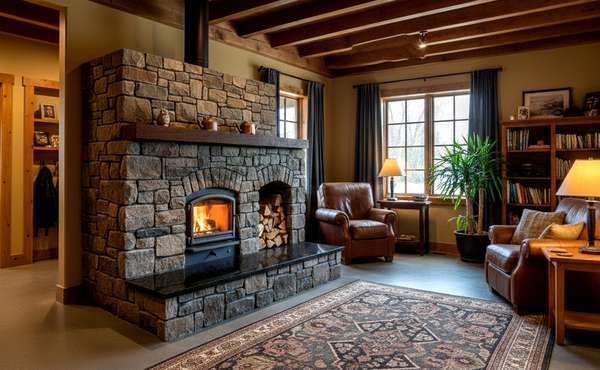
There is an inherent feeling of resiliency that comes with having a wood stove, in that you know you can keep your home warm in the case of a power outage. The concern with wood burners in modern airtight homes is that fire needs a supply of oxygen.
This guide covers the essential requirements, stove types, and installation best practices for safely and efficiently integrating wood heat into a modern, energy-efficient structure.
This guide provides a comprehensive look at the key aspects of this topic. Below is an overview of the sections we will cover, allowing you to jump directly to the information you need.
- The conventional wood burner in a standard home
- The airtight home challenge: depressurization and air supply
- Room-sealed wood burners by region
- The critical importance of stove sizing in high-performance homes
- Wood stoves and mechanical ventilation with heat recovery (MVHR)
- In brief
The conventional wood burner in a standard home
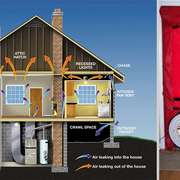
In days past when air leakage in homes was not on the radar of builders, there was ample air coming in through leaks in the envelope to provide sufficient oxygen to run fireplaces and wood stoves.
If you go back a century ago (and more of course) homes with open fireplaces offer very comfortable radiant heat as fires burned well in leaky homes. The problem was that they took the warm air from your home straight up the chimney and pullled in cold winter air though holes in building envelope. As a side note, if you still have an open fire place, sealing your chimney could save you a lot of money.
The airtight home challenge: depressurization and air supply
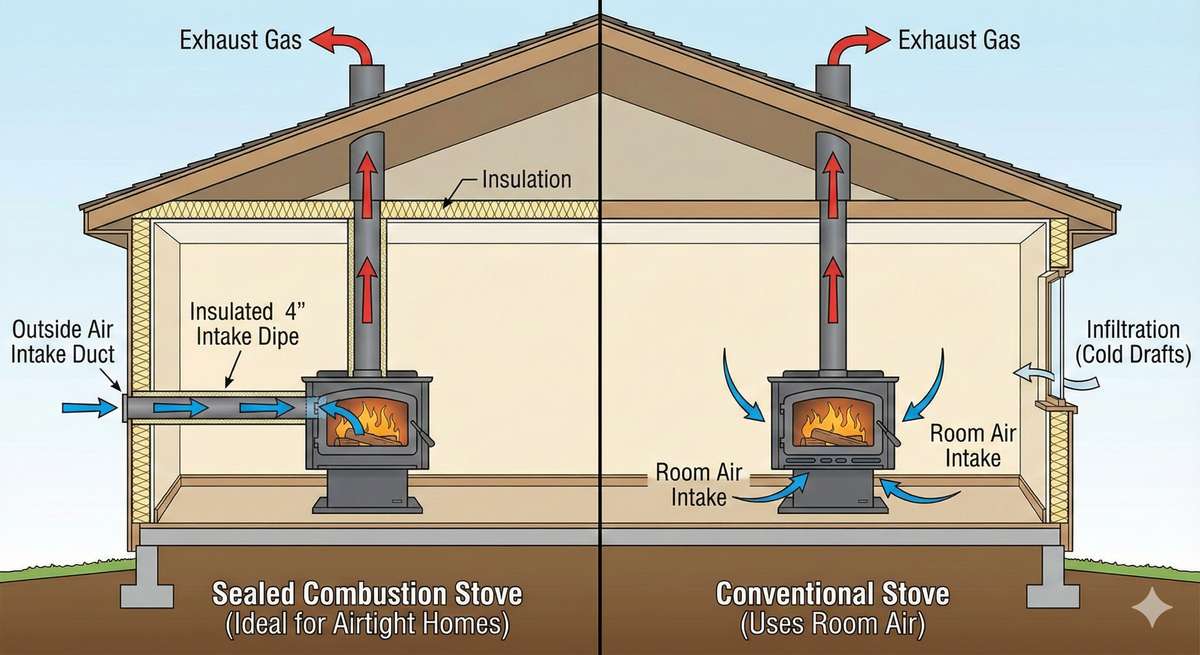
When a conventional wood stove operates in an airtight space, it rapidly consumes the available oxygen and creates a condition known as negative pressure or depressurization. This vacuum is powerful enough to overwhelm the chimney's natural draft, causing back-drafting, where combustion gases and smoke are pulled down the chimney or flue and into the living space.
This poses a major safety and indoor air quality risk. This depressurization can also compromise the efficiency of the home's primary ventilation system, such as a Heat Recovery Ventilator (HRV) or Energy Recovery Ventilator (ERV).
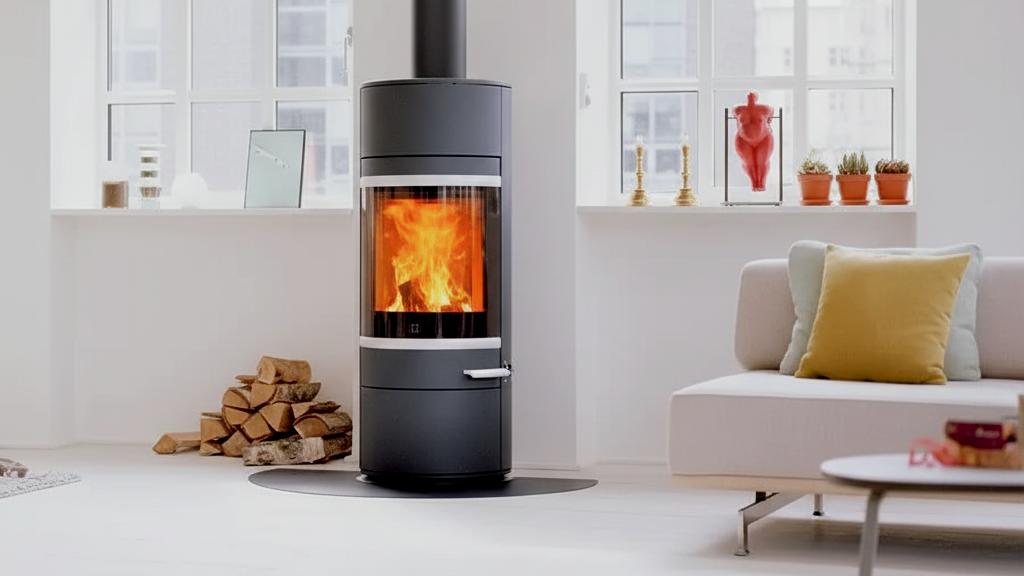
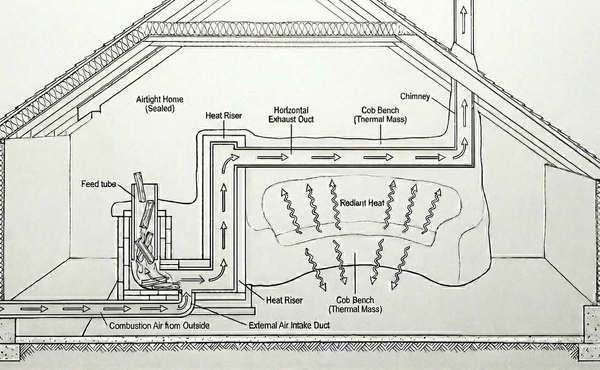
The required solution, mandatory in these structures, is a room-sealed wood burner that pulls 100% of its combustion air from the outside, thereby operating completely independently of the indoor air volume.
Room-sealed wood burners by region
The type of stove required for an airtight home is universally referred to as having a 'direct air supply' (DAS) or being 'sealed combustion', but the terminology, standards, and regulatory focus vary by region.
Canada: Focus on advanced airtightness standards
In Canada, modern homes are often built to meet or exceed the requirements of the National Building Code of Canada (NBCC), aiming for high energy performance targets like Net Zero or the Passive House standard. The challenge in these highly efficient structures is the interaction with the Heat Recovery Ventilator (HRV), which is essential for healthy indoor air quality.
- Canadian terminology: The terms 'direct vent' (for gas) and 'direct air' or 'sealed combustion wood stove' are commonly used.
- Code requirement: The NBCC and provincial codes often mandate that any solid fuel-burning appliance installed in a dwelling unit with a certified air leakage rate of less than 1.5 air changes per hour (ACH) must be equipped with a source of combustion air brought from the exterior.
- Product selection: Canadian builders often rely on stove models with a certified airtight connection to the outside, ensuring the firebox is completely sealed from the room. These units help maintain the integrity of the building envelope.
United States (US): Focus on EPA emissions and fire safety
In the US, regulations focus heavily on emissions standards, set by the Environmental Protection Agency (EPA). All new wood stoves must be EPA-certified, guaranteeing low particulate matter emissions. Building codes are primarily governed by the International Residential Code (IRC).
- US terminology: The stove is generally called a 'direct-vent' (often used for both gas and wood appliances drawing external air) or 'sealed combustion wood stove.'
- Code requirement: While the IRC does not mandate a specific airtightness level, it often requires a dedicated exterior air supply for combustion appliances in areas with high wind loads or in homes with tightly sealed construction. The air intake is often a 4 inch (10 cm) duct feeding air to the firebox connection.
- Professional guidance: The National Fire Protection Association (NFPA) standards and the Hearth, Patio & Barbecue Association (HPBA) often provide guidance on the correct installation and venting of these appliances in modern homes.
United Kingdom (UK): Focus on HETAS and clean air zones
The UK has a strong focus on certification and installer competency, primarily overseen by the Heating Equipment Testing and Approvals Scheme (HETAS). With increasing clean air zones in cities, the use of DEFRA-exempt stoves (stoves approved for smoke control areas) is critical.
- UK terminology: The appliances are commonly called 'room-sealed wood burners', 'direct air log burners', or 'external air log burners'.
- Building regulations: Under Document J of the Building Regulations, a dedicated air supply is required for all solid fuel appliances. Critically, for homes with an air permeability rate of less than 5 cubic meters per hour per square meter of floor area (the UK standard for very airtight homes), the installer must ensure the air supply is non-closable and suitable, strongly recommending a dedicated external air connection directly to the stove.
- Installer standard: Homeowners should use a HETAS-registered installer to guarantee the stove is installed to the correct standards, including proper connection of the external air supply and compliance with all fire safety regulations.
The critical importance of stove sizing in high-performance homes
The biggest mistake homeowners and builders make in super-insulated homes is oversizing the stove. An airtight, well-insulated home requires a fraction of the heat output (kilowatts or BTUs) of a conventional home.
- Low heat load: A Passive House or similar high-performance home may only require 1 to 3 kilowatts (kW) of heat on the coldest days.
- The problem of oversizing: If you install a stove rated for 10 kW (34,120 BTU/h) and only need 3 kW, you have two options: burn a small, low fire, or overheat the house. A low, smoldering fire starves the combustion process of oxygen, leading to incomplete burning. This is highly inefficient, significantly increases harmful fine particulate emissions (smoke), and causes rapid creosote buildup in the chimney, creating a fire hazard. It is always better to have a smaller stove burning hotter and cleaner.
- Sizing recommendation: Choose the smallest, most efficient stove possible. Look for units with a very low minimum burn rate and output that align with your home's calculated heating load. Consider a modern and efficient indoor wood-fired boiler, which sends most of the heat to a thermal storage tank, limiting direct room heat and preventing overheating.
Wood stoves and mechanical ventilation with heat recovery (MVHR)
In virtually all modern airtight homes, mechanical ventilation with Heat Recovery (MVHR) system (or Energy Recovery Ventilator (ERV) in North America) is installed to ensure healthy indoor air quality by providing a continuous supply of fresh air without losing heat. The interaction between the wood stove and the MVHR system is a key design consideration.
The Pressure dynamics challenge
If a wood stove is operating in a room with an MVHR system, you must ensure the stove does not cause a pressure imbalance. Even a properly installed MVHR system can create a slight positive or negative pressure depending on its balance.
If the stove and MVHR are fighting for air, the stove will lose, leading to back-drafting and smoke spillage when the door is opened. Read more here about how to balance air pressure in a home.
The solution is complete sealing
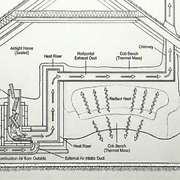
The only safe way to combine an MVHR system and a wood stove is by using a total direct air supply stove (sealed combustion). This setup ensures the MVHR system and the stove are mechanically isolated. The stove draws air only from the outside, and its exhaust is fully contained by the chimney. This isolation ensures the MVHR can continue to balance the interior air pressure without interference from the stove.

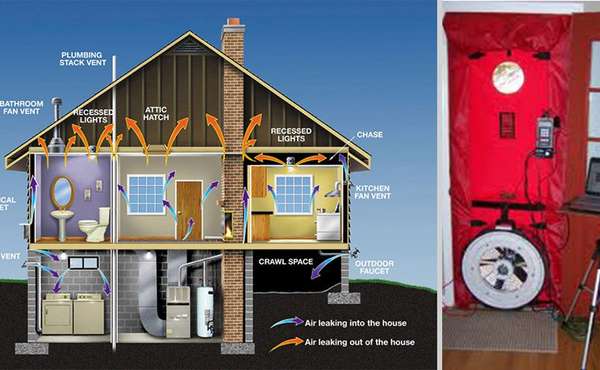
For professionals, it is best practice to perform a blower door test with the MVHR system running and the stove installed and sealed (but not burning) to confirm the home's airtightness is maintained and no significant depressurization occurs. Note: some codes require the appliance to be installed before the final airtightness test.
When selecting exterior finishes, prioritizing fire-rated siding for urban homes can provide a critical buffer against heat flux.
In brief
Successfully installing a wood burning stove in an airtight home comes down to two main principles: complete isolation and correct sizing. Use a total direct air supply stove (or room-sealed wood burner) to isolate the firebox from the indoor air. This prevents depressurization and back-drafting, which are dangerous and inefficient.
Secondly, choose a stove with a low heat output, typically 1 to 3 kW (around 3,400 to 10,200 BTU/h), to match the minimal heating demand of a high-performance building. This allows the stove to operate at its peak efficiency and cleanliness without overheating the space or producing excessive smoke from smoldering fires.
Avoid the common mistake of getting the area wet too early by checking the sealant drying vs curing time on the product label.
Now that you know more about wood burning stoves in airtight homes, find more info about wood heat and green building techniques in the Ecohome Green Building Guide and these pages below:
-
Choosing the best wood-burning fireplace inserts or stoves
-
Burning the right firewood for maximum heat output
-
Why gas fireplaces, stoves, furnaces and water heaters are being phased out
-
Wood pellet stoves for off-grid heating



Comments (0)
Sign Up to Comment