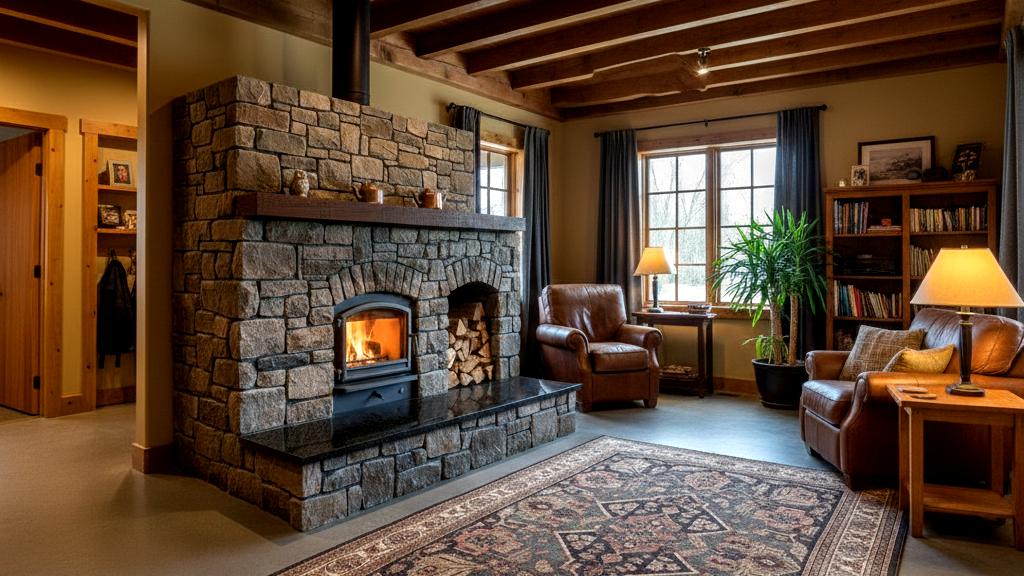



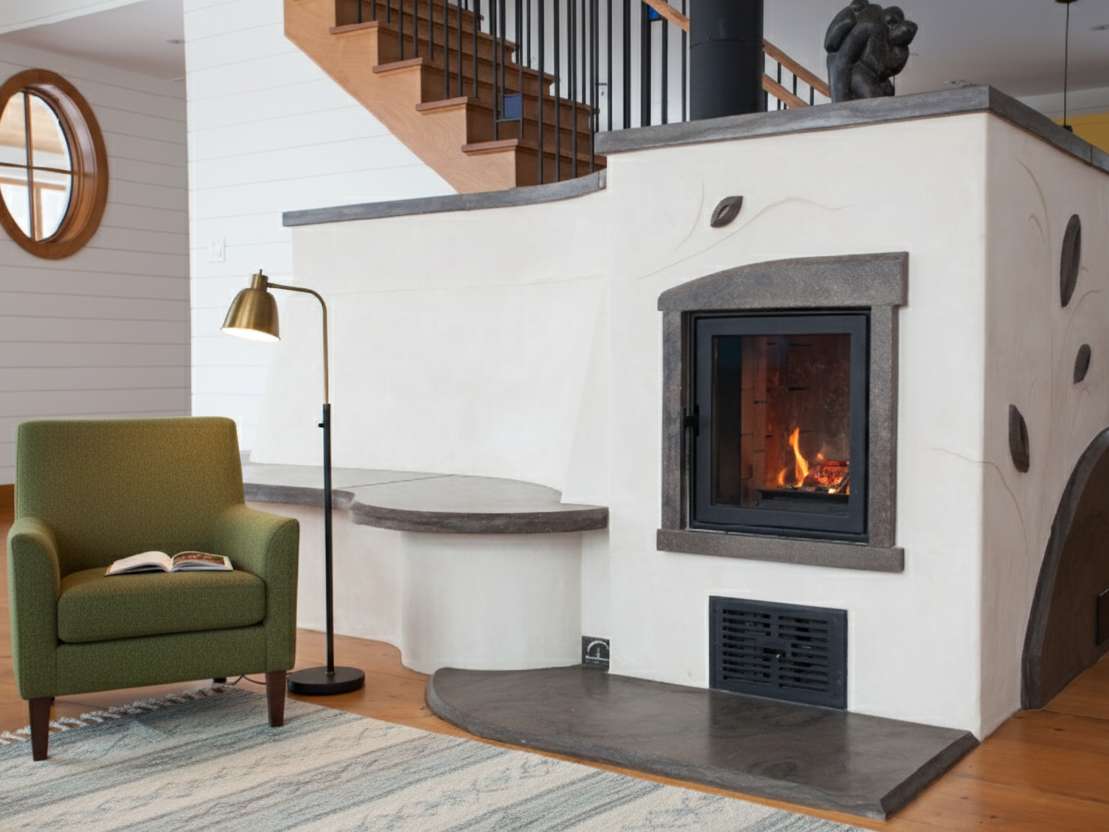
There is a specific quality of warmth that comes from a masonry heater that is unlike any other heating source. It is often described as feeling like the warmth of the sun on a rock.
While standard wood stoves can overheat a modern, well-insulated home, a masonry heater acts as a massive thermal battery, storing intense heat from a quick fire and releasing it slowly over 12 to 24 hours.
This guide explores why masonry heaters (also known as Finnish fireplaces, Russian stoves, kachelofen, or soapstone heaters) are arguably the best biomass option for Passive House, Net Zero, and LEED-certified builds. We will cover how they work, why they are safe for airtight homes when installed correctly, and how to choose the right high-efficiency core.
Below is a comprehensive overview of the sections we will cover, allowing you to jump directly to the information you need.
- What is a masonry heater and how does it differ from a wood stove?
- Radiant heat vs. convection: Why it matters for comfort
- The physics of the contraflow system
- The critical air supply requirement for airtight homes
- Types of heaters: Brick, soapstone, and modular cores
- Bonus features: Heated benches and bake ovens
- Clean burning, efficiency, and emissions
- In brief
What is a masonry heater and how does it differ from a wood stove?
A masonry heater is a site-built or modular heating structure weighing anywhere from 800 kg (1,700 lbs) to several tons. Unlike a metal wood stove that heats up and cools down rapidly, a masonry heater is built from materials with high thermal mass and conductivity, such as soapstone, firebrick, or specialized refractory concrete.
To understand why these are the superior choice for high-performance homes, we have to look at the difference in burn cycles.
The metal wood stove cycle
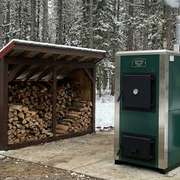
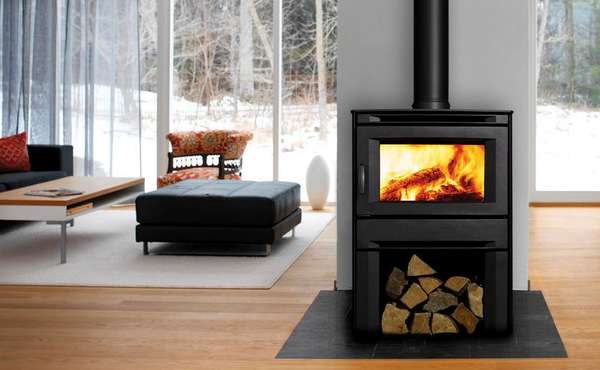
In a standard cast iron or steel stove, you feed the fire continuously. The metal radiates heat immediately. In a drafty, older home, this is useful. However, in a highly insulated Passive House, a metal stove produces a spike of heat (often 8kW to 12kW) that quickly makes the room unbearable. You are then forced to shut the air dampers down to lower the heat, which creates a smoldering, dirty fire that produces creosote and pollution.
The masonry heater cycle
A masonry heater works on what could be called a 'pulse' system. You burn a large load of wood rapidly (usually in 1 to 2 hours) with the air vents wide open to achieve maximum combustion. The heat does not enter the room immediately; instead, it is absorbed by the tons of stone mass. The heater then gently radiates that stored energy (at a low output of 1kW to 3kW) for the next 24 hours.
Radiant heat vs. convection: Why it matters for comfort
Most modern heating systems, including forced air furnaces and standard wood stoves, rely on convection. They heat the air, which then circulates around the room.
Convection can be uncomfortable in energy-efficient homes because it creates air currents and stratifies the heat—your head is hot, but your feet are cold. Masonry heaters produce radiant heat. Like the sun, radiant heat travels in waves (infrared) and warms solid objects (walls, furniture, and people) rather than the air itself.
This allows you to feel warm even if the air temperature in the house is kept slightly lower, which creates a fresher, less stuffy indoor environment perfect for homes with tight building envelopes and controlled ventilation.
The physics of the contraflow system
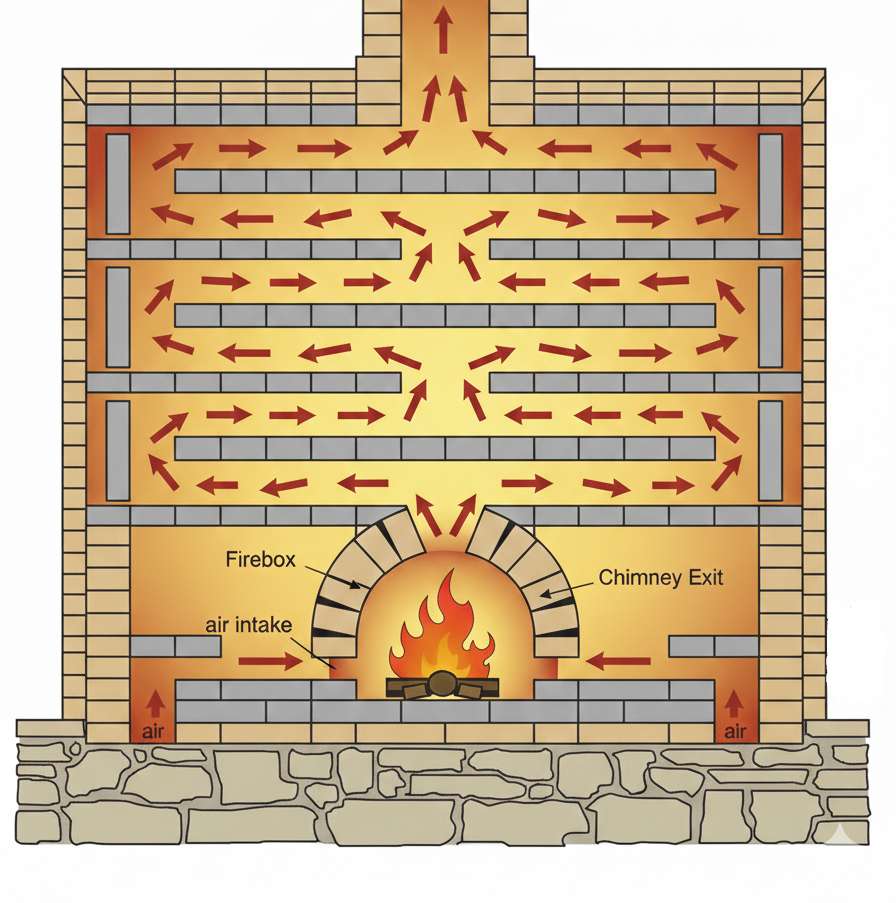
The defining engineering feature of a masonry heater is the internal pathway of the smoke, often called the flue gas path.
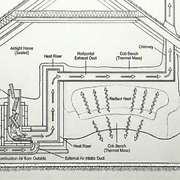
In an open fireplace or standard stove, hot gas rises straight up and out. This wastes up to 80% of the energy. In a masonry heater, the hot exhaust gases are forced through a complex system of baffles or 'contraflow' channels. The gases rise to the top of the firebox, but are then forced to travel down through side channels (against their natural buoyancy) before they are allowed to exit the chimney.
This long, winding path forces the hot gas to transfer its thermal energy into the masonry exterior shell. By the time the smoke leaves the chimney, it has cooled significantly, meaning that heat stayed in your house rather than heating the sky.
The critical air supply requirement for airtight homes
This is the most important section for green builders. While the heat output of a masonry heater is perfect for airtight homes, the combustion air supply is the potential point of failure.
Masonry heaters require a 'fast and furious' burn. This consumes a high volume of oxygen very quickly. In a leaky, older home, air is pulled in through cracks in windows and doors. In a home built to modern airtightness standards (like 1.5 ACH50 or lower), the house cannot supply this air fast enough.
This creates depressurization. The heater will starve for oxygen, or worse, it will pull smoke back into the living room (back-drafting). This negative pressure also conflicts with mechanical ventilation systems like your Heat Recovery Ventilator (HRV).
The solution: A sealed direct air supply (DAS)
You cannot rely on room air. You must install a dedicated direct air supply. This involves:
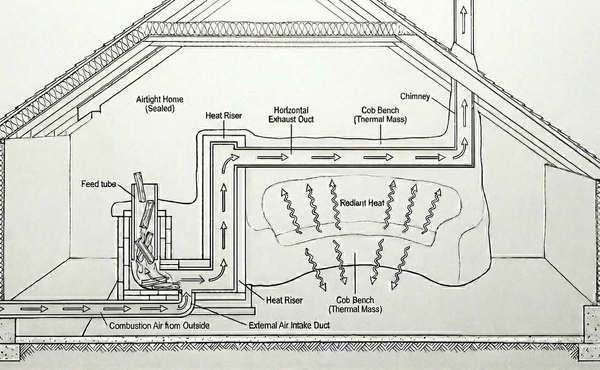
- The intake: An insulated duct (usually 4 to 6 inches in diameter) running from the exterior of the house, often under the slab or through the rim joist.
- The connection: This duct must connect directly to the bottom of the heater core or the ash pit.
- The seal: The heater must be equipped with gasketed, airtight glass doors (like those found on high-end fireplace inserts).
When the door is closed, the fire burns in a system that is completely isolated from the air in your living room. It takes air from outside, burns it, and sends the exhaust back outside, never interacting with your indoor air quality.
Types of heaters: Brick, soapstone, and modular cores
When specifying a masonry heater, you generally have three construction paths to choose from.
1. Traditional brick and stone (custom)
These are built brick-by-brick by a specialized mason (often certified by the MHA - Masonry Heater Association). They offer unlimited design flexibility. The internal core is firebrick, and the outer skin can be brick, stone, stucco, or tile.
2. Soapstone heaters (Tulikivi, Nunnauuni)
Soapstone is a geological wonder; it has a specific heat capacity much higher than brick, meaning it can store more heat per pound. Brands like Tulikivi produce kits cut from massive blocks of soapstone. They heat up faster and stay warm longer than red brick, making them highly efficient for smaller footprints.
3. Modular refractory cores (temp-cast, masonry heater refractories)
This is often the most cost-effective route for modern builds. You buy a factory-cast core made of high-temperature refractory concrete. The pieces stack together like Lego. Once the core is installed (along with the chimney connection and air supply), you can face it with whatever material matches your interior design—thin stone veneer, brick, or adobe.
Bonus features: Heated benches and bake ovens
Because you are building a custom thermal mass, you can route the exhaust channels horizontally before they go up the chimney.
This allows for the creation of a heated bench (or hypocaust). The hot smoke travels through a channel inside a stone bench next to the heater. There is arguably no more comfortable spot in a home during winter than sitting on a warm stone bench with your back against a warm masonry heater.
Additionally, many masonry heaters include a 'white oven' or bake oven. Because the stone mass holds a stable temperature for hours, these ovens are legendary for baking bread, slow-cooking stews, and making pizza, utilizing the heat from the fire you burned earlier in the day.
Clean burning, efficiency, and emissions
Environmental sustainability is not just about heat retention; it is about reducing air pollution. Masonry heaters are among the cleanest ways to burn biomass.
For the best efficiency, wood needs to burn at high temperatures to complete the burn. Standard wood stoves often pollute because they are 'damped down' to burn slowly, which starves the fire of oxygen and lowers the burn temperature. Running a wood stove at lower temperatures creates less heat and more smoke (particulate matter), so you go through wood a lot quicker. A masonry heater is always fired with the air wide open to allow the secondary combustion.
Because the fire burns in a highly insulated firebox, temperatures often exceed 1000°C (1800°F). At this temperature, secondary combustion occurs—the smoke itself burns. This results in:
- Near-complete combustion: Very little ash is left behind.
- Low Emissions: Very low particulate matter exiting the chimney.
- No Creosote: The dangerous buildup in chimneys is virtually eliminated because the smoke is burned in the firebox.
To achieve this, you must use dry, seasoned firewood and use the 'top-down' lighting method to ensure rapid ignition.
In brief - All about masonry heaters
A masonry heater is the 'Rolls Royce' of biomass heating for sustainable homes. By decoupling the time of the burn from the release of the heat, it solves the overheating problems associated with standard stoves in airtight houses.
To ensure safety and performance, you must prioritize a sealed direct air supply to prevent depressurization and choose a high-efficiency core with secondary combustion technology. This setup provides comfortable, radiant heat that complements the thermal stability of a high-performance building envelope.
To get that high-end look, use a few simple tips for a smooth caulk bead that doesn't require constant wiping.
Now that you understand masonry heaters and thermal mass, learn more about integrating wood heat into green buildings in the Ecohome Green Building Guide and the related pages below:
-
Choosing the best wood-burning fireplace inserts or stoves
-
The definitive guide to choosing the right woodstove for airtight high performance and Passive Homes
-
Why sealing your old chimney damper is essential for lowering heating bills
-
Modern wood-fired boilers for hydronic heating




If the exhaust gives up too much heat to the masonry you'll get soot building up in the stove (and the stack). How do we figure out the maximum length of the exhaust path inside the stove to avoid buildup in inaccessible locations?