







Top HRV and ERV ventilation units: a homeowner's and pro's guide
We're at the point where most building codes now mandate mechanical ventilation systems in homes, leaving only older homes without air barriers and air sealing measures that still rely on air leakage to change the air in homes.
Natural ventilation does remove moisture as well as a certain amount of indoor contaminants, but that's not a reliable way to provide fresh air to homes, nor is it an energy efficient one. And new contaminants can be introduced as air passes through some pretty sketchy insulation materials or mold that can sometimes be found in older homes.
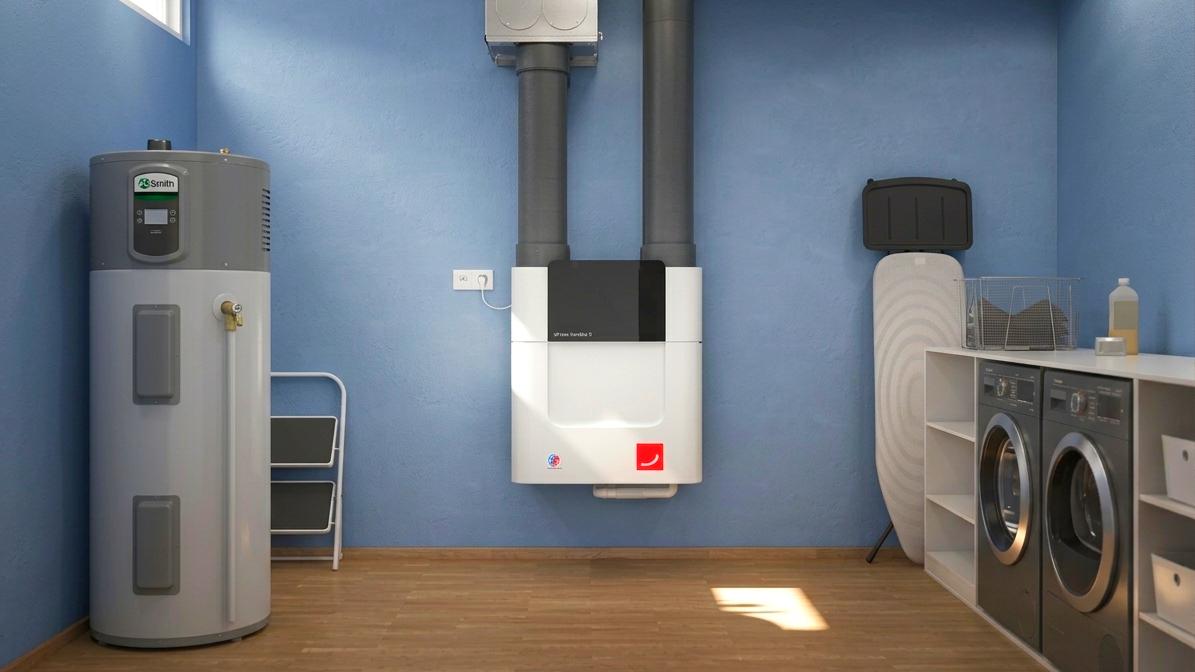
Integrating a high performance Heat Recovery Ventilator (HRV) or Energy Recovery Ventilator (ERV) into new builds and renovations is essential. This buyer guide reviews the best models on the market, evaluating their mechanical performance, core heat exchange efficiency, and operational reliability.
- Understanding balanced ventilation: HRV vs ERV
- Key features to evaluate before buying
- The top selling home ventilation units of 2026
- Installation considerations for homeowners and professionals
- In brief
Understanding balanced ventilation: HRV vs ERV
Mechanical ventilation systems operate by simultaneously exhausting stale indoor air and supplying fresh outdoor air in perfectly equal quantities. Read here why balanced air pressure in homes is so important.
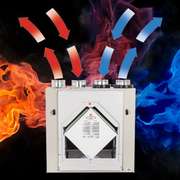
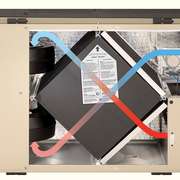
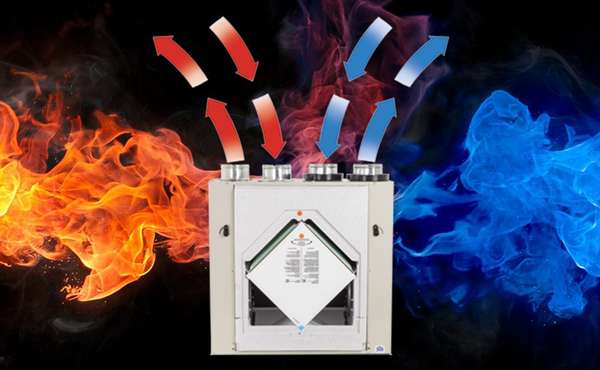
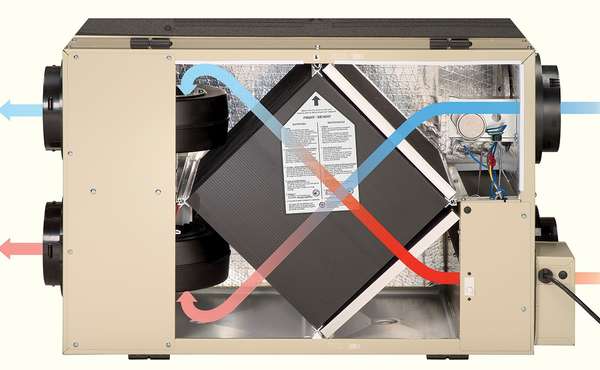
An HRV extracts heat from the outgoing exhaust air and uses it to preheat or precool the incoming air stream through a heat transfer core. This process is ideal for cold, dry winter climates where keeping thermal energy inside the envelope is the primary concern.
Conversely, along with transfering heat an ERV also collects moisture, and keeps it on the same side of the building envelope. An ERV has a core made with dPoint polymer membranes that allow water vapor molecules to pass between the exhaust and intake streams via molecular diffusion while entirely blocking gases, odors, and contaminants.
To learn more about how each one works and to learn which is better for your climate, see this page on choosing between an HRV and ERV. And note - One may be better than the other for your climate, but you can't really go 'that' wrong as long as you have one or the other.
Key features to evaluate before buying and ERV or ERV in 2026
Evaluating mechanical specifications carefully ensures your chosen system will perform reliably over its operational lifespan. The key to making the right choice is to prioritize specific performance data over simple brand recognition. When analyzing options, keep these key factors in mind:
- Evaluating core efficiency metrics such as Sensible Recovery Efficiency (SRE) to understand true thermal performance.
- Determining correct capacity adjustments by matching total air volume capabilities to house size, measured in cubic feet per minute or liters per second.
- Assessing filtration options to confirm the housing accommodates high efficiency particulate air or Merv Minimum Efficiency reporting Value) filters.
- Checking climate suitability ratings to ensure the internal defrost mechanism prevents core freezing during extreme winter weather.
Smart sensors and demand-controlled ventilation
The control systems managing residential ventilation have evolved from simple manual wall switches and basic crank timers into automated, responsive networks. See here to learn about smart home controls for home efficiency.
Modern high end ventilation systems operate on Demand-Controlled Ventilation (DCV) protocols, meaning they deliver fresh air precisely when and where it is required. Rather than operating on a fixed, continuous schedule or relying on homeowners to manually increase fan speeds when indoor air quality degrades, modern systems utilize continuous monitoring arrays.
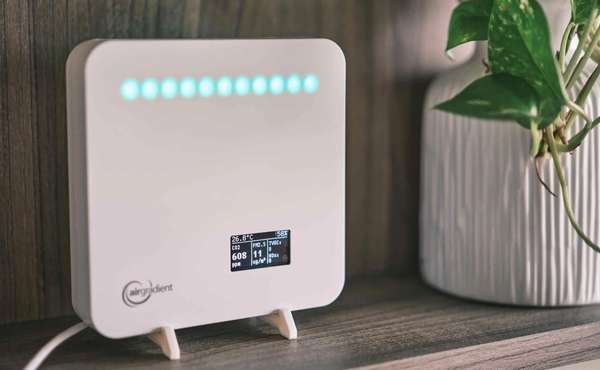
Wireless sensor stations are deployed in high occupancy zones and moisture heavy spaces, tracking three primary metrics: carbon dioxide (CO2), Volatile Organic Compounds (VOCs), and relative humidity (RH).
When CO2 levels rise in a master bedroom overnight or humidity spikes in a bathroom, the sensor transmits data to the main ventilation controller. Learn more here about indoor air quality monitor in homes and how they work.
The top selling home ventilation units of 2026
Selecting the right ERV or HRV brand and model requires analyzing certified performance numbers rather than relying on marketing claims alone. The following units represent the market leaders in build quality, performance engineering, and contractor satisfaction for the 2026 calendar year.
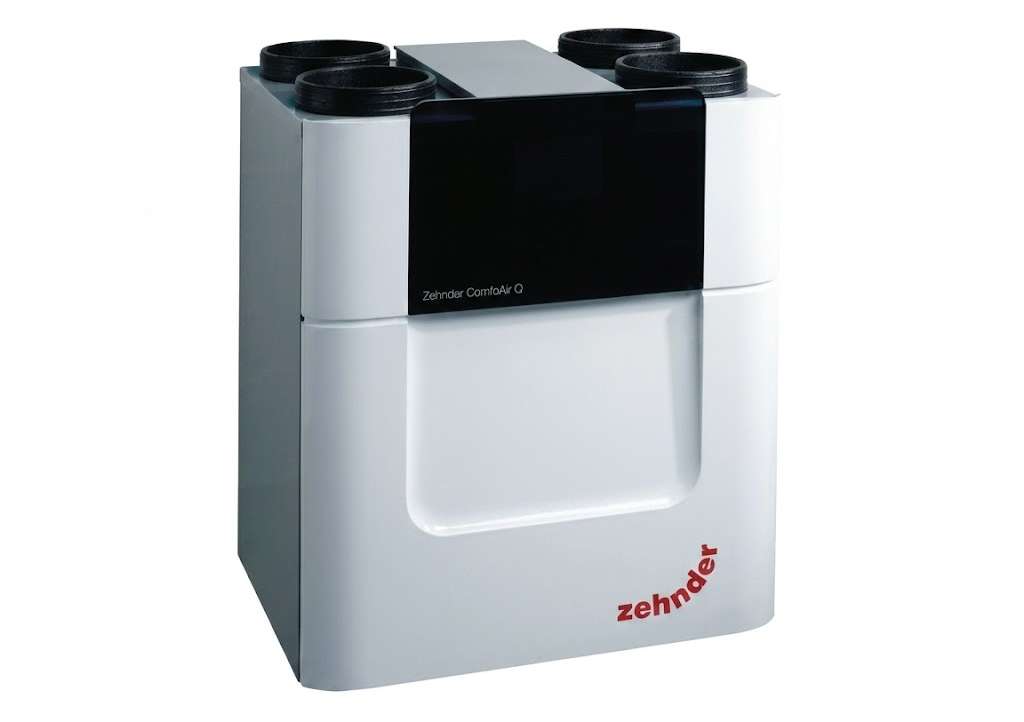
Zehnder ComfoAir Q series
The Zehnder ComfoAir Q series remains the undisputed gold standard for luxury residential projects and premium custom builds. It features a world class counterflow heat exchanger that delivers an extraordinary Sensible Recovery Efficiency of between 88% and 93%, which is about the highest rate available.
This level of performance makes it a premier choice for high performance construction projects aiming for stringent Passive House certification. The series includes three distinct models, the Q350, Q450, and Q600, which manage maximum airflows ranging from 206 cfm (97 L/s) up to 353 cfm (167 L/s).
For building professionals, the system features constant volume fans with integrated sensor technology to ensure the supply and exhaust flows stay perfectly balanced regardless of external wind pressures or filter loading.
It functions with whisper quiet decibel outputs due to optimized internal aerodynamics and heavy acoustic insulation. While the initial capital expenditure sits at the top of the market range, the long term electrical savings and ultimate thermal comfort justify the premium price tag for high efficiency designs.
Brink Climate Systems Flair series
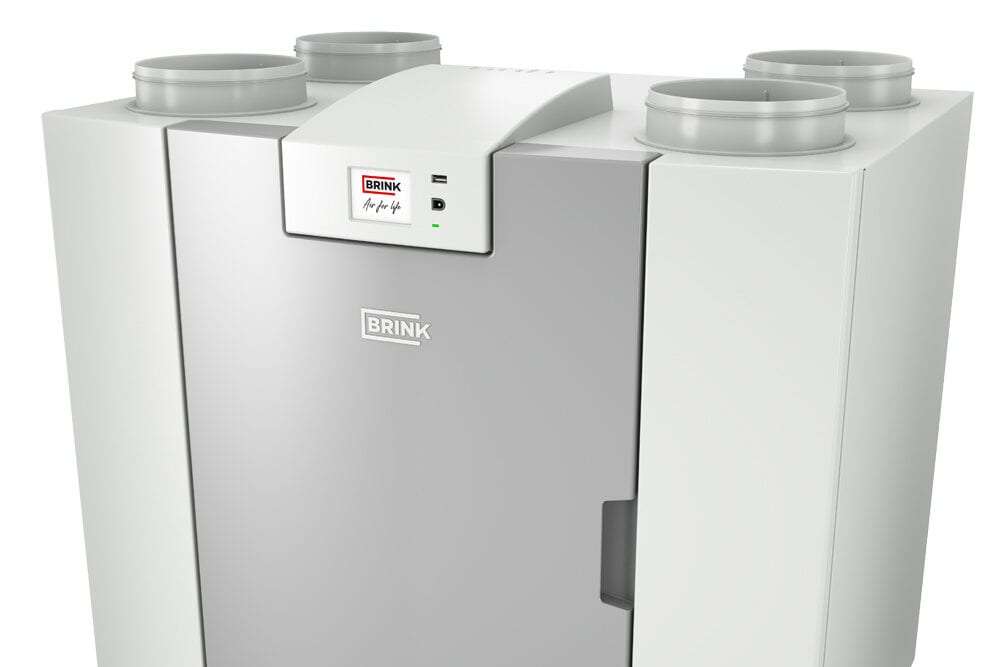
Brink Climate Systems has emerged as a primary alternative to premium legacy brands in North America. The Brink Flair series is engineered specifically for low energy consuming homes and airtight retrofits.
The engineering focus of the Flair series centers on aerodynamic design and constant flow Electronically Commutated (EC) motors. These units are also at the top of the scale with a sensible recovery efficiency of between 89% and 91% for HRV configurations and approximately 81% to 82% for ERV configurations.
A key advantage for installers is the integrated, high efficiency modulating bypass system, which optimizes free cooling pathways during summer nights. Unlike fully proprietary radial duct systems that require single source sourcing, Brink units integrate flexibly with varied high performance duct networks, reducing overall mechanical installation costs.
Panasonic Intelli-Balance series
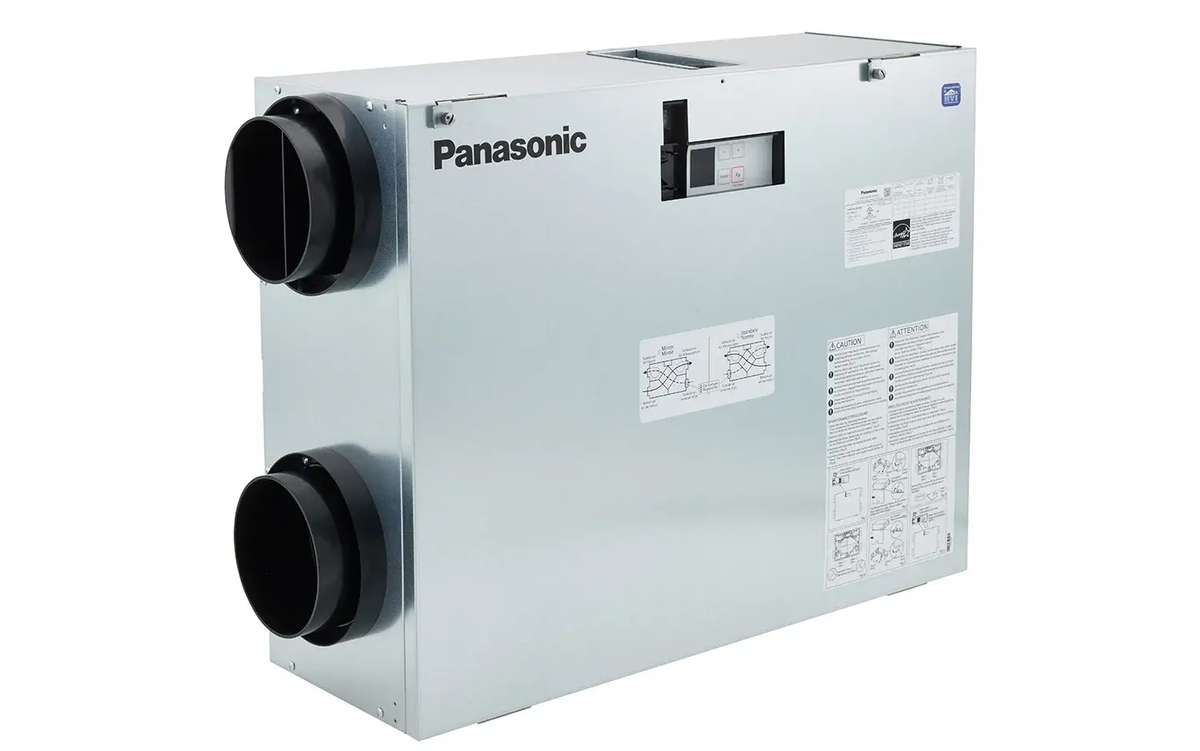
The Panasonic Intelli-Balance series typically ranges between 75% and 90%, with the Intelli-Balance Elite and Elite Plus+ all-climate models achieve 90% SRE
These engineered ERV systems deliver up to 90% Sensible Recovery Efficiency and up to 84% Total Recovery Efficiency, making them exceptional options for managing seasonal indoor humidity profiles. The units feature dual brushless direct current motors equipped with smart flow technology to dynamically overcome static pressure variations across the duct network.
Installers can quickly adjust the individual supply and exhaust fan speeds using built in digital dials, choosing custom settings from 50 cfm (24 L/s) up to 150 cfm (71 L/s). The Elite Plus models are purpose built to withstand severe winter temperatures, operating successfully down to -22 °F (-30 °C) via a flexible, automated defrost cycle that switches seamlessly between recirculation and exhaust-only modes. Its compact chassis allows for convenient ceiling, wall, or floor installations without requiring a dedicated condensation line connection.
Minotair PentaCare Series
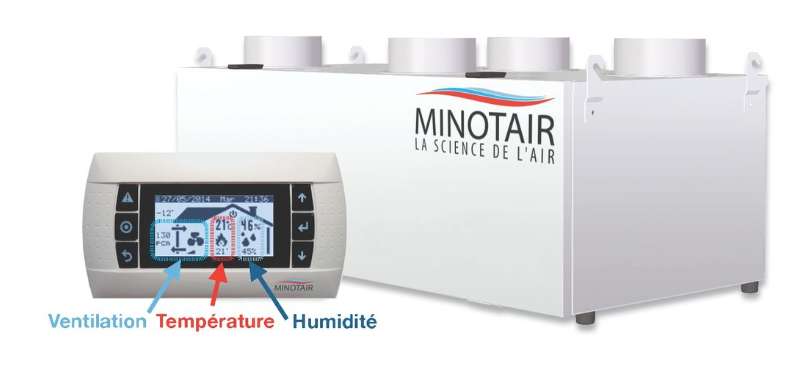
For projects requiring mechanical intervention beyond passive core recovery, manufacturer Minotair in Quebec Canada offers the PentaCare series. Rather than functioning purely as a passive heat exchanger, these units are classified as compact air treatment systems designed for airtight residential structures. The system utilizes a built in, reversible micro-heat pump alongside a traditional recovery core.
It does this by harvesting "hidden" heat. The compressor aggressively drops the temperature of the outgoing stale air, squeezing out not just sensible heat but also latent heat (moisture condensation).
Also, with the compressor motor fully enclosed inside the box, the machine can also take advantage of that minor amount of waste heat and feed it back into your home's incoming fresh air stream.
This configuration allows the unit to actively heat, cool, dehumidify, and filter indoor air using MERV 15 or HEPA filtration. When outdoor temperatures drop significantly or ambient summer humidity spikes, the active micro-heat pump handles the thermal load. This process maintains stable indoor delivery temperatures and eliminates reliance on raw electric resistance defrost strips, which can drastically increase peak electrical loads in cold climates.
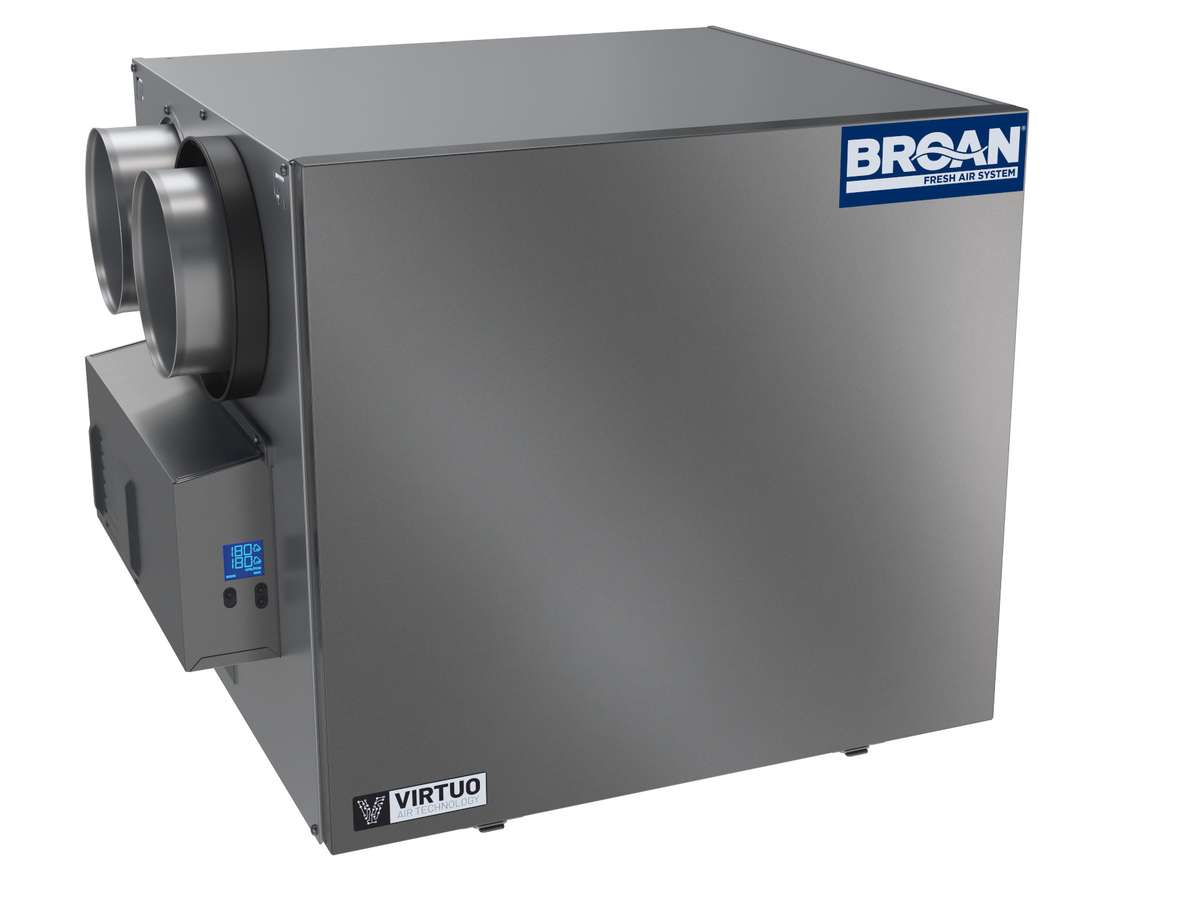
Broan-NuTone AI series
The Broan-NuTone AI series has quickly become a favorite among high volume homebuilders and mechanical contractors due to its revolutionary configuration workflow. It features proprietary Virtuo automated air balancing technology, which continuously monitors and adjusts internal fan speeds to keep air streams perfectly balanced.
This completely eliminates the need for manual airflow tracking hoods and saves significant installation time on the job site. The units cover airflow ranges between 130 cfm (61 L/s) and 160 cfm (75 L/s), satisfying whole house ventilation requirements across a broad footprint of mid-sized residential spaces.
The Sensible Recovery Efficiency (SRE) of the Broan-NuTone AI series of fresh air systems (HRVs and ERVs) ranges from 64% to 81% depending on the model, airflow, and outdoor temperature.
Fantech Hero series
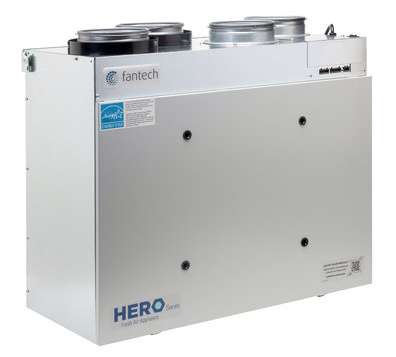
The Fantech Hero series is an incredibly rugged, dependable contractor-grade option built to withstand harsh northern climates. Utilizing an advanced counterflow core design, the Hero series maximizes contact surface area to deliver excellent thermal recovery performance.
It operates with a robust galvanized steel cabinet and is popular for its straightforward mechanical layout that simplifies routine filter cleaning. Standard models easily push 150 cfm (71 L/s) through six inch (15 cm) round duct adapters, making it highly compatible with traditional ducted infrastructure configurations.
The Fantech Hero series generally provides a Sensible Recovery Efficiency (SRE) of 75% to 80%. The exact efficiency depends on the specific model and the outdoor testing temperature.
Lunos e² series decentralized HRV
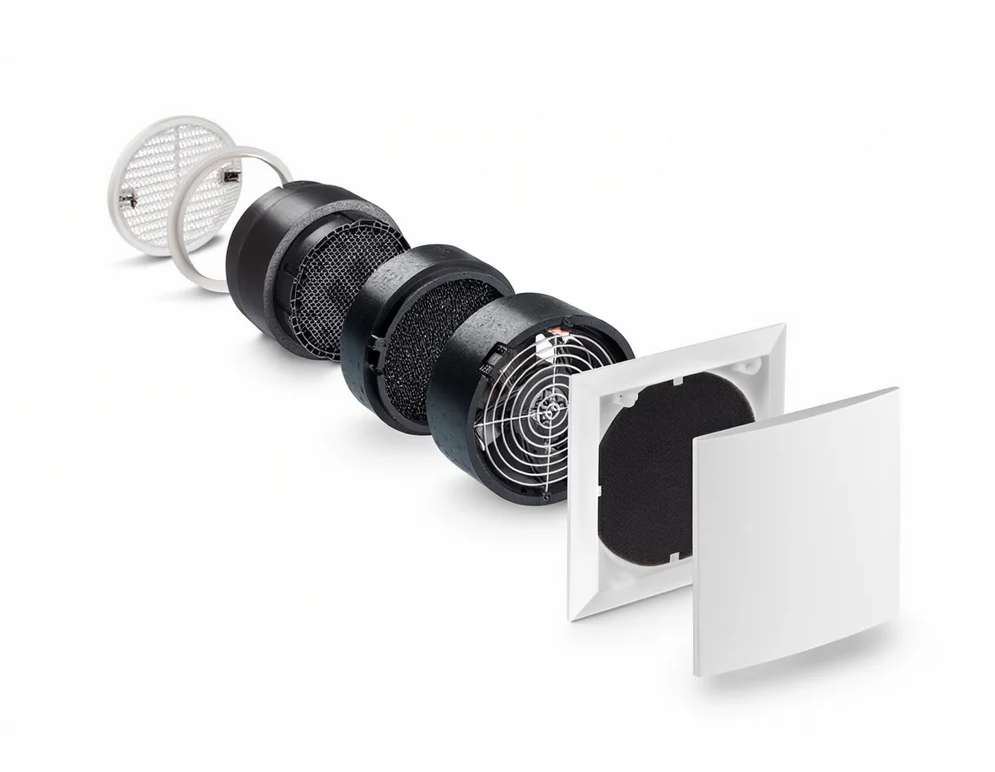
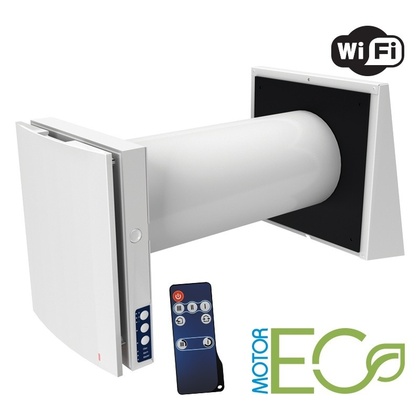
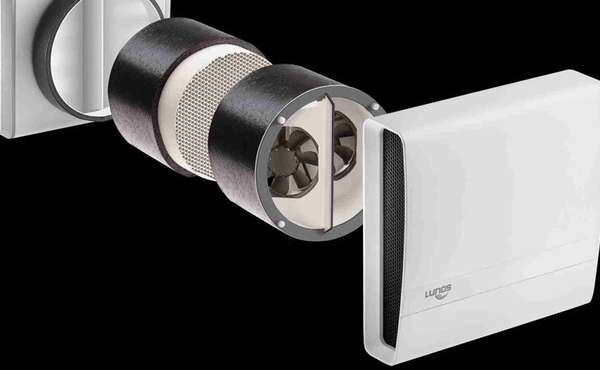
When running extensive duct networks through an existing structure is physically impossible or financially prohibitive, decentralized options offer an elegant way forward. The Lunos e² series represents a specialized, through the wall ductless ventilation system that operates in synchronized pairs.
Each individual unit contains a highly regenerative ceramic thermal storage core alongside a reversible direct current fan. Every 70 seconds, the units reverse their airflow direction, with one unit exhausting warm air to heat its ceramic core while the paired unit draws cold outdoor air through its preheated core.
For specialized renovations where running complex duct networks is impossible, a compact ductless air exchanger offers an ideal solution, supplying a variable airflow up to 22 cfm (10 L/s) per paired assembly.The sensible recovery efficiency (SRE) of the Lunos e² series decentralized HRV is generally rated between 84% and 92%.
We used the Lunos e2 system ourselves when we built Canada's first LEED V4 Platinum House and were quite happy with it. You will hear it as you hear any other ventilation system, where is is a bit more noticeable is that it changes directions quite frequently. We found that in fairly short order, the noise fades into the background like any furnace or ventilation system, or fridge for that matter.
Here you can how simple installation is in the Ecohome DIY Lunos HRV installation video.
Installation considerations for homeowners and professionals
Proper installation and routine balancing dictate whether a high efficiency ventilation unit meets its rated performance in the field. Even a premium system like a Zehnder will underperform if duct connections are poorly executed or leaky.
Contractors must ensure all exterior duct connections are completely sealed with high quality mastic and thoroughly wrapped in insulation to prevent condensation from forming inside the building envelope. Homeowners must maintain a strict schedule for filter inspections, cleaning or replacing the HRV and ERV core filters every three to six months to prevent airflow restrictions and maintain clean indoor air delivery.
In brief
Investing in a top tier ventilation system guarantees a continuous supply of fresh outdoor air while protecting your home envelope from structural moisture damage. Systems from Zehnder and Panasonic provide premium options for maximum thermal recovery and smart motor controls, while Broan-NuTone offers outstanding automated calibration features for professional installers.
Choosing the best home ventilation system requires finding a balance between the realities of the climate zone you live in, and your specific budget and spatial layout constraints.
Now that you know more about heat recovery ventilation, find more info about indoor air quality and green building techniques in the Ecohome Green Building Guide and these pages below:
-
Easy maintenance tips to keep your ERV or HRV clean and running efficiently
-
The definitive guide to choosing the best Indoor Air Quality monitors
-
How to keep wildfire smoke out of homes with home ventilation systems
-
Carbon monoxide poisoning and prevention: How to protect indoor air quality in homes from CO contamination



Comments (0)
Sign Up to Comment