











LFP vs lithium-ion: a homeowner's & pro's guide
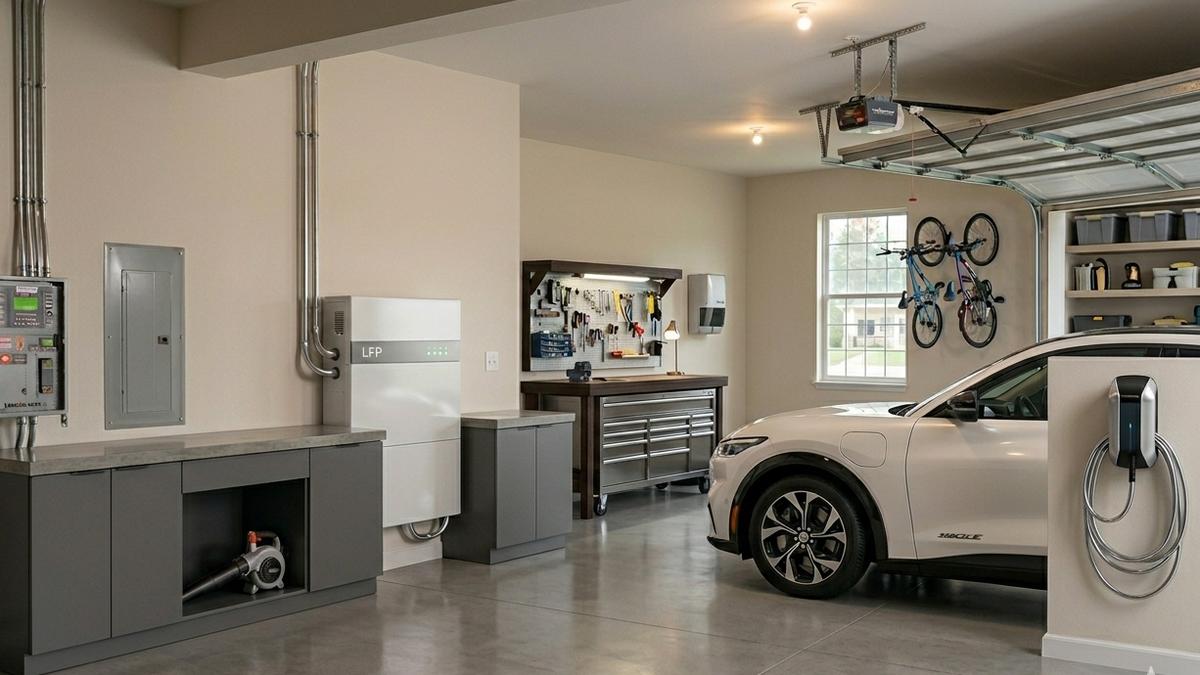
As residential energy storage becomes a standard feature in high-performance building, the debate between lithium iron phosphate (LFP) and traditional nickel manganese cobalt (NMC) lithium-ion chemistries has taken center stage.
While both technologies fall under the lithium-ion umbrella, their chemical stability, safety profiles, and long-term return on investment (ROI) differ significantly. This guide breaks down these technical nuances to help homeowners and contractors specify the right storage solution for off grid or net zero homes.
- Understanding battery chemistries: LFP vs NMC
- The practical shift: why EV buyers prefer LFP
- Safety and thermal runaway: expanding on the risks
- Cost comparison and long-term value proposition
- Performance and capacity: energy density vs weight
- Smart home integration and management advantages
- Environmental impact and ethical sourcing
- In brief
Understanding battery chemistries: LFP vs NMC
The term lithium-ion is a broad category. In the context of home energy storage, it almost always refers to Nickel Manganese Cobalt (NMC). This chemistry was the early market leader because it powers everything from smartphones to high-end electric vehicles (EVs). However, we have recently witnessed a massive global shift in the dominant technology.
The 2025 takeover
Between 2021 and 2025, Lithium Iron Phosphate (LFP) staged a rapid takeover of the global market. In 2025, LFP officially surpassed nickel-based chemistries for the first time, accounting for over 50% of all EV batteries and a staggering 90% of all stationary energy storage systems worldwide. This shift was driven by a 15% drop in LFP production costs in 2025 alone, making it the clear industry standard for safety-conscious applications.
The chemical distinction
The fundamental difference lies in the cathode material. NMC batteries use a layered structure of nickel, manganese, and cobalt. LFP batteries use an olivine crystal structure made of iron and phosphate. This phosphate bond is chemically stronger and more stable than the metal-oxide bonds found in NMC, which dictates how the battery behaves under stress, heat, and repeated use.
The practical shift: why EV buyers prefer LFP
While builders care about stationary storage, the EV market has provided the most data on why LFP is winning. Despite LFP being heavier for the same capacity, buyers are choosing it for daily practicality over raw performance metrics.
Daily range and longevity of EVs
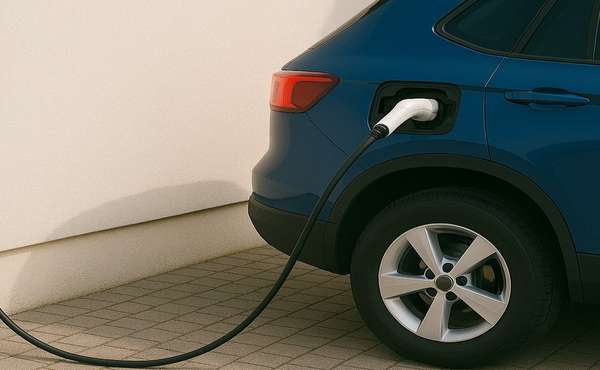
Unlike traditional NMC batteries, which are best kept between 20% and 80% charge to prevent degradation, LFP batteries can be charged to 100% every day. This means a 250-mile LFP car often provides more 'real-world' daily range than a 300-mile NMC car that you are advised to baby. Furthermore, LFP cells are "million-mile" batteries, capable of 4,000 to 6,000 cycles. For a homeowner or boat owner, this translates to a battery that will likely outlast the structure it powers. See our EV Buyers guide - find the best electric vehicle for you.
Safety and thermal runaway: expanding on the risks
For any indoor installation, safety is the primary concern for both homeowners and building inspectors. The primary risk with lithium batteries is thermal runaway-a feedback loop where an increase in temperature leads to further heating, potentially resulting in fire or the release of toxic gases.
The 150 degree gap in stability
LFP is inherently safer because it has a much higher thermal runaway threshold. While NMC batteries can become unstable at temperatures around 302-410 degrees F (150-210 degrees C), LFP typically remains stable until it reaches approximately 518-572 degrees F (270-300 degrees C). This 150 degree F (65 degree C) gap is the difference between a battery handling a minor fault and a catastrophic failure.
Oxygen release and propagation
When an NMC battery fails, the cathode releases oxygen, which effectively acts as an internal fuel for the fire. This makes NMC fires extremely difficult to extinguish. In contrast, LFP does not release oxygen during decomposition, significantly reducing the risk of cell-to-cell propagation-where a fire in one cell spreads to the entire bank. For pros, this means LFP systems often find it easier to pass UL 9540A fire testing requirements for indoor residential use.
Cost comparison and long-term value proposition
In 2026, record-low LFP prices have solidified its position as the budget-friendly choice. The levelized cost of storage (LCOS)-measuring the cost over the entire lifespan-is where LFP truly dominates the market.
Upfront vs lifetime costs
As of early 2026, average LFP battery pack prices have fallen to roughly $81/kWh, making them over 40% cheaper than NMC alternatives, which average around $128/kWh. However, the real savings come from the cycle life. LFP batteries typically offer 3,000 to 6,000 cycles (10-15 years of daily use), whereas NMC batteries generally provide 1,000 to 2,000 cycles (3-8 years). An LFP system will likely outlast the inverter it is paired with, providing a much higher ROI.
Performance and capacity: energy density vs weight
Where NMC still holds an advantage is in energy density. It can store more energy in a smaller, lighter package. This is why NMC remains the standard for long-range EVs where weight is a penalty. In a home, weight is rarely a factor unless you are dealing with a tiny home or a reinforced loft installation.
Capacity and discharge rates
NMC batteries generally have an energy density of 200-280 Wh/kg, while LFP sits between 160-190 Wh/kg. This means an LFP battery bank of equal capacity will be larger and heavier. However, LFP excels in depth of discharge (DoD); it is "happier" living at 100% state of charge and can be fully discharged without the significant degradation that NMC experiences when pushed past 80% capacity.
Smart home integration and management advantages
The rise of smart home energy management systems (SHEMS) has changed how we interact with batteries. Modern LFP and NMC systems both utilize a battery management system (BMS) to communicate with the home's electrical core, but there are nuances in how they integrate with smart tech.
Load management and state of charge
LFP batteries have a very flat discharge curve, meaning the voltage stays nearly constant until the battery is almost empty. While this is great for consistent power delivery, it makes it harder for simple sensors to determine the state of charge (SoC). This requires an advanced BMS that uses coulomb counting to provide accurate data to smart panels like Span or Lumin. For more on this, see our guide on smart home energy management.
Environmental impact and ethical sourcing
Sustainable building isn't just about energy efficiency; it is about the embodied carbon and ethics of the materials we use. This is perhaps the strongest argument for LFP in the green building community.
The cobalt-free advantage
NMC batteries rely on cobalt, a material largely mined under conditions that frequently raise human rights and environmental concerns. LFP batteries are cobalt-free and nickel-free, utilizing abundant and non-toxic iron and phosphate. Furthermore, LFP batteries are generally easier to recycle at the end of their functional life. If you are looking for even more sustainable options, you might also consider saltwater batteries for stationary use.
In brief
For the vast majority of residential solar and backup applications, LFP is the clear winner. As of 2026, it offers superior fire safety, a lifespan that triples that of traditional lithium-ion, and costs 40% less per kWh. NMC remains relevant only when extreme space constraints make energy density the absolute priority. For pros and homeowners alike, the stability and longevity of LFP provide the best long-term value for a sustainable energy ecosystem.
Now that you know more about LFP vs lithium-ion, find more info about home power storage & green building techniques in the Ecohome Green Building Guide and these pages below:
-
Top 10 questions to ask a solar provider before signing a contract
-
The definitive guide to home solar panels - 2026 buyers guide
-
Heating a home using only solar panels - all about off grid heating systems
-
Power your home from your EV during a power outage with V2H charging





Comments (0)
Sign Up to Comment