











Seasonal affective disorder (SAD) and 'daylight balanced' home lighting: how do they affect us?
As the days grow shorter in the fall and winter months, many people experience a noticeable drop in mood and energy. For some, this shift goes beyond the typical 'winter blues' and is clinically recognized as seasonal affective disorder (SAD), a form of depression linked to reduced sunlight exposure.
For homeowners and building professionals alike, understanding the powerful link between light and mental health is critical for designing and renovating sustainable, healthy homes. This guide provides a definitive look at the science behind SAD and the best practices for integrating light-based solutions - from specialized 10,000 lux light therapy to whole-house 'daylight balanced' design strategies.
The mixed audience of interested homeowners and informed professionals must recognize that light is more than just illumination; it is a critical signal that regulates our sleep cycles, mood, and hormone production. By strategically employing both natural and artificial light, we can significantly mitigate the negative effects of the dark season and create truly healthier living spaces, whether you are in Winnipeg, Manchester, Sydney, or Auckland.
This guide provides a comprehensive look at the key aspects of this topic. Below is an overview of the sections we will cover so you can jump ahead if you like.
- Understanding SAD: the cause and impact
- Bright light therapy: the 10,000 lux standard
- Architectural strategies for maximizing natural light
- Daylight-balanced lighting for the whole home
- Regional variables: SAD across North America, the UK, Australia, and New Zealand
- In brief: SAD and strategic home lighting
Understanding SAD: the cause and impact
Seasonal affective disorder (SAD) is a type of recurring major depressive disorder that typically manifests during the late fall and winter. While it can occur in summer, the winter pattern is far more common, particularly in regions far north or south of the equator where daylight hours are significantly reduced. The symptoms are often debilitating, including oversleeping, loss of energy, changes in appetite, and general feelings of depression.
As I sit here writing this on a cloudy, snowy November day in Quebec, and watch as the sun sets lower every day, I'm reminded that it's time to get out my own daylight balanced lamp. I love the winter, but I do miss the lack of sun. Daylight balanced lighting in a home is not something reserved only for those who suffer from emotional effects due to the dark days in winter, its an upgrade in quality of life for anyone.
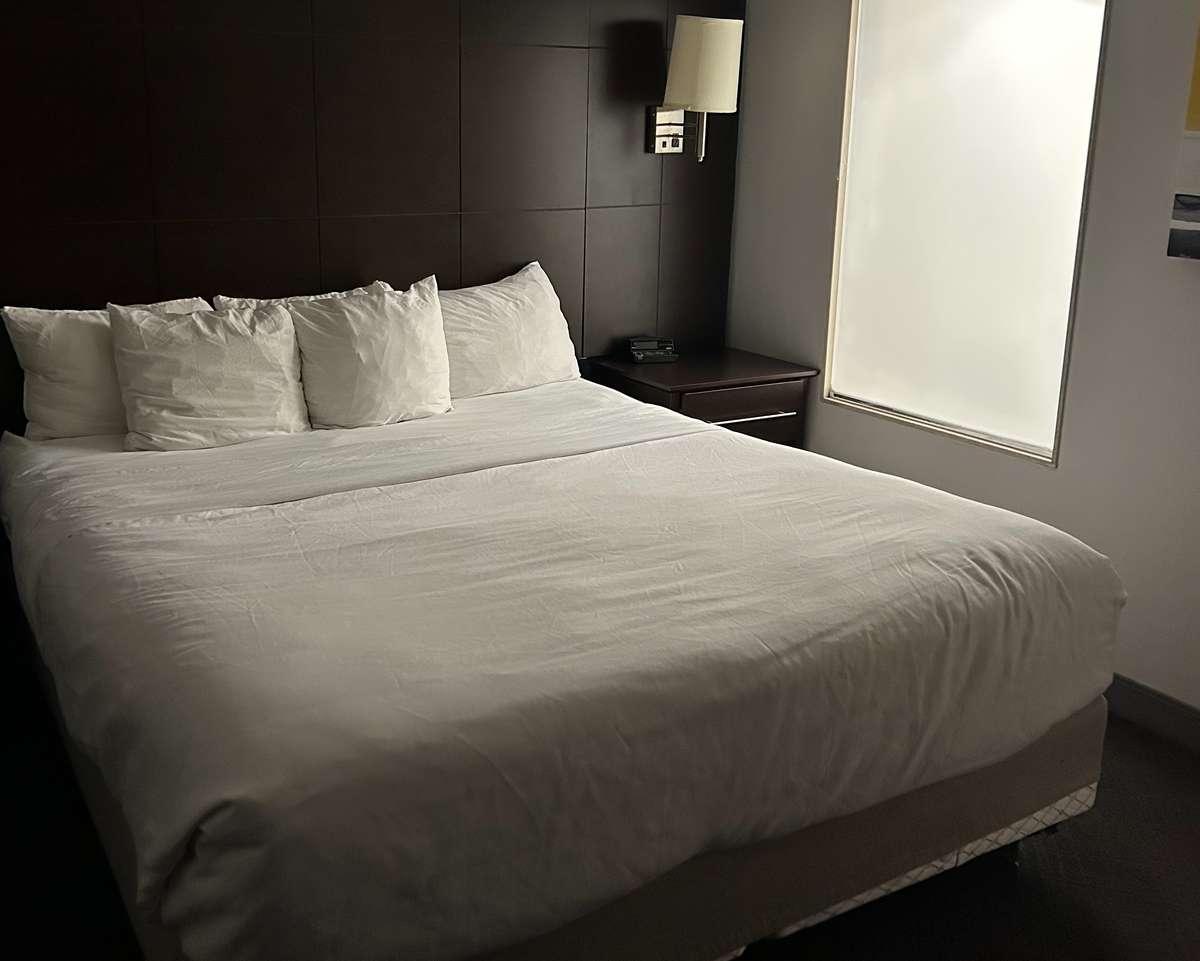
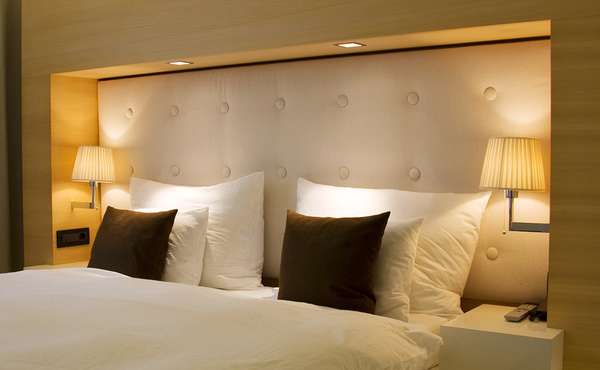
Mimicking natural light in northern climates with specific light temperature bulbs and creative home lighting design makes for brighter happier looking spaces. I was reminded of this on a recent trip where I saw an unusual design feature in my hotel room that had a remarkeable impact on the space, as you can see in the image below.
The wall between the bathroom and living area was a large piece of opaque glass, so leaving the light on in the bathroom created a really interesting quality of light. A hotel bathroom is not the place you'll find light bulbs chosen specifically for their light temperature, but still the effect was a whole lot nicer than any other hotel room I've seen.
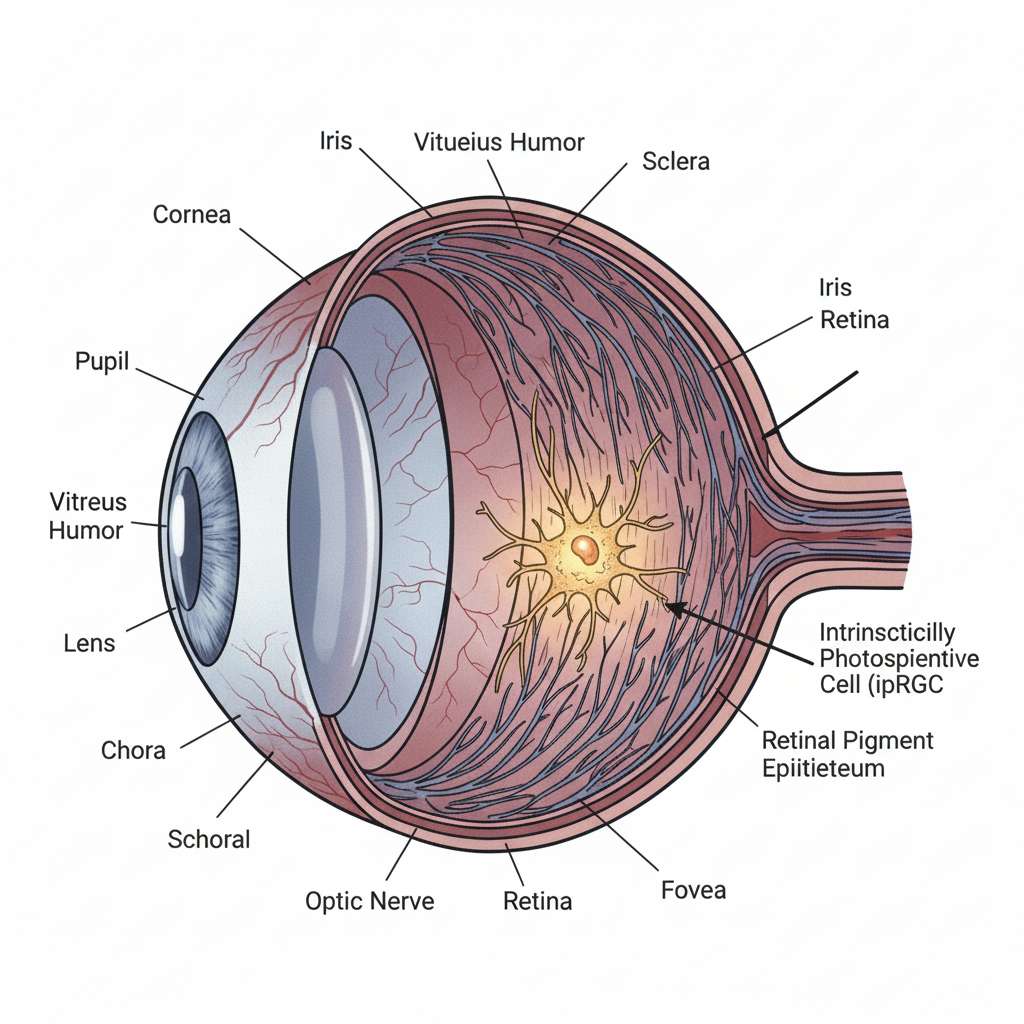
The core theory links SAD to the disruption of the body's circadian rhythm, the internal biological clock that regulates the sleep-wake cycle. The decrease in natural light during winter is thought to affect two key neurochemicals:
- Melatonin: The 'sleep hormone.' Less light in the morning can lead to an overproduction of melatonin, making a person feel lethargic and sleepy.
- Serotonin: The 'feel-good' neurotransmitter. Reduced sunlight exposure can cause a drop in serotonin levels, which is directly linked to depressed mood.
For building professionals, designing with this in mind means actively seeking ways to introduce high-quality, bright light - especially during morning hours - to help regulate these hormonal balances for the building's occupants.
Bright light therapy: the 10,000 lux standard
For individuals with diagnosed SAD, the most effective, non-pharmaceutical treatment is bright light therapy, also known as phototherapy. This is a targeted medical approach that is distinct from general home lighting. It is essential for both homeowners and professionals to understand the specifications of these devices.
What Is bright light therapy?
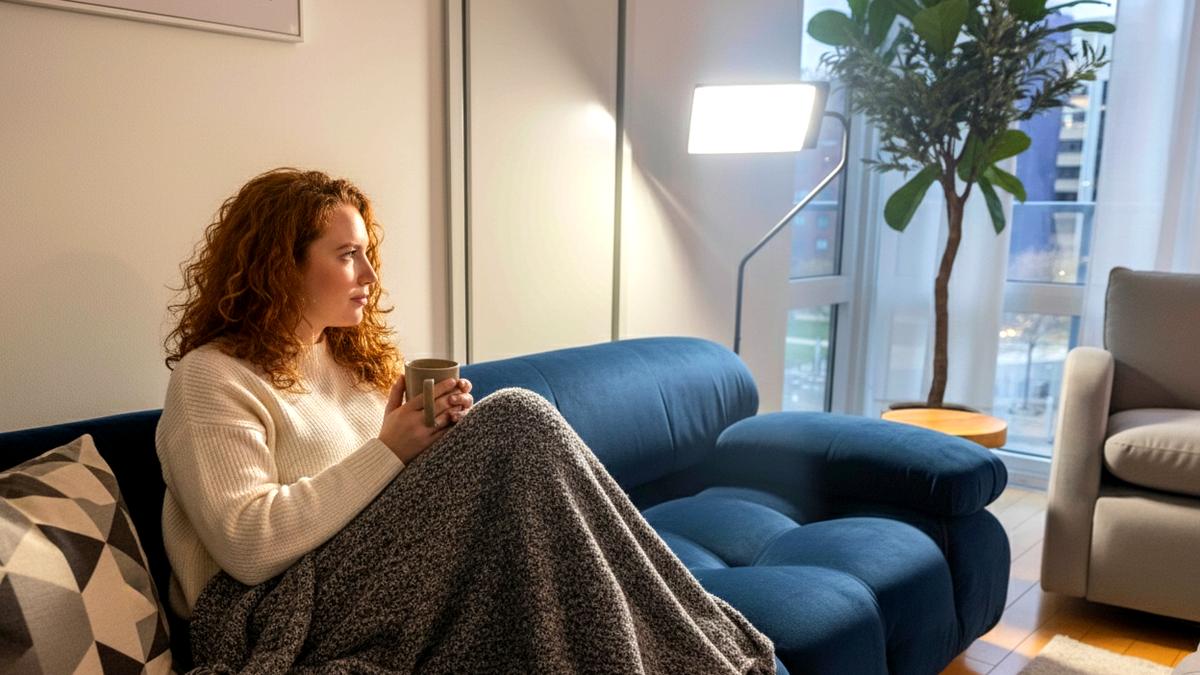
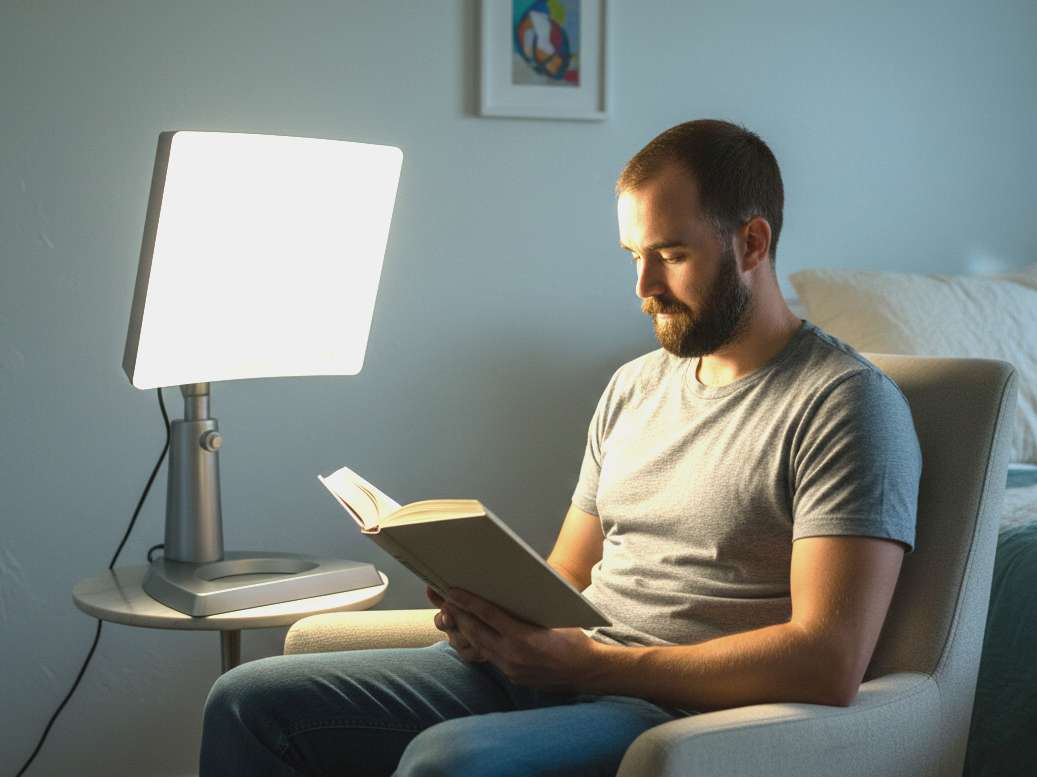
Bright light therapy involves sitting in front of a specialized device called a light box, often for 20 to 60 minutes each morning. The light box must be designed specifically for SAD treatment (not for skin disorders, which use UV light) and meet specific criteria:
- Intensity: The light box must emit 10,000 lux (lumens per square meter) at the recommended sitting distance, which is about 20 times brighter than typical indoor lighting.
- Wavelength/color temperature: The light should be a cool white light, typically in the 4,000 to 6,500 kelvin (K) range. Research suggests that a specific color temperature is less critical than the intensity (10,000 lux).
- Safety: It must filter out nearly all ultraviolet (UV) light to prevent eye and skin damage.
For homeowners, the key takeaway is that your standard 60-watt equivalent 800-lumen LED bulb, even one that is 'daylight balanced,' is not an adequate substitute for a 10,000 lux light box for clinical SAD treatment.
Architectural strategies for maximizing natural light
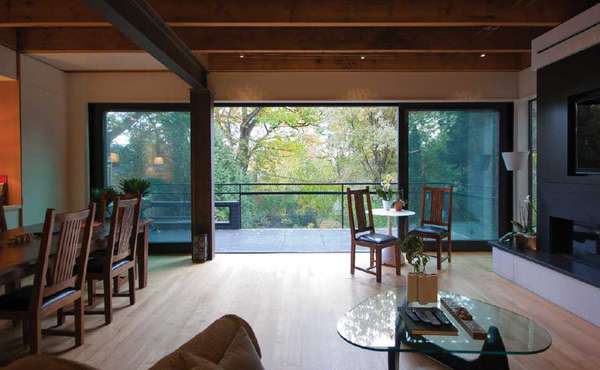
While light boxes treat SAD, good architectural design prevents it. Green building design focuses on daylighting - the practice of effectively harnessing and distributing natural light throughout a home - as a core principle of energy efficiency and occupant health. This approach is a non-negotiable step toward a healthy, resilient home, especially in northern or southern latitudes.
Passive solar design fundamentals
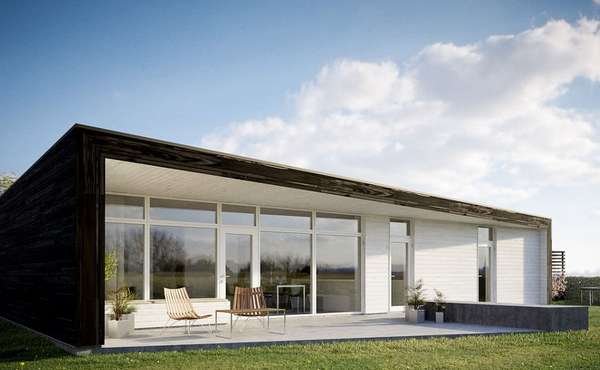
The orientation of the home and its windows is the first, most critical step. For most of the northern hemisphere (North America, UK), and the southern hemisphere (Australia, New Zealand), maximizing north-facing glazing (southern hemisphere) or south-facing glazing (northern hemisphere) is essential.
This allows for maximum solar heat gain and light penetration in winter, while being easier to shade in summer. This approach offers free, therapeutic light along with free passive solar heat gain.
Bringing light deep into the floorplan
Traditional windows alone can only illuminate about 10 feet (3 meters) into a room. To get light into interior spaces like hallways, bathrooms, or closets, professionals must look to solutions that penetrate the roofline. Before elaborating on one method, we must check for existing resources:
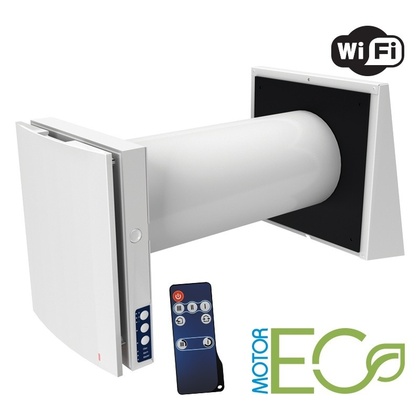
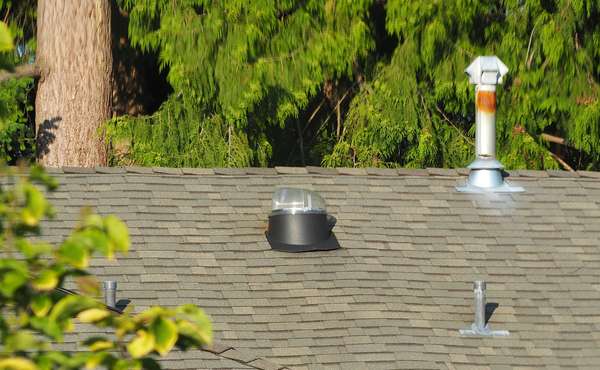
A highly effective solution for internal light delivery is the installation of tubular skylights, also known as sun tunnels or sun tubes, which can funnel daylight deep into the floorplan, often with minimal heat loss and UV transmission.
For light delivery deep into the house, architects and builders may also integrate internal glazing, such as transom windows or internal glass partitions, to allow light from exterior rooms to penetrate deeper.
Daylight-balanced lighting for the whole home
For general home illumination once the sun goes down - or on a persistently gray day - choosing the right artificial light is a vital component of a healthy home. The goal is to mimic the natural changes in daylight, promoting alertness in the morning and winding down for sleep in the evening.
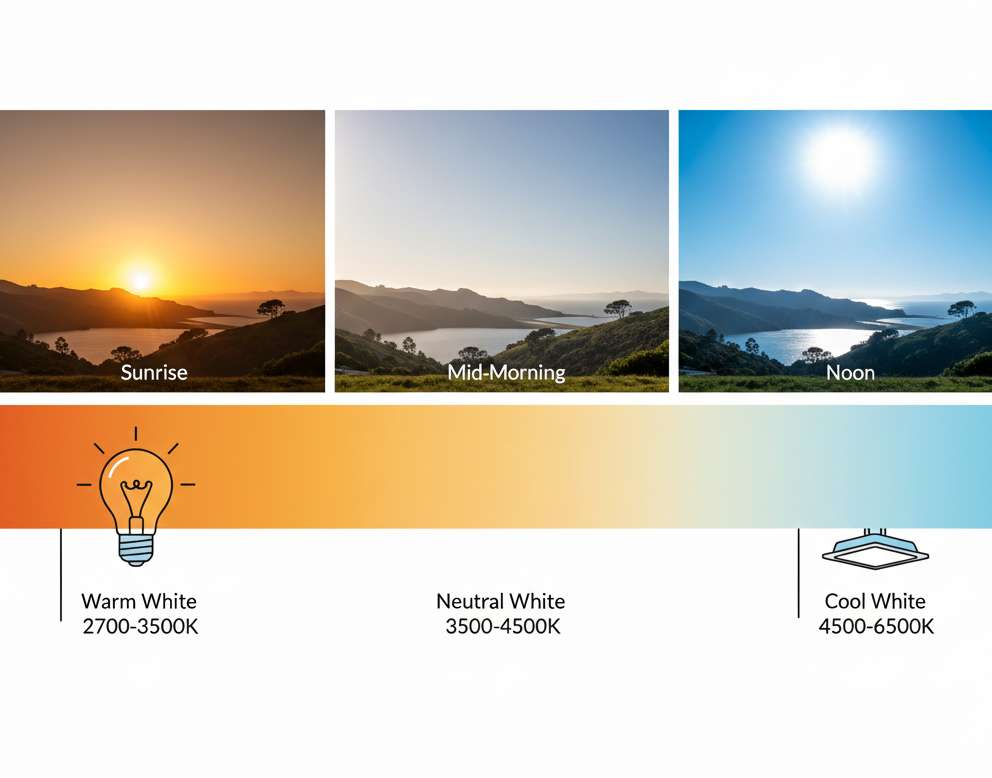
Understanding color temperature (kelvin)
The color of light is measured in kelvin (K). This is a critical metric for a daylight-balanced home:
- 2,700K (warm white): Simulates incandescent light or candlelight. Best for evening use as it is least disruptive to melatonin production.
- 3,000K to 3,500K (neutral/soft white): Ideal for general living spaces.
- 4,000K to 5,000K (cool white/daylight): Excellent for task-oriented areas like kitchens, workshops, and home offices where high alertness is desired.
- 5,000K to 6,500K (cool daylight): Closely mimics mid-day natural light. This range is common in bright light therapy but should be used sparingly in general home lighting, primarily in the morning or early afternoon.
Smart lighting systems and fixtures with tunable white technology allow homeowners to seamlessly adjust the color temperature throughout the day to support the body's natural circadian rhythm. For example, a 5,000K bright light in the morning for the kitchen, fading to a 2,700K soft light in the living room after supper.
The critical role of dimming and light quality
Beyond color temperature, professionals must prioritize high-quality LED lighting that offers deep, smooth dimming without flicker. Look for a Color Rendering Index (CRI) of 90 or higher. A high CRI means the light bulb renders colors accurately, making the home feel vibrant and natural, further improving the perceived quality of the light environment.
For home-owners, dimming control is just as important as the bulb's color, allowing for fine-tuning of light intensity in accordance with individual comfort and the time of day.
Regional variables: SAD across North America, the UK, Australia, and New Zealand
While the physiology of SAD is universal, the application of light-based solutions varies significantly depending on location. The primary factor is latitude - how far a location is from the equator - which directly determines the severity of the seasonal change in daylight hours.
- North America (US & Canada) and the UK: These regions, particularly the northern tier of the US (e.g., Minnesota, Alaska), all of Canada, and the northern part of the UK (e.g., Scotland, Northern England), experience the most significant winter light reduction. Here, the necessity for 10,000 lux light therapy, combined with aggressive passive solar design and sun tunnel integration, is most pronounced. Building codes (like those in Canada and the UK) must be met while still maximizing glazing.
- Australia and New Zealand: These southern hemisphere countries experience the winter season (June to August) when North America and the UK are in summer. While SAD is less prevalent overall due to generally milder climates and lower average latitude, it is still a factor, especially in southern regions like Tasmania (Australia) and the South Island (New Zealand). The key difference in design is that north-facing windows are crucial for winter sun and daylighting, the exact opposite of the northern hemisphere.
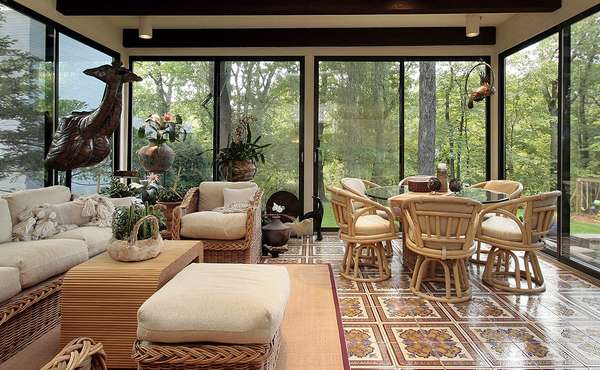
The universal lesson is to embrace a biophilic design approach that seeks to connect occupants with the natural world, whether through large windows, sun tunnels, or sophisticated, circadian-friendly artificial lighting systems.
In brief: SAD and strategic home lighting
Managing the effects of winter on mental health through light is a key pillar of healthy, sustainable building. For homeowners, this means supplementing low winter light with targeted bright light therapy and being mindful of color temperature in general lighting. For professionals, it means prioritizing aggressive daylighting strategies like passive solar design and introducing light deep into the floor plan with specialized tools like sun tunnels.
Ultimately, a home that optimizes light for the body’s natural clock is a home that is fundamentally healthier, more energy-efficient, and more comfortable year-round.
Now that you know more about SAD and daylight balanced lighting, find more info about healthy homes & green building techniques in the Ecohome Green Building Guide and these pages below:
-
Are skylights a good idea? Balancing light benefits with durability concerns
-
Ecohome window buyers guide - what to look for to find the best windows
-
All about LED filament bulbs - buyers guide for home lighting design
-
Passive solar home design - letting in passive heat and natural light






Comments (0)
Sign Up to Comment