




What's the best way to heat a slab on grade home foundation?
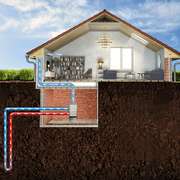
A slab on grade is a very cost-effective, durable and low-impact foundation for a home. You get to live above grade, your home won't flood, and concrete slab floors pair perfectly with radiant under floor heating. So what is the best type of under floor heating, and what is the best way to power it?
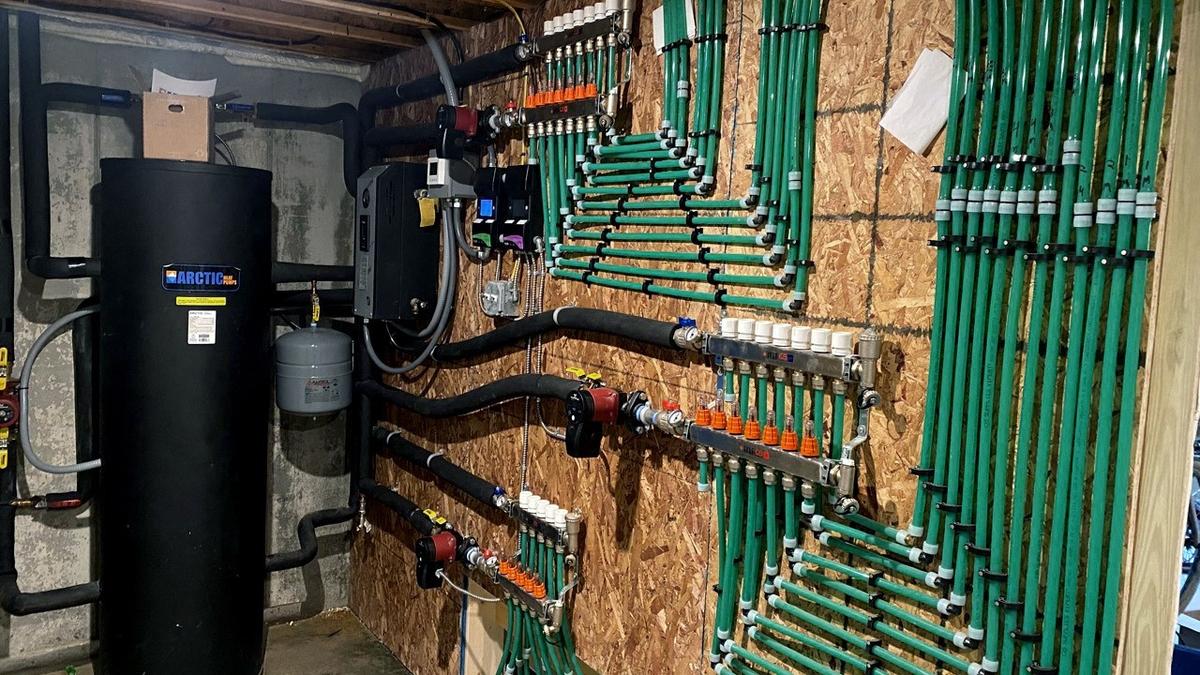
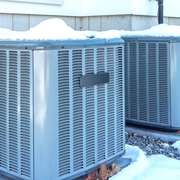
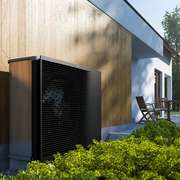
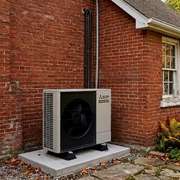
You really have 3 choices of infloor heating - either electric wires, liquid pumped through Pex tubing, or the outlier, air heated radiant floors. Two of those options - hydronic and air heating tubes - can pair with an air to water heat pump.
There is little question about how heat pumps cost far less to operate that other home heat sources, but they often get overlooked when it comes to radiant under floor heating. As heat pump technology improves, they operate efficiently at much lower temperatures that decades past, so there is less concern that they will be unable to meet your heating needs.
Here we want to make a case for why you should power your radiant heated floor with a heat pump rather than an electric or gas boiler. This guide analyzes the financial and performance variables of you need to consider in order to make an informed choice. Below is an overview of the sections we will cover, allowing you to jump directly to the information you need.
This guide provides a comprehensive look at the key aspects of this topic. Below is an overview of the sections we will cover, allowing you to jump directly to the information you need.
- Initial setup costs comparison
- Efficiency and operational savings
- Heat pump brands and models that produce high water temperatures
- Return on investment timeframes
- Regional utility rates impact
- Technical considerations for slab on grade
- In brief
Initial setup costs comparison- heat pump vs boiler
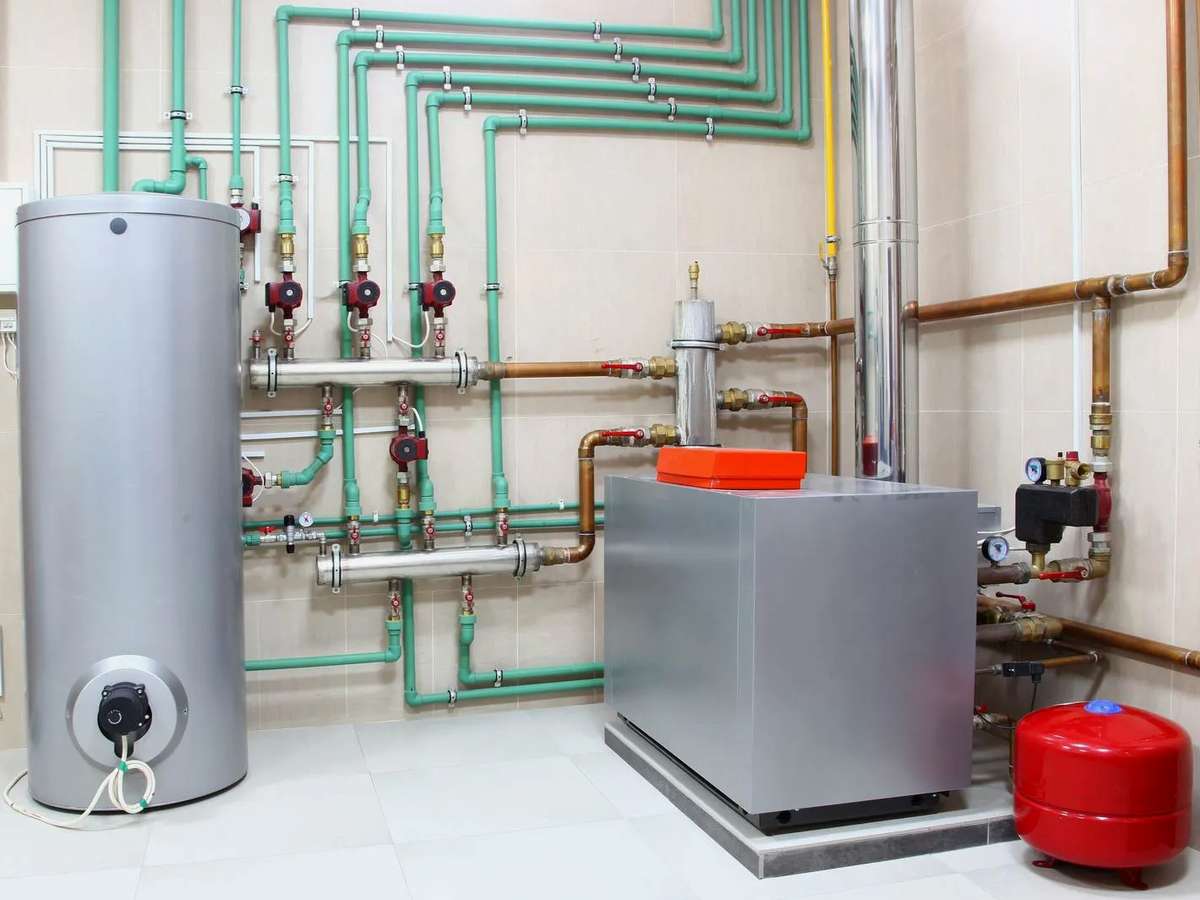
The upfront capital investment for an air-to-water heat pump is significantly higher than that of a standard electric or gas boiler. For simplicity sake we will use USD figures and trust Canadians, Europeans and Australians to do a little math to get costs in their dollars.
For a typical residential installation, a high-quality AWHP unit and professional installation can range from $12,000 to $18,000 US dollars. In contrast, a high-efficiency condensing gas boiler typically costs between 4,000 and $8,000, while a simple electric boiler may cost as little as $2,000 to $5,000.
Worth noting - an AWHP is a high-draw appliance and will likely require 200 amp service rather than just 100 amp, but this has pretty much become the norm anyway with growing demand for EV home chargers.
Efficiency and operational savings
The primary advantage of the AWHP is its Coefficient of Performance (COP). While an electric boiler is 100% efficient (1 unit of electricity = 1 unit of heat), an air to water heat pump can achieve a COP of 3.0 to 4.0 in moderate temperatures. For every 1 kWh of electricity consumed, it delivers 3 to 4 kWh of heat into the hydronic radiant floor tubing. Meaning - you get 3 to 4 times as much heat for your money.
Comparing gas and electric fuel sources
Compared to a 95% efficient condensing gas boiler, the AWHP often wins on carbon footprint and energy stability. In regions with high natural gas prices, the 3-to-1 efficiency advantage of the heat pump typically results in lower monthly utility bills, even if electricity rates are higher per unit of energy than gas.
For those currently using an electric boiler, switching to an AWHP can reduce heating energy consumption by 60% to 75% because it moves heat rather than creating it through resistance.
Not to be ignored, is that there is a transition away from fossil fuel heating for obvious reasons - reducing carbon emissions to mitigate climate change, increasing gas prices due to dwindling global resources, and many countries have already enforced bans on natural gas for heating and cooking in homes with others coming in the future.
Return on investment timeframes
The return on investment (ROI) for an air to water heat pump is driven by a massive reduction in your monthly energy bills. While the upfront purchase price is higher than a gas or electric boiler, the system pays for itself through significantly lower monthly operating costs.
Immediate payback through mortgage financing
For many homeowners and builders, the true return on investment is felt immediately. While the initial cost of a heat pump is higher than a boiler, this difference is typically rolled into a mortgage. Because the monthly savings on your heating and cooling bills are often greater than the slight increase in your monthly mortgage payment, the system can be cash-flow positive from the very first month.
Drastically lower monthly heating costs
The main benefit of an air to water heat pump is its efficiency. Because it moves heat rather than creating it, the system is three to four times more efficient than a gas or electric boiler. This means your monthly heating bills can be roughly one third of what you would pay for traditional heating.
Break-even points for boilers
The time it takes to recover the higher initial cost depends on the system you are comparing it to:
-
Compared to electric boilers: The payback period is short, typically five to eight years. The 70% reduction in electricity usage provides immediate and heavy monthly savings.
-
Compared to gas boilers: The break-even point is often 10 to 15 years. However, this includes hidden costs of gas, such as the initial gas line installation and fixed monthly account fees that you pay even before burning any fuel.
When you factor in the lower utility bills and the fact that a heat pump can also provide cooling - eliminating the need for a separate air conditioner - it is the most cost-effective long-term choice for a modern home.
Regional utility rates impact
Geography dictates the financial viability of this technology. In areas with low-cost hydroelectricity, the heat pump is almost always the financial winner over both gas and electric boilers. Conversely, in regions where electricity is expensive and natural gas is heavily subsidized, the operational savings compared to a gas boiler may be slimmer.
Climate zones and cop
The ambient outdoor temperature also affects the ROI. In very cold climates (below -13°F (-25°C)), the COP of an air source system drops, occasionally requiring backup electric resistance heat. Prosumers should look for cold-climate rated units that maintain high efficiency at lower temperatures to ensure the thermal battery of the concrete slab is charged efficiently during off-peak hours, further reducing costs compared to peak-rate gas or electric heating.
Technical considerations for slab on grade
For slab on grade construction, the heat pump is an ideal partner. Because radiant floors operate at low water temperatures (typically 90°F to 110°F (32°C to 43°C)), the AWHP can run at its most efficient state. High-temperature radiators used with older gas boilers, by contrast, require 140°F (60°C) or more, which forces a heat pump to work harder and reduces its COP.
Thermal mass and off peak charging
The thermal mass of a well-insulated slab on grade floor stores so much latent heat, that you would be hard pressed to notice a temperature drop after the system being off all day, even on the coldest of days. So with a radiant floor, there is really no need to operate your heat pump during peak hours with high peak rates. This strategy can shave years off the payback period compared to a gas boiler, which generally has fixed fuel costs regardless of the time of day.
Heat pump brands and models that produce high water temperatures
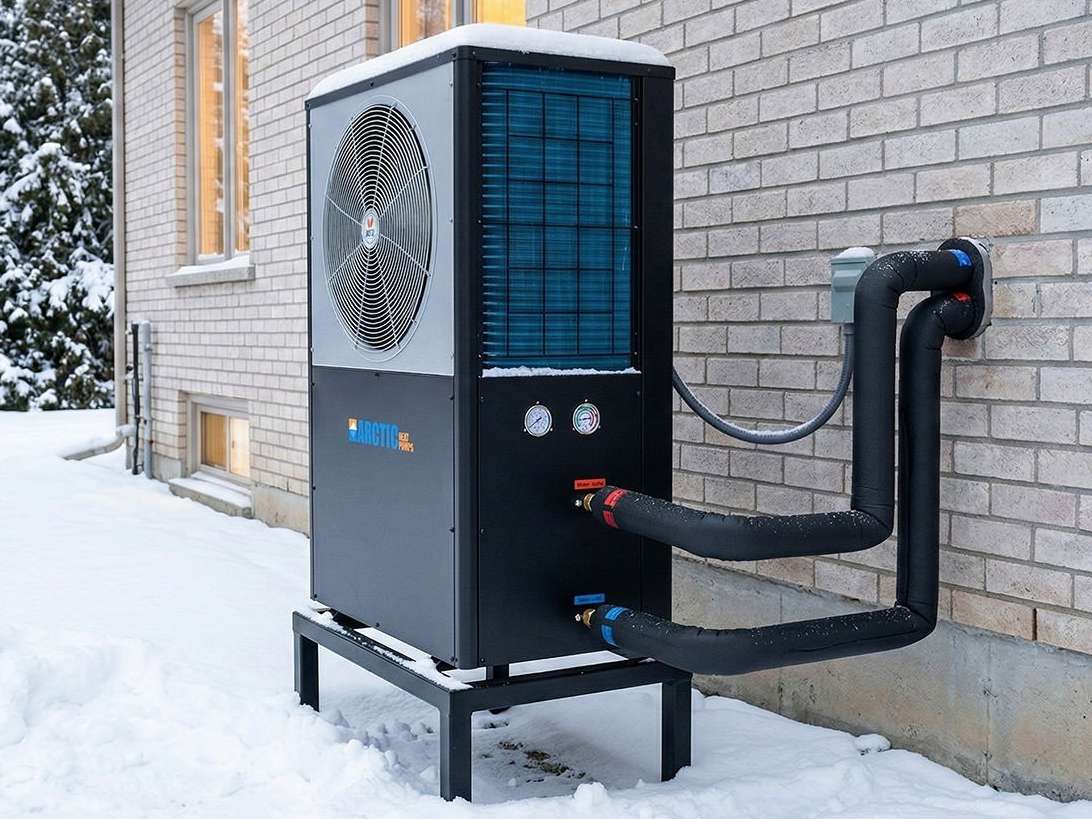
Several air-to-water heat pumps can heat water to 140°F (60°C), including specific models from brands like Trane, Arctic, and LG. These are often categorized as high-temperature or high-efficiency units and may use advanced technologies like enhanced vapor injection (EVI) to achieve these temperatures, particularly in colder climates.
- Trane: Their Ascend® and Thermafit™ lines can provide fluid temperatures up to 140°F.
- LG: The LG Therma V is mentioned as a potential high-temp option by contractors.
- Daikin: The Altherma is another model recommended for high-temperature applications.
- Arctic Heat Pumps: Arctic air-to-water heat pumps offer possibly the lowest operating temperatures with their R32 refrigerant models. They can achieve water temperatures as high as 85°C (185°F), making them a viable option to directly replace oil boilers that heat through cast iron or baseboard radiators.
In brief
Air to water heat pumps represent a significant upfront investment but offer the lowest long-term operating costs for hydronic radiant floors, especially in all-electric or high-efficiency homes. Saving on heating infrastructure reinforces how the envelope first building philosophy focusing on heat retention is an essential design philosophy for resilience and affordability.
While the ROI of gas boilers can be a decade or more, the move away from fossil fuels and the integration of renewable energy makes heat pumps the superior choice for high-performance building. Properly insulated slab on grade floors and climate-specific unit selection are essential to maximizing these gains over traditional gas or electric resistance systems.
Now that you know more about air to water heat pumps and boilers, find more info about sustainable heating and green building techniques in the Ecohome green building guide and these pages below:
-
Integratiing solar, batteries and heat pumps - how to master net metering
-
All about under floor heating systems for homes
-
Are heat pumps worth it and is it the right time to buy?
-
Heat pump water heaters: efficiency and rebates guide




Comments (0)
Sign Up to Comment