













How to choose the best watermakers for off-grid homes and sustainable living
Before you invest thousands in a desalination system for your off-grid property, understand that a watermaker is not a "set-and-forget" appliance like a toaster. The best models of watermaker you find on the market are often a complex piece of industrial chemistry and mechanical engineering that requires a consistent diet of energy, regular maintenance, and a clear understanding of your source water's biology.
At Ecohome, we are famously advocates for the "Passive First" approach. Just as we prefer high-efficiency rainwater harvesting over deep-well drilling, we view traditional watermakers as a "high-maintenance" technology for specific geographic niches. However, we have our ear to the ground: new technologies are currently emerging that promise to transform the ownership experience.
Imagine a shift as significant as the transition from steam engines to electric rail - moving from clunky, high-pressure mechanical systems to elegant, engineered solutions. We will be reporting on these "membrane-less" and "low-energy" breakthroughs as they reach commercial scale, so be sure to subscribe as an Ecohome member to stay ahead of this water revolution.
If you are still in the design phase of your home, we strongly recommend exploring water conservation strategies like low-flow showers first. But if your only options are hauling water or turning the sea into a tap, this guide will help you navigate the current world of reverse osmosis (RO) while keeping a watchful eye on the future.
No brands, just the hard physics of making water in the middle of nowhere. Here in the pacific Northwest and thoughout the more remote corners of our extensive North American coastline there are land parcels that could be idyllic for extended living - at a very reasonable cost.
With renewable and autonomous power systems now poised to become mainstream, an effective and robust way to use excess electrical power to make potable water reliably seems like a great idea.
This guide moves beyond the "boating brochures" to look at the real engineering and energy factors at play for land-based homes looking to make drinking water from salt water. We've put the following menu so you can navigate to the most relevant section directly.
This guide provides a comprehensive look at the key aspects of this topic. Below is an overview of the sections we will cover, allowing you to jump directly to the information you need.
- The Science: How reverse osmosis actually works
- Source Water: Is your water brackish or salt?
- The Energy Equation: Solar vs. Water production
- The "Bête Noire": Maintenance and the membrane trap
- Energy Recovery: Reducing the "Power Tax"
- Pre-filtration: Protecting the "Heart" of the system
- The Revolution: Membrane-less and "Solid State" water?
- The Ecohome Off-Grid Watermaker Checklist
- Glossary of Desalination Terms
- In brief: The Ecohome verdict on off-grid watermakers
The science: How reverse osmosis actually works
Desalination is essentially the process of forcing water through a semi-permeable membrane at high pressure. The membrane acts like a microscopic sieve that allows water molecules through but blocks salts, minerals, and bacteria. Or at least that's the idea when it's all working perfectly.
In an off-grid setting, the challenge isn't just the filtration; it’s the pressure. To overcome the osmotic pressure of seawater and force it through the membrane, your system needs to reach upwards of 800-900 PSI. This requires significant mechanical force, which translates directly to your daily energy budget. This reliance on extreme pressure is exactly what the next generation of technology - the "electric rail" of watermaking - aims to eliminate by using clever engineering principles instead of brute force.
Sourcewa ter: Is your water brackish or salt?
The best watermaker for you when you're considering living remotely depends entirely on what you are dipping your intake pipe into. There is a massive technical difference between a "Brackish Water" system and a "Seawater" system. You cannot simply use a brackish system on the ocean; it will fail within minutes.
- Seawater (35,000+ PPM): Requires the highest pressure and most robust membranes. These systems are more expensive to buy and run.
- Brackish Water (1,000 to 10,000 PPM): Often found in coastal wells or inland alkaline lakes. These require much less pressure, meaning they use less power.
Before buying a system, get a professional water analysis including for Radon for your well or your source. If your "off-grid" water is actually a salty well, you can save thousands by choosing a brackish-specific unit.
The energy equation: Solar vs. water production
For off-grid homes, "water is energy." In a standard home, you think of water in gallons. Off-grid, you must think of it in Amp-hours. Most modern watermakers fall into two categories for power:
1. 12V/24V DC Systems
These watermakers are the darlings of the off-grid world. They can be wired directly into your battery bank, avoiding the "inverter tax." However, they generally produce water more slowly - think 1 to 5 gallons per hour. For many, this slow-and-steady approach is the only way to stay within a reasonable solar budget - but at 1 gallon an hour, don't be thinking your going to be taking a bath every night!
2. 120V/240V AC Systems
These are "high-output" water-making systems (20-60 gallons per hour). The downside? They require a huge surge of power to start the motors. If you're building an off-grid home, these often demand a backup generator, which moves you away from true energy independence or living the sustainable lifestyle you promised yourself.
The "Bête Noire": Maintenance of watermakers and the membrane trap
As any former boat owner with a watermaker can attest, the membrane is the "bête noire" of these systems. It is fragile, prone to "fouling" (clogging with organic matter), and incredibly sensitive to being left idle. If you leave salt water in a membrane for more than a few days without a "freshwater flush," bacteria will grow, minerals will scale, and your multi-thousand-dollar heart of the system will be ruined.
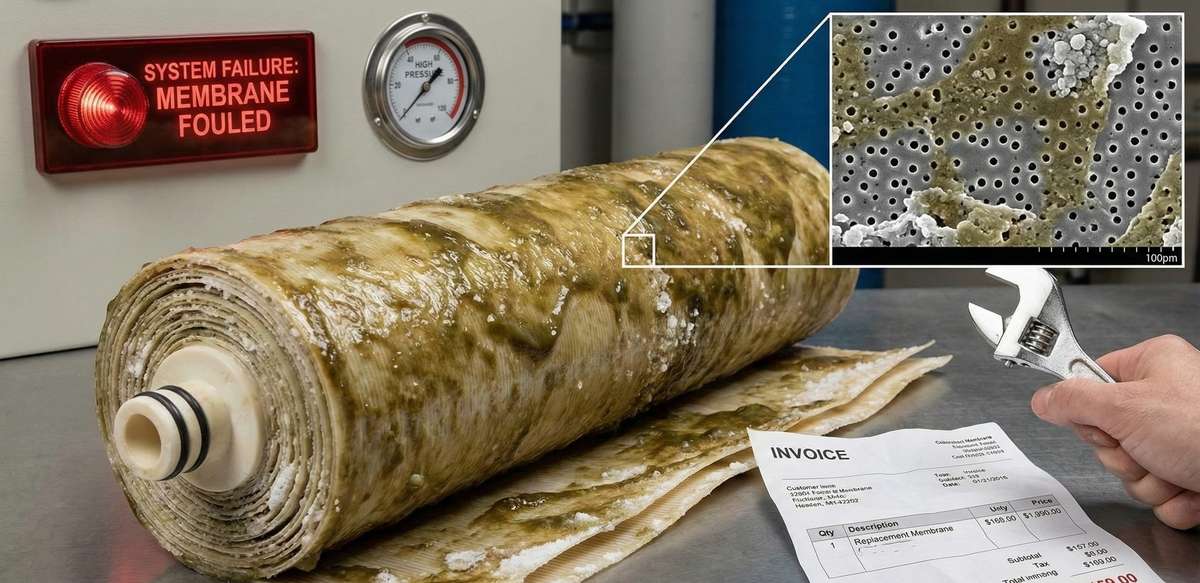
This necessity for constant "pickling" and flushing makes ownership of most watermakers a chore. We’ve heard of emerging "membrane-less" technologies - using an innovative cavitation reactor at it's heart - that could potentially end this headache forever. While current market leaders rely on high-pressure pumps and delicate films, the "electric train" of watermaking is coming. Join the Ecohome Network to get notified the moment these become commercially viable for homes, as we intend testing one out for ourselves.
Energy recovery: Reducing the "power tax" when making water
In traditional RO, you pressurize seawater, take the fresh water out, and "throw away" the highly pressurized salt water (brine). Energy Recovery Pumps (often called Clark Pumps or Pearson Pumps) are a game-changer. They capture that waste pressure and use it to help the pump on the next stroke, reducing energy use by up to 75%.
If your off-grid system is modest, an energy recovery system is the only logical choice, even if the upfront cost is higher. It turns a "power-hog" into something your solar array can actually handle during the day, but it still comes at a cost, and increase the complexity and future maintenance requirements of your watermaker.
Pre-filtration: Protecting the "Heart" of your watermaker
The membrane is the most expensive part of any Reverse Osmosis watermaker system. To protect it, you need a series of pre-filters to catch sand, silt, and plankton. In an off-grid home, your intake location is critical. If you suck up "tea-colored" water full of tannins or harbor silt, you will be changing $10 filters every day. We recommend a settling tank or a beach well (a pipe buried in the sand) to provide naturally pre-filtered water to the machine.
The Revolution: Membrane-less and "solid state" water?
Why are we so excited about the future? Because the current "best" watermakers are still essentially Victorian-era mechanical solutions - just with some better materials. We are tracking pilot projects that use new Cavitation Reactor technology that operate without filters, membranes, or expensive part replacement and maintenance.
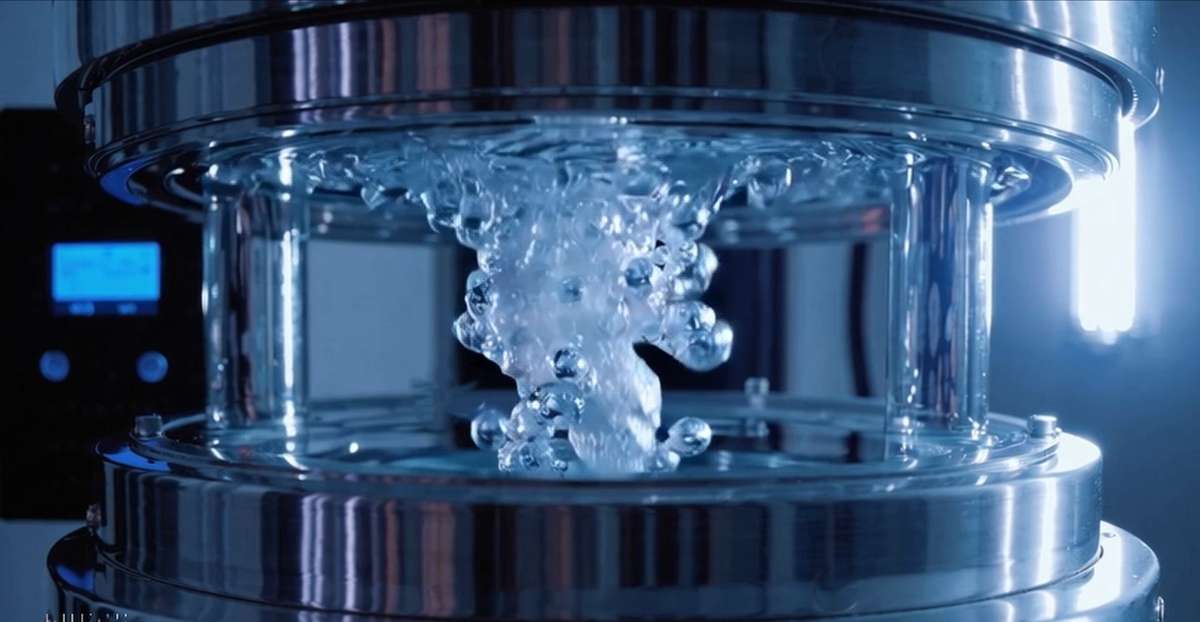
While traditional watermakers rely on high-pressure pumps and plastic membranes, the next generation of water treatment - the Cavitation Reactor - uses the raw power of physics to purify water. Think of it as a "micro-storm" that shreds contaminants at a molecular level without the need for delicate filters.
The process follows a rapid, three-step cycle of hydrodynamic cavitation (HC):
- 1. Bubble Formation (Pressure Drop): Water is forced at high velocity through a constriction (like a venturi tube or high-speed rotor). As the water speeds up, its pressure drops so low that it flash-boils, creating millions of microscopic vapor bubbles.
- 2. Bubble Transport: These tiny "cavities" are carried downstream into a region where the pressure begins to rise again.
- 3. The Violent Collapse (Implosion): When the surrounding pressure recovers, the bubbles become unstable and implode in microseconds. This is where the magic happens.
The result is a "localized apocalypse" for contaminants:
- Extreme Heat & Pressure: The implosions create "hot spots" reaching 5,000 K (as hot as the surface of the sun) and 500 bar of pressure.
- Physical Destruction: Powerful shockwaves and micro-jets physically shred the cell walls of bacteria, viruses, and parasites.
- Chemical Oxidation: The intense energy splits water molecules (H2O) into hydroxyl radicals - the most powerful oxidants available - which chemically "burn" away organic pollutants and toxins.
The Ecohome Take: Because cavitation reactors rely on mechanical force rather than delicate membranes, they are far more resilient to the "muck" that kills traditional watermakers. This is the technology we are watching closely for the next evolution of off-grid living and reliable watermaking.
The Ecohome off-grid watermaker checklist
When selecting a system, don't jump to the most expensive or highest-output unit first. Use this checklist to determine if a watermaker is right for your energy budget and maintenance tolerance.
| Priority Phase | Action Items | The Sustainable Choice |
|---|---|---|
| 1. Source Check | Test TDS (Total Dissolved Solids). Is it 35,000 (Ocean) or 5,000 (Brackish Well)? | Brackish systems (Lower energy) |
| 2. Power Audit | Calculate Amp-hours available from your battery bank. | DC Energy Recovery models |
| 3. Intake Strategy | Don't suck up surface water. Use a "Beach Well" or 10-foot depth intake. | Natural pre-filtration |
| 4. Maintenance | Can you commit to a freshwater flush every 3-5 days or periodic "pickling"? | Automated Flush systems |
| 5. Future Proofing | Is this a 10-year investment or a stop-gap before next-gen tech arrives? | Subscribe for Tech Updates |
Glossary of desalination terms
- TDS (Total Dissolved Solids): A measure of water saltiness. Ocean = ~35,000 PPM; Drinking = <500 PPM.
- Bête Noire: In this context, the high-pressure membrane that requires constant care.
- Freshwater Flush: Using produced fresh water to rinse the salt out of the system during downtime.
- Pickling: Using chemicals to preserve a membrane for long-term storage (months).
- Energy Recovery: Reusing the pressure of the "reject" stream to save electricity.
In brief: The Ecohome verdict on off-grid watermakers
A watermaker is a "high-entropy" solution. It requires energy, spare parts, and near constant attention to keep running reliably. If you can solve your water needs with rainwater or a reliable well, do that first. It is cheaper, quieter, and more sustainable.
If you must install a watermaker today, prioritize energy recovery and DC operation to stay within your solar means. But remember, we are close to a technological leap that will make these mechanical "steam engines" of a watermaker look like relics from a bygone age. For those looking for the ultimate "set-and-forget" off-grid home, the real best watermaker might be the one coming to market soon. Stay informed, stay modular, and stay independent.
Deepen your understanding of off-grid water and energy in the Ecohome sustainable construction guides:
-
Plan for building resilient, sustainable & healthy homes
-
How to design a home for living off-grid or net-zero
-
Passive solar home design guides
-
Choosing the right water softener










Comments (0)
Sign Up to Comment