













District heating and district energy systems: What they are and how they work
District heating, also known as district energy (DE), is a large-scale, efficient, and increasingly popular method of heating and cooling buildings from a single, centralized source. For homeowners, it means reliable, low-carbon heat without needing an individual boiler or furnace; for professionals, it represents a crucial component in developing resilient, net-zero-ready communities and meeting ambitious climate targets.
This definitive guide breaks down how district energy works, its global applications, and the key factors to consider for both residential hook-ups and large-scale project development.
This guide provides a comprehensive look at the key aspects of this topic. Below is an overview of the sections we will cover, allowing you to jump directly to the information you need.
- Understanding district energy systems and how they work
- From waste heat to smart grids: sources and generations of DE
- The clear advantages: benefits for homeowners and communities
- Planning and pitfalls: challenges and considerations for DE
- A comparative look: district energy versus individual home systems
Locations and applications where district energy systems make sense
- Urban areas: Downtowns and central business districts use district energy to serve a high density of commercial and institutional buildings.
- Institutional campuses: Colleges, universities, hospitals, and healthcare facilities use the systems for their large, clustered needs and to ensure reliability, especially for hospitals that cannot afford power outages.
- Industrial complexes: Manufacturing facilities use these systems for large-scale process heating and cooling.
- Transportation hubs: Airports are another common user, benefiting from the efficiency and redundancy of a central system.
- Residential communities: It can also be used for residential buildings, often in new developments or as part of a broader plan to reduce emissions in a community.
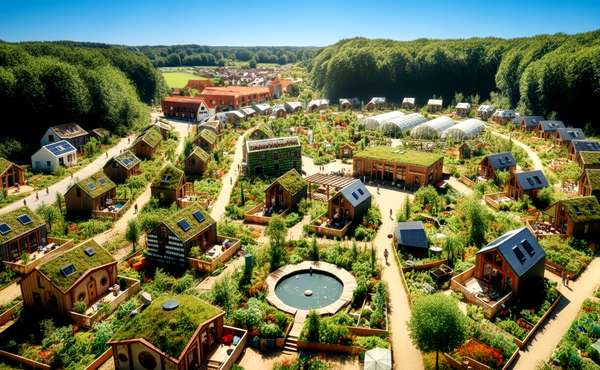
- Off-grid eco-communities: Private and community-owned eco-community housing projects can benefit from district heating, either with renewable energy systems or small-scale biofuel burning facilities.
Understanding district energy systems and how they work
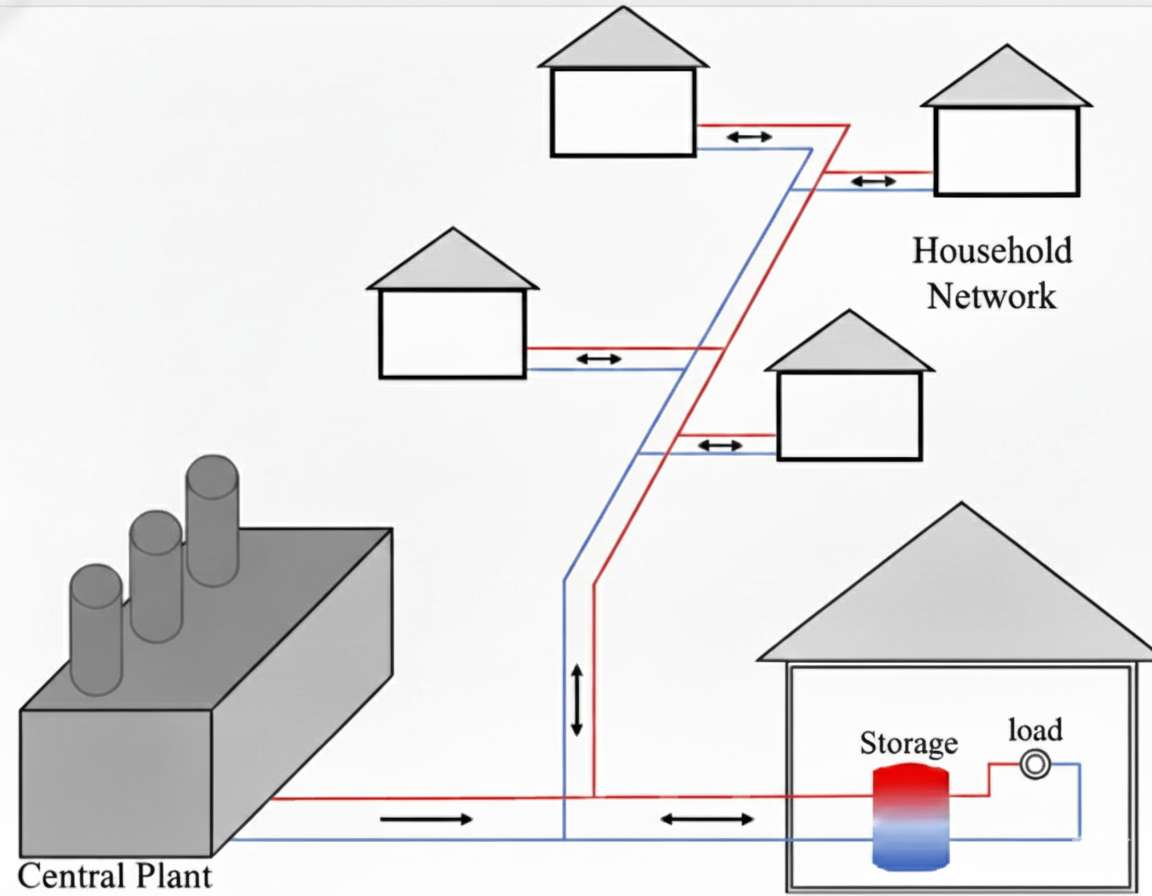
District heating is essentially a central heating system scaled up to a community or city level. Instead of each building having its own dedicated furnace or boiler, a DE system generates heat - and often cooling - at a centralized energy plant and distributes it to multiple buildings through a network of super-insulated, underground pipes.
This network is often referred to as a heat network in the UK and a district energy system in North America and Australia, which typically includes cooling services.
Key components of a district heating system
A district energy system comprises three primary components:
- The energy source/plant: This is where the heat (and/or cool) is generated. Sources can include many fuel types, such as gas boilers, biofuel boilers, renewable energy systems or highly sustainable options like large-scale heat pumps. One of the more sensible options is recovered industrial waste heat, particularly as AI use is anticipated to but a heavy burden on electrical systems. The waste heat generated can easily be used to heat local buildings .
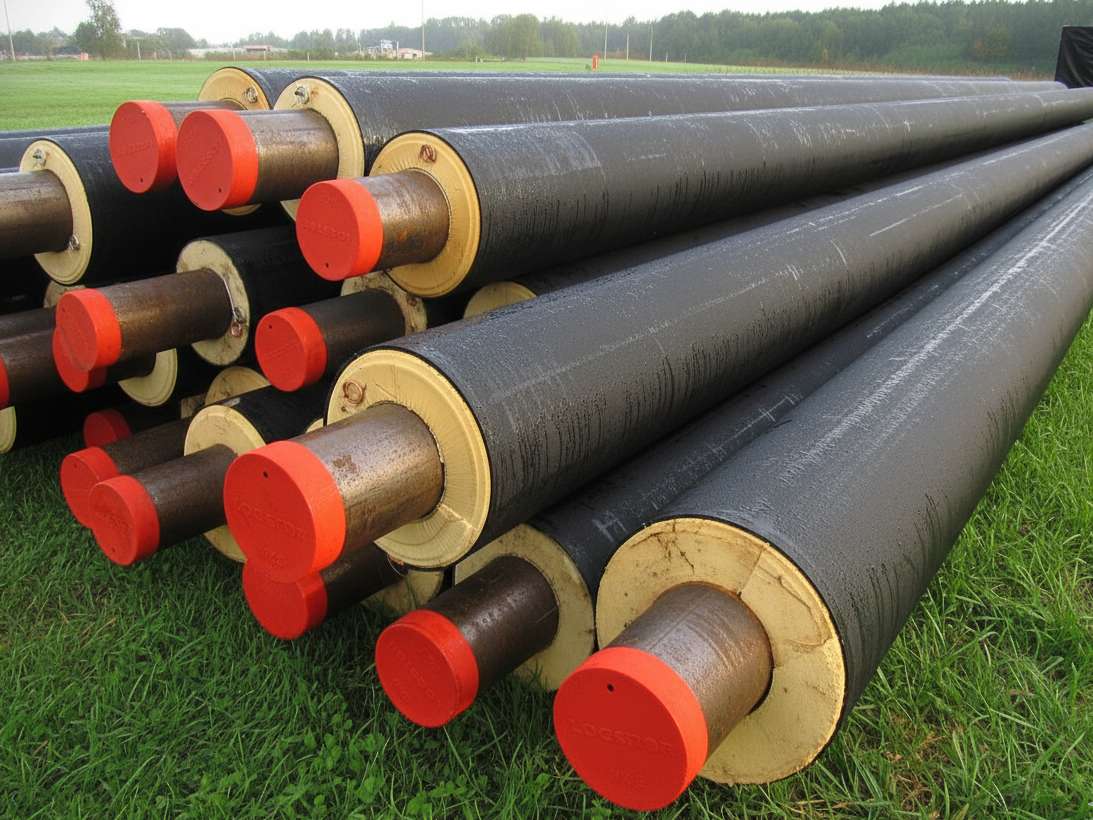
- The distribution network (the pipes): This is the circulatory system, consisting of highly insulated, underground pipes that carry heated water (or steam) to consumers and return the cooled water back to the plant for reheating. High-quality insulation is critical to minimize thermal losses - a major consideration in colder climates like Canada and the northern US.
- The consumer connection (the energy transfer station): At the point of use, a heat exchanger (sometimes called a substation) transfers the heat from the district network's water into the building's internal heating system like radiators or in-floor radiant heat. Critically, the district water and the building's water never mix, ensuring safety and system integrity.
For the homeowner, the connection requires a compact unit, the heat exchanger, typically no larger than an average water heater. For the professional, the pipe network's design - specifically the material, insulation type, and installation depth - is paramount to ensure a low rate of heat loss, often cited as being below 5% for modern, efficient systems.
Regional terminology and focus
While the core technology is universal, the focus varies regionally:
- North America (US & Canada): The term district energy (DE) is often used, encompassing both heating and cooling (district cooling). There’s a strong push toward DE in university campuses, military bases, and downtown cores for high-density, resilient power.
- UK: The term heat network is preferred, with a major emphasis on connecting existing homes and new developments to meet carbon reduction targets, often displacing natural gas boilers.
- Australia & New Zealand: While systems exist, the focus is often on the district cooling aspect in warmer climates, or smaller-scale networks in new greenfield developments.
From waste heat to smart grids: sources and generations of DE
The transition to sustainable district energy is best viewed through its generations. Older, less efficient systems (first and second generation) used high-temperature steam or high-pressure hot water, often fueled by coal or oil. Modern systems are fundamentally different, being lower-temperature and capable of integrating diverse, renewable heat sources.
The 4th and 5th generation district energy systems
Today's cutting edge is represented by 4th and 5th generation systems (4GDH and 5GDHC):
- 4th Generation District Heating (4GDH): Characterized by low-temperature water (122-140°F (50-60°C)) which significantly reduces pipe heat loss and allows for the integration of low-grade renewable heat sources like geothermal, large-scale heat pumps, and solar thermal water heating
- 5th Generation District Heating and Cooling (5GDHC): Also known as an ambient loop or uninsulated network. This is the ultimate evolution, using a local water loop that is close to the ground temperature (41-77°F (5-25°C)). Buildings connected to this loop use individual high-efficiency heat pumps to extract or reject heat from the ambient loop as needed. A building needing cooling in the summer can reject its heat into the loop, which then provides 'free' heat to a nearby building needing hot water or space heating.
Modern and sustainable energy sources
The fuel source is what dictates the environmental performance of the entire network. Sustainable sources include:
- Waste heat recovery: Capturing heat from industrial processes, data centres, sewage treatment plants, or subway tunnels that would otherwise be released into the atmosphere. This is a massive, often-untapped resource in urban centers.
- Large-scale heat pumps: Using a water source or large geothermal field (boreholes) to efficiently generate heat.
- Biomass: Utilizing wood chips or sustainable agricultural byproducts, though this must be managed carefully to ensure carbon neutrality and air quality. Learn here about how to burn biomass fuels efficiency and reduce emissions.
- Deep geothermal: Harnessing heat from deep within the earth.
The clear advantages: benefits for homeowners and communities
District energy is not just a building-scale technology; it’s an urban infrastructure strategy with benefits that ripple through the community, making it attractive for both municipal planners and individual residents.
For the homeowner and resident
- Reduced maintenance and capital cost: The homeowner is relieved of the burden of maintaining, repairing, and eventually replacing an expensive boiler or furnace. The heat exchanger unit is relatively simple and long-lasting.
- Future-proofing homes against fuel costs: Since DE systems can switch energy sources (e.g., from natural gas to waste heat or geothermal) without impacting the end-user, homeowners are insulated from the volatile prices and long-term uncertainty of single-source fuels.
- Increased safety: By moving the combustion process (if one is used) to a central, professionally monitored plant, the risk of carbon monoxide poisoning in homes is eliminated.
- Space savings: The heat exchanger is far more compact than a traditional boiler, freeing up valuable space in basements or utility rooms.
For professionals and the community
For builders, developers, and municipal policy makers, the system offers powerful strategic advantages:
- High energy efficiency: A single, large, professionally-operated plant can maintain much higher efficiencies than thousands of individual units. This reduction in primary energy use is a huge win for carbon reduction.
- Fuel flexibility and resilience: The central plant can burn multiple fuels (or harness multiple renewable sources), offering energy security. In a disaster, the system can be restored faster than thousands of independent, damaged units.
- Facilitating the smart grid and renewable integration: DE systems can be designed to use electricity to run heat pumps when power is cheap (e.g., overnight or during high wind/solar periods), acting as a massive thermal battery to balance the electrical grid. To learn more about how this connects, read our Renewable energy guide.
- Reduced local emissions: Centralizing the source moves any emissions away from residential areas and allows for much more effective pollution control systems than are possible on individual home furnaces.
Planning and pitfalls: challenges and considerations for DE
While the benefits are clear, successful district energy deployment requires careful planning to overcome significant financial, logistical, and technical hurdles.
Upfront capital and financial risk
The single greatest challenge to new district energy projects is the massive upfront capital cost. Laying hundreds or thousands of feet (or meters) of insulated piping through existing streets (in a process called 'trenching') is highly disruptive and expensive. This is why DE is often most viable in:
- High-density areas: Where the heat load per foot (0.3 meter) of pipe is highest, ensuring a quicker return on investment.
- New developments (greenfield): Where pipes can be laid before roads are finished, dramatically reducing installation costs.
- University or hospital campuses: Where the heat load is concentrated and the system is contained within a single owner's property.
Technical and operational requirements
- Thermal losses (the 'sinking' money): While modern pipes are highly insulated, heat loss is inevitable. Professionals must calculate the required pipe diameters, insulation thickness, and network length with precision to meet the system's target efficiency. This is even more crucial in cold climates like those across Canada, the northern US, and parts of Europe.
- Connecting to old buildings: Connecting a modern, low-temperature DE network to an older building designed for high-temperature steam or hot water often requires internal building upgrades, such as new, larger radiators or higher-efficiency air handlers, to accommodate the lower supply temperature.
- Regulatory and political hurdles: DE requires a long-term commitment (decades) from the municipality and its residents. Setting appropriate and fair billing structures (known as the tariff) is essential to ensure both the system's financial viability and fairness to consumers.
A comparative look: district energy versus individual home systems
A homeowner or developer must evaluate a district energy hookup against the most efficient on-site technologies, which are typically heat pumps and high-performance building envelopes like those found in a Passive House design.
For buildings built to the highest efficiency standards - such as those following the principles in our Passive House guide - the remaining heating load is so small that the financial case for the DE hookup becomes less clear, especially if the cost is high. In these cases, an individual, high-efficiency mini-split heat pump or ground source heat pump might be the preferred, lower-cost option.
Maximizing efficiency with the building envelope
Regardless of the heat source - centralized district energy or an individual system - the first and most important investment is always the building's envelope. A home with poor insulation and high air leakage will demand so much heat that even the most efficient DE system will struggle to operate cost-effectively.
The lower the heat demand, the more efficient a DE system can run, moving toward a 5th generation ambient loop that simply balances heat between buildings, making it the perfect complement to high-performance, well-insulated homes.
District energy systems in brief:
District energy (DE) is a sophisticated, centralized system that pipes heat and cooling from a single source to multiple buildings. It is a key tool for communities aiming to decarbonize their energy supply, offering homeowners freedom from individual boiler maintenance and providing greater fuel flexibility and energy resilience at a community scale.
The newest systems are low-temperature networks that integrate renewable energy systems, waste heat, and large-scale heat pumps to act as an effective thermal battery for the electrical grid. While facing high initial capital costs for pipe installation, DE's long-term operational efficiency and stability make it an increasingly vital part of the global transition to sustainable infrastructure.
Now that you know more about district heating / district energy systems, find more info about sustainable heating & green building techniques in the Ecohome Green Building Guide and these pages below:
-
Hydronic heating systems - the complete guide to radiant heat
-
Window shading options for passive cooling of homes
-
All about air heated radiant floor instead of hydronic /liquid tubing
-
Radiant cooling in homes - the alternative to forced air AC
-
How to build a passive house on a budget









Comments (0)
Sign Up to Comment