






Carpenter bees - a homeowner and pro's guide
Carpenter bees can be a source of confusion and concern for homeowners and construction professionals alike. Often mistaken for their fuzzy cousins, bumblebees, these large bees are in fact highly effective pollinators. However, their nesting habits can cause cosmetic and progressive damage to wooden structures around the home and garden.
This guide embraces the Ecohome philosophy: a pest is often just a creature of nature in the wrong place. Our objective is not extermination, but to provide homeowners and pros with the knowledge for humane deterrence, effective prevention, and eco-friendly carpenter bee management, encouraging these occasionally destructive bees to return to their natural habitat while keeping your home safe.
- Understanding Carpenter Bees: A Pollinator in the Wrong Place
- Geographical Distribution: Where Carpenter Bees are Found
- Identifying Carpenter Bee Damage on Wood Structures
- Eco-Friendly Deterrents and Humane Removal
- Long-Term Prevention: Protecting Your Home
- Carpenter Bees vs. Other Wood-Boring Insects
- In brief - the low-down on carpenter bees
Understanding carpenter bees - a pollinator in the wrong place
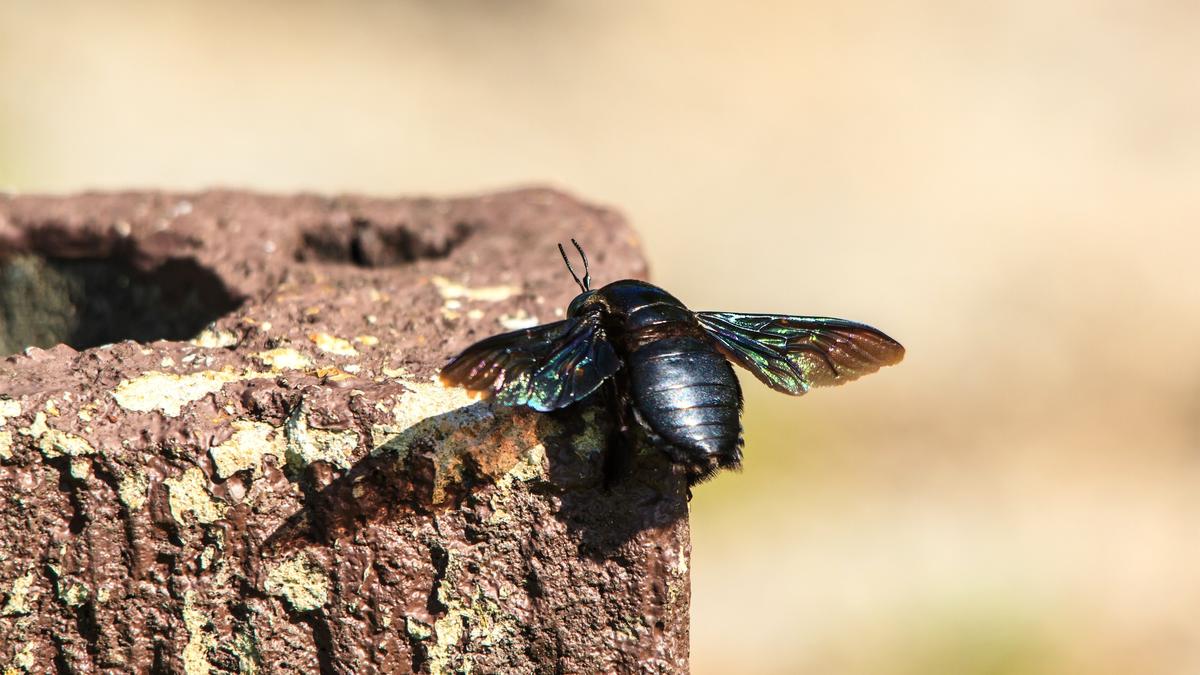
Before any action is taken to this impressive looking insect, correct identification is critical. Carpenter bees (genus Xylocopa) are solitary bees, unlike honeybees or wasps. While their tunneling can compromise wood, they are excellent pollinators for many flowers and food plants that other bees struggle to pollinate, such as passion fruit, eggplant, and tomatoes.
And to be perfectly clear, at Ecohome we don't buy into the drama often used by pest exterminators that this big black behomoth of an insect is about to devour your home and bring it crashing to the ground.
Key Identification: Carpenter Bee vs. Bumblebee
The easiest way for both homeowners and pros to tell these usually inoffensive bees apart is by looking at the abdomen or main body area (the part the furthest from the head):
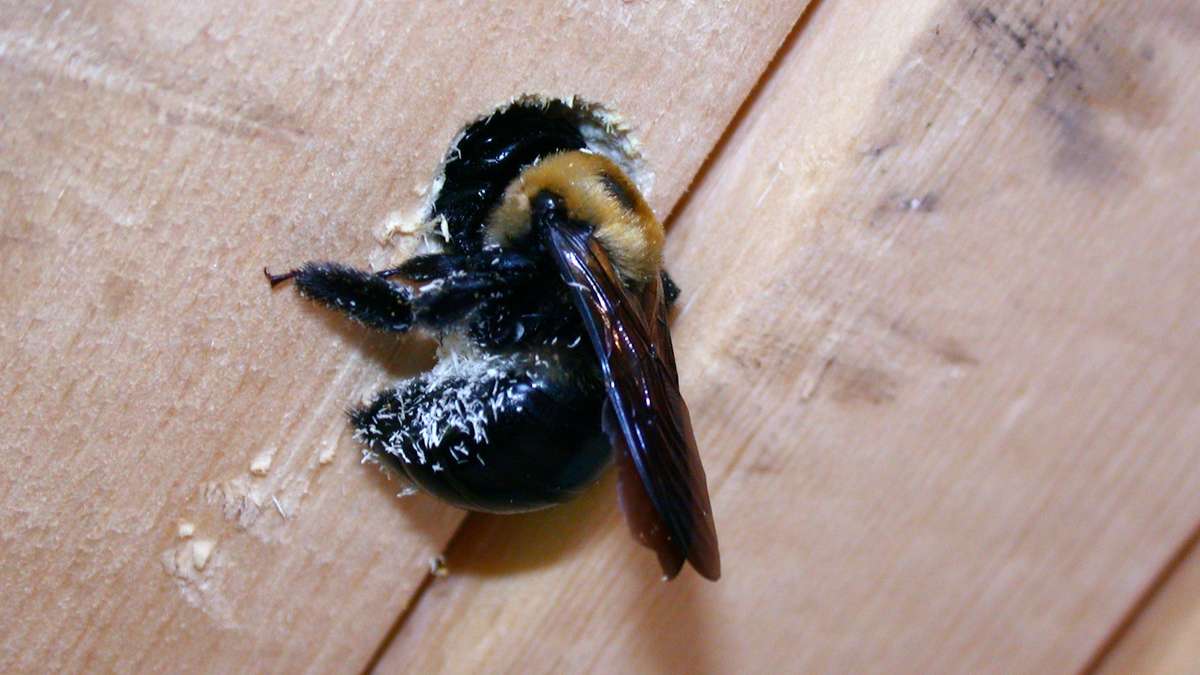
- Carpenter bee: Has a large, black, shiny, and almost entirely hairless abdomen - making them look like a huge bluebottle more than a fuzzy bee.
- Bumblebee: Has a hairy body with distinct yellow and black stripes the whole length and often scattered with yellow pollen as below.

Temperament: Are Carpenter Bees Dangerous?
The large, hovering bees you see are typically males guarding a nest. They can be very intimidating, and will often cause the more insect-paranoid to be screaming on your deck over summer, but it's pure bluff; male Carpenter bees have no stinger and cannot sting. The female carpenter bee does have a stinger but is usually very docile and will only sting if she is directly handled or feels her nest is critically threatened.
Obviously, if you're known to be very allergic to bee stings then you're probably wise to be wary, and to take the usual precautions when leaving the home like carrying your EpiPen and wearing your allergy medical alert ID bracelet.
Otherwise, no, carpenter bees in general are solitary and friendly insects that just want to peacefully raise their squishy larval kids in a soft piece of lumber. So long as they do that to a piece of wood that doesn't belong to our homes or outbuildings, then that's just fine by us!
Geographical distribution - where Carpenter bees are found
Carpenter bees exist worldwide, but different species are native to different regions. Knowing what to expect in your area is key for prevention if you see them taking a particular interest in parts of your home that you'd rather stay intact.
- North America (US & Canada): The Eastern Carpenter Bee (Xylocopa virginica) is common across the eastern and central United States, extending into southern Ontario and Quebec in Canada. Western states have species like the Valley Carpenter Bee. They are a primary concern for any property with untreated softwood structures like decks, sheds, fascias, and pergolas.
- United Kingdom: The Violet Carpenter Bee (Xylocopa violacea) is a stunning, large bee with violet-tinted wings that has become more common in southern England and Wales. While still less prevalent than in other regions, its presence is increasing, and it will investigate garden structures and house eaves.
- Australia & New Zealand: Australia is home to several native species, often called 'great carpenter bees', particularly in the northern regions. They nest in soft, dead timber. New Zealand, however, has no native carpenter bee species, so wood-boring damage of this type is not a concern there.
Identifying Carpenter bee damage on wood structures
Carpenter bees do not eat wood; they excavate it to create nesting galleries. The damage starts small but can become significant over years if nests are expanded and reused. This is why we need to be alert, and if Carpenter bees are buzzing around we need to observe where they are heading and whether they keep going to the same piece of exposed lumber that happens to be a part of our homes or outbuildings.
Consider this part of the essential preventative maintenance for homes that every homeowner should pay attention to if they want to avoid large and costly renovation and repairs caused by neglect.

Primary Signs of Carpenter Bee Activity
- Perfectly Round Holes: The unmistakable entry hole is a nearly perfect circle, almost exactly 1/2 inch (1.25 cm) in diameter - if you're not using a tape measure all day, this is about thumb tip sized!
- Sawdust (Frass): A coarse, sawdust-like material called frass may be found on the ground or surfaces directly below the entry hole - this is basically insect poop.
- Dark Stains: Yellowish or brownish stains from bee poop can also sometimes be seen around the opening to the Carpenter bee nest.
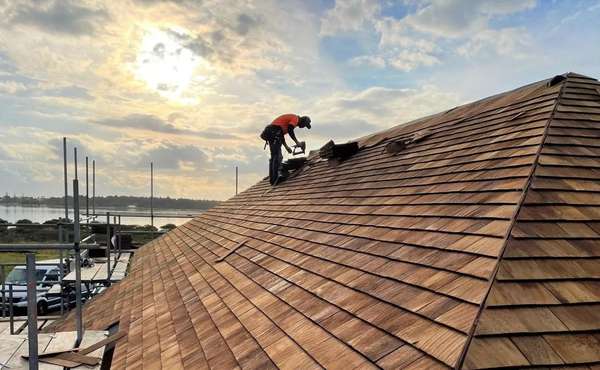
- Secondary Damage: Woodpeckers are predators of carpenter bee larvae and can cause extensive, destructive damage by pecking and splintering the wood to get to the Carpenter bee nests and galleries. In my personal experience with a wood shingle roof and red cedar fascia boards, while the Carpenter bees made the first holes, it was the woodpeckers in our neighborhood who ripped our roof apart. That is similar to just the lawn damage you get from racoons, skunks or crows ripping up the turf while hunting larvae of beetles like chafer beetles or Japanese beetles.
Eco-friendly deterrents and humane carpenter bee removal
The goal is to make the nesting site unattractive and encourage the bees to leave. Harsh chemicals are unnecessary and can harm the local ecosystem. For a broader look at non-toxic solutions for household pests, see our guide on how to get rid of insects and rodents safely & humanely.
Step 1: Make the Area Unpleasant
Carpenter bees are repelled by strong scents and vibration. Spraying a simple, non-toxic solution of water mixed with citrus oil, almond oil, or white vinegar on and into the holes can effectively drive them away. Reapply every few days and after rain.
Playing loud music from a speaker placed near the nest can also convince them to relocate - especially if it's a rock classic like BTO or even something as repulsive as Nickleback's greatest hits (though we'd suggest warning the neighbors before taking this extreme a measure to prevent carpenter bee infestation of your deck!)
Step 2: Plug Abandoned Nests
In the late fall or early part of winter, once you are certain the bee nest is inactive, you must seal the hole up. If you plug a nest with active larvae, they will simply chew a new exit hole and next year the process will start over again. Clean out the tunnel with a wire, then pack it tightly with steel wool, a wood dowel, or wood putty. Caulk the entrance, sand it flush, and apply a non-toxic wood finish to the area that will keep next years carpenter bee mum's from laying their eggs in your home and making it theirs.

Long-term : Protecting your home from carpenter bee nests coming back
The most effective strategy is to make your wood structures an undesirable target. Carpenter bees are lazy; they seek out the easiest nesting sites, which are almost always bare, unpainted, or weathered softwoods - and especially ones that already have inviting cracks or holes in.
- Finishes are Your First Line of Defense: A thick coat of paint or a quality stain is the best deterrent. While not completely impenetrable, finished wood is far less attractive to bees. For advice on non-toxic options, see our guide to choosing safe paints.
- Consider Charred Wood (Yakisugi): One of the most effective and sustainable methods for pest-proofing wood siding is the ancient Japanese technique of charring. Known as Shou Sugi Ban or Yakisugi, this process creates a beautiful, carbonized layer that is naturally resistant to insects and rot. For a complete overview, read our definitive guide to Shou Sugi Ban burnt wood siding.
- Build to Last: When constructing or repairing decks, pergolas, or other structures, using the right techniques can make a huge difference in their longevity and resistance to all forms of decay. Learn more in our guide on how to build decks that last longer.
- Maintain Your Exterior: Regularly inspect your home for exposed, untreated wood. Caulk and seal any new cracks or holes to prevent bees from seeing an invitation.
Carpenter bees vs. other wood-boring insects
For professionals, correct diagnosis is key, as treatment varies wildly between pests. Carpenter bee holes are clean and round. In contrast, termites create hidden, mud-filled galleries inside wood, causing it to become brittle. Carpenter ants prefer damp, decaying wood and leave behind fine, fibrous sawdust. All of these require different management strategies, as outlined in our comprehensive guide to removing insects and rodents.
In brief - the low-down on carpenter bees
Carpenter bees are beneficial pollinators that can become a nuisance when they nest in our homes. An eco-friendly management plan focuses on deterrence and prevention. Identify them by their shiny black abdomen, their tendency to terrorize our patios in the early summer as they search for a spot to raise their family, and look for their signature half-inch round holes in untreated wood around the outside of your home.
Use natural repellents like citrus oils or vinegar to drive them out, which are also effective in deterring carpenter ants, then plug the holes in the fall. For long-term prevention, keep all wood surfaces protected with paint, stain, or a durable, pest-resistant finish like Shou Sugi Ban charred wood.
This approach protects both your property and these important members of our ecosystem - although as life can get busy - we also understand that you might want to call in the most eco-friendly pest control companies near you to take care of carpenter bees also.
Now that you know more about Carpenter bees, find more info about natural pest control & green building techniques in the Ecohome Green Building Guide and these pages below:
-
How to get rid of insects and rodents safely and humanely
-
Shou Sugi Ban burnt wood siding, a Japanese wood finish
-
How to build decks that last - top tips and photos
-
Choosing the right exterior siding for fitting, cost comparisons & appearance












Comments (0)
Sign Up to Comment