






Siding is important!
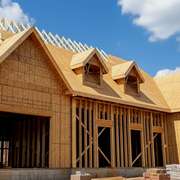
There is no stage of home construction that you should rush through, but if there were, it shouldn't be siding. Whatever type of siding product you choose, purchase and installation is not cheap, so you don't want to do it again anytime soon.
Your siding needs to protect your home from the weather, while at the same time allowing air flow so your interior wall can shed moisture from outside and humidity from inside. And it has to accomplish both these tasks with style, as your choice of siding will be the first thing you see every time you come home, and rightly or wrongly the surface finish is what drives perceptions about the quality of the home. With siding though, it's important to remember that beauty is more than skin deep.
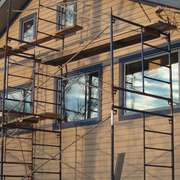
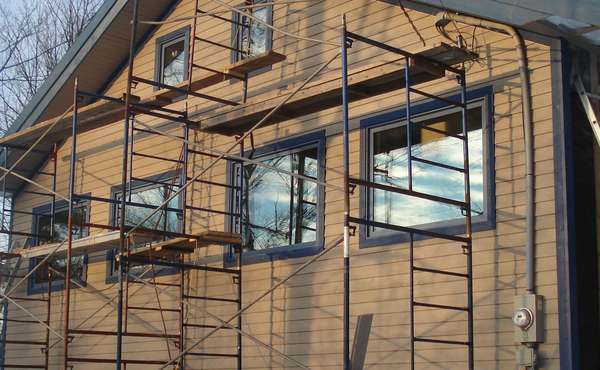
Depending on the profile of your site and design of your home, gaining access to some higher parts for the siding installation might be difficult. In construction, 'difficult' translates into either dangerous, time consuming or expensive depending on how much of your own maintenance you do.
For that reason, in the page below we have given an overview of a variety of siding products, giving you an idea of the performance you can expect, cost, general maintenance requirements and durability.
Siding installation tips:
Whatever siding you choose, creating an air space behind it where water can drain and moisture can dry is the key. You can read our Guide on Siding Installation here.
Solid wood siding
 |
|
Wood siding fitted horizontally © Ecohome
|
- Pros of Wood Siding: It makes for a great looking traditional finish to the siding on a home. Certainly with FSC wood siding, extraction & manufacturing can be sustainable, and very little pollution is generated in production and manufacturing. Wood is abundantly available to us in Canada & North America, provided that forests are managed properly.
- Cons of Wood Siding: It is not the most durable choice to protect your home from weather, and clearly wood siding isn't the best for fire resistance. Wood can be susceptible to damage from insects and rodents, as well as mold and rot from moisture & humidity.
- Cost of wood siding: $8 to $20 per square foot installed, depending on type of wood, style and the complexity of the job.
- Expected siding lifespan: Durability of 40 to 55 years if the wood siding is regularily & carefully maintained
Note: There are companies that offer pre-painted wood siding products, a quality that you cannot match on a ladder with a brush. Several coats of paint are applied, to both sides, so your job is simply to cut the siding to length, paint the ends, and install it. A reputable company will give your siding a warranty up around 15 years, and potentially up to 30 years if you apply a coat of paint within that first 15 years.
If you prefer to paint your wood siding yourself, it will be a lot easier (and a better quality) if you do it on the ground before installation. It will require significant space to paint, but also the time to build drying racks for your siding to sit on while the paint finish is drying off. For more information on timber choices for framing a house, see here.
Composite wood siding products
 |
|
Composite wood siding © Céline Lecomte
|
Composite wood refers to the repurposing of waste wood into usable siding products. Small chips and sawdust can be steam pressed into a very close likeness of actual wood siding, including the addition of realistic looking 'grain'.
- Pros of composite siding: It makes use of post-industrial waste that might otherwise head for a landfill. Installation of composite siding can actually be easier than installing conventional wood siding, due to not having knots to contend with for cutting and fitting.
- Cons of composite siding: Composite wood siding faces the same challenges as solid wood in regards to performance and risk. Though raw material use is effectively eliminated, there is higher pollution during manufacturing than raw wood and you might want to look closely at the bonding agents to avoid plastics, formaldehyde & other toxic content.
- Cost of composite siding: $6 to $15 per square foot installed.
- Expected lifespan of composite siding: 25 years and over if maintained to manufacturers specifications.
Cedar shingles for house siding
Cedar is a beautiful wood commonly used outdoors because it is highly resistant to rotting. Left untreated its lifespan isn't as greatly affected as other wood siding, but the look certainly is. Cedar siding will turn grey through exposure to weather and UV rays, and since that won't be even, the resulting color won't be either. So required maintenance of cedar siding depends a lot on your taste and the desired aesthetic for your home.
- Pros of cedar siding: Wood is a natural product, and due to the length of cedar shingles (approximately 18"), they can make use of shorter pieces of wood such as stumps that would often be left in forests, or post industrial waste. If you don't mind the look of greying cedar siding, you won't need to do a lot of maintenance.
- Cons of cedar siding: Very expensive and time consuming to install. And if you DO mind the look of greying cedar siding, like all wood products, it will require regular repainting, staining or oiling to keep a consitent color & finish. (see here for eco-friendly wood finishing products)
- Cost of cedar siding: Due to the size of shingles and the cost of cedar, you can expect to pay around $27 to $40 per square foot installed.
- Lifespan of cedar siding: In and around 50 years, much longer with treated shingles and proper installation.
Note: In this writer's experience, a step that is often missed in the installation of cedar shakes is creating an air space and drainage plane. One of the cheapest and most effective spacers can be a dimpled foundation membrane cut into 2" strips. This method allows for an air space, but also allows vertical drainage, where a strip of solid wood limits air flow and drying.
Brick and stone exterior finishes for homes
 |
|
Rustic Brick Wall Finish © Marlon Bunday
|
- Pros of brick wall finishes: Very low maintenance and its performance is excellent. Brick and stone resist weathering, and are virtually unassailable from pests, insects, mold, and fire.
- Cons of brick wall finishes: Regarding brick and fabricated stone products, production is very clean but demand a significant amount of embodied energy throughout the extraction and production process. Moreover, it is not easy to install.
- Cost of brick wall finishes: Very expensive - "If you have to ask..."
- Expected Lifespan of brick wall finishes: longer than yours!
Stucco wall finishes
 |
|
Stucco Wall Finish © Yanni Milon
|
Stucco refers to a thin coating of troweled or sprayed on cementituous surface finish that is applied to exterior walls to keep them waterproof and protected.
- Pros of stucco: Performs well against pests and rodents; raw materials are relatively abundant; fairly resistant to fire.
- Cons of stucco: Concrete is highly polluting and energy intensive in its production; poor resistance to weathering; difficult to install and maintain.
- Cost of stucco: $3 to $12 per square foot installed.
- Expected lifespan of stucco: 50-75 years.
Acrylic wall coverings
 |
|
Acrylic wall coverings © Céline Lecomte
|
Acrylic siding materials are composed of concrete, glass fiber and polystyrene. Suppliers sometimes claim that in addition to siding they also act as insulators, but there isn't much truth to that. Any insulation value it might have would be ineffective if you install it properly, which includes an air space between it and your main wall system.
- Pros of acrylic wall coverings: Performs well against pests and mold and it's quite versatile.
- Cons of acrylic wall coverings: High pollution and embodied energy in the extraction and manufacturing process; materials can be scarce; poor resistance to weather and fire; not easy to install and maintain.
- Cost of acrylic wall coverings: $9 to $14 per square foot installed.
- Expected lifespan of acrylic wall coverings: 25 years and over.
Fiber cement siding (Hardie board)
 |
|
Fiber Cement Siding (Hardie Board)© Céline Lecomte
|
Fibre cement siding board was developed by James Hardie industries over a century ago as "Hardie Board". The original product was made from cement and asbestos, modern day production has replaced the asbestos with healthier alternatives. Fiber cement board can be molded to any style, even to look like wood.
- Pros of fiber cement siding board: Very strong and very durable; resistant to fire, insects and decay.
- Cons of fiber cement siding board: High pollution and energy consumption during production. This is a popular product in warmer dryer climates, but it doesn't perform as well in northern climates. While the product itself is durable, paint will often chip off during the freeze / thaw cycle.
- Cost of fiber cement siding board: $10 to $20 per square foot installed, depending on style.
- Expected lifespan of fiber cement siding board: 40 years or more
Metal siding
 |
|
Metal Siding © AA Architecture
|
- Pros of metal siding: Highly resistant to weathering, excellent performance against mold and parasites, easy to install and maintain. It's durable and fairly versatile, and when the day comes that someone is taking down your home, it will unquestionably be recycled.
- Cons of metal siding: Production (mining) is not at all green, metal has a high embodied energy.
- Cost of metal siding: $8 to $20 per square foot installed.
- Expected lifespan of metal siding: 50 years and over.
Many types and styles of metal siding can be found. Pre-finished steel, galvanized steel, copper, zinc, most commonly of course would be aluminum siding.
Vinyl / PVC siding
 |
|
Vinyl Siding © Céline Lecomte
|
- Pros of vinyl siding: Highly resistant to weathering. Very good against pests and mold. Fairly easy to install and easy to maintain.
- Cons of vinyl siding: Cons: It is derived in part from natural gas, which is not renewable, however the largest component that goes into its manufacturing is salt. For consideration in developments and construction that require fire ratings, vinyl siding may need to be used with other building materials to achieve certain fire ratings. Vinyl is technically recyclable but very rarely recycled.
- Cost of vinyl siding: $4 to $ 12 per square foot installed.
- Lifespan of vinyl siding: 40 years and over.
Siding options; final thoughts
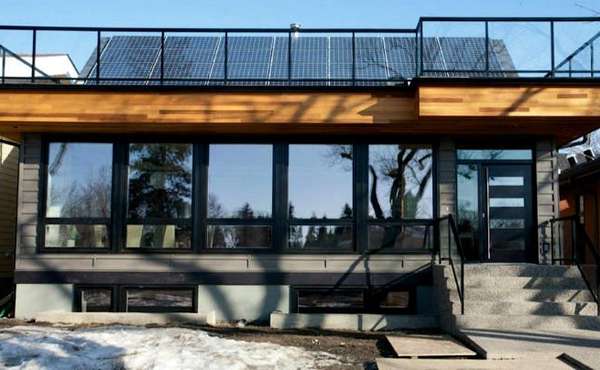
Regardless of which siding you choose to finish your home's exterior, one of the greatest ways you can protect your home is through good design. Extensive overhangs will mean that the majority of rain will not even touch your walls or the siding, this fact alone will greatly increase the lifespan of whatever cladding you choose to put on the exterior of your home.
Rain, UV rays and humidity are the three main factors that will cause the siding of your home to age and deteriorate, sizable overhangs can help protect you from the first 2 out of 3. Along with protecting your siding, shading techniques play an essential role in passive solar design or Passive House designs to avoid overheating.
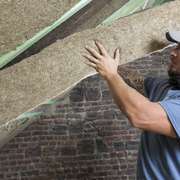
When choosing and installing siding, it's important to remember that the exterior wall surface of your home needs to be able to be able to dry. That means allowing any water that gets in to drain out, and letting humid air escape - in modern energy efficient green homes using sustainable home design, the siding's principle role is to protect the air and weather barriers from deterioration while looking beautiful, effortlessly.
Now you know more about which siding is best for home cladding. Find more pages about sustainable construction below and in the Ecohome Green Building Guide pages.
Discover all the benefits of a free Ecohome Network Membership here - promote your business and get access to discount pricing on select building materials! |








How would you install a brick/stone veneer siding over the top of the rain cladding? It looks like many masonry companies have a metal cladding with vertical ridges that goes right over the house wrapping that allows for the air gap needed to help the house dry. Then a mortar blocking fabric, a mesh layer, mortar, then the brick or stone veneer. But this seems to not leave any room for mineral wool or other insulation on outside of the home. Is there another way to install a brick or stone veneer that incorporates the exterior insulation? Is the solution to use a more rigid insulation? Or is the only solution to use traditional bricks and stack them so that the air gap is still there?